

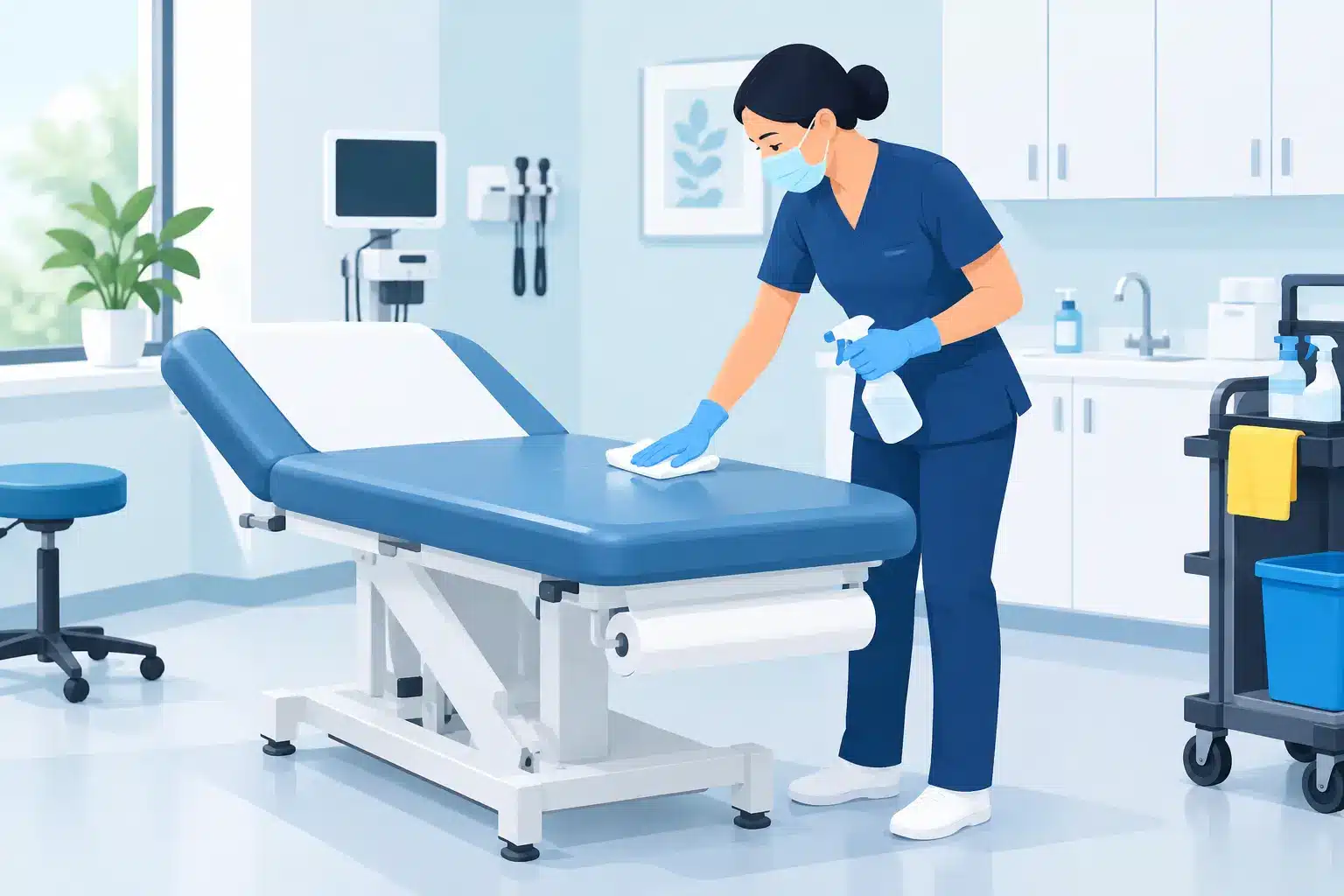
Medical Furniture: Cleaning That Measures Up
An exam table, a waiting room chair, or a treatment chair can seem clean after a quick wipe. Yet medical furniture is exposed every day to repeated contact, fluids, dust, aerosols, and care products. Its upkeep must therefore go beyond appearance: it must support hygiene in the premises, preserve the coverings, and contribute to the trust of patients and staff alike.
In a clinic, a professional office, a care center, or a residence offering health services, every surface counts. A suitable protocol reduces the buildup of dirt, prevents premature wear of the furniture, and helps maintain an environment consistent with the requirements of your facility.
Why Medical Furniture Requires a Precise Method
The furniture used in a care environment is not always made of the same materials. Medical vinyl, faux leather, leather, technical fabric, molded plastic, painted metal, stainless steel, and laminate surfaces do not react the same way to disinfectants, moisture, or friction.
A product that is too aggressive can dull a covering, weaken seams, make vinyl crack, or leave a sticky residue that attracts even more dust. Conversely, cleaning that is too light can leave body oils, product traces, stains, or contaminants in the most heavily used areas. The right result depends on a balance between sanitary effectiveness and respect for the materials.
You also need to distinguish cleaning from disinfection. Cleaning removes visible soil and some of the contaminants present on a surface. Disinfection aims to reduce microorganisms according to the directions of the product used, notably its contact time. In many cases, disinfecting a surface that is still soiled gives an incomplete result: the dirt can interfere with the action of the disinfectant.
The Areas That Accumulate the Most Contaminants
Frequently touched surfaces deserve constant attention. Armrests, handles, adjustment knobs, table edges, headrests, reception chairs, and stools are often handled dozens of times a day. Their appearance can remain acceptable while an invisible buildup forms gradually.
Upholstered chairs and benches are also more complex to maintain. Fine dust, hair, dead skin cells, odors, and allergens can work their way into the fibers or crevices. A superficial intervention removes surface debris but does not necessarily treat what has settled into the padding.
Waiting rooms require a particular approach. They receive a variable volume of visitors, sometimes accompanied by children, and their furniture often combines several materials. The upkeep schedule then depends on foot traffic, the nature of the services offered, and the level of risk associated with the environment.
Stains Should Not Be Treated at Random
A stain from disinfectant, cream, coffee, blood, or a medical product cannot be removed with the same method. Scrubbing vigorously can spread the stain, wear down the finish of the material, or push the liquid deeper into a fabric. You first need to identify the covering, assess the nature of the soil, and test any solution in an inconspicuous area when the manufacturer recommends it.
This caution is particularly useful for vinyl and faux leather coverings. Despite their apparent resistance, they can dry out, fade, or crack if the products used are not compatible. The cost of a premature replacement far exceeds that of planned upkeep.
An Effective Routine Between Specialized Services
Staff can maintain the daily cleanliness of medical furniture through simple, consistent actions. Contact surfaces must be cleaned and disinfected according to the facility’s internal protocol and the manufacturer’s guidelines. Splashes and fresh stains must be dealt with quickly, before they penetrate or dry.
Using clean cloths, changed regularly, avoids moving contaminants from one surface to another. Products must be used at the prescribed dilution, with no improvised mixing. Mixing cleaners or applying a disinfectant in excessive quantity does not necessarily strengthen hygiene and can damage materials or affect indoor air quality.
For armchairs, upholstered chairs, and benches, regular vacuuming of seams, folds, and the areas under cushions helps limit the buildup of particles. This step is often overlooked even though it extends the appearance and lifespan of the furniture.
When to Call for Professional Cleaning
Routine upkeep is essential, but it does not replace a deep cleaning. A professional service becomes relevant when you notice persistent odors, old stains, general dullness, a loaded feel to the fabric, or a visible buildup in the seams and mechanisms.
It is also a sensible solution before a clinic opens, after renovations, following an incident requiring a targeted intervention, or as part of a periodic maintenance program. The frequency depends on how the premises are used. A small clinic open by appointment does not have the same needs as a high-traffic center or a waiting room open all day.
A qualified technician starts by assessing the materials, their condition, the most affected areas, and access constraints. The method can then include detailed vacuuming, pretreatment of stains, controlled cleaning of textiles or upholstered surfaces, extraction when the material allows it, and suitable drying. The goal is not to wet the furniture excessively, but to remove soil without creating a residual moisture problem.
Protecting Indoor Air Quality
Textile furniture can hold particles that go back into circulation when people sit down, move cushions, or walk through the room. In spaces serving sensitive clients, notably children, seniors, or people with allergies, this reality deserves extra attention.
A thorough cleaning of fabrics and upholstered surfaces helps reduce odors, embedded dust, and accumulated allergens. It does not replace the infection control measures specific to a care facility, but it effectively complements a clean and well-maintained environment.
What a Good Maintenance Plan Should Include
A realistic plan does not consist of applying the same treatment everywhere. It must take into account the type of furniture, foot traffic, manufacturers’ recommendations, and the function of each room. Treatment rooms, reception areas, and administrative spaces do not have the same exposure or the same priorities.
It is useful to document regular interventions, the products used, and particular incidents, such as a stain or a spill. This discipline makes follow-up easier, helps teams act consistently, and makes it possible to spot items that are deteriorating faster than expected.
For businesses in Montreal, Laval, the North Shore, and the South Shore, Nettoyage Imperial can assess the condition of upholstered furniture and propose a cleaning method compatible with the materials present. A professional approach protects both the investment in the furniture and the experience of the people who visit your premises.
A well-maintained care space is not noticed only because it is clean. It immediately inspires the seriousness, comfort, and respect that patients expect to receive upon arrival.
What is the difference between cleaning and disinfecting medical furniture?
Cleaning removes visible soil and some of the contaminants on a surface, while disinfection aims to reduce microorganisms according to the product’s directions, including its contact time. Disinfecting a surface that is still soiled often gives an incomplete result because the dirt can interfere with the disinfectant.
How do you clean vinyl medical furniture without damaging it?
Identify the covering first, then use compatible products at the prescribed dilution, with no improvised mixing. Products that are too aggressive or not compatible can dry out, fade, or crack vinyl and faux leather.
How often should waiting room chairs be cleaned?
The schedule depends on foot traffic, the nature of the services offered, and the level of risk of the environment. Contact surfaces should be cleaned and disinfected according to the facility’s internal protocol and the manufacturer’s guidelines.
How do you remove stains from medical furniture upholstery?
Identify the covering and the type of stain first, and test any solution in an inconspicuous area when the manufacturer recommends it. Avoid vigorous scrubbing, which can spread the stain, wear down the finish, or push the liquid deeper into the fabric.
When does medical furniture need a deep cleaning?
When you notice persistent odors, old stains, general dullness, a loaded feel to the fabric, or a visible buildup in the seams and mechanisms. It is also useful before a clinic opens, after renovations, or after an incident.
Key Takeaways
- Medical furniture needs more than a surface wipe, since it is exposed every day to contact, fluids, dust, aerosols, and care products.
- Vinyl, faux leather, fabric, and metal react differently to products, so the method must balance sanitary effectiveness and respect for the materials.
- Cleaning removes soil, while disinfection reduces microorganisms. Disinfecting a surface that is still soiled often gives an incomplete result.
- Treat stains with the right method: identify the covering, avoid vigorous scrubbing, and test in an inconspicuous area when the manufacturer recommends it.
- A good daily routine uses clean cloths, the prescribed dilution, no improvised mixing, and regular vacuuming of seams, folds, and the areas under cushions.
- A deep cleaning is relevant for persistent odors, old stains, or buildup, and a good maintenance plan documents interventions, products, and incidents.