

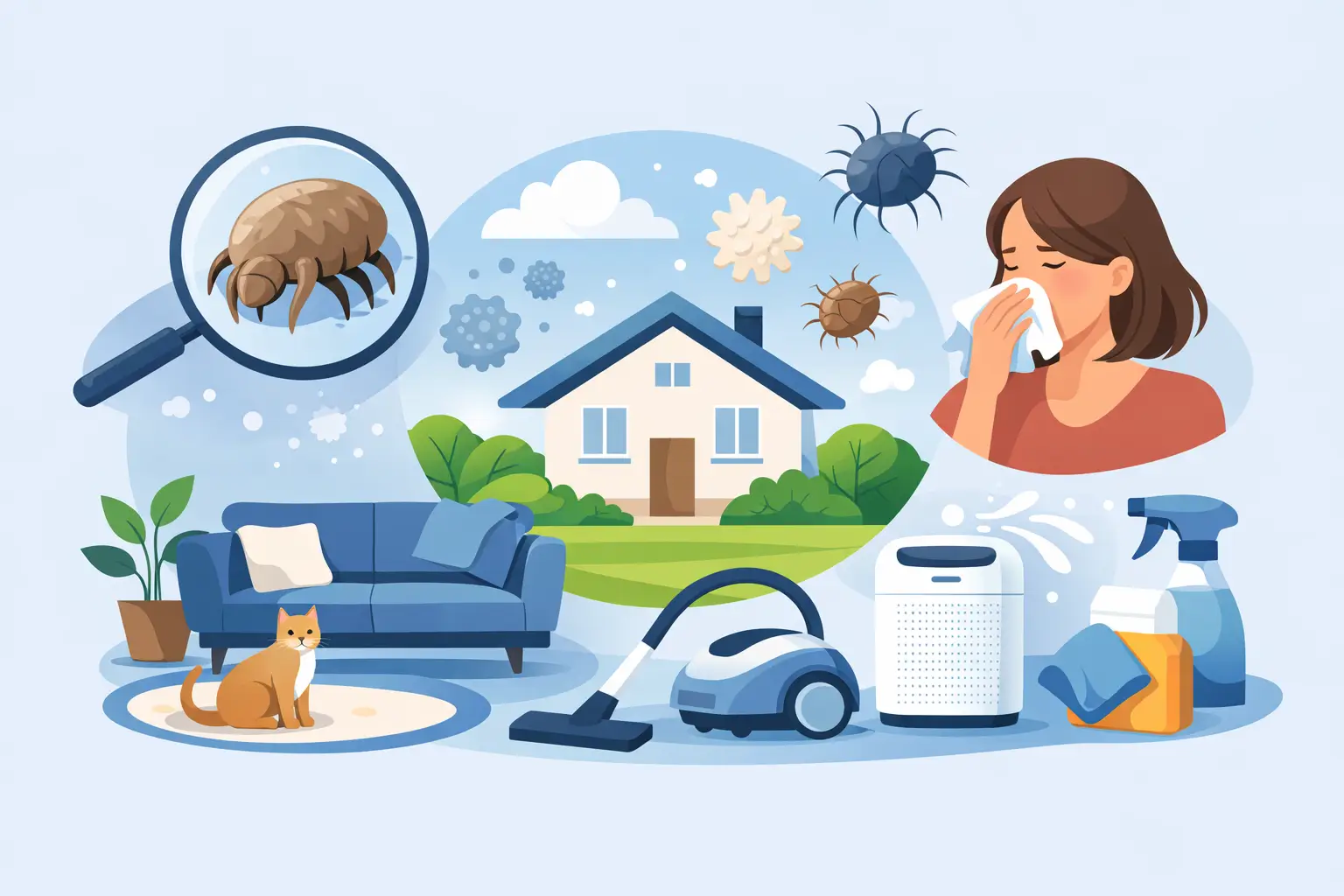
A stuffy nose in the morning, itchy eyes in the living room, a persistent cough at night; these are signals your home may be harbouring more allergens than you realise. Knowing how to reduce allergens in your home goes well beyond wiping down surfaces. It means identifying where particles build up, understanding how they travel through the air, and applying the right home allergen removal solutions to textiles, surfaces, and ventilation systems alike.
Not All Indoor Allergens Behave the Same Way
Dust mites settle deep into bedding and upholstered furniture. Pet dander and animal proteins land on rugs, curtains, and cushions, then re-enter the air with every movement. Mould thrives in poorly ventilated or damp areas. Fine particulate matter finds its way into ductwork, filters, and air-handling equipment. Each source requires a different response, which is why home allergen removal solutions need to be targeted rather than generic.
Many households focus only on what is visible. A carpet can look perfectly clean while holding a significant load of dust, pollen, skin cells, and mites. A mattress can accumulate particles for years with no visible sign. A clean-looking vent cover does not mean the ductwork behind it is clear. Effective dust mite and pet dander reduction tips always start with the hidden reservoirs, not just the visible surfaces.
The Bedroom: The Most Underestimated Allergen Zone
If symptoms are worst at night or first thing in the morning, the bedroom is almost always the first area to address. Body heat and ambient moisture create conditions that dust mites prefer. Mattresses, pillows, duvets, and decorative cushions all contribute to the problem. Reducing excess textiles heavy curtains, thick rugs, and decorative layers is one of the most practical dust mite and pet dander reduction tips for households dealing with respiratory sensitivities.
Regular washing of bedding helps but does not go far enough on its own. Mattresses and pillows retain particles deep in their fibres that surface cleaning cannot reach. In homes with children, asthma sufferers, or known respiratory allergies, a professional deep clean of these textiles makes a measurable difference. Knowing how to reduce allergens in your home means treating the bedroom as a priority, not an afterthought.
Living Areas: Where Allergens Circulate Most
In high-traffic spaces, the main challenge is not just accumulation but redistribution. Every step across a rug, every movement on a sofa, every air current stirs settled particles back into the breathing zone. Upholstered furniture, area rugs, and curtains capture these residues and release them gradually. These are exactly the surfaces that call for genuine home allergen removal solutions, not just routine vacuuming.
For homes with pets, the problem runs deeper than visible fur. The allergenic proteins from animals are found primarily in microscopic skin deposits left on fibres not in the hair itself. Even a visually tidy interior can remain consistently irritating. Targeted dust mite and pet dander reduction tips for pet owners include more frequent deep cleaning of upholstery and rugs, along with attention to air filtration.
Humidity, Moisture, and the Rooms People Overlook
Allergens are dust-driven. Excess moisture promotes mould growth, which triggers and worsens respiratory symptoms. Bathrooms, laundry rooms, basements, and any under-ventilated space are the most vulnerable. The solution is not surface cleaning alone it is correcting the underlying cause: poor extraction, condensation, or inadequate ventilation.
A bathroom cleaned frequently but poorly ventilated will remain a mould risk. A heated basement with high humidity will too. Keeping humidity levels stable is one of the home allergen removal solutions that requires both habit and proper equipment. Air exchangers and ventilation units that are poorly maintained lose efficiency and allow moisture to settle where it should not.
Ventilation Systems: The Lever Most Homeowners Ignore
When allergy symptoms persist despite regular cleaning, it is time to look at air circulation. Ducts, vents, dryer exhaust lines, and air exchangers play a direct role in indoor air quality. When they are heavily soiled, they do not remove contaminants they redistribute them. This is one of the most important and most overlooked aspects of knowing how to reduce allergens in your home, particularly in older Montreal properties and multi-unit buildings in Laval or on the South Shore.
Not every system requires the same frequency of service. Age of the building, presence of pets, recent renovations, humidity levels, and general usage all influence the timeline. But when dust returns quickly after cleaning, airflow feels reduced, persistent odours are present, or occupants are particularly sensitive, professional duct and ventilation cleaning becomes a practical necessity. At Nettoyage Imperial, this type of service is part of a broader approach to improving indoor air quality, protecting materials, and addressing the invisible sources of allergen buildup across the Montreal area, Laval, the North Shore, and the South Shore.
Practical Habits That Make a Lasting Difference
The most effective home allergen removal solutions are the ones that can be sustained consistently. A one-time deep clean help but stabilising the environment over time is what produces lasting improvement. Focus on regular maintenance on high-traffic floors, bedrooms, and upholstered surfaces. Wash bedding and removable covers frequently. Reduce objects that accumulate dust without serving a clear purpose.
What is the most effective way to start when learning how to reduce allergens in your home?
Begin with the bedroom and your ventilation system these are the two areas where how to reduce allergens in your home has the greatest impact. Address bedding, mattresses, and ductwork before moving to living areas. Reducing dust mite and pet dander reduction tips work best when applied in layers, starting with the spaces where you spend the most time.
Do home allergen removal solutions work without professional help?
Home allergen removal solutions like regular vacuuming, humidity control, and frequent bedding washes are all effective as part of ongoing maintenance. However, textiles, mattresses, and ductwork eventually accumulate particles that household equipment cannot fully extract. Professional cleaning addresses what is embedded in fibres and built up inside ventilation systems.
What are the best dust mite and pet dander reduction tips for families with animals?
The most practical dust mite and pet dander reduction tips for pet owners are to clean upholstered furniture and rugs more frequently, maintain good air filtration, and have carpets deep-cleaned at least once a year. Pet allergens are found in microscopic skin deposits on fibres, not just in visible fur, so surface cleaning alone is rarely sufficient.
How does duct cleaning help reduce allergens in a home?
Dirty ducts can recirculate dust, mould spores, and dust mite and pet dander particles throughout the home every time the heating or cooling system runs. Professional duct cleaning removes this accumulated buildup and supports better indoor air quality a key element of lasting home allergen removal solutions, especially in homes in Montreal, Laval, and surrounding areas.
When should a homeowner act without delay on indoor allergens?
If allergy symptoms worsen indoors but improve outside, if a musty odour appears, or if dust and odours return quickly despite regular cleaning, it is time to go beyond routine maintenance. These signs suggest a deeper source often in textiles, humid zones, or ventilation that calls for targeted action to genuinely reduce allergens in your home.
Key Takeaways
- How to reduce allergens in your home starts with the bedroom and ventilation system the two highest-impact zones most households undertreat.
- Effective home allergen removal solutions target hidden reservoirs like mattresses, upholstered furniture, and ductwork, not only visible surfaces.
- Dust mite and pet dander reduction tips for pet owners go beyond fur removal allergenic proteins live in microscopic fibre deposits that require deep cleaning.
- Humidity control is a critical and overlooked part of any home allergen removal strategy, especially in basements, bathrooms, and poorly ventilated spaces.
- When dust mite and pet dander particles circulate through dirty ducts, cleaning floors and textiles alone will not resolve persistent symptoms.
- Combining consistent maintenance habits with periodic professional intervention is the most reliable way to reduce allergens in your home over the long term.