

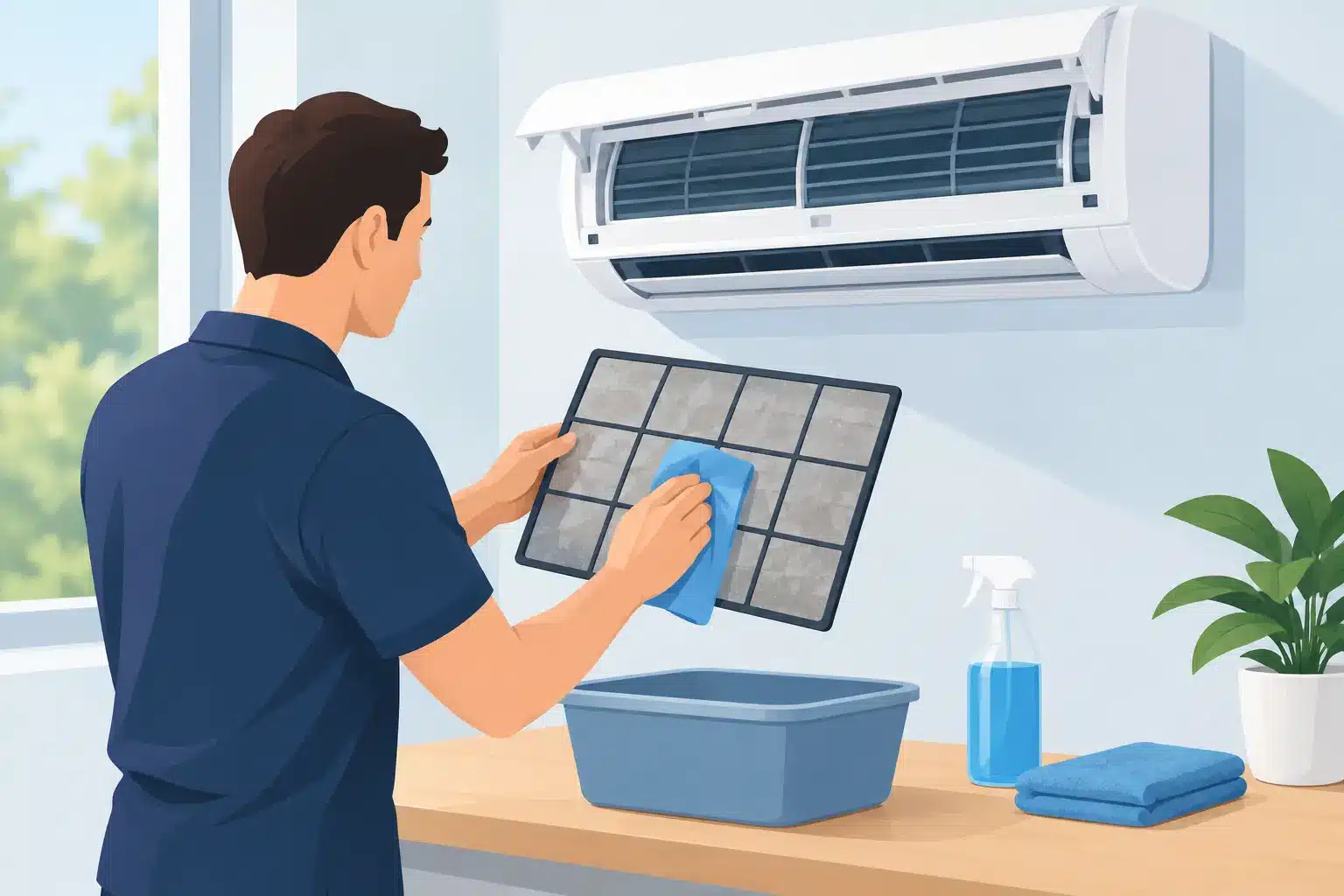
How to Clean a Heat Pump Filter
A grayish filter covered in dust or pet hair quickly reduces your unit’s performance. Knowing how to clean a heat pump filter helps maintain good airflow, limit odors, and keep the wall unit from working harder than necessary. In most cases it is a simple task, but it must be done carefully so as not to damage the internal components or put contaminants back into circulation in the home.
For homeowners in Montreal, Laval, the North Shore, and the South Shore, this upkeep is especially important during periods when the heat pump runs almost nonstop, whether for cooling in the summer or for heating in the spring, the fall, and on milder winter days.
Why Clean a Heat Pump Filter?
The indoor unit’s filter catches some of the dust, hair, pet dander, and airborne particles before they reach the components of the unit. When it is clogged, air passes through less easily. The heat pump then has to run longer to reach the requested temperature.
The problem is not limited to comfort. Insufficient airflow can increase energy consumption, create a feeling of uneven heating or cooling, and encourage dirt to build up on the coil, the fan, and the condensate pan. People sensitive to dust, allergies, or odors may also notice a difference in indoor air quality.
A clean filter does not, on its own, turn a neglected heat pump into a new unit. However, it is the first line of upkeep and helps protect expensive equipment. It is a preventive task that takes little time, as long as the right method is followed.
How Often Should You Wash the Filters?
In a home without pets and without a major source of dust, a monthly check is a good habit. Cleaning is generally needed every four to eight weeks when the unit is used regularly. If the heat pump is used for both heating and cooling all year, it is better not to wait for a change of season to check the filters.
The frequency should be increased in certain situations: cats or dogs, a household with young children, renovation work, indoor smoking, proximity to a busy street, or an unusual buildup of dust. In a business, a rental unit, or a high-traffic building, filters can get dirty even faster.
It is best to inspect them before they become visibly black. A slightly dusty filter is much easier to clean, and you prevent debris from being drawn deeper into the unit.
How to Clean a Heat Pump Filter, Step by Step
Before any handling, turn off the unit with the remote control, then cut its power at the circuit breaker if access and the installation allow it. This precaution reduces risks when the front panel is open. Then wait until the fan has stopped turning completely.
Gently open the front panel of the wall unit. On most models, it lifts from the bottom and stays held in the open position. The filters are usually two fine grilles located just behind the panel. Consult the manufacturer’s manual if you cannot clearly find their grip points or if your unit has additional filters.
Remove the grilles without forcing them. Hold them by their frame so as not to deform the mesh. A deformation, a crack, or a damaged frame can prevent the filter from fitting properly and let more dust through.
Start by gently vacuuming both sides with a clean brush attachment. This step is sometimes enough when the layer of dust is light. If the filters are dirtier, rinse them in lukewarm water under a gentle stream. You can use a small amount of mild, unscented soap without an aggressive degreaser, then rinse thoroughly.
Do not use very hot water, bleach, solvents, abrasive products, or a stiff brush. These products can weaken the plastic or damage the mesh. A pressure washer should also be avoided: its force can deform the filter, even if it seems sturdy.
Gently shake off the excess water and let the filters dry completely in the open air, in a clean, shaded spot. Never put them back in the heat pump while damp. Residual moisture can encourage odors and contribute to microbial growth on internal surfaces. Also avoid the hair dryer, the radiator, or direct sunlight, which can warp or deform the parts.
Once the filters are completely dry, put them back in their rails, close the panel, and turn the power back on. Run the unit for a few minutes. Airflow should be stronger and operation quieter if a clogged filter was the main cause of the problem.
Should You Also Clean the Small Specialty Filters?
Some models include deodorizing, electrostatic, antibacterial, or purifying filters that attach to the main filters. Their upkeep varies by manufacturer. Some can be gently vacuumed, while others must be replaced at set intervals and must not be rinsed.
Do not assume that a small colored or treated filter is washed the same way as a standard grille. Check the manufacturer’s instructions and replace items that have reached the end of their useful life. A saturated specialty filter can lose its effectiveness, even if it looks clean on the surface.
What Cleaning the Filters Does Not Fix
Washing the filters is routine upkeep, but it does not replace a full cleaning of the wall-mounted heat pump. Over time, dust, moisture, and deposits can build up on the coil, the blower wheel, the fins, the collection pan, and the condensate drain. These areas are not designed to be cleaned with a cloth or a household spray.
A musty odor at startup, stains or water running down the wall, an unusual noise, a persistent loss of power, or particles blown into the room are signs to take seriously. In these cases, continuing to wash the filters will not be enough. A professional inspection can locate the source of the problem and clean the internal components using a suitable method.
It is also important to distinguish upkeep of the indoor unit from that of the outdoor module. The outdoor unit generally does not have the same washable filters. Its fins must stay clear of leaves, dust, snow, and vegetation, but they are fragile. A clumsy intervention can bend them and reduce airflow.
Mistakes That Shorten the Life of the Unit
The most common mistake is putting the filters back while they are still damp. The second is neglecting the filters until the heat pump smells bad or heats poorly. In both cases, the unit runs in worse conditions and dirt can migrate to hard-to-reach components.
You should also avoid spraying a disinfectant, an air freshener, or a household cleaner directly into the indoor unit. These products can leave residue on the coil and the blower wheel, irritate occupants, or temporarily mask a contamination that requires a real cleaning. A clean unit should smell like fresh air, not like perfume added to cover a persistent odor.
Finally, do not take apart the internal panels, the blower wheel, or the electrical connections without training. Some parts are delicate, and a mistake can cause a leak, poor drainage, or a breakdown. The right reflex is to limit home upkeep to the accessible filters and leave the deep cleaning to equipped technicians.
When Should You Schedule Professional Upkeep?
For a wall-mounted heat pump that is used often, periodic professional cleaning helps maintain performance, hygiene, and the lifespan of the equipment. The exact frequency depends on lifestyle, environment, and the condition of the unit. In a home with pets or with year-round use, more frequent upkeep may be justified.
At Nettoyage Imperial, interventions target the areas that filters do not fully protect: the coil, the fan, the condensate pan, and the drainage, depending on the condition and configuration of the unit. The goal is to remove deposits without compromising the components or the quality of the air delivered to the home or commercial space.
A clean filter is a simple gesture, but it also reveals the general condition of your heat pump. If you have to wash it much more often than before, if odors come back quickly, or if comfort drops despite a spotless filter, it is better to act before routine upkeep turns into an expensive repair.
How do you clean a heat pump filter?
Turn off the unit, open the front panel, and remove the grilles by their frame. Vacuum both sides, rinse in lukewarm water with a little mild soap if needed, and let them dry completely before putting them back.
How often should you clean a heat pump filter?
Generally every four to eight weeks when the unit is used regularly, with a monthly check as a good habit. Clean more often with pets, young children, renovation work, indoor smoking, or a lot of dust.
What happens if you don’t clean a heat pump filter?
A clogged filter lets less air through, so the heat pump runs longer, can use more energy, and may heat or cool unevenly. Dirt can also build up on the coil, the fan, and the condensate pan.
Can you wash a heat pump filter with water?
Yes, with lukewarm water under a gentle stream and, if needed, a little mild unscented soap. Avoid very hot water, bleach, solvents, abrasive products, stiff brushes, and pressure washers, and never put the filter back damp.
When should you call a professional to clean a heat pump?
When there is a musty odor at startup, water running down the wall, an unusual noise, a persistent loss of power, or particles blown into the room. In these cases, washing the filters is not enough.
Key Takeaways
- A dirty filter reduces airflow, so the heat pump works harder, and it can lead to odors and uneven comfort.
- Check the filters monthly and wash them every four to eight weeks, or more often with pets, renovation work, indoor smoking, or heavy dust.
- Turn the unit off first, then vacuum the filters and rinse them gently in lukewarm water with mild soap if needed.
- Never use hot water, bleach, solvents, abrasives, a stiff brush, or a pressure washer, and never put the filters back damp.
- Washing the filters does not replace a full cleaning: a musty odor, water on the wall, unusual noise, or lost power calls for an inspection.
- Do not spray products into the unit or take it apart, and leave the deep cleaning to equipped technicians.