

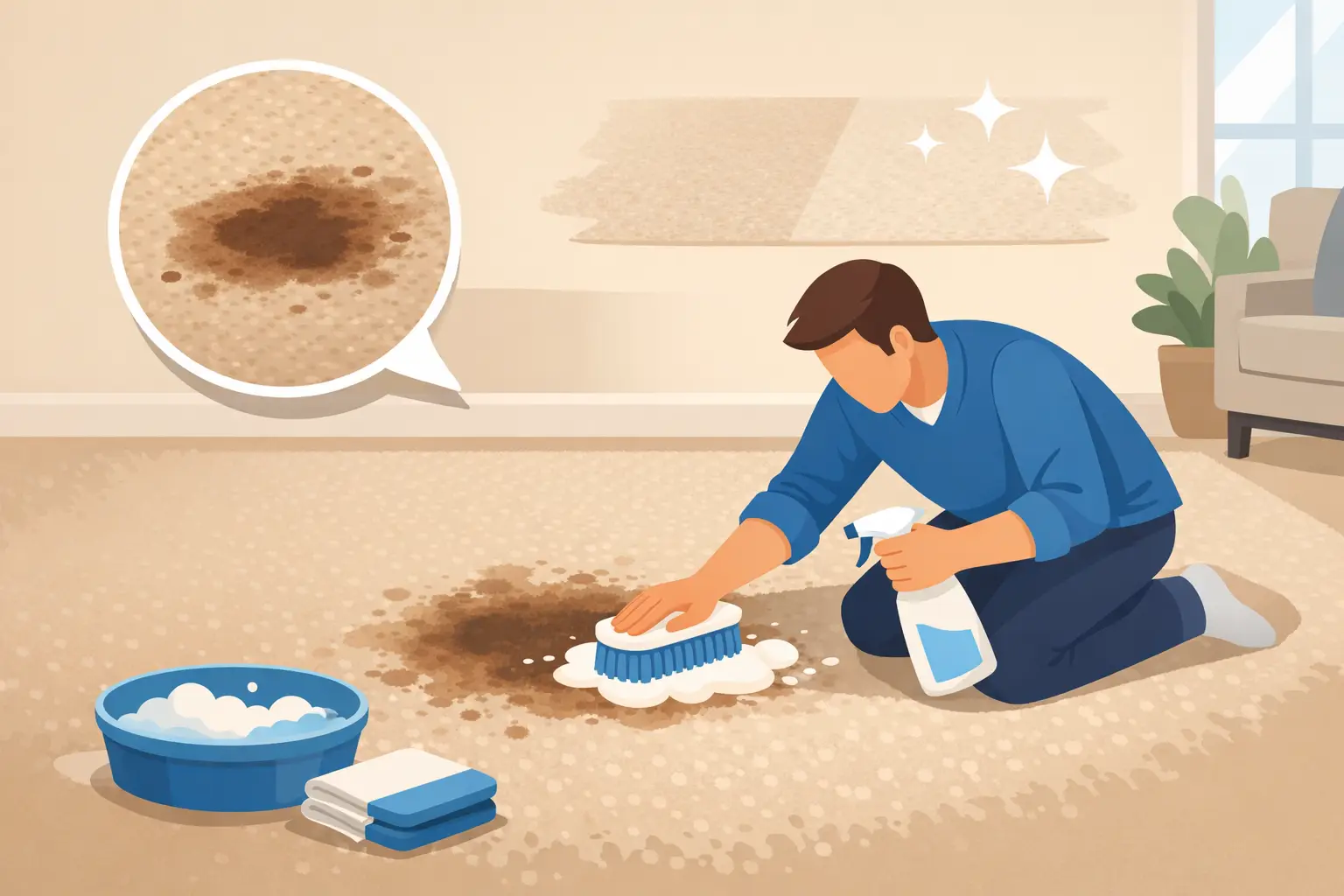
Old carpet stains are more than an eyesore. Over time, they oxidize, bind deeper into the fibres, trap dust, and can develop a persistent odour. Knowing how to remove old stains from carpet the right way means choosing the correct treatment for each stain type and avoiding harsh home remedies that damage the textile more than they clean it. Whether you are dealing with a set-in spill in a Montreal condo or a dried stain on an area rug in Laval, the approach matters as much as the product.
Why Old Carpet Stains Are Harder to Treat
A carpet acts like a dense textile surface. Liquids absorb both at the surface and deep within the fibres, sometimes reaching the underlay. Once the stain dries, the residue locks into place, attracts more dirt, and can create a halo effect around the treated area. Understanding this is the first step in any effective set-in carpet stain removal method.
The longer a stain sits, the more its composition changes. Proteins, tannins, fats, and dyes all behave differently over time. An old food stain, a pet urine mark, or a dried sugary drink each requires a different approach. There is no single solution that works safely across all stain types and all fibre types. This is especially true when trying to remove dried stains from an area rug, where fibres can be more delicate.
How to Remove Old Stains from Carpet Without Making Them Worse
The goal is not to work fast. It is to avoid irreversible mistakes. Scrubbing hard, soaking the area, or layering multiple cleaning products are among the most common errors. An oversaturated carpet takes much longer to dry and is prone to odour and residue resurfacing, which complicates any set-in carpet stain removal effort afterward.
Start by vacuuming the stained area thoroughly to remove loose particles. Then lightly blot with a clean white cloth that is barely damp. This quick test tells you whether the residue lifts, whether the carpet colour bleeds, or whether the fibre holds stable. Always work from the outer edge toward the centre to contain the stain and prevent spreading.
Use minimal product, allow it to work according to the stain type, then blot and absorb rather than rub. The objective is to transfer the soil from the textile onto the cloth, not to push it deeper. This disciplined approach is foundational when learning how to remove old stains from carpet without causing further damage.
Set-In Carpet Stain Removal Methods by Stain Type
Food, Coffee, and Beverage Stains
Coffee, tea, wine, juice, and sauces leave behind pigments and tannins that penetrate deeply into carpet fibres. A pH-controlled textile cleaner typically outperforms improvised mixtures that are too acidic or too alkaline. If the area has already been treated multiple times, soap residue may be attracting more dirt and darkening the zone. In that case, extraction before detaching is often the better starting point for set-in carpet stain removal.
Grease and Oil-Based Stains
Oils, cosmetics, creams, and shoe scuffs do not dissolve with water alone. A degreaser formulated for textile fibres is usually required, applied with a controlled contact time. Too much product leaves a film that attracts dirt. Too little does nothing. This is a delicate balance that makes removing dried stains from an area rug particularly challenging without professional-grade tools.
Organic Stains and Odours
Urine, vomit, blood, and similar accidents require treatment both at the visible surface and in the invisible residue below that causes lingering odour. Enzyme-based solutions are often effective but must be compatible with the specific fibre. On older organic stains, the odour can originate from the underlay rather than the surface. A surface-only clean may improve the appearance while leaving the source untouched, which is a key limitation of DIY set-in carpet stain removal methods.
The Most Common Mistakes Homeowners Make
Using too much water is the most frequent error. A saturated carpet retains moisture, develops a musty smell, and can cause residues to wick back up to the surface. This applies to residential carpets in South Shore homes and high-traffic commercial spaces alike.
Mixing multiple products while removing dried stains on area rug is equally problematic. Combining vinegar, dish soap, baking powder, foam cleaners, and fabric deodorizer creates more residue than it removes. It can also complicate any future professional treatment. Scrubbing with a stiff brush is another mistake: some fibres mat, flatten, or lighten under mechanical pressure, leaving the area visibly worn even after the stain fades.
When to Call a Professional for Old Carpet Stains
There are situations where home methods are simply not enough, and recognizing them early saves time and protects your carpet. If the stain is old, large, odorous, or has already resisted multiple treatments, a professional approach is the more reliable path. Homeowners across Montreal, Laval, North Shore, and South Shore frequently contact Nettoyage Imperial precisely because earlier attempts made the stain more difficult to treat, not less.
A qualified technician identifies the fibre type, assesses the depth of contamination, selects the right detaching agent, and controls both rinsing and extraction. Professional equipment also extracts far more residue than household tools, reducing drying time and preventing stain recurrence. This level of precision is what makes professional set-in carpet stain removal methods consistently more effective, especially on light-coloured carpets and high-end area rugs.
Transparency matters here: not every old stain can be fully eliminated. If the dye has permanently altered the fibre, or if contamination has reached the underlay over a long period, results may be partial. However, a proper professional treatment almost always improves appearance significantly, reduces or eliminates odour, and extends the life of the carpet by stopping repeated DIY attempts that gradually weaken the fibres.
What is the best way to remove old stains from carpet at home?
The most effective home approach involves vacuuming the area first, then blotting gently with a barely damp cloth to test the stain. Use a small amount of a pH-neutral textile cleaner, work from the edges inward, and blot rather than scrub. Avoid soaking the carpet. For stubborn or odorous stains, professional set-in carpet stain removal methods are more reliable and less likely to cause fibre damage.
Can dried stains on an area rug always be fully removed?
Not always. If the stain has permanently altered the dye in the fibre, or if aggressive household products have already caused discolouration, full removal may not be possible. A professional treatment can still significantly improve the appearance of the rug and eliminate associated odours, but setting realistic expectations upfront is important.
Why does a carpet stain come back after cleaning?
Stain recurrence typically happens when residues remain deep in the fibre and wick back to the surface as the carpet dries. This is usually caused by oversaturation or inadequate extraction. Professional equipment with high-powered extraction reduces this risk significantly. It is one of the most important reasons to use proper set-in carpet stain removal techniques rather than DIY methods involving excess water.
How do I remove dried stains from an area rug without damaging delicate fibres?
Natural fibre rugs such as wool require extra care. Avoid harsh chemicals, acidic mixtures, and stiff brushes. Test any cleaner on a hidden area first. Blot gently and never scrub. For anything beyond a very minor stain, contacting a specialist in carpet and area rug cleaning in Montreal or Laval is the safest choice to protect the integrity of the rug.
How often should carpets be professionally cleaned in Montreal homes?
For households with children, pets, or high foot traffic, a professional deep clean once or twice per year is generally recommended. Regular maintenance prevents old stains from accumulating and helps maintain better indoor air quality. Carpets trap fine dust, allergens, and residues that are not always visible, making periodic deep cleaning an essential part of home care in the Greater Montreal area.
Key Takeaways
- How to remove old stains from carpet effectively starts with identifying the stain type before choosing any cleaning product or method.
- Set-in carpet stain removal methods require working from the edge inward, using minimal product, and blotting rather than scrubbing to avoid fibre damage.
- Remove dried stains from an area rug with caution: natural fibres such as wool are especially vulnerable to aggressive chemicals and stiff brushes.
- Using too much water, mixing household products, or scrubbing hard are the three most common mistakes that make old carpet stains harder to treat.
- Professional carpet stain removal equipment extracts deeper residues, reduces drying time, and significantly lowers the risk of stain recurrence.
- Not every old stain can be fully removed, but a professional treatment will almost always improve appearance, eliminate odour, and extend the life of the carpet.