

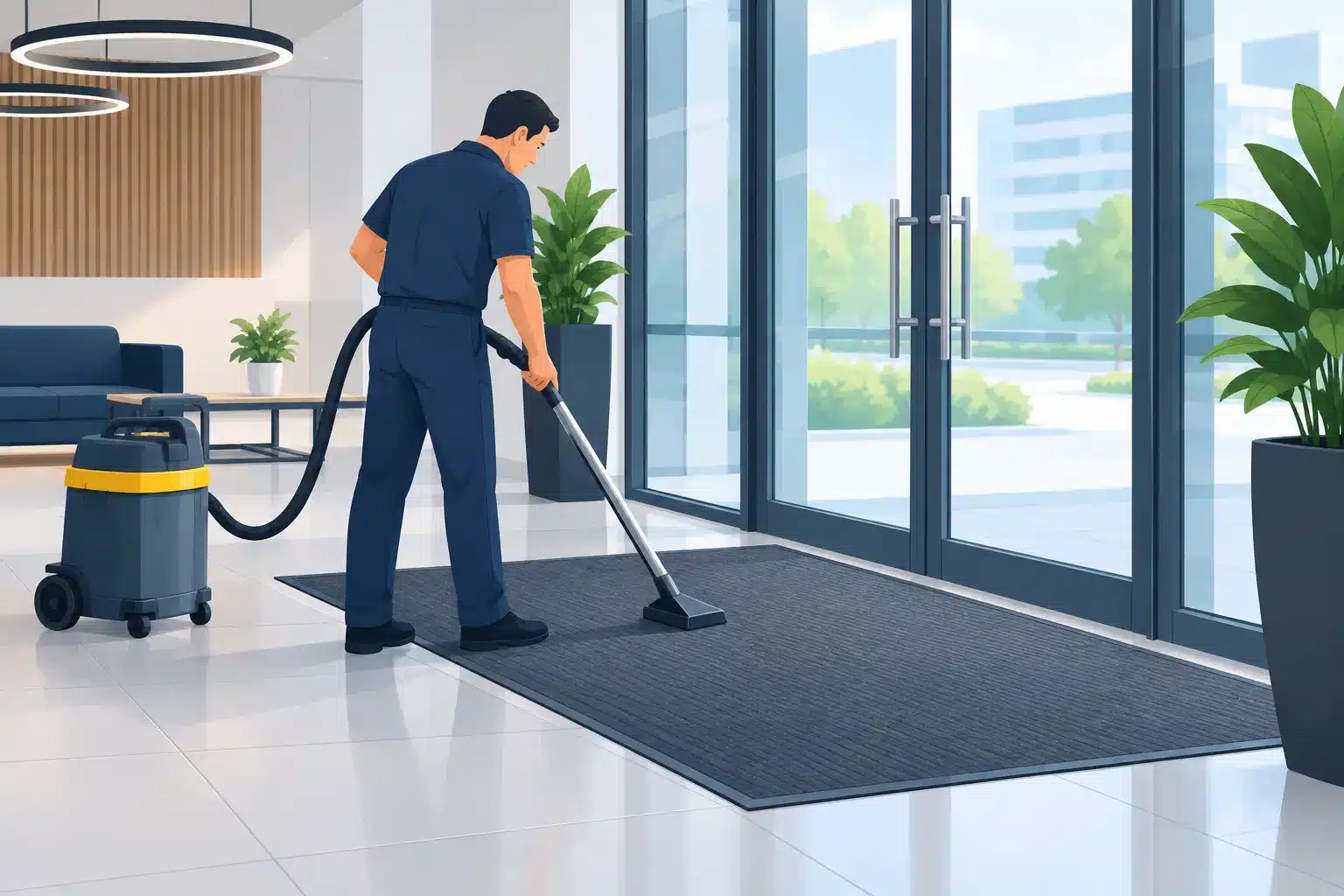
A busy entrance can see hundreds of pairs of shoes cross the same section of carpet in a single day. Sand, calcium, water, fine dust and organic residue settle there quickly, often without the carpet looking dirty right away. Commercial carpets therefore do more than improve the appearance of a space: they hold back part of the contaminants that would otherwise circulate through offices, stores, rental buildings and healthcare facilities.
When they are maintained with the right method, they contribute to a polished image, a healthier environment and a longer lifespan for the flooring. When they are neglected, fibers get crushed, stains set in, odors take hold and replacement comes too early.
Why Commercial Carpets Get Dirty So Quickly
A commercial carpet is subject to different stresses than a residential carpet. Traffic is more constant, walkways are predictable and dirt comes from several sources: outdoor entrances, eating areas, hallways, workstations, waiting rooms and elevators. In winter, abrasives, de-icing salt and moisture put additional pressure on the fibers.
Visible dirt is only part of the problem. Dry, abrasive particles work their way to the base of the fibers. With every step, they act like sandpaper and speed up wear. Liquids, for their part, can create rings or encourage odors if drying is insufficient. Superficial maintenance can improve the appearance in the short term without truly removing what is damaging the carpet.
The composition of the flooring must also be considered. Nylon carpets generally tolerate regular professional cleaning well, while certain blends, modular carpet tiles, natural fibers or adhesive backings require more precise settings. Temperature, moisture, the product used and extraction power are not chosen at random.
Commercial Carpets Need a Maintenance Plan
A good result rarely depends on a single intervention. Instead, it relies on a program adapted to the level of traffic, the type of carpet and the activities carried out on site. A clinic, a daycare, a hotel and an administrative office do not accumulate the same contaminants and cannot follow the same schedule.
Daily Maintenance Limits Damage
Frequent vacuuming remains the first step. It removes dry dust before it is trampled into the fibers. In a busy entrance, hallway or reception area, daily vacuuming is often justified. In less-used areas, maintenance several times a week may be enough.
Entrance mats deserve special attention. They are the first barrier against outdoor dirt. When they are saturated, they stop holding back moisture and particles, which then end up on interior surfaces. Planning a sufficiently long matting area at the entrance reduces a significant part of the building’s maintenance load.
Treating Stains Quickly Protects Appearance
Coffee, sugary drinks, ink, food grease and shoe marks should be treated as soon as possible. The longer a liquid stays in the fibers, the more likely it is to migrate toward the carpet backing and become difficult to remove.
However, you should avoid scrubbing vigorously or using a random household product. Some stain removers leave sticky residues that attract even more dirt. Others can discolor a fiber, change the texture or leave a ring. A safe method is to blot the excess, identify the nature of the stain and use a product compatible with the material. For a large or unknown stain, calling in a technician remains the most cautious option.
Deep Cleaning Removes What the Vacuum Cannot Reach
Professional cleaning targets the contaminants that build up in the fibers and near their base. Depending on the carpet, the condition of the premises and operating constraints, different approaches can be used: controlled hot water extraction, low-moisture cleaning, encapsulation or targeted treatment of heavily soiled areas.
Hot water extraction is often effective for dislodging embedded dirt and residue. However, it must be performed with powerful extraction and a controlled drying time. A carpet left too damp can encourage odors, attract dust again or cause problems with the backing. In offices that need to reopen quickly, a low-moisture solution may be more appropriate. The best choice therefore depends as much on the cleaning need as on the time available before activities resume.
How Often Should a Commercial Carpet Be Cleaned?
There is no universal frequency, but traffic patterns offer a reliable guide. A very busy entrance, a retail store or a building common area may require quarterly deep cleaning, or even more often depending on the season. Offices with moderate traffic can often plan an intervention every six to twelve months, with interim treatment of walkways.
Waiting until the carpet looks completely dirty is not the most cost-effective strategy. At that stage, the fibers have already undergone repeated abrasion, and some deposits may require several passes or may not disappear entirely. A preventive program stabilizes costs and keeps spaces presentable at all times.
Transition periods are especially useful for planning an intervention. After winter, the carpet may contain salt, sand and damp residue. After a period of renovations, a move or corporate events, deep cleaning also helps restore a clean environment before occupants or customers return.
Signs That Professional Cleaning Is Needed
A carpet does not need to be covered in stains to require an intervention. A persistent odor, a rough texture, gray areas in walkways, marks that reappear after drying or a color that has turned dull are telltale signs. Complaints related to dust or air quality can also justify an assessment, especially in enclosed and heavily occupied spaces.
Recurring stains sometimes indicate residue below the surface. Odors can come from liquids that have reached the backing, poorly controlled moisture or a previous cleaning that was not extracted thoroughly enough. In these situations, masking the odor with a fragrance solves nothing. You need to locate the source and apply the appropriate method.
Choosing a Commercial Carpet Cleaning Service
Price is a factor to consider, but it should not be the only criterion. A qualified provider begins by assessing the fibers, the type of soiling, the priority areas and the building’s constraints. This step avoids using a method that would be too aggressive, too wet or ineffective for the flooring in place.
Also ask how drying time will be managed, which products will be used and whether the work can be scheduled outside business hours. For a property manager or a business, scheduling flexibility limits disruptions and makes it easier to keep operations running. A clear quote should explain the scope of the work, the planned treatments and the applicable fees.
Since 1995, Nettoyage Imperial has supported businesses, property managers and owners in Montreal, Laval, the North Shore and the South Shore with processes adapted to the surfaces and the reality of each establishment. The goal is not simply to make a carpet look cleaner for a few days, but to remove dirt safely in order to preserve the fibers, the hygiene of the premises and the client’s investment.
Preserving Results Between Two Interventions
After professional cleaning, a few habits make a concrete difference. Regular vacuuming, immediate treatment of spills and the use of clean entrance mats slow the return of dirt. It is also useful to quickly report any water infiltration or liquid damage: the faster the response, the lower the risk of odor or deterioration.
A well-maintained commercial carpet should not draw attention. It should quietly support the cleanliness, comfort and professionalism of the space. By planning its maintenance before wear becomes obvious, you protect both the appearance of the premises and the lifespan of your surfaces.
How often should commercial carpet be professionally cleaned?
There is no universal frequency, but traffic patterns are a reliable guide. A very busy entrance, a retail store or a building common area may need quarterly deep cleaning, or more often depending on the season. Offices with moderate traffic can often plan an intervention every six to twelve months, with interim treatment of walkways.
Why do commercial carpets get dirty so fast?
Traffic is constant and dirt comes from many sources, including outdoor entrances, eating areas, hallways, workstations, waiting rooms and elevators. In winter, abrasives, de-icing salt and moisture add pressure on the fibers. Dry, abrasive particles settle at the base of the fibers and act like sandpaper with every step.
What is the best method for cleaning commercial carpet?
It depends on the carpet, the condition of the premises and operating constraints. Options include controlled hot water extraction, low-moisture cleaning, encapsulation or targeted treatment of heavily soiled areas. Hot water extraction is often effective but needs powerful extraction and controlled drying, while a low-moisture solution may suit offices that must reopen quickly.
What are the signs that a commercial carpet needs professional cleaning?
A persistent odor, a rough texture, gray areas in walkways, marks that reappear after drying or a dull color are telltale signs. Complaints about dust or air quality can also justify an assessment, especially in enclosed and heavily occupied spaces.
What should you look for in a commercial carpet cleaning service?
Price should not be the only criterion. A qualified provider assesses the fibers, the type of soiling, the priority areas and the building’s constraints. Ask how drying time will be managed, which products will be used and whether work can be scheduled outside business hours, and expect a clear quote covering the scope, treatments and fees.
Key Takeaways
- Commercial carpets hold back sand, salt, water and dust that would otherwise spread through the building. Neglect leads to crushed fibers, set-in stains, odors and early replacement.
- Vacuum daily in busy entrances, hallways and reception areas, keep entrance mats clean and treat stains quickly by blotting and using a product compatible with the material.
- Deep cleaning methods (hot water extraction, low-moisture cleaning, encapsulation, targeted treatment) are chosen according to the carpet, the premises and the time available before reopening, with controlled drying.
- High-traffic areas may need quarterly deep cleaning, while moderate-traffic offices can often plan cleaning every six to twelve months. After winter, renovations, a move or events are good times to schedule it.
- Choose a provider that assesses the fibers first, explains drying and products, offers flexible scheduling and gives a clear quote.