

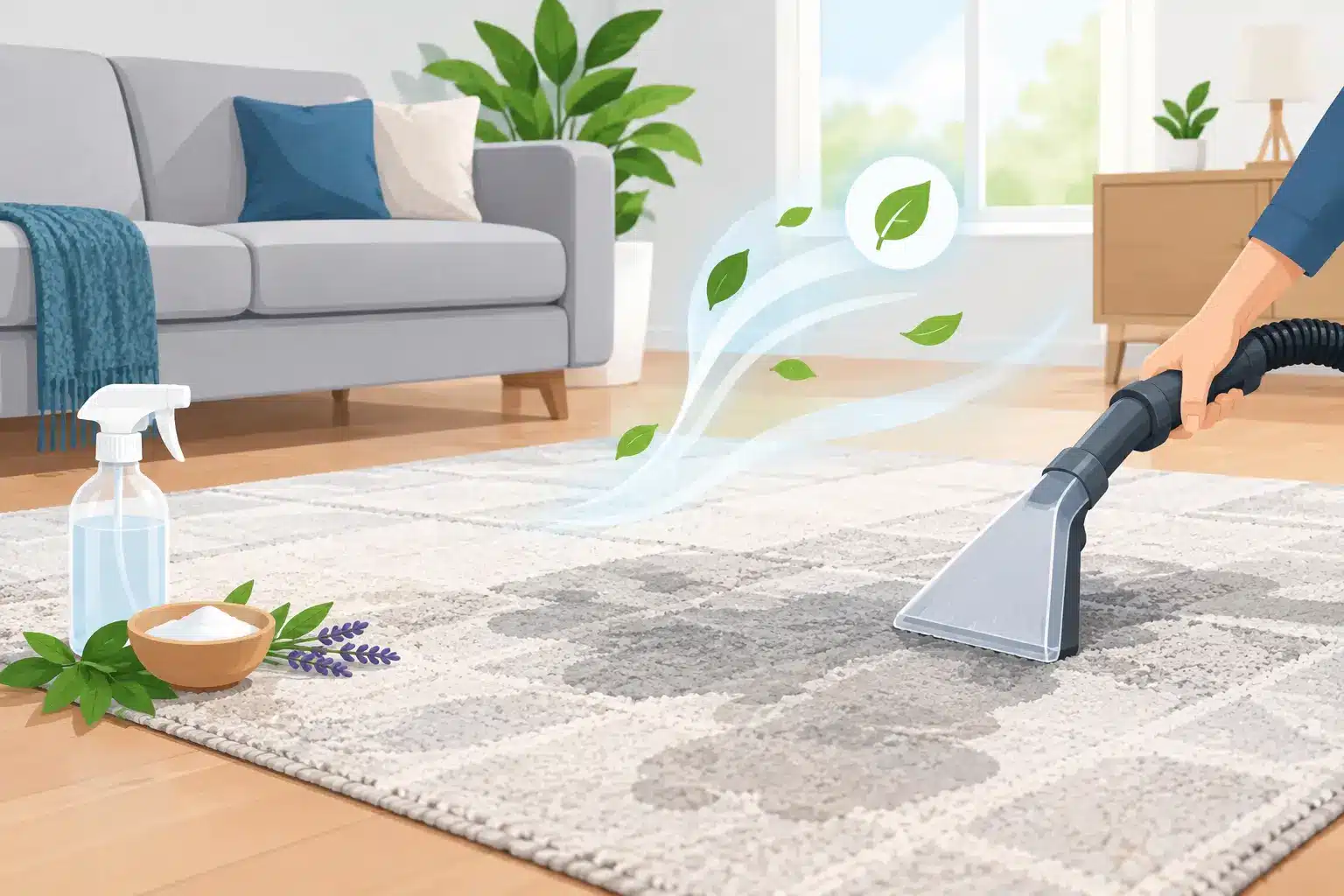
A musty smell rising from a carpet after water damage, a wash or an infiltration is not just a minor nuisance. It almost always indicates that moisture is still present in the fibers, the underlay or the floor. To remove odors from damp carpets for good, you therefore need to dry the carpet thoroughly and treat the cause, rather than masking the smell with a fragrance.
In a home as in a commercial space, a quick response limits the risk of mold, protects materials and helps preserve indoor air quality. The method, however, depends on the amount of water, how old the damage is, the type of carpet and what got the surface wet.
Why a Damp Carpet Smells Bad
The odor appears when water stays trapped long enough for bacteria and micro-organisms to develop. The carpet may feel dry to the touch while its backing, its padding or the underside of the floor still hold a lot of moisture. This is especially common after cleaning a carpet that was not ventilated enough, a window left open in the rain, a pet that urinated or a small plumbing leak that went unnoticed.
The nature of the water also matters. Clean water from a spilled glass or a small, recent leak can often be handled quickly. On the other hand, a sewer backup, a major outdoor infiltration or dirty water requires stricter precautions. In these situations, trying to save the carpet without a proper assessment can expose occupants to contaminants and allow odors to persist.
An earthy, sour or basement-like smell should be taken seriously. It can signal the beginning of mold, even when no visible trace appears on the surface.
Removing Odors from Damp Carpets: Act in the Right Order
The right reflex is to remove the water before applying any product. Deodorizers, scented powders and household cleaners can temporarily cover the problem, but they remove neither the moisture nor the organic residue responsible for the odor.
1. Stop the Source of Moisture
First, check what got the carpet wet. Shut off the water supply in the event of a leak, move the spilled container, fix an infiltration around a window or check for condensation. If the source remains active, drying will only bring a temporary result.
Next, remove the furniture sitting on the damp area, when this can be done safely. Wood or metal legs can stain the carpet and slow evaporation. Do not walk on the area unnecessarily, because pressure pushes the water deeper into the fibers and the padding.
2. Extract the Water, Do Not Just Blot the Surface
Clean towels can absorb part of the water during a small, recent incident. Press them firmly onto the carpet and replace them as soon as they are saturated. Avoid rubbing: this motion spreads dirt, distorts certain fibers and can set a stain.
For a heavily soaked carpet, mechanical extraction is generally necessary. A wet and dry vacuum can help if the water is clean and the appliance is used according to the manufacturer’s instructions. However, it does not replace high-power professional extraction, especially when the padding is affected. A carpet can hold several liters of invisible water below the surface.
3. Speed Up Drying in a Controlled Way
Increase air circulation with fans pointed toward the carpet, ideally combined with a dehumidifier. In the cold season, heating can help, but an overheated room without ventilation is not always enough to remove moisture. The goal is to keep the air moving and lower the ambient humidity level.
Gently lift a corner of the carpet only if you know how to put it back in place and if doing so will not damage the fastenings. If the carpet is glued down, stretched or installed over a thick underlay, improper handling can cause ripples, detachment or shrinkage. Wool carpets, old rugs and natural fibers require particular caution: excessive heat or poorly controlled drying can distort them.
4. Clean the Source of the Odor After Initial Drying
Once most of the water has been extracted, appropriate cleaning removes the residue responsible for the odors. For a food stain or light soiling, use a product compatible with the fiber, in a small amount and after a discreet test. Always follow the instructions and avoid soaking the area again.
Baking soda can absorb some surface odors on a carpet that is already dry, but it is not a treatment for moisture or mold. It must be vacuumed up completely and can be difficult to remove from thick carpets. Vinegar is also often recommended, but its acidity is not suitable for all materials and its smell can add to the problem if the carpet stays damp. Never mix household products together.
When it comes to pet urine, enzymatic products designed for this type of residue are usually more relevant than a fragrance or a general disinfectant. The product still has to reach the contaminated depth without overwetting the carpet.
When Should You Call a Professional?
A specialized intervention is recommended if the odor persists after 24 to 48 hours of active drying, if the carpet is damp over a large area or if the water has reached the underlay. It is also the most cautious choice after an appliance leak, an infiltration, contaminated water damage or the presence of dark marks and mold.
A qualified technician can assess the moisture level under the carpet, select a method that is safe for the fibers and perform deep extraction. Depending on the condition of the premises, it may be necessary to lift the carpet, dry the floor and replace the underlay. This decision is not excessive: an underlay that remains contaminated can keep producing odors long after the carpet surface looks clean.
Since 1995, Nettoyage Imperial has served homeowners, property managers and businesses in Montreal, Laval, the North Shore and the South Shore with methods adapted to carpets, rugs and upholstered furniture. A professional assessment makes it possible to distinguish a surface problem from deeper moisture, without unnecessarily applying an aggressive solution.
Preventing Odors from Coming Back
After correcting the problem, keep an eye on the area for a few days. Run your hand over the carpet and check whether an odor returns when the room is closed. An odor that reappears in the morning or in humid weather often reveals that drying is not complete.
In higher-risk rooms, such as the basement, the entrance or spaces near a patio door, maintain good ventilation and a reasonable humidity level. Have minor leaks checked quickly, clean spills as soon as they happen and avoid placing a decorative rug on wall-to-wall carpet that is still damp. Carpets and rugs installed in walkways also benefit from periodic cleaning, because accumulated dust and residue hold odors more easily.
A properly dried carpet should not give off a persistent odor. If the problem comes back despite your efforts, do not try to cover it up: have the hidden moisture identified before it causes further damage to your flooring or the air you breathe.
Why does my carpet smell after getting wet?
The odor appears when water stays trapped long enough for bacteria and micro-organisms to develop. The carpet may feel dry to the touch while its backing, its padding or the underside of the floor still hold a lot of moisture.
How do you get rid of a damp carpet smell?
Work in the right order: stop the source of moisture, extract the water instead of just blotting the surface, speed up drying with fans and a dehumidifier, then clean the source of the odor with a product compatible with the fiber. Deodorizers and scented powders only cover the problem.
Does baking soda or vinegar remove wet carpet odors?
Baking soda can absorb some surface odors on a carpet that is already dry, but it does not treat moisture or mold, must be vacuumed up completely and can be hard to remove from thick carpets. Vinegar’s acidity is not suitable for all materials, and its smell can add to the problem if the carpet stays damp.
Can a musty carpet smell mean mold?
Yes. An earthy, sour or basement-like smell should be taken seriously, because it can signal the beginning of mold even when no visible trace appears on the surface.
When should you call a professional for a damp carpet?
Call a professional if the odor persists after 24 to 48 hours of active drying, if the carpet is damp over a large area or if the water has reached the underlay. It is also the safest choice after an appliance leak, an infiltration, contaminated water damage or the presence of dark marks and mold.
Key Takeaways
- A musty smell from a carpet almost always means moisture is still present in the fibers, the underlay or the floor, so the cause must be treated rather than masked.
- Act in the right order: stop the moisture source, extract the water, dry with fans and a dehumidifier, then clean the source of the odor.
- Avoid rubbing, overwetting and mixing household products. Baking soda and vinegar have limits, and enzymatic products are better suited to pet urine.
- Take wool carpets, old rugs, natural fibers and glued or stretched carpets into account, since poor handling or excessive heat can damage them.
- Call a professional if the odor lasts beyond 24 to 48 hours of active drying, the damp area is large, the underlay is wet or the water was contaminated, and monitor the area for a few days afterward.