

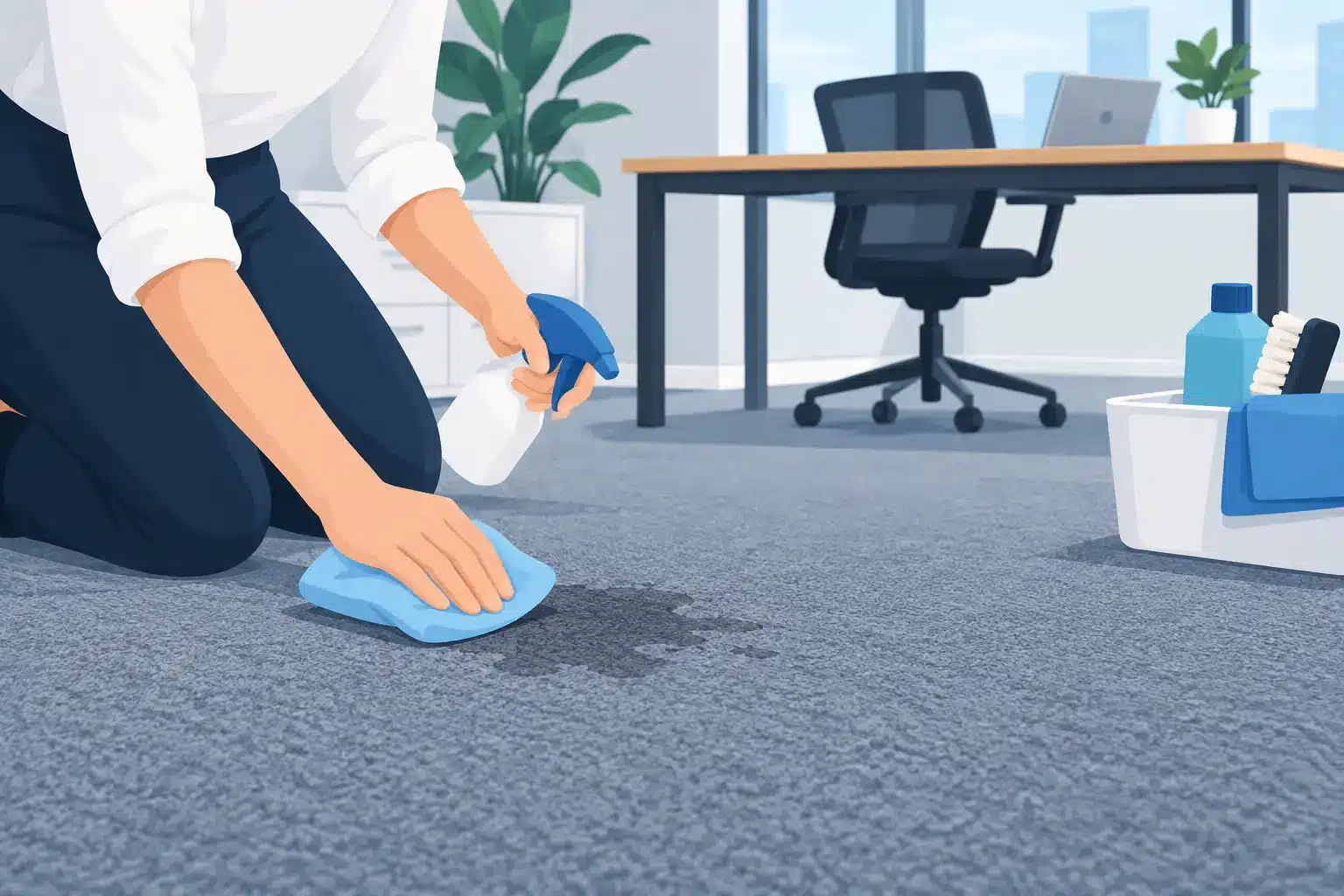
A coffee stain next to a workstation, a muddy footprint at the entrance or a spilled drink after a meeting can quickly give an impression of neglect. To remove stains from an office carpet effectively, you need to work methodically: absorb, identify the type of stain and use a product that is compatible with the fibers. The wrong reflex, such as scrubbing vigorously or pouring on an untested stain remover, can spread the stain, discolor the carpet or create a lasting ring.
In a professional environment, what is at stake goes beyond appearance. A stained carpet holds more dust, sticky residue and sometimes odors. It can also wear out prematurely in high-traffic areas. A quick, appropriate response therefore protects both the image of the premises and the lifespan of the flooring.
Before Removing Stains from an Office Carpet: Identify the Stain
Identify the Stain and Absorb the Excess
Not all stains are treated the same way. A sugary drink, a greasy stain, ink, mud or food residue each react differently to water, degreasers and enzymatic cleaners. The first step is to remove the excess without pushing it into the fibers. Use a clean white cloth or unprinted paper towels, then blot from the edge of the stain toward its center.
Avoid Soaking the Carpet
Avoid wetting the carpet heavily. Too much water can pass through the carpet backing, reach the underlay and prolong drying time. In an office, this residual moisture encourages odors and can make it harder to put the space back into use. It is better to work in small amounts and absorb after each application.
Check the Fibers and Test First
Before using any product, check the manufacturer’s care guide if possible. Commercial carpets can be made of nylon, polypropylene, wool or blended fibers. Wool and certain dyes require particular caution: a product that is too alkaline or oxidizing can change the color and texture. Always test in a discreet corner, then wait for the area to dry before continuing.
The Right Steps for Each Type of Stain
Coffee, Tea, Juice and Soft Drinks
For a fresh stain from coffee, tea, juice or a fizzy drink, start by absorbing the liquid. Then blot with a cloth lightly moistened with lukewarm water, without saturating the carpet. If some color remains, a textile cleaner suited to the fibers may be needed. Rinse very lightly with a damp cloth and dry by blotting to limit residue.
Grease Stains
A grease stain, often caused by a meal eaten at a workstation or food packaging, calls for a different approach. Water alone does not dissolve oil. First, remove solid particles with a spoon or a non-sharp spatula. Then apply a degreaser designed for textiles, in a limited amount, and follow its contact time. Insufficient rinsing leaves a film that attracts dust again: this is a common cause of a stain that reappears a few days later.
Mud
For mud, it is best to let it dry completely before intervening. Vacuuming dry mud removes a large share of the particles without spreading them. Any remaining residue can then be treated with an appropriate textile product. This method is especially useful near entrances, hallways and busy common areas.
Ink, Marker and Correction Fluid
Ink, marker and correction products require more caution. Some solvents can set the stain, make colors migrate or damage the adhesive of the carpet backing. Do not apply alcohol, acetone or an aggressive household product without first confirming that it is compatible. When a colored stain is old or has spread across several fibers, a professional evaluation remains the safest solution.
Mistakes That Turn a Stain into a Ring
Scrubbing and Colored Cloths
Scrubbing is the most common mistake. It spreads the fibers apart, pushes the contaminant deeper and enlarges the visible area. Patient blotting is less spectacular but far more effective. Colored cloths should also be avoided: with moisture and product, their dye can transfer onto a light-colored carpet.
Homemade Remedies
Homemade remedies should be used with restraint. Vinegar, baking soda and dish soap may seem harmless, but their effectiveness depends on the stain and the material. A poorly dosed mixture can leave a sticky residue or change the pH of the fibers. Baking soda can also be difficult to extract once moistened, especially in a dense carpet.
Too Much Stain Remover
Too much stain remover causes a similar problem. More product does not mean a better result. If the product is not properly extracted, it acts like a dirt magnet. The area looks clean at first, then gradually darkens with foot traffic and the buildup of dust.
Masking Odors
Finally, do not mask a persistent odor with an air freshener. A smell of coffee, milk, food or dampness often signals a residue that is still present in the carpet or the underlay. You need to treat the source, extract the contaminants and ensure proper drying.
When Professional Cleaning Becomes Necessary
Spot stain removal is suitable for recent, limited incidents. However, it reaches its limits when stains are old, greasy, repeated or spread across walkways. The same applies when a carpet shows darker traffic lanes, a persistent odor, multiple rings or a dull appearance despite daily maintenance.
Professional cleaning begins by identifying the fibers, the condition of the carpet and the contaminants present. Depending on the carpet and how soiled it is, the technician may use a targeted pretreatment, controlled agitation, hot-water extraction or a low-moisture method. The choice of method matters: an office carpet must be cleaned deeply without compromising its drying or needlessly interrupting the company’s activities.
Professional extraction removes not only the visible stain but also part of the embedded residue, fine dust and accumulated allergens. It is especially relevant in open-plan offices, waiting rooms, healthcare facilities, retail spaces and high-traffic buildings. Planned maintenance also reduces the need for intensive treatments and helps preserve a uniform appearance across surfaces.
At Nettoyage Imperial, interventions are adapted to the type of carpet, the traffic in the premises and the scheduling constraints of businesses in Montreal, Laval, the North Shore and the South Shore. The goal is clear: treat stains without taking unnecessary risks with the fibers, while limiting the downtime of workspaces.
Preventing New Stains in Workspaces
A well-maintained carpet starts with a simple routine. Entrance mats should be vacuumed and cleaned regularly, because they trap much of the sand, salt and moisture brought in from outside. In winter, this upkeep is even more important in the Montreal context, where the abrasion caused by particles can speed up fiber wear.
Frequent vacuuming is essential, especially in corridors, near printing stations and around eating areas. It removes dry particles before they are crushed into the carpet. Quick treatment of incidents, combined with periodic professional cleaning, keeps the carpet looking well maintained without waiting for stains to become permanent.
Also keep a response kit within reach, containing white cloths, absorbent paper towels, gloves and a textile stain remover approved for your type of carpet. This preparation avoids costly improvisation when an accident happens. A clean office carpet does not go unnoticed: it quietly supports employee comfort, a welcoming experience for visitors and the perceived quality of your work environment.
How do you remove a coffee stain from office carpet?
Start by absorbing the liquid, then blot with a cloth lightly moistened with lukewarm water, without saturating the carpet. If some color remains, a textile cleaner suited to the fibers may be needed. Rinse very lightly with a damp cloth and dry by blotting to limit residue.
How do you get a grease stain out of office carpet?
Water alone does not dissolve oil. First, remove solid particles with a spoon or a non-sharp spatula. Then apply a degreaser designed for textiles, in a limited amount, and follow its contact time. Rinse well, because an insufficient rinse leaves a film that attracts dust again.
Can you use vinegar or baking soda to clean office carpet stains?
These remedies should be used with restraint. Their effectiveness depends on the stain and the material. A poorly dosed mixture can leave a sticky residue or change the pH of the fibers, and baking soda can be difficult to extract once moistened, especially in a dense carpet.
Why does a carpet stain come back after cleaning?
Too much stain remover that is not properly extracted acts like a dirt magnet, and an insufficient rinse leaves a film that attracts dust again. The area looks clean at first, then gradually darkens with foot traffic and the buildup of dust.
When should you call a professional to clean a stained office carpet?
Spot stain removal suits recent, limited incidents. A professional is the better choice when stains are old, greasy, repeated or spread across walkways, or when the carpet shows darker traffic lanes, a persistent odor, multiple rings or a dull appearance despite daily maintenance.
Key Takeaways
- Absorb first and blot from the edge of the stain toward the center with a white cloth or unprinted paper towels. Never scrub.
- Identify the type of stain (sugary drink, grease, mud, ink) before choosing a product, and always test in a discreet corner first.
- Use small amounts of water and stain remover, then extract and dry well, so you avoid moisture in the underlay, odors and rings.
- Be careful with homemade remedies, solvents (alcohol, acetone) and wool or dyed carpets, which can react badly.
- Call a professional when stains are old, greasy, repeated or spread across walkways, or when you see darker lanes, persistent odor or multiple rings.