

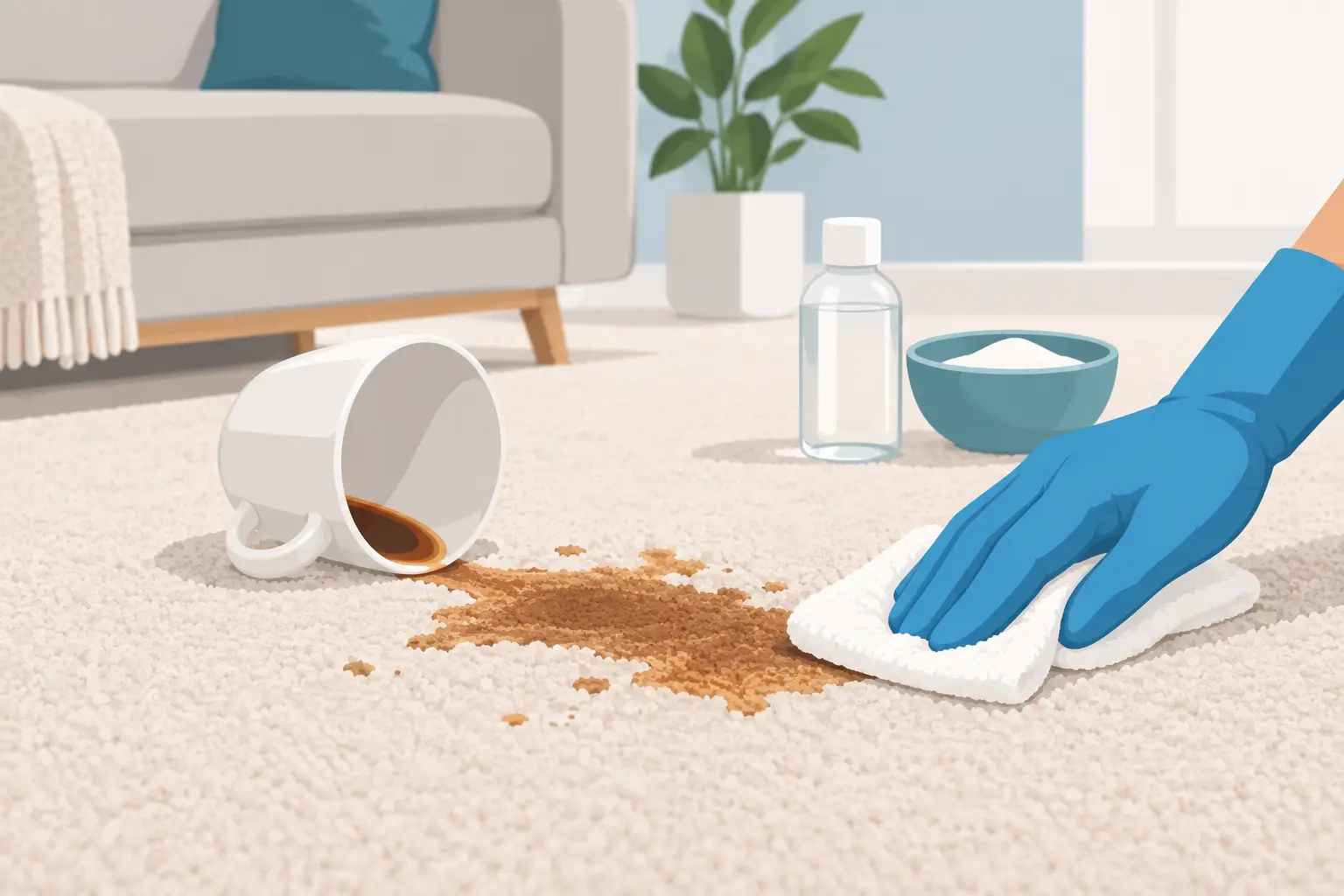
A cup spilled on a carpet is more than a small brown mark. Coffee contains tannins that bind to the fibers, and the situation becomes more complex when it contains milk, cream, or sugar. The best treatments for coffee stains on carpet therefore rest on two simple principles: act quickly and choose a method that is compatible with the fiber. The right move can save a carpet; the wrong product can leave a ring, discolor the surface, or set the residue even deeper.
Why Coffee Stains Set So Quickly
Black coffee mainly leaves a tannin discoloration. These natural pigments cling to textile fibers, especially when the liquid dries or is exposed to heat. On synthetic wall-to-wall carpet, the stain is often easier to lift if it is treated quickly. On a wool rug, or a cotton, viscose, or silk rug, caution is essential: overly alkaline solutions, hot water, and rubbing can alter the colors or distort the fibers.
Milk and sugar add another problem. They can leave a sticky feel, attract dirt, and, if moisture lingers, cause an odor. A stain that seems to disappear after a surface cleaning can therefore reappear a few days later. This is common when the liquid has reached the carpet backing or the underpad and wicks back up during drying.
The Right Reflex in the First Few Minutes
Start by absorbing the liquid, without rubbing. Use a clean white cloth, a sturdy paper towel, or a white towel, then press from the outside of the stain toward the center. Working in this direction limits the spread of the wet area. Replace the cloth as soon as it turns brown or damp.
Avoid pouring a large amount of water on the carpet. The goal is to dilute the remaining coffee, not to saturate the lower layers. After blotting, dab the area with a cloth lightly dampened with cold or lukewarm water. Repeat until the cloth picks up very little color, then press with a dry towel.
Do not use heat to speed up drying. A hair dryer, very hot water, or uncontrolled steam can set the tannins and make cleaning more difficult. Instead, encourage good air circulation in the room.
Best Treatments for Coffee Stains on Carpet by Type of Stain
The ideal treatment depends on what is in the coffee, the age of the stain, and the material. Before any application, always test the solution in an inconspicuous area. If color transfers to the cloth or the fiber changes appearance, stop the treatment.
Freshly Spilled Black Coffee
After the initial blotting, a small amount of mild detergent, free of bleach and dyes, can help loosen the residue. Mix a few drops into lukewarm water, dampen a white cloth, and dab gently. Then rinse by dabbing with another lightly damp cloth so that no soap is left in the carpet.
Rinsing is an often overlooked step. Yet detergent residue attracts dust and can form a darker area around the old stain. Finish with a dry towel and let the area dry completely before judging the result.
Coffee with Milk, Cream, or Sugar
When the drink contains fats or proteins, simple soapy water may not be enough. A carpet cleaner designed for food stains is generally more appropriate, provided it is compatible with the type of fiber. Follow the manufacturer’s instructions strictly and don’t increase the concentration in the hope of getting faster results.
Enzymatic products can be useful on organic residue, but they aren’t suitable for every carpet. Their action and contact time must be controlled, particularly on natural fibers and sensitive colors. On a valuable rug, it’s better not to keep trying one home remedy after another.
Dried or Old Stain
A dried stain takes more patience. Moisten it lightly with a clean cloth to soften the deposit, without soaking the carpet. Then work with a suitable cleaner in small applications, dabbing between each pass. Two moderate treatments are better than one aggressive treatment that risks leaving a visible line.
A persistent discoloration doesn’t always mean there is still coffee in the carpet. It can be caused by residue, by oxidation of the pigment, or by a change in the fiber’s original shade. In that case, adding product after product can make the problem worse. A professional diagnosis helps determine whether a residue needs to be extracted, a discoloration neutralized, or a risky intervention simply avoided.
Home Remedies to Use with Care
White vinegar is often suggested for coffee stains. Its acidity can help reduce some residues, but it isn’t universally safe. It can alter the carpet’s pH balance, affect certain dyes, and leave an odor if it isn’t rinsed well enough. It must never be mixed with bleach or any other household product.
Baking soda is sometimes useful for absorbing an odor once the carpet is dry, but it doesn’t replace extracting the coffee. Applied to a carpet that is still damp, it can form a paste that is hard to remove. As for dish soap, it should be used in a minimal amount and rinsed carefully. Lots of foam is not proof that it is working.
Oxygen-based stain removers can work on some tannin stains, but they carry a risk of fading on dark colors, printed rugs, and delicate fibers. The rule stays the same: test first, use a small amount, limit the contact time, and remove the product completely.
Mistakes That Turn a Stain into a Lasting Problem
Scrubbing vigorously is the most common mistake. It pushes the coffee deeper, spreads the stain, and can damage the twist of the fibers. Cut-pile carpets can then show an area that looks different from the rest, even once the color is removed.
You should also avoid rental cleaners or household machines used with too much water. Without enough extraction power, they can leave the carpet damp deep down. Prolonged moisture encourages odors, stains that return by wicking, and, in some cases, color bleeding from the backing or the underpad.
Finally, don’t mask a coffee odor with a fabric fragrance. If milk or sugar has soaked into the inner layers, the problem has to be extracted at the source. A fragrance doesn’t clean the fibers and can make it harder to assess the real odor.
When to Call for Professional Cleaning
A professional intervention is recommended if the stain is large, old, sticky, comes with an odor, or is on a wool rug, an oriental rug, viscose, or a high-end textile. It is also advisable when a home treatment has left a ring or the stain comes back after drying.
The work isn’t just about applying a stain remover. A technician assesses the type of fiber, the type of dye, how deeply the stain has penetrated, and which products have already been used. They can then use a controlled extraction method, with suitable solutions and proper rinsing. This approach reduces residue while limiting the risk to the carpet and to indoor air.
Since 1995, Nettoyage Imperial has treated residential and commercial carpets and rugs with particular attention to material safety, deep extraction, and proper drying. For households in Montreal, Laval, the North Shore, and the South Shore, this expertise is especially useful when an everyday accident threatens a carpet that is difficult or costly to replace.
Preventing the Next Stain Without Tiptoeing Around
The most effective prevention is also the simplest: use stable cups and containers for drinks, choose a table rather than an armchair near the carpet, and act immediately when there is a splash. In workspaces, break areas are best kept away from high-traffic carpets or protected with washable rugs.
Regular maintenance also helps the fibers better withstand accidents. A carpet already loaded with dust, grease, and residue holds liquids more easily and looks more stained after a spill. A coffee stain doesn’t have to become permanent: a calm reaction, little moisture, and the right method make all the difference.
How do you get a coffee stain out of carpet?
Blot the liquid right away with a clean white cloth, pressing from the outside of the stain toward the center without rubbing. Then dab with a cloth lightly dampened with cold or lukewarm water. For black coffee, a few drops of mild detergent in lukewarm water can help, followed by rinsing with a damp cloth and pressing dry.
Does vinegar remove coffee stains from carpet?
White vinegar’s acidity can help reduce some residues, but it isn’t universally safe. It can alter the carpet’s pH balance, affect certain dyes, and leave an odor if not rinsed well, and it must never be mixed with bleach or any other household product.
Can old or dried coffee stains be removed from carpet?
A dried stain takes more patience. Lightly moisten it to soften the deposit without soaking the carpet, then apply a suitable cleaner in small amounts, dabbing between passes. If a discoloration persists, a professional diagnosis can determine the right approach.
Why does a coffee stain come back after cleaning?
When the liquid has reached the carpet backing or the underpad, it can wick back up to the surface during drying. Detergent residue left in the fibers can also attract dust and form a darker area around the old stain.
Should you use hot water on a coffee stain on carpet?
No. Very hot water, a hair dryer, or uncontrolled steam can set the tannins in the fibers and make the stain harder to remove. Use cold or lukewarm water and let the area dry with good air circulation.
Key Takeaways
- Coffee contains tannins that bind to carpet fibers, and milk, cream, or sugar make the stain more complex to treat.
- Blot immediately from the outside of the stain toward the center, use as little water as possible, and never rub or apply heat.
- The right treatment depends on the type of coffee, the age of the stain, and the fiber, so always test a solution in an inconspicuous area first.
- Home remedies such as vinegar, baking soda, dish soap, and oxygen-based stain removers each have limits and risks, and must be used sparingly and rinsed completely.
- Large, old, sticky, or smelly stains, and stains on wool, oriental, viscose, or high-end rugs, are best handled with professional cleaning.