

An odor that comes back a few hours after cleaning is not simply a fragrance problem. It often indicates that residue, moisture or an organic source remains trapped in the fibers and the underlay. To know how to deodorize a carpet for good, you therefore need to treat the cause, without saturating the material or masking the problem with an overly scented product.
In a home, a rental unit or a commercial space, a carpet can hold odors from pets, food, smoke, moisture, wet shoes or old spills. The right method depends on the type of carpet, the nature of the odor and the actual condition of the fibers.
Why Does a Carpet Hold On to Bad Odors?
The fibers act like a filter. They capture dust, oils, hair, crumbs and airborne particles. Over time, this buildup creates an environment that favors odors, especially when it is combined with moisture.
A musty smell can come from incomplete drying after a wash, a water infiltration or a carpet placed in a damp basement. A urine odor, for its part, may have seeped beyond the surface, into the carpet backing, the padding or even the floor. In this case, cleaning only the visible area rarely gives a lasting result.
Scented products can improve the smell for a few hours, but they do not remove the contaminants. They can also leave sticky residue that attracts more dirt. Effective deodorizing must reduce the particles responsible for the odor, then ensure complete drying.
How to Deodorize a Carpet at Home
Before doing anything else, vacuum thoroughly. This step seems simple, but it is essential: powders, dry residue and embedded dirt limit the effectiveness of deodorizing products. Focus on walkways, under furniture and near entrances.
Use Baking Soda in Moderation
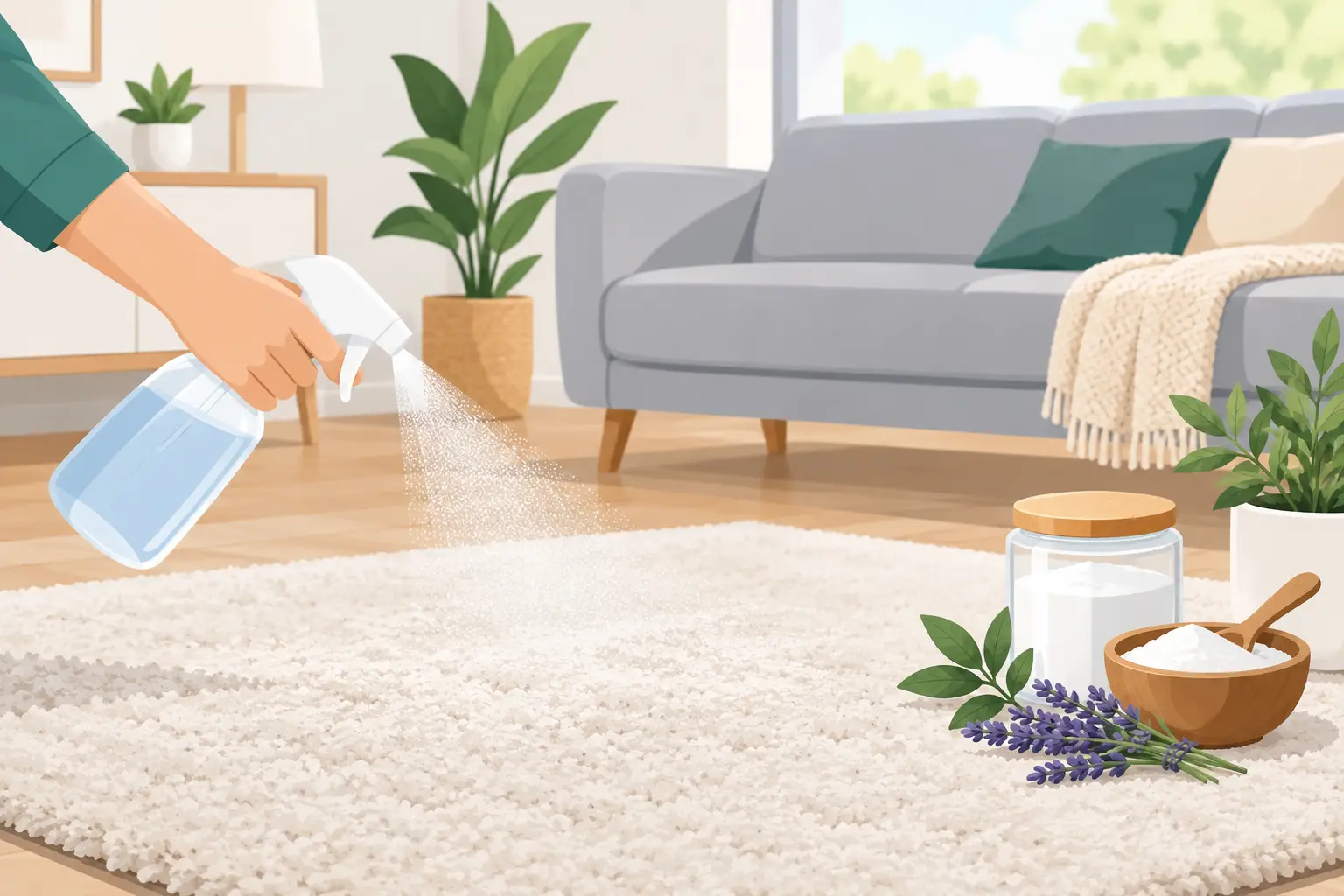
Baking soda can help absorb certain light odors, particularly those related to shoes, cooking or a lack of ventilation. Sprinkle a thin layer on a completely dry carpet, let it sit for several hours, then vacuum slowly and methodically.
This solution is better suited to occasional maintenance than to a strong or old odor. Avoid pouring on an excessive amount. The powder can build up deep in the fibers, in the backing and in the vacuum filter. On some thick or delicate carpets, removing it completely becomes difficult.
Treat Small Accidents Quickly
When a liquid is spilled, absorb it immediately with clean towels, without rubbing. Rubbing spreads the stain and pushes the liquid toward the bottom of the carpet. Work from the outside toward the center to limit spreading.
For a light odor, a cloth very lightly moistened with a mild solution suitable for textiles may be enough. Always test in an inconspicuous area first. A wool, viscose or silk carpet or a handcrafted rug should not receive the same treatment as a common synthetic carpet.
Encourage Complete Drying
A damp carpet is a carpet at risk. After spot cleaning, improve air circulation with a fan, open the windows when the weather allows and avoid putting furniture back on the treated area right away. Sometimes you need to lift the carpet slightly or check underneath if the incident was significant.
If the odor gets stronger after the carpet has been wet, this is often a sign that deep contaminants are rising to the surface. Repeatedly adding water or fragrance can then make the problem worse.
Pet Odors: Do Not Confuse a Stain with Contamination
Pet odors require special attention. Urine contains compounds that can persist for a long time, even when no stain is visible. With ambient humidity, the odor can reappear, especially on hot days or after the carpet is washed.
An enzymatic neutralizer can be useful, provided it is suitable for the textile and reaches the actual depth of the contamination. Its contact time must be respected according to the manufacturer’s recommendations. Lightly spraying the surface is not always enough if the liquid has passed through the fibers.
You should also avoid ammonia-based products for this type of situation. Their smell can remind some animals of urine and encourage them to mark the spot again. Vinegar is sometimes used at home, but it is not suitable for all carpets and does not necessarily neutralize deep contamination. Its acidity can also pose a risk to certain dyes or natural fibers.
When a pet odor keeps coming back, a professional inspection makes it possible to determine whether the carpet, the underlay and the floor need to be treated. This is especially relevant in rental units, homes with several pets or before new occupants move in.
Mold or Damp Odors: Act Without Delay
A musty odor should never be treated as a simple nuisance. It can signal an infiltration, a leak, persistent condensation or a carpet that stayed wet for too long. In this context, the priority is to find and correct the source of moisture.
Do not try to mask the odor with aerosols or essential oils. If mold is present under the carpet or in the underlay, it can continue to grow. Sensitive people, young children and occupants with allergies or respiratory problems may be more affected.
A carpet that has suffered clean water damage and was treated quickly can sometimes be saved with appropriate extraction and drying equipment. However, when the water was contaminated, drying was delayed or the underlay is affected, replacing some materials may be necessary. Each situation must be assessed according to the type of water, the response time and the extent of the damage.
Mistakes That Keep Odors Around
Some practices give an impression of cleanliness but make long-term cleaning more difficult. Using too much shampoo is one of the most common. If the product is not completely rinsed and extracted, it leaves a film that holds dust and odors.
Renting a machine can be useful for light maintenance, but it has its limits. Insufficient extraction leaves a lot of moisture in the carpet. On the other hand, a machine that is too aggressive or a poorly chosen product can discolor a fiber, cause colors to bleed or weaken a delicate carpet.
You should also be wary of scented powders applied regularly. They do not eliminate the source of the odor and can build up. For people sensitive to fragrances, they can even make the indoor air less pleasant.
When to Leave Deodorizing to a Professional
A specialized intervention is recommended when the odor persists after drying, comes back after a few days or is associated with urine, smoke, water damage or significant contamination. It is also the cautious choice for high-end carpets, antique rugs, wool and natural fibers.
Professional cleaning is not just about applying a deodorizer. It begins by identifying the fibers, assessing the soiling and locating the source. Depending on the case, the technician may carry out deep extraction, targeted odor treatment, rinsing of residue and controlled drying.
Since 1995, Nettoyage Imperial has applied this methodical approach to residential and commercial carpets in Montreal, Laval, the North Shore and the South Shore. The choice of method matters as much as the cleaning itself: it protects the materials, improves hygiene and reduces the risk of the odor returning quickly.
Preventing Odors from Coming Back
A well-maintained carpet better preserves its appearance and comfort. Vacuum regularly, remove wet shoes at the entrance and act without delay after a spill. In high-traffic areas, periodic deep cleaning helps remove what the vacuum cannot reach.
Also keep an eye on the humidity level in your home, especially in the basement. Adequate ventilation and quick repair of leaks protect not only your carpets but also indoor air quality.
When an odor seems to have settled in, it is better to act early than to keep adding products. An accurate diagnosis and a suitable method remain the safest way to get back a carpet that is clean, dry and truly fresh.
Why does my carpet still smell after cleaning?
An odor that comes back a few hours after cleaning often means residue, moisture or an organic source is still trapped in the fibers and the underlay. Using too much shampoo that is not completely rinsed and extracted can also leave a film that holds dust and odors, and insufficient extraction leaves a lot of moisture in the carpet.
Does baking soda deodorize a carpet?
Baking soda can help absorb certain light odors, such as those from shoes, cooking or a lack of ventilation. Sprinkle a thin layer on a completely dry carpet, let it sit for several hours, then vacuum slowly. It suits occasional maintenance rather than strong or old odors, and too much can build up in the fibers, the backing and the vacuum filter.
How do you get rid of pet urine odor in a carpet?
An enzymatic neutralizer can help if it is suitable for the textile, reaches the actual depth of the contamination and is used according to the manufacturer’s recommendations. Avoid ammonia-based products, which can encourage pets to mark again. Vinegar does not suit all carpets and does not necessarily neutralize deep contamination. If the odor keeps returning, a professional inspection can determine whether the carpet, underlay and floor need treatment.
Why does my carpet smell worse after it gets wet?
If the odor gets stronger after the carpet has been wet, it is often a sign that deep contaminants are rising to the surface. With urine, ambient humidity can also make the odor reappear. Repeatedly adding water or fragrance can make the problem worse.
When should you call a professional to deodorize a carpet?
Professional help is recommended when the odor persists after drying, comes back after a few days or is linked to urine, smoke, water damage or significant contamination. It is also the cautious choice for high-end carpets, antique rugs, wool and natural fibers.
Key Takeaways
- A returning odor usually means residue, moisture or an organic source is trapped in the fibers or underlay, so the cause must be treated rather than masked with fragrance.
- Vacuum thoroughly first, use baking soda only in moderation on a dry carpet, blot spills without rubbing and always test products in an inconspicuous area.
- Dry the carpet completely with good air circulation, since a damp carpet is a carpet at risk and repeated water or fragrance can worsen the odor.
- For pet urine, use a suitable enzymatic neutralizer that reaches the contamination and avoid ammonia. For musty odors, find and fix the moisture source quickly.
- Avoid excess shampoo, poorly extracted rental machines and regular scented powders, and call a professional when odors persist, return or involve urine, smoke, water damage or delicate fibers.