

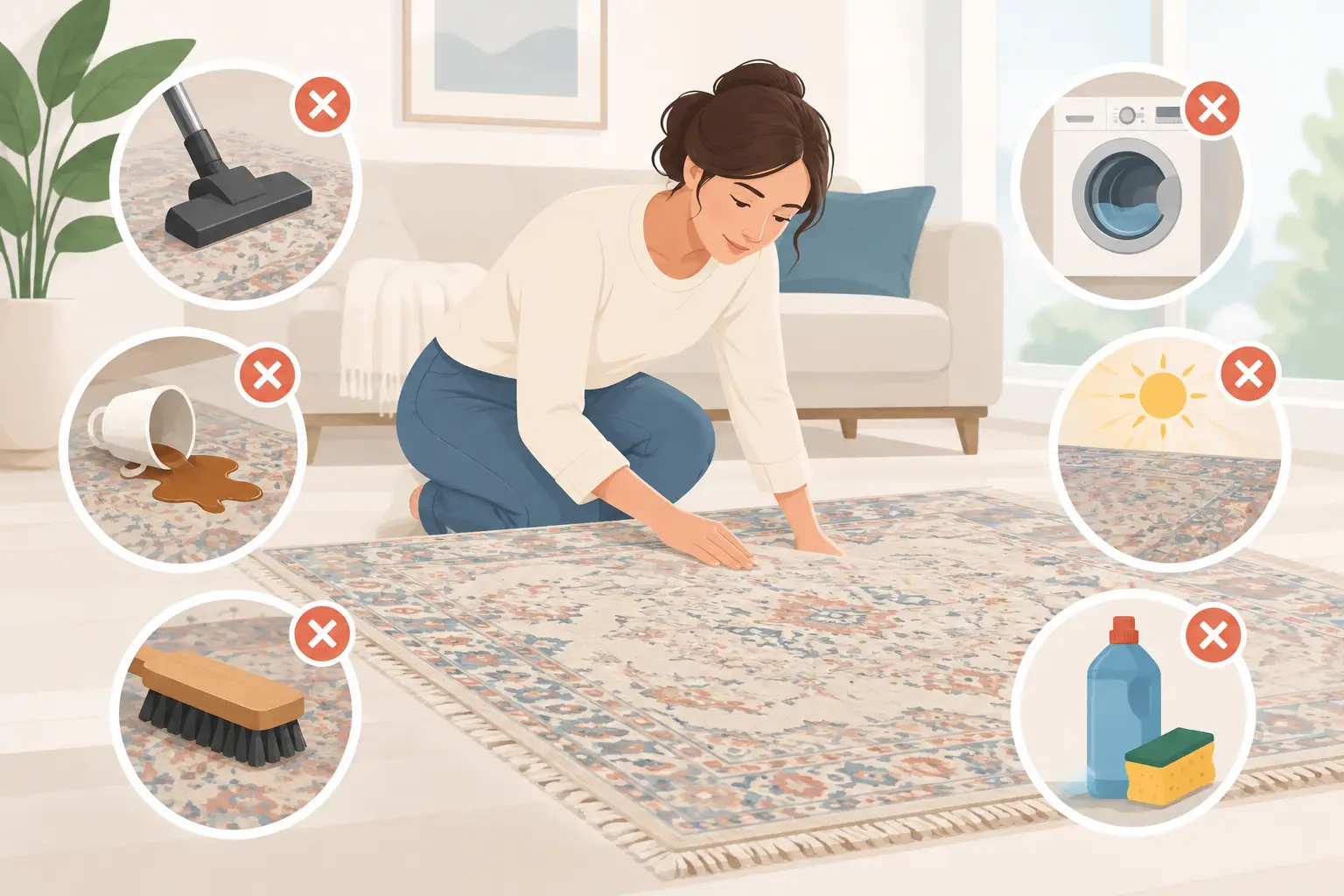
A delicate rug can look clean after a home cleaning and yet already have suffered damage that is hard to correct: colors that bleed, wool that stiffens, weakened fringes, or a lingering damp odor. Delicate rug care mistakes don’t always come from a lack of care. They often happen when a method meant for a synthetic area rug is used on a natural fiber, an antique rug, or a handmade piece.
In Montreal, Laval, the North Shore, and the South Shore, rugs are also exposed to calcium, de-icing salt, melted snow, and strong seasonal humidity. Proper care therefore protects the rug’s appearance as much as its structure, its value, and the air quality in the home.
1. Cleaning Without Identifying the Fiber and Construction
The first mistake is treating every rug the same way. A wool, silk, viscose, cotton, jute, or blended-fiber rug doesn’t react the same way to water, to a product’s pH, or to mechanical action. Construction matters too: a hand-knotted rug, a glued area rug, a latex-backed rug, or an antique piece each calls for a different approach.
Wool, for example, is naturally resilient, but it can felt if it is too wet or agitated too much. Viscose has a silky look, but its fibers quickly lose strength when wet. Jute can turn brown, give off an odor, or lose its shape. As for antique or oriental rugs, their dyes are not always stable.
Before doing anything, check the label when there is one, assess the condition of the fibers, and do a discreet test on an area that isn’t very visible. Without reliable information, it’s better to treat the rug as sensitive than to take an unnecessary risk.
2. Soaking the Rug with Water to Get Rid of a Stain
Water is often seen as a harmless solution. On a delicate rug, however, too much water can do more damage than the stain itself. It passes through the fibers, reaches the rug’s backing and the floor, then encourages odors, mold, rings, or warping.
The problem is especially common with a rental machine or a household appliance that injects a lot of water without enough extraction. The rug looks washed on the surface, but moisture stays trapped in its base. In a poorly ventilated home or during a humid period, drying can then take several days.
For a fresh stain, gently blot with a clean, absorbent white cloth. Work from the outside toward the center to avoid making the area bigger. Use as little liquid as possible and stop if color transfers to the cloth. A wine, urine, coffee, or grease stain calls for a different response: adding an all-purpose product without a diagnosis can set the stain or change the shade.
3. Scrubbing the Fibers Hard
Faced with a visible stain, the first reflex is often to rub. Yet it is one of the costliest mistakes. Rubbing pushes dirt deeper, opens up the fibers, and leaves an area that is fuzzy or lighter than the rest of the rug. On viscose, silk, and some wools, marks left by abrasion are sometimes permanent.
The right move is blotting, with controlled pressure. Absorb, lift, and repeat, rather than scour. A stiff brush, an abrasive sponge, or a rough cloth should be avoided, even if the stain seems stubborn.
If an area becomes rough after a treatment, don’t try to fix it with more product. Let the rug dry completely and have the fiber assessed. The fix depends on the material, the density of the pile, and the type of damage already done.
4. Using a Household Stain Remover or an Overly Alkaline Product
Products sold for carpets aren’t automatically suitable for delicate rugs. Some highly alkaline stain removers can dull colored wool, weaken a cellulose fiber, or leave a sticky residue that quickly attracts dust. Bleach, ammonia, abrasive powders, and some all-purpose cleaners are especially risky.
Vinegar is also often presented as a universal solution. It can help in some specific situations, but its acidity doesn’t make it suitable for every fiber or every dye. On a valuable rug, a homemade recipe doesn’t replace a colorfastness test and a product chosen according to the required pH.
A methodical professional cleaning starts with identifying the fiber, checking the colors, and analyzing the stains. The product, the contact time, and the extraction method are then adjusted. This discipline reduces the risk of discoloration and residue, while still allowing a truly deep clean.
5. Neglecting Drying After Cleaning
A delicate rug isn’t clean just because it has been wetted and treated. It also has to dry under controlled conditions. Slow drying encourages bad odors, microbial growth, and color transfer. It can also make the rug ripple or weaken the adhesives and backing materials.
After a light treatment, keep the air circulating steadily without exposing the rug directly to an intense heat source. A fan can help, but a heater placed too close to the rug or a hair dryer on high heat can dry out and distort some fibers. Avoid putting heavy furniture back right away on an area that is still damp.
Drying time varies with the thickness, the fiber, how dirty the rug was, and the method used. A very thick or heavily soiled rug may need in-shop cleaning, where washing, controlled wringing, and drying are adapted to its construction.
6. Forgetting About Dry Dust and Abrasive Dirt
Stain cleaning gets all the attention, but dry dust is often a rug’s main enemy. Sand, salt, fine particles, and pet hair settle at the base of the fibers. With every step, these particles act like an abrasive and gradually wear the rug down.
Regular vacuuming at a suitable power limits this wear. However, aggressive rotating brushes can pull loops, damage fringes, or wear down a delicate pile. For long-pile rugs, knotted rugs, or fragile pieces, use a suitable attachment and avoid vacuuming directly over the fringes.
Rotating the rug a few times a year also helps spread out wear and light exposure. This simple step is especially useful near a picture window, an entrance, or a busy hallway.
7. Waiting Until the Rug Looks Dirty
A rug can build up dust, allergens, and residue without looking very dirty. Waiting until major stains appear makes cleaning more complex and increases the need for heavy-duty treatments. For households with children, pets, or a lot of foot traffic, preventive maintenance is generally safer than an intensive catch-up cleaning.
How often a rug needs cleaning depends on how it is used. A decorative rug in a little-used bedroom doesn’t have the same needs as an entrance rug or an area rug under a family table. People with allergies can also benefit from more regular maintenance, especially when the fibers hold on to dust and dander.
8. Trusting a Delicate Rug to the Wrong Method
The cheapest method in the short term isn’t always the most economical. An unsuitable wash can cause color loss, warping, or shrinkage, and the repair can cost far more than specialized care. This is even more true for wool rugs, oriental rugs, antique pieces, and rugs with great sentimental or financial value.
At Nettoyage Imperial, assessing the rug’s material and condition guides the choice between at-home cleaning and in-shop treatment. The goal isn’t only to remove visible dirt, but to preserve the fibers, limit leftover moisture, and extend the life of the piece.
A delicate rug deserves careful handling: blot rather than rub, treat with caution rather than piling on products, and ask for an assessment as soon as a stain won’t budge or a color starts to run. This vigilance protects your investment and helps your rug stay healthy, stable, and beautiful for many years.
What should you not do when cleaning a delicate rug?
Avoid soaking it with water, scrubbing the fibers, using bleach, ammonia, abrasive powders, or overly alkaline stain removers, and drying it with intense heat. Each of these can cause color bleeding, fiber damage, odors, or warping.
Can you use vinegar on a wool rug?
Vinegar can help in some specific situations, but its acidity doesn’t make it suitable for every fiber or every dye. On a valuable rug, a colorfastness test and a product chosen according to the required pH are safer than a homemade recipe.
How do you clean a stain on a delicate rug?
Gently blot with a clean, absorbent white cloth, working from the outside toward the center. Use as little liquid as possible, never rub, and stop if color transfers to the cloth.
Is it safe to vacuum a delicate rug?
Yes. Regular vacuuming limits the wear caused by sand, salt, and fine particles. Use a suitable attachment instead of an aggressive rotating brush, and avoid vacuuming directly over the fringes.
How often should a delicate rug be cleaned?
It depends on how the rug is used. An entrance rug or an area rug under a family table needs more frequent care than a decorative rug in a little-used bedroom, and homes with children, pets, or allergy sufferers benefit from more regular preventive maintenance.
Key Takeaways
- Identify the rug’s fiber and construction before cleaning, since wool, silk, viscose, cotton, jute, and antique rugs each react differently to water, pH, and agitation.
- Too much water and hard scrubbing can do more damage than the stain itself, so blot gently with as little liquid as possible.
- Household stain removers, overly alkaline products, bleach, ammonia, and even vinegar can dull colors or weaken the fibers of a delicate rug.
- Controlled drying and regular vacuuming with the right attachment protect the rug from odors, warping, and abrasive wear.
- Preventive maintenance and a cleaning method suited to the rug are safer and more economical than waiting for heavy soiling or risking an unsuitable wash.