

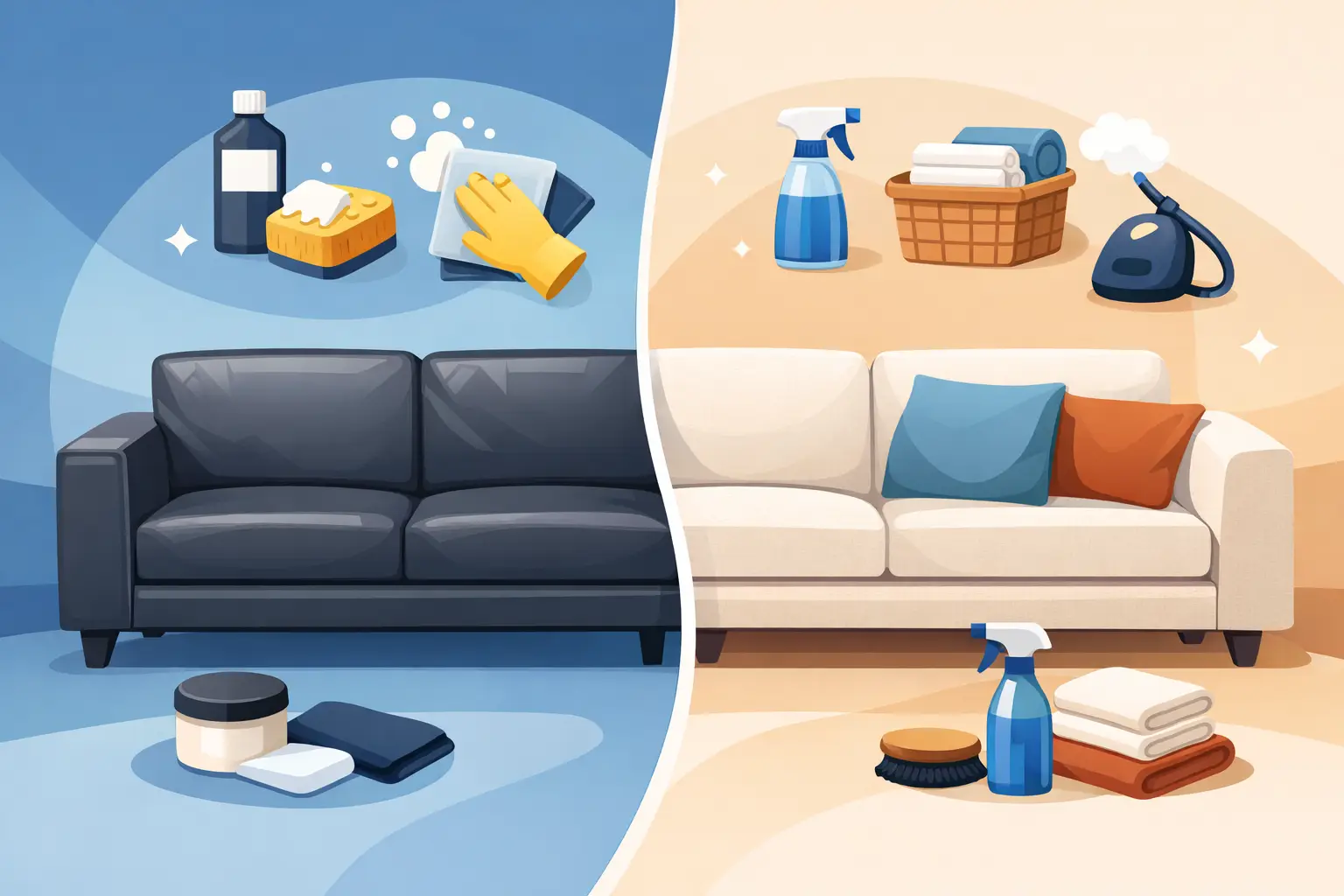
A search for “leather or fabric sofa care” usually starts with a real problem: a spreading stain, a lingering smell, or upholstery that’s losing its original look. But proper care isn’t just about cleaning more often. It’s about using a method suited to the material, its surface treatment, and how old the stain is.
Leather and fabric don’t share the same porosity, and they don’t react the same way to water, heat, or stain removers. The right approach can significantly extend a sofa’s lifespan. The wrong product, on the other hand, can leave a ring, harden leather, or discolor fabric.
Leather or Fabric Sofa: Care Based on the Upholstery
A fabric sofa holds onto fine dust, pet hair, crumbs, pollen, and certain allergens more easily. Its fibers also absorb liquids quickly, especially once the fabric stain-resistant treatment has worn off. That means it needs regular attention, without soaking the padding in water.
Leather offers a less absorbent surface, which makes it easier to wipe up a spill right away. That doesn’t mean it’s low maintenance. Leather is a natural or pigmented material that can dry out, crack, discolor, or become sticky when exposed to harsh products, a heat source, or excess humidity.
The choice between leather and fabric also depends on how much upkeep you can realistically commit to. In a household with young children, pets, or heavy daily use, good-quality pigmented leather can make small accidents easier to manage. A resistant, removable-cover, or stain-treated fabric, on the other hand, can be more comfortable and offer a wider choice of textures and colors. In either case, preventive cleaning is always better than dealing with a stain that’s already set in.
The Right Habits for a Fabric Sofa
Vacuuming is the first step in effective upkeeping. It should be done about once a week on the seats, backrests, armrests, and crevices. Use a clean attachment with soft bristles so you remove particles without snagging the fibers. This routine keeps dust from building up, which otherwise dulls the color and speeds up wear. For more detailed fabric sofa cleaning tips, check the care label first and use a method suited to the upholstery.
When a liquid spills, don’t rub it. Blot the area with an absorbent white cloth, working from the edge toward the center. Rubbing pushes the stain deeper into the fibers and can make it spread. Also avoid applying an all-purpose stain remover without first checking the manufacturer’s care label.
The codes on that label are useful. A fabric marked W generally accepts water-based products, while an S marking calls for a suitable solvent instead. WS and X codes also call for caution: WS allows several methods under certain conditions, while X usually limits care to vacuuming or a specialized intervention. These labels don’t replace testing a product first on a less visible part of the sofa.
A deep clean is generally recommended every 12 to 24 months, depending on use. For a family, a home with pets, or a heavily used sofa, once a year is often more realistic. The professional method should be chosen only after identifying the fibers, the dyes, and the type of filling. A poorly controlled extraction can leave too much moisture in the foam, encourage odors, or create rings as it dries.
Mistakes to Avoid on Fabric
Very hot water, uncontrolled steam, and strongly alkaline cleaners are risky choices. They can cause some fabrics to bleed color, change the texture of the fibers, or break down factory-applied protective treatments. Scented wipes and multi-purpose household cleaners can also leave sticky residue that attracts even more dust afterward.
Also avoid soaking a small stain locally. If the cleaned area dries differently from the rest of the seat, a visible mark can appear. In that case, cleaning the whole section evenly is usually safer than a heavily concentrated spot treatment.
Caring for a Leather Sofa Without Damaging It
For leather, consistency matters more than how hard you clean. Dust the sofa weekly with a soft, dry, or very lightly dampened cloth. Pay extra attention to the seams, folds, and contact areas, especially the armrests and headrests, where natural skin oils and hair products tend to build up.
If a liquid spills, blot it immediately with a clean cloth. Don’t let water, coffee, wine, or an oily product seep into the seams. Never use dish soap, vinegar, household alcohol, or disinfecting wipes. Even though these products may seem effective in the short term, they can strip away protective agents and disrupt the leather’s natural moisture balance.
Leather needs a cleaner formulated for its specific finish, followed, if the manufacturer recommends it, by a suitable conditioning treatment. This can be done once or twice a year. The goal isn’t to over-oil the surface, but to preserve its suppleness and protective film. Too much product can leave a tacky feel and attract dust.
Not all leathers are treated the same way. Pigmented leather is generally easier to maintain than aniline or semi-aniline leather, whose more natural look comes with greater sensitivity to stains and light. Suede, nubuck, and certain brushed leathers require different techniques altogether. When in doubt, it’s best not to improvise with an off-the-shelf product.
Protecting Leather Every Day
Direct sunlight is one of the leather’s main enemies. It can speed up discoloration and dry out, particularly near a large window. It’s also a good idea to keep the sofa a reasonable distance from a radiator, baseboard heater, or hot air vent.
If a leather sofa starts to crack or peel, it’s important to distinguish genuine leather from a synthetic covering, sometimes called faux leather or bonded leather. The repairs, the products, and the expectations aren’t the same. Misidentifying the material can make the problem worse instead of fixing it.
Stains, Odors, and Allergens: When to Act Fast
A fresh stain is always easier to treat than an old one. Coffee, wine, urine, grease, makeup, and ink each call for a specific approach. On both fabric and leather, the first rule remains the same: absorb immediately, then follow up with a treatment suited to the material.
Odors, on the other hand, often signal deeper contamination. On a fabric sofa, they may have reached the fibers, the foam, and sometimes the internal structure. Spraying air freshener or an odor neutralizer only masks the problem temporarily, without removing its source. A well-calibrated professional extraction, paired with controlled drying, is better suited to pet, tobacco, moisture, or food odors.
For people sensitive to allergies, sofa maintenance is directly tied to indoor hygiene. Dust, skin flakes, pollen, and fine particles naturally build up in upholstered furniture. Regular vacuuming and deep cleaning at the right frequency reduce this buildup without putting the materials at risk.
When Should You Call a Professional?
Calling a specialist makes sense when a stain is old, when an odor comes back after a DIY cleaning, when fabric shows rings, or when leather has lost its suppleness. It’s also the safest route for delicate fabrics, high-end sofas, velvet, natural fibers, or upholstery with no care label at all.
A professional starts by inspecting upholstery, identifying discoloration risks, and choosing a compatible method. Powerful equipment alone isn’t enough; the result depends on how the products are dosed, how well moisture is controlled, how long the treatment sits, and how the piece is dried.
Between deep cleans, stick to a simple routine: vacuum regularly, blot spills right away, keep the sofa away from heat sources, and avoid products that aren’t designed for its upholstery. These small, consistent habits far more than an occasional aggressive cleaning are what keeps your living room looking comfortable and well cared for. For delicate fabrics, leather, or upholstery with persistent stains and odours, professional upholstery cleaning can provide a safer and more controlled approach.
How often should I clean a fabric or leather sofa?
Vacuum weekly for both materials. A deep clean is generally recommended every 12 to 24 months, or about once a year for households with pets, children, or heavy daily use.
Can I use vinegar or dish soap on a leather sofa?
No. These products can strip leather protective agents and disrupt their natural moisture balance, even though they may seem to work well at first.
What do the W, S, WS, and X codes on a fabric care label mean?
W means the fabric generally accepts water-based cleaning products, S calls for a solvent instead, WS allows either method under certain conditions, and X typically limits care to vacuuming or professional intervention.
Why does my sofa still smell bad after cleaning it myself?
Odors often penetrate deeper than the surface, reaching the fibers, foam, or internal structure. Air fresheners only mask the smell temporarily; a professional extraction with controlled drying addresses the source.
How can I tell if my sofa is real leather or faux leather?
Cracking or peeling can affect both, but the repair approach differs significantly. If you’re unsure, it’s best to have the material identified before attempting any repair or treatment, since misidentifying it can make the damage worse.
Key Takeaways
- Leather and fabric require different care methods — always match the product to the material.
- Fabric traps dust and allergens easily and absorbs liquids fast; vacuum weekly and blot (never rub) spills.
- Check the fabric care code (W, S, WS, X) before applying any cleaning product and always spot-test first.
- Leather needs gentle weekly dusting, immediate blotting of spills, and a finish-appropriate cleaner/conditioner once or twice a year.
- Sunlight and heat sources are leather’s biggest enemies — keep sofas away from windows and vents.
- Fresh stains are always easier to treat than old ones; act immediately regardless of material.
- Persistent odors usually mean deeper contamination and often need professional extraction rather than air freshener.
- A professional deep clean is generally recommended every 12 to 24 months, or annually for households with pets, kids, or heavy use.