

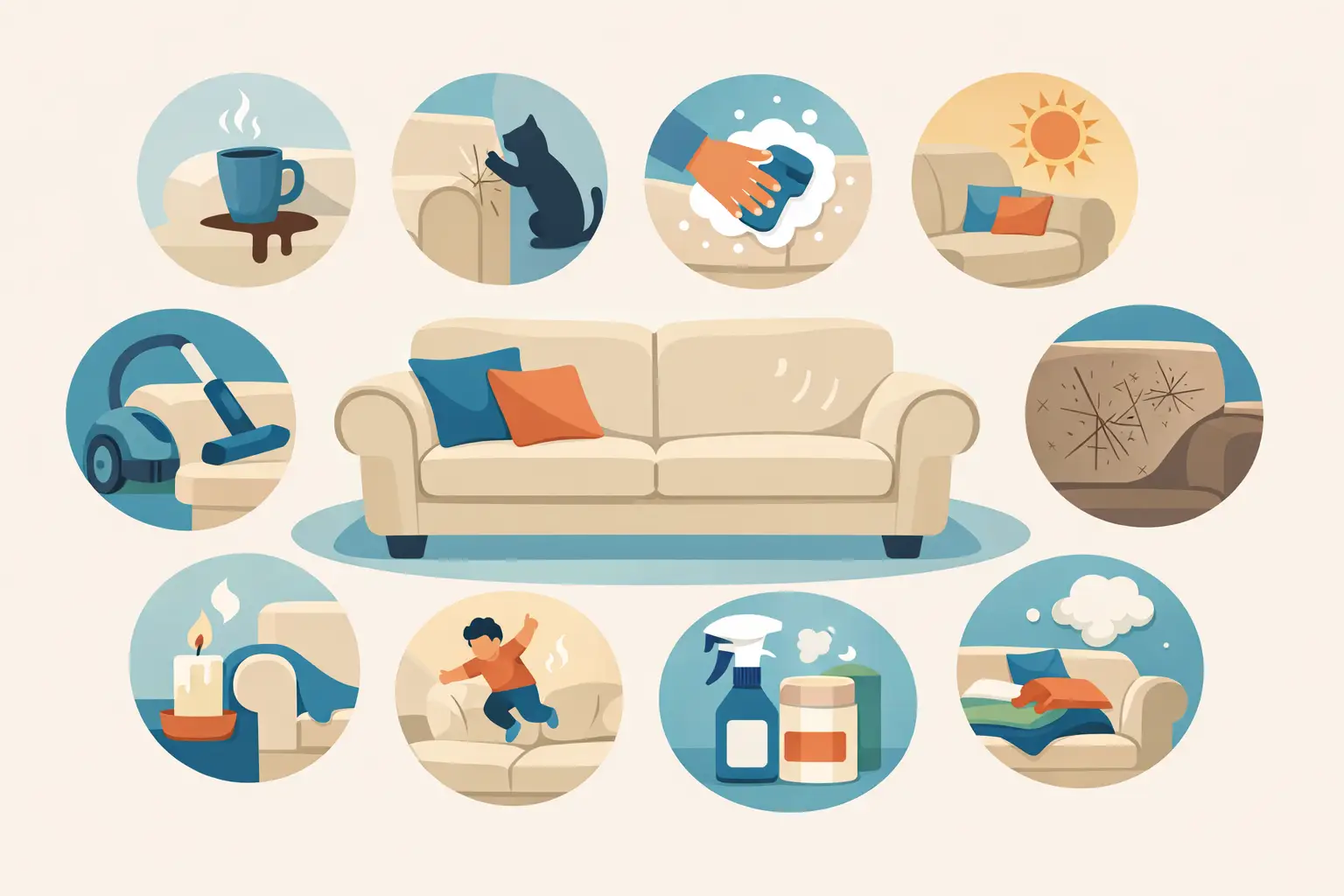
A sofa that looks clean can still contain fine dust, product residue, allergens, and moisture trapped in its fibers. Most damage doesn’t come from a single dramatic incident but from repeated, poorly suited habits. Knowing which mistakes harm upholstered furniture helps preserve the fabric’s appearance, the comfort of the cushions, and the overall lifespan of your furniture.
Real conditions in Montreal and Laval households
In Montreal, Laval, and on both shores, furniture also faces real everyday stressors: wet winter boots, de-icing salt, dry heating-season air, pets, and busy family life. A methodical care routine reduces the risk of permanent stains, embedded odors, and premature sagging.
The Everyday Mistakes That Damage Upholstered Furniture
Rubbing a stain instead of blotting it
It’s the most common reflex: a glass spills, and you immediately rub it with a cloth or paper towel. But rubbing often pushes the liquid deeper into the fibers and spreads the stained area. On some fabrics, it can also change the direction of the pile or leave a visible ring once the seat dries.
It’s better to blot gently, working from the outside of the stain toward the center, without saturating the fabric. For a step-by-step approach to cleaning a fabric sofa safely, see our guide to fabric couch cleaning tips before treating a larger stain at home.
Use a clean white cloth to avoid any color transfer. For a greasy, colored, or old stain, combining multiple homemade products can make the problem worse; the right method always depends on the fiber, the type of soiling, and the finish applied by the manufacturer.
Using an all-purpose or overly harsh product
A so-called “multi-purpose” stain remover isn’t automatically safe for a polyester armchair, a cotton sofa, microfiber, blended wool, or a stain-treated fabric. Bleach, alkaline degreasers, strong solvents, and some scented cleaners can discolor the upholstery, harden the fibers, or leave a sticky residue that then attracts dirt.
Before doing anything, check the furniture care label. Care codes generally indicate whether the fabric tolerates water, solvents, or requires specialized professional cleaning. Even when a product seems appropriate, testing it on a low-visibility area is essential. A reaction can be immediate, but it may also only appear once the fabric dries.
Over-wetting cushions and armrests
Excess water is one of the most underestimated causes of damage. A poorly adjusted consumer-grade device, an overly soaked sponge, or multiple wet passes can soak through the fabric and reach the foam, padding, or frame of the furniture. Residual moisture encourages musty odors, color migration, and, in some cases, microbial growth.
The risk is especially high for thick cushions and slow-drying fabrics. A sofa can appear dry on the surface while its interior stays damp for several hours. Well-executed professional cleaning combines a precise solution dosage, efficient extraction, and proper ventilation to limit this risk.
Neglecting to vacuum high-contact areas
Visible crumbs and pet hair are only part of the buildup. Fine dust, skin flakes, sand, and abrasive particles accumulate between cushions, in seams, and on armrests. Through repeated pressure and friction, these particles wear down the fibers and give the fabric a dull or rough appearance.
Gentle, regular vacuuming with an attachment suited to upholstery is a simple and highly effective measure. Remove the cushions whenever possible and vacuum the folds, edges, and hard-to-reach spots. However, avoid a brush that’s too stiff on a delicate, looped, or textured fabric; it can snag threads and alter the surface.
Habits That Speed Up Furniture Wear
Letting pets and blankets trap moisture
Pets bring hair, sebum, saliva, and sometimes moisture onto seating surfaces. A protective blanket can help, provided it’s washed regularly and completely dry before being put back in place. A damp or heavily hair-covered blanket gradually transfers odors and dirt to the sofa.
This isn’t about banning pets from the sofa, but about organizing its upkeep. A washable cover, frequent vacuuming, and quick action after an accident significantly limit damage. Urine odors in particular require targeted treatment; masking them with fragrance doesn’t neutralize the source.
Exposing furniture to direct sunlight or strong heat
Direct light can fade certain colors, especially blues, reds, and natural fabrics. Heat from a radiator, electric baseboard heater, or heating vent can also dry out the fibers and weaken certain finishes. On leather, it encourages dryness and cracking; on textiles, it can accelerate the loss of suppleness.
When the furniture’s location can’t be changed, curtains, blinds, or periodically rotating the cushions help distribute the exposure. Keeping a few centimeters of distance between the furniture and a heat source also helps preserve the materials.
Waiting until a sofa is visibly dirty
Cleaning too late is rarely economical. When a fabric has absorbed months of dust, perspiration, body residue, or greasy particles, cleaning becomes more complex. The most-used areas; headrests, armrests, favorite seats, can then show marked yellowing or graying.
Periodic professional maintenance is preferable to a series of emergency cleanings. Frequency depends on use: a lightly used living room doesn’t have the same needs as a family sofa with children and pets. As a rule, having the furniture assessed as soon as it starts losing its shine allows for intervention before soiling becomes deeply set.
Using steam without checking fabric compatibility
Steam can be useful in certain contexts, but it isn’t a universal solution. Too high a temperature can set certain stains, break down adhesives, distort synthetic fibers, or cause shrinkage on delicate fabrics. It can also over-humidify the padding if the equipment isn’t properly controlled.
Furniture with delicate trims, natural fibers, unstable colors, or glued structures requires a cautious approach. The choice between steam, hot water extraction, dry foam, or low-moisture cleaning should be made after identifying the material — not based on whichever machine is available at home.
Protecting Cushions, Foam, and Structure
Always sitting in the same spot
Foam naturally compresses over time, but wear speeds up when a single spot is used every day. Reversible cushions should be flipped and rotated regularly. This habit distributes pressure, limits dents, and helps the sofa keep a uniform silhouette.
For non-reversible cushions, gently fluff them and reposition them according to the manufacturer’s recommendations. Don’t pull roughly on the seams to reshape them. If significant sagging occurs, the problem may lie with the foam, straps, or springs — cleaning won’t fix a structural failure, even though it will improve the fabric’s appearance.
Ignoring labels and manufacturer recommendations
Removing a label because it’s unsightly can deprive you of essential information when a stain occurs. Cleaning codes, fabric composition, and protection guidelines help you choose the right method. Take a photo of the label and keep it with your maintenance records.
This precaution is especially useful for high-end furniture, imported fabrics, and custom upholstery. Two visually similar textiles can react very differently to water, heat, or solvents.
When to Turn to a Professional Cleaner
Certain situations reasonably go beyond routine maintenance: persistent odor, an old stain, rings left after a DIY attempt, widespread soiling, a pet accident, or a delicate fabric. A professional assessment identifies the upholstery, verifies its color stability, and selects a technique that cleans deeply without compromising drying or texture. If your sofa needs more than routine maintenance, professional upholstery cleaning can help remove deeply embedded dirt, stains, allergens, and odors while protecting the fabric.
Well-maintained upholstered furniture stays more pleasant, healthier, and more durable. At the first sign of a ring, odor, or loss of shine, act with restraint: blotting, identifying the fabric, and choosing the right method protects your furniture far better than improvised cleaning.
How often should upholstered furniture be professionally cleaned?
It depends on usage; lightly used furniture needs less frequent cleaning than a family sofa with kids and pets, but having it assessed as soon as it starts losing its shine is the general rule of thumb.
Can I use bleach or an all-purpose cleaner on my sofa?
No, bleach, alkaline degreasers, and strong solvents can discolor upholstery, harden fibers, or leave a sticky residue. Always check the care label first and test in a hidden area.
Why shouldn't I rub a fresh stain on my sofa?
Rubbing pushes the liquid deeper into the fibers, spreads the stain, and can change the pile direction or leave a visible ring once dry. Blotting from the outside is safer.
Is steam cleaning safe for all upholstery fabrics?
No, high heat can set stains, break down adhesives, distort synthetic fibers, or shrink delicate fabrics. The right method depends on identifying the material first.
Why does my sofa still smell or look dull even though I vacuum it?
Vacuuming removes surface debris but not deeply embedded dust, oils, and residue, especially in seams and cushion folds. Over time this buildup dulls fabric and causes odors that regular vacuuming alone can’t fully resolve.
Key Takeways
- Blot stains gently from the outside in, never rub, and always use a clean white cloth.
- Check the care label before using any cleaning product; test in a hidden spot first.
- Avoid over-wetting cushions; excess moisture can reach the foam and cause odors or microbial growth.
- Vacuum high-contact areas regularly with a suitable attachment, avoiding stiff brushes on delicate fabrics.
- Rotate and flip cushions regularly, keep furniture away from direct sun/heat, and don’t remove care labels — small habits protect both fabric and structure over time.