

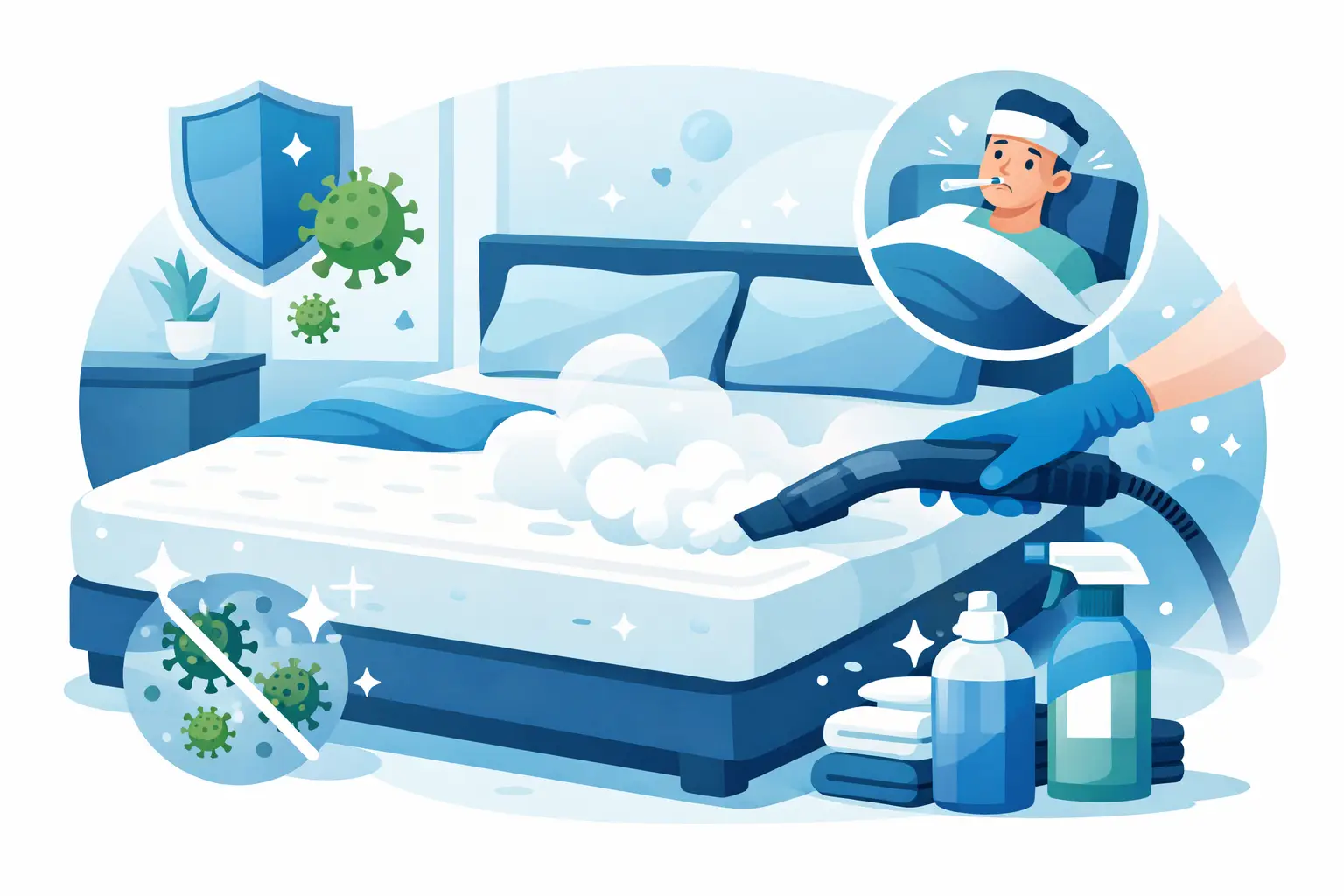
After a stomach bug, a high fever, the flu, or a long period of bed rest, a bed can hold onto far more than just a feeling of staleness. Sweat, secretions, odors, dead skin cells, and moisture can build up in the fabric and on the surface of the mattress. Professional mattress cleaning can help address these contaminants without unnecessarily saturating the mattress.
The instinct to spray a scented disinfectant over the whole surface is rarely the right solution. A mattress is made up of foams, fibers, springs, or latex that don’t hold up well to excess water or certain chemicals. Too aggressive an approach can leave irritating residue, create a stubborn odor, or encourage mold growth inside the filling.
Start by Isolating and Washing All Bedding
Before treating the mattress itself, remove the sheets, pillowcases, blankets, comforter, mattress protector, and any fabric that came into direct contact with the sick person. Don’t shake these items out in the bedroom, doing so scatters dust, dead skin, and particles into the air and onto surrounding surfaces.
Wash the linens according to the care label, using the highest temperature the fabric can tolerate. A full drying cycle matters just as much. Linens that are still damp, even if they look clean, can pass a musty smell on to the mattress and the room.
The mattress protector deserves special attention. If it’s waterproof, inspect its membrane after washing. A cracked or warped protector no longer effectively blocks sweat and liquids. Replacing it is often wiser than relying on repeated disinfection of the mattress itself.
Assess the Mattress Before Disinfecting
Not every episode of illness calls for the same level of intervention. Someone who simply slept through a cold doesn’t leave the same traces as a child who vomited, a person who sweated heavily, or an episode of diarrhea. The presence of stains, odors, or biological fluids calls for more thorough, localized cleaning.
Start by airing out the room and wearing disposable gloves if you’re handling a soiled area. Remove any solids with absorbent paper, without rubbing. Then blot the moisture from the edge of the stain toward the center to limit its spread. Avoid pouring water directly onto the mattress, the goal is to treat the surface, not soak the inner layers.
A careful inspection also helps identify situations where a DIY treatment isn’t enough. An old stain, a smell that lingers after drying, a very damp area, signs of mold, or significant contamination are signals to take seriously. In these cases, the true condition of the filling can’t be judged by eye.
Safe Mattress Disinfection After Illness: A Reliable Method
The first step is to slowly vacuum the surface with a device fitted with a clean attachment, ideally one with effective filtration. Go over the seams, edges, and tufted areas. This removes dust, hair, dead skin cells, and allergens that can trap odors and complicate cleaning. This is also an important first step in mattress disinfection between deeper treatments.
Next, treat stains with a product suited to upholstery fabric and the type of soiling. Always test the product on a small, discreet area first. Apply it sparingly to a clean cloth rather than saturating the mattress directly. Work in gentle blotting motions, then remove the excess with a dry, absorbent cloth.
For sanitizing, choose a solution designed for textile surfaces and strictly follow its instructions, contact time, and warnings. The word “disinfectant” doesn’t guarantee a product is appropriate for a porous surface or a mattress. Bleach, alcohol poured in large quantities, essential oils, and mixtures of household products should be avoided. They can damage fibers, irritate the airways, or leave behind a residue that’s not compatible with a sleeping environment.
Baking soda can help absorb some light odors once the area is completely dry, but it does not disinfect the mattress. Sprinkle a thin layer, let it sit for a few hours, then vacuum thoroughly. This remains useful for freshening up, not for treating contamination or a significant biological stain.
Drying Is a Non-Negotiable Step
After localized cleaning, the mattress must dry all the way through before being covered again. Open the windows when conditions allow, use a fan, and keep good air circulation in the room. A dehumidifier can help in homes where humidity is high.
Don’t put the sheets back on while the surface still feels cool or damp to the touch. An insufficiently dried mattress can trap moisture under the bedding and create conditions favorable to bad odors, bacteria, and mold. Depending on the extent of the treatment, plan for several hours, or even a full day, of drying time.
What to Avoid to Protect the Mattress and Your Health
Some popular methods create an impression of cleanliness without actually solving the problem, or introduce unnecessary risk. Steam, for example, can be effective on certain fabrics when used carefully, but steam that’s too wet or applied for too long can penetrate deep into the foam. The result can be a mattress that’s clean on the surface but damp inside.
Also avoid layering on air fresheners and scented sprays. Masking an odor removes neither its source nor the residue feeding it. If an odor returns a few days after treatment, it’s likely that moisture or soiling has reached the inner layers.
Finally, never mix vinegar, chlorine-based products, ammonia, or multi-purpose cleaners. These combinations can produce irritating or dangerous fumes. A professional method relies on compatible products, correctly dosed and suited to the material; not an improvised mixture.
When to Call in Professional Cleaning
Specialized cleaning is especially worthwhile after an illness involving vomiting, incontinence, heavy sweating, or lingering odors. It’s also worth considering for children’s mattresses, rental rooms, seniors’ residences, and homes where people with allergies, asthma, or weakened immune systems live.
Qualified technicians assess the covering, the padding, the depth of the stain, and the moisture level before intervening. They use controlled extraction methods and products suited to textiles, aiming to remove soiling without damaging the filling or leaving the mattress excessively damp. This approach is more reliable than a uniform treatment applied without a proper diagnosis.
In Montreal, Laval, the North Shore, and the South Shore, Nettoyage Impérial works with processes designed for deep cleaning of mattresses and upholstered furniture. The goal isn’t just to improve the look of the bed, it’s also to reduce sources of odor, preserve the materials, and restore a genuinely healthy place to rest.
Preventing Problems Before the Next Illness
A washable, waterproof mattress protector remains the simplest and most cost-effective protection. It creates a barrier between the sleeper and the filling, while still allowing for a full wash after an incident. Keeping a second set of clean sheets on hand also makes it easier to change the bedding without delay.
After an illness, air out the bedroom regularly, wash the bedding, and let the mattress breathe for a few hours before making the bed again. This routine doesn’t replace proper treatment in the case of significant soiling, but it reduces moisture and helps maintain good indoor air quality. A clean mattress shouldn’t just look fresh; it should be dry, free of residue, and ready to offer truly restful sleep.
Can you disinfect a mattress without ruining it?
Yes, as long as you avoid soaking it. Vacuum first, spot-treat stains with a small amount of a fabric-appropriate cleaner and use a textile-safe sanitizing product exactly as directed rather than a generic disinfectant spray.
What is the best homemade disinfectant for a mattress?
There isn’t a truly reliable homemade “disinfectant” for a mattress — baking soda can help absorb light odors once the area is dry, but it doesn’t disinfect. Harsh combinations like bleach, alcohol, or mixed household cleaners should be avoided, as they can damage the mattress or produce irritating fumes.
How long does a mattress take to dry after cleaning?
It depends on how much moisture was used and the room’s humidity, but a mattress can take anywhere from several hours to a full day to dry completely. Good airflow — open windows, a fan, or a dehumidifier — speeds up the process.
Can I use a steam cleaner on a mattress?
Steam can work on certain fabrics if used carefully, but too much moisture or too long an application can soak into the foam beneath the surface, leaving the mattress damp inside even though it looks clean on top.
When should I call a professional to clean a mattress?
It’s worth calling in professional cleaning after vomiting, incontinence, heavy sweating, or when odors persist after you’ve tried cleaning it yourself — especially for children’s mattresses or homes with allergy, asthma, or immune-sensitive occupants, since these situations are harder to assess and treat without proper equipment.
Key Takeaways
- Isolate and wash all bedding on the hottest safe setting first and fully dry it; damp linens can transfer musty odors right back onto the mattress.
- Assess the severity of soiling before treating: a cold is very different from vomiting, heavy sweating, or diarrhea, and biological stains need more careful handling.
- Vacuum first, spot-treat stains sparingly with the right product (tested on a small area) and always blot from the edge of a stain toward its center, never soaking the mattress.
- Avoid bleaching, alcohol, essential oils, mixed household chemicals, and over-wetting with steam; these can damage the mattress or leave irritating residue.
- Drying is non-negotiable: the mattress must be completely dry to the touch, not just the surface, before bedding goes back on, or you risk trapped moisture, odor, and mold.