

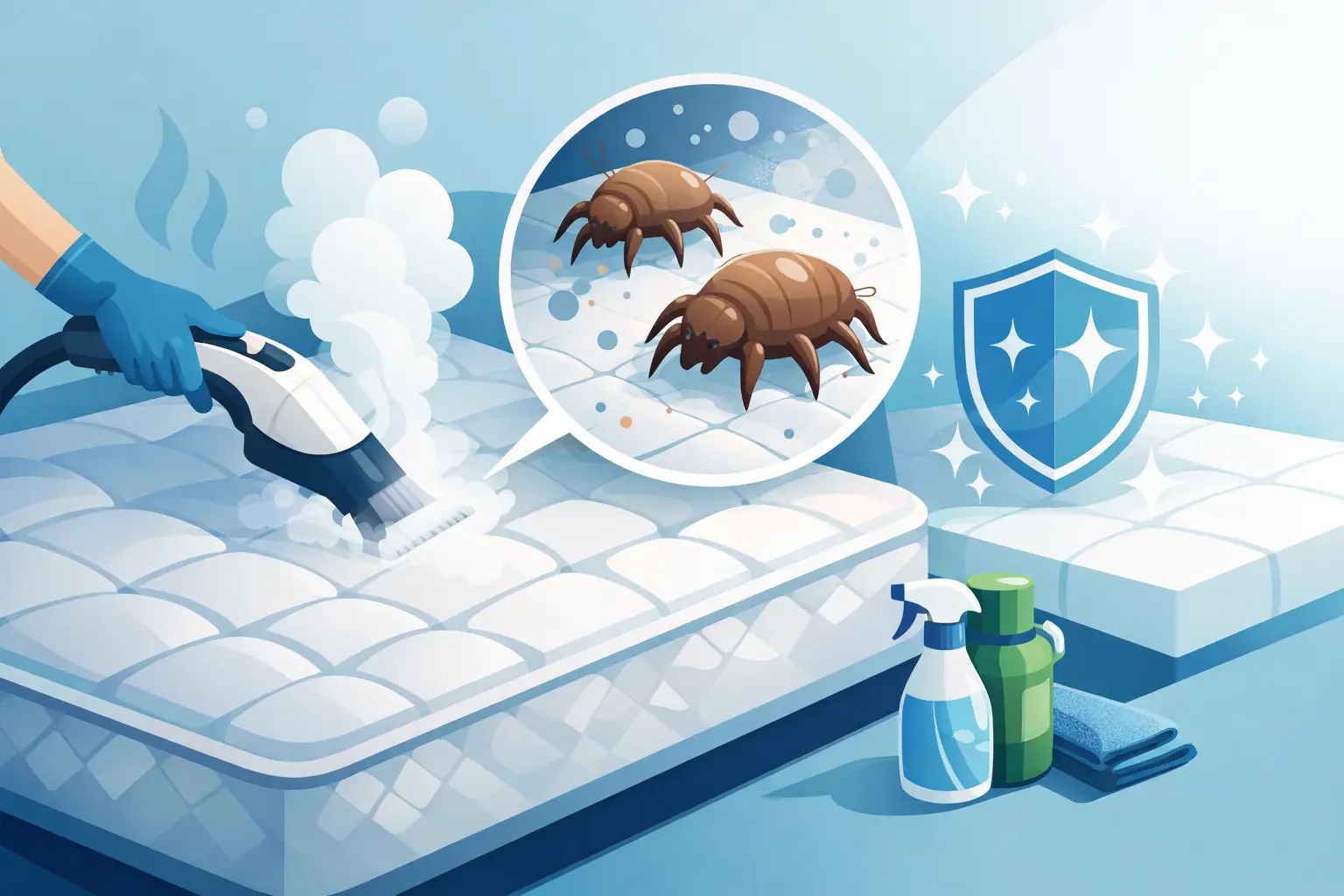
A mattress can look perfectly clean on the surface and still hold fine dust, skin cells, residual moisture, and invisible allergens. Knowing how to disinfect a mattress against dust mites properly means going beyond a quick vacuum or a scented spray. The real goal isn’t freshness alone, it’s a lasting reduction in allergens without damaging the materials inside your mattress.
Dust mites don’t bite, but the particles they leave behind in mattress fibres can irritate airways, trigger asthma symptoms, or cause sneezing first thing in the morning. This is especially common in poorly ventilated bedrooms, humid homes, or mattresses that have gone years without deep care. For homeowners across Montreal, Laval, the North Shore, and the South Shore, proper mattress disinfection starts with understanding why dust mites keep coming back.
Why Dust Mites Keep Coming Back
A mattress offers nearly everything dust mites need to thrive. Body heat, moisture from perspiration, and microscopic organic matter create a comfortable environment for them. Even a bed made neatly every morning can trap residual humidity deep in its layers, especially in rooms with limited airflow.
This is why quick fixes rarely solve the problem. A surface spray might create an impression of freshness, but it often fails to reach the layers where professional mattress dust mite removal service can.
What Actually Works for Mattress Disinfection
Getting real results means combining steps that respect your mattress’s materials. The first step is always mechanical extraction. A vacuum with strong filtration and a fabric attachment removes a large portion of surface dust from the top layers. This should be done slowly, with close attention to seams, tufting, and edges.
From there, mattress disinfection treatment needs to accomplish two things at once: mattress dust mite removal and sanitizing the mattress without oversaturating the fibres. Steam can help, since heat reduces microbial presence and loosens embedded debris, but it must be carefully controlled. Poorly regulated steam can soak materials that take a long time to dry, while fabric disinfectants need to be chosen carefully so they don’t leave residue or irritate sensitive airways.
Mistakes That Make Things Worse
Many homeowners rely on baking soda alone, assuming it solves the problem at the source. It can help with light odours, but it isn’t a full mattress dust mite removal method and won’t clear embedded allergens on its own.
Another common mistake during mattress disinfection is soaking the mattress with a homemade mix of hot water, vinegar, soap, or essential oils. Vinegar isn’t suitable for every fabric, essential oils can irritate skin, and excess moisture leads to uneven drying or visible rings on the comfort layer.
Underpowered consumer devices carry a similar risk: they clean the visible surface without properly extracting fine particles, so the mattress looks better while residue stays trapped inside.
Choosing the Right Method and When to Call a Professional for Mattress Disinfection
The right approach for mattress disinfection depends on your mattress’s age, materials, and condition. A newer mattress that’s well maintained can benefit from preventive care, including careful vacuuming, regular airing out, a washable protective cover, and targeted sanitizing.
If your mattress has odours, old stains, a damp feeling, or household members with noticeable allergies, a more technical clean is the better choice. Foam, memory foam, pocket coil, and hybrid mattresses respond differently to heat and moisture, so a mattress dust mite removal method that works on one type isn’t always right for another. This is where professional cleaning across Montreal and Laval makes a real difference, with stronger equipment, fabric appropriate products, and a controlled process from start to finish.
At Nettoyage Imperial, this approach to how to disinfect mattress against dust mites has guided our work since 1995, focused on thorough, safe, lasting results rather than a quick cosmetic fix.
Keeping Dust Mites From Coming Back
Treating the mattress isn’t enough if the bedroom still favours allergens. Dust mites return quickly when bedding is poorly ventilated or humidity stays high, so it helps to treat the whole bed, not just the mattress, as part of your routine.
Let the mattress air out each morning before making the bed, wash sheets and protectors regularly, and choose a proper allergen cover if anyone in the home is sensitive. Light, consistent vacuuming is usually more effective than one deep clean after years of buildup, and bedroom ventilation plays a direct role in keeping allergen levels low.
How do you disinfect a mattress against dust mites without damaging it?
The safest approach combines slow, thorough vacuuming with controlled steam or a fabric safe sanitizer, avoiding excess moisture. Knowing how to disinfect mattress against dust mites properly means treating fibres deeply without oversaturating them, since too much liquid can damage the comfort layer and leave odours behind.
What is the best method for mattress disinfection at home?
Start with mechanical extraction using a vacuum with strong filtration, focusing on seams and edges. From there, light mattress disinfection with a fabric appropriate product, combined with regular airing out and a washable protective cover, keeps allergen levels manageable between deep cleans.
How often should mattress dust mite removal be done?
It depends on the household. A home without allergies may need preventive care a few times a year, while bedrooms with pets, children, or allergy sufferers benefit from more frequent mattress dust mite removal. Spills, heavy sweating, or persistent odours all call for quicker attention.
Can steam cleaning kill dust mites in a mattress?
Heat from steam can reduce microbial presence and loosen embedded debris, which helps with mattress disinfection. However, it must be applied carefully, since over saturating the mattress can trap moisture deep inside and create new problems like odours or slow drying.
Is professional mattress cleaning worth it for allergies?
Yes, especially for households with allergies, rental turnover, or older mattresses. Professionals use stronger equipment and a controlled process to disinfect mattress against dust mites effectively, targeting indoor air quality while protecting materials that are difficult and costly to replace.
Key Takeaways
- How to disinfect mattress against dust mites starts with slow, thorough vacuuming before any product is applied.
- Baking soda and homemade vinegar mixes are not a complete mattress disinfection method on their own.
- Steam helps reduce allergens but must be controlled to avoid oversaturating the mattress.
- Mattress dust mite removal should be more frequent in homes with pets, children, or allergy sufferers.
- Airing out the mattress daily and washing bedding regularly helps prevent dust mites from returning.
- Professional cleaning is the safer choice for older mattresses, allergy concerns, or rental properties.