

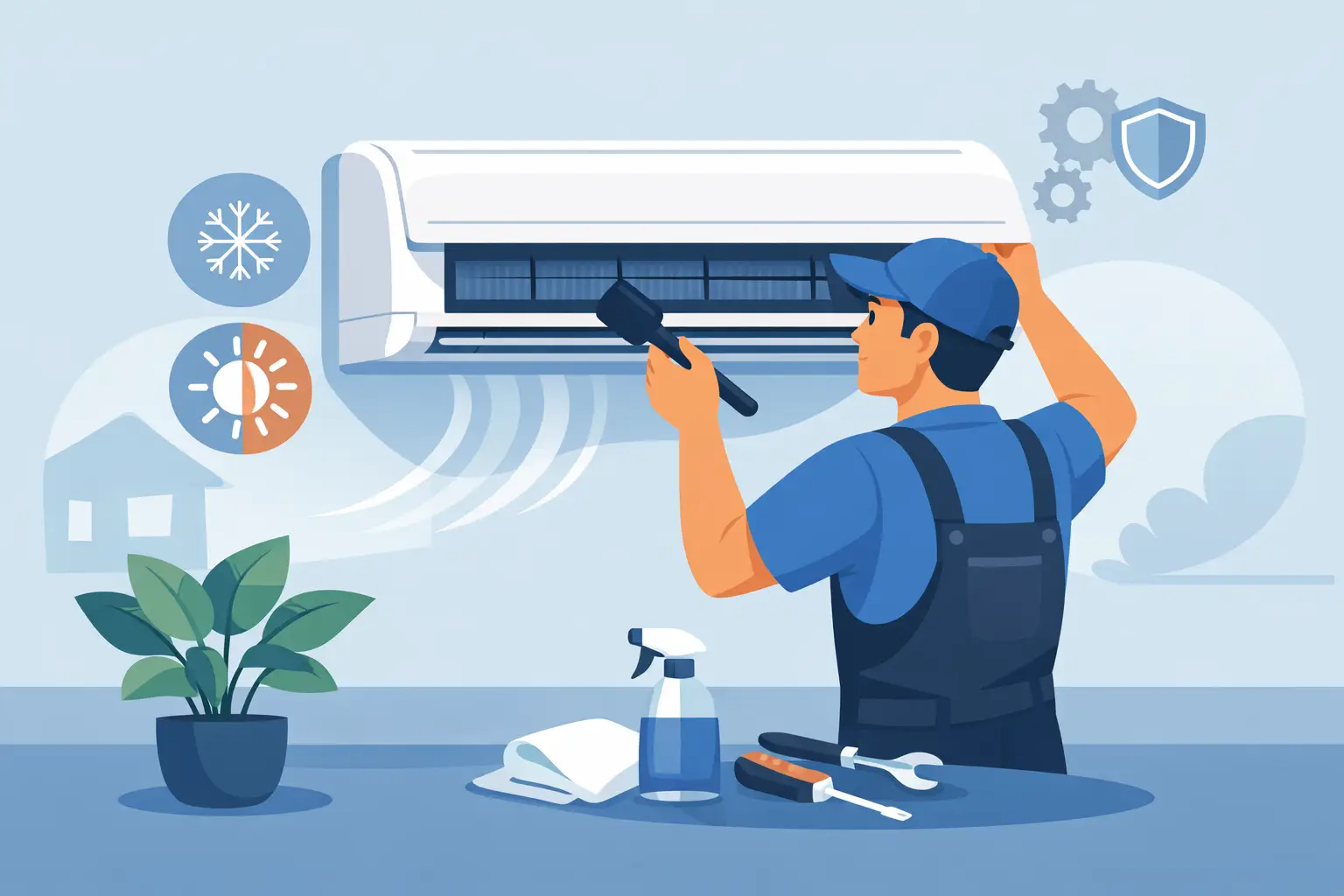
Your wall-mounted heat pump works hard year-round. When it starts blowing less strongly, smelling musty, or running louder than usual, the cause is rarely a sudden breakdown. In most cases, it starts with a buildup.
Wall-mounted heat pump maintenance is not just about comfort; it directly affects air quality, energy efficiency, and the lifespan of your unit. Regular ductless heat pump maintenance helps prevent dust, mould, and debris from restricting airflow and reducing performance. Understanding the right heat pump cleaning tips and knowing when professional servicing is needed can save homeowners in Montreal, Laval, the North Shore, and the South Shore from costly repairs down the road.
Why Wall-Mounted Heat Pump Maintenance Goes Beyond Changing Filters
Most homeowners know to check the filters, and that is a good habit. But filters only capture part of what circulates through your unit. Over time, deposits build up deeper inside the system; on the blower wheel, the evaporator coil, and the drainage components. At that point, wiping down the front panel or rinsing the filters only addresses a fraction of the problem. Proper wall-mounted heat pump maintenance requires a more thorough approach.
The issue is both mechanical and sanitary. A dirty unit works harder to produce the same result, airflow decreases, heat exchange becomes less efficient, and moisture can stagnate in certain areas. This creates the right conditions for odours, recirculated dust, and premature wear on components that cost far more to replace than a preventive cleaning. For property managers and business owners, it also means more service calls and shorter equipment life cycles. These are exactly the situations that consistent ductless heat pump maintenance helps prevent.
How Often Should You Schedule Wall Mounted Heat Pump Maintenance?
The right frequency depends on how heavily the unit is used. A wall-mounted heat pump running nearly year-round for both cooling and heating has different needs than one used only during peak summer months.
Homes with pets, young children, frequent cooking, or recent renovations tend to accumulate buildup faster. The same applies to commercial spaces where fine particles and odours are more present throughout the day.
As a general rule, filters should be checked regularly and cleaned based on visible buildup. For a full professional wall mounted heat pump maintenance, periodic cleaning by a trained technician is the safest approach.
Waiting until a strong odour develops or drainage problems appear is rarely cost-effective by that point, the buildup is already significant. One of the most practical heat pump cleaning tips any technician will offer is this: do not wait for obvious symptoms before scheduling a service.
Heat Pump Cleaning Tips You Can Safely Do at Home
There is real value in routine home maintenance, provided you stick to safe and straightforward tasks. Always cut power to the unit before touching anything. From there, opening the front panel gives you access to the filters. If they are washable, a gentle rinse with lukewarm water works well; just make sure they are completely dry before reinstalling them. These basic heat pump cleaning tips keep your unit in better shape between professional visits.
Signs That Professional Wall-Mounted Heat Pump Maintenance Is Overdue
Some warning signs should not be ignored. A musty smell at startup is one of the most common indicators; it often points to contamination inside the indoor unit or residual moisture issues. Reduced airflow after cleaning the filters usually means the buildup is deeper. Unusual dripping, a drain or basin that is not clearing properly, louder fan noise, or difficulty maintaining the set temperature are all useful signals. In most cases, timely wall-mounted heat pump maintenance resolves these issues before they become expensive repairs.
For anyone sensitive to allergens or respiratory irritants, there is another sign worth noting: air that feels heavier or more irritating when the unit is running. A heat pump should not degrade your indoor air quality. If it is producing odours, pushing out dust, or causing respiratory discomfort, the problem goes beyond the filter. Consistent ductless heat pump maintenance protects both equipment performance and the air your household breathes.
What a Professional Service Actually Covers
A thorough professional service goes well beyond what is visible. It begins with a full assessment of the unit’s condition; buildup levels, drain status, airflow quality, and any abnormalities worth monitoring. The indoor unit cleaning focuses on the areas that accumulate the most residue: filters, heat exchanger, blower turbine, housing, and drainage components.
The goal is not just to remove surface dust, but to eliminate the stuck deposits that reduce airflow and cause odours. Applying the right heat pump cleaning tips at a professional level means using appropriate products and equipment that clean deeply without damaging components.
How often should wall-mounted heat pump maintenance be performed in Quebec homes?
For most households, a professional wall-mounted heat pump maintenance service once a year is a reasonable baseline. Homes with pets, heavy cooking, or year-round use may benefit from more frequent attention. Filters should be checked every few weeks and cleaned as needed, regardless of when the last professional visit took place.
Can I handle ductless heat pump maintenance on my own?
Basic tasks like cleaning filters, dusting the panel, and clearing the area around the outdoor unit are safe for homeowners. However, ductless heat pump maintenance beyond these steps such as cleaning the blower wheel or evaporator coil should be left to a trained technician to avoid damaging components or spreading contaminants further into the system.
What are the best heat pump cleaning tips for between professional visits?
The most effective heat pump cleaning tips for home use include: cutting power before any contact with the unit, rinsing washable filters with lukewarm water and drying them fully before reinstalling, and keeping the area around the outdoor condenser clear of debris. Avoid using household sprays or disinfectants inside the unit.
What does musty air from a wall-mounted heat pump indicate?
A musty smell at startup typically signals contamination inside the indoor unit, often from moisture that has not drained properly or surface mould on internal components. This is one of the clearest signs that wall-mounted heat pump maintenance is overdue and that a professional cleaning is needed rather than a filter rinse alone.
Does proper maintenance actually extend the life of a ductless heat pump?
Yes. A clean unit runs under less mechanical stress, manages humidity more effectively, and experiences less wear on its components over time. Consistent ductless heat pump maintenance reduces the factors that accelerate deterioration and helps avoid the kind of progressive performance loss that often goes unnoticed until a more serious problem develops.
Key Takeaways
- Wall-mounted heat pump maintenance should be performed regularly, not only when problems appear, preventive care protects performance and air quality
- Ductless heat pump maintenance goes beyond filters; blower wheels, evaporator coils, and drainage components all require periodic professional attention
- Practical heat pump cleaning tips for homeowners include cleaning washable filters with lukewarm water, clearing debris from the outdoor unit, and never using unapproved cleaning products inside the system
- A musty smell, reduced airflow after filter cleaning, unusual dripping, or louder fan noise are all signs that wall-mounted heat pump maintenance is overdue
- A professionally cleaned unit runs under less mechanical stress, lasts longer, and maintains better ductless heat pump maintenance standards than one serviced only reactively
- In high-demand climates like Montreal, Laval, and the South Shore, consistent heat pump cleaning tips applied at both the homeowner and professional level make a measurable difference in comfort and equipment durability