

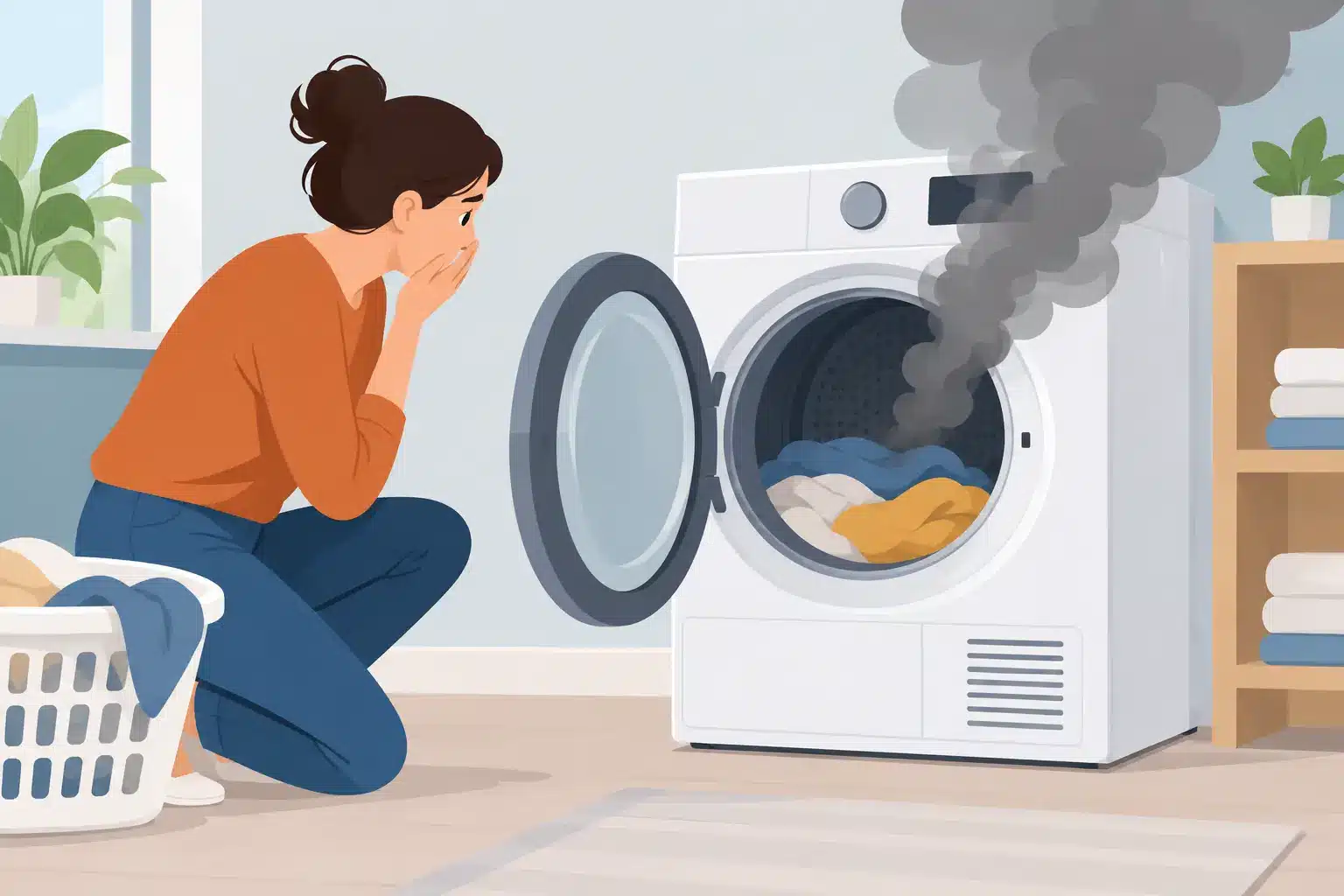
A burning smell coming from the laundry room should never be ignored. If you are searching for why your dryer smells like burning, the problem can range from a relatively simple lint buildup to a mechanical or electrical fault that requires quick action. In every case, stop using the appliance until the cause is identified. An overheating dryer is a fire risk, and it also needlessly increases your energy consumption and wears out your clothes.
Why a Dryer Smells Like Burning
The Most Common Cause
The most common cause is poor evacuation of hot, humid air. A dryer produces a lot of heat. When air no longer flows freely to the outside, the heat stays in the appliance, lint builds up and some components work at an abnormal temperature.
What the Smell Can Tell You
The smell may be faint, similar to heated dust, or sharper, comparable to burning rubber, plastic or electrical wire. This distinction helps guide the diagnosis, but it does not replace an inspection. A persistent smell that gets stronger during the cycle should be treated as a warning sign.
Lint in the Filter, Vent or Exterior Outlet
Why Emptying the Filter Is Not Always Enough
The lint filter should be emptied after every load, but this routine is not always enough. Fine fibers can pass through the filter and build up in the housing, the connecting hose and the wall vent. Over time, they reduce airflow and can come into contact with very hot surfaces.
Vent Problems and Outdoor Exposure
A vent that is crushed behind the dryer, too long, punctured or made up of several elbows traps more deposits. In Montreal, Laval, on the North Shore or on the South Shore, exterior outlets are also exposed to leaves, snow, ice and insect nests. An exterior flap that stays closed while the dryer is running often indicates a blocked exhaust.
Do Not Rely Only on How the Filter Looks
You should not rely only on the appearance of the filter. A filter that looks clean on the surface can be covered with an invisible residue caused by dryer sheets and certain laundry products. This film limits the passage of air through the screen and encourages overheating. Gently washing the filter with lukewarm water, followed by complete drying, can help, but it will not fix a vent that is already loaded with lint.
Overheating Heating Element or Gas System
Electric Dryers
In an electric dryer, the heating element can overheat or become deformed. It can then produce a smell of hot metal, burnt dust or sometimes plastic. Thermostats and thermal fuses are designed to limit this risk, but they can themselves be faulty or react only after a long period of overheating.
Gas Dryers
In a gas dryer, an unusual smell near the appliance calls for even more caution. A smell of gas, combustion or smoke should not automatically be blamed on lint. Turn off the appliance, ventilate the space if this can be done safely and have the equipment checked by a qualified technician. Never try to take apart the gas system or the electrical components to find the source of the problem.
Worn Belt, Motor or Rollers
The Drum Belt
A burning rubber smell can come from the belt that drives the drum. If it slips, is worn or rubs against a displaced part, it heats up and gives off a characteristic smell. A drum that turns with difficulty, squeaks, bangs or stops before the end of the cycle can accompany this problem.
Motor and Support Rollers
The motor and the support rollers can also overheat when the bearings are worn or blocked by fibers. These failures generally require a mechanical repair. Continuing to run the dryer risks causing further damage to the motor and melting some nearby parts.
Damaged Wire, Outlet or Component
A smell of burning plastic, an outlet that is hot to the touch, browned marks on the plug or a breaker that trips are serious signs. They can indicate a poor electrical contact, a damaged cable or an internal component that is overheating.
What to Do in This Situation
In this situation, unplug the dryer if you can do so without touching a hot or damaged area. Do not simply reset the breaker to start the cycle again. An inspection by an electrician or an appliance repair technician is necessary before the dryer is put back into service.
What to Do Immediately
As soon as a burning smell appears, stop the cycle and let the appliance cool down. Then check the lint filter and make sure nothing visibly blocks the exterior outlet. You can also observe whether the exhausted air is weak or unusually hot while the appliance is running, but only after ruling out any sign of smoke, sparks or an electrical problem.
What Not to Do
Do not use a household vacuum to push lint deeper into the vent, and do not insert metal objects into the openings of the appliance. These actions can move the blockage, damage the vent or create contact with an electrical part. Flexible plastic or thin aluminum hoses, often installed in tight spaces, also deserve special attention because they deform easily and trap fibers.
When to Call Emergency Services
If you see smoke, traces of soot or a flame, call emergency services. If the smell is strong, comes back after the filter has been cleaned or comes with unusual noises, do not restart the dryer while waiting to see whether the problem goes away.
When Vent Cleaning Becomes Necessary
Professional dryer vent cleaning is especially recommended when clothes take more than one cycle to dry, when the laundry room becomes very hot or humid, when the exterior flap opens only slightly, or when a burning smell appears without an obvious mechanical cause. These symptoms often indicate that hot air is no longer being evacuated properly.
Cleaning the Entire Path
The cleaning must cover the entire path, from the connection behind the appliance to the exterior outlet. Removing only the visible lint near the filter often leaves a large part of the deposit in the hidden sections. The goal is to restore effective airflow, reduce overheating and limit the buildup of combustible material in the vent.
How Often It Should Be Done
The frequency depends on usage, the length of the vent and the type of installation. A family that uses the dryer several times a week, a rental building or a business with a laundry room may need more frequent maintenance. Condo owners must also consider long vents shared across complex routes, which require an adapted method.
The Nettoyage Imperial Approach
At Nettoyage Imperial, the service is based on a methodical inspection of the exhaust path, professional equipment and safe practices designed to remove deposits without damaging the installation. This approach makes it possible to distinguish a ventilation blockage from a breakdown that must be handled by an appliance repair technician.
Preventing the Burning Smell From Coming Back
Prevention starts with the lint filter, emptied after every use, and with regular checks of the exterior flap. Avoid overloading the drum: an excessive load slows down tumbling, extends drying time and forces the appliance to produce heat for longer.
Watch Your Cycle Times
Also get into the habit of monitoring cycle times. If your towels or thick clothes suddenly take much longer to dry, do not wait for a smell to appear before acting. A drop in performance is often the first clue of a clogged vent or a worn mechanical part.
What a Healthy Dryer Looks Like
A dryer should dry efficiently without an unusual smell, without excessive heat in the room and without requiring multiple cycles. By acting at the first sign, you protect your home, your clothes and an appliance that can still serve you for a long time
Why does my dryer smell like burning?
The most common cause is poor evacuation of hot, humid air. When air cannot flow freely to the outside, heat and lint build up in the appliance. Other causes include an overheating heating element, a worn belt, motor or rollers, and a damaged wire, outlet or component.
Is it safe to use a dryer that smells like burning?
No. You should stop using the dryer until the cause is identified. An overheating dryer is a fire risk, and it also increases your energy consumption and wears out your clothes.
What should I do first when my dryer smells burnt?
Stop the cycle and let the appliance cool down. Then check the lint filter and make sure nothing visibly blocks the exterior outlet. If you see smoke, soot or a flame, call emergency services.
Can a clogged dryer vent cause a burning smell?
Yes. Lint that builds up in the housing, the connecting hose, the wall vent or the exterior outlet reduces airflow and can come into contact with very hot surfaces. A vent that is crushed, too long, punctured or made up of several elbows traps even more deposits.
When should a dryer vent be cleaned?
Vent cleaning is especially recommended when clothes take more than one cycle to dry, when the laundry room becomes very hot or humid, when the exterior flap opens only slightly, or when a burning smell appears without an obvious mechanical cause. The frequency also depends on usage, vent length and the type of installation.
Key Takeaways
- Never ignore a burning smell from your dryer. Stop using it until the cause is identified.
- The most common cause is poor evacuation of hot, humid air, which lets heat and lint build up inside the appliance.
- Lint can build up in the filter housing, the connecting hose, the wall vent and the exterior outlet, even when the filter looks clean.
- Worn belts, motors and rollers, an overheating heating element and damaged wires or outlets can also cause the smell.
- A smell of gas, combustion or smoke, a hot outlet, browned plug marks or a tripping breaker are serious signs that call for a qualified professional.
- Do not use a household vacuum or metal objects to clear a blocked vent.
- If you see smoke, soot or a flame, call emergency services.
- Empty the lint filter after every use, check the exterior flap regularly, avoid overloading the drum and watch your cycle times.