

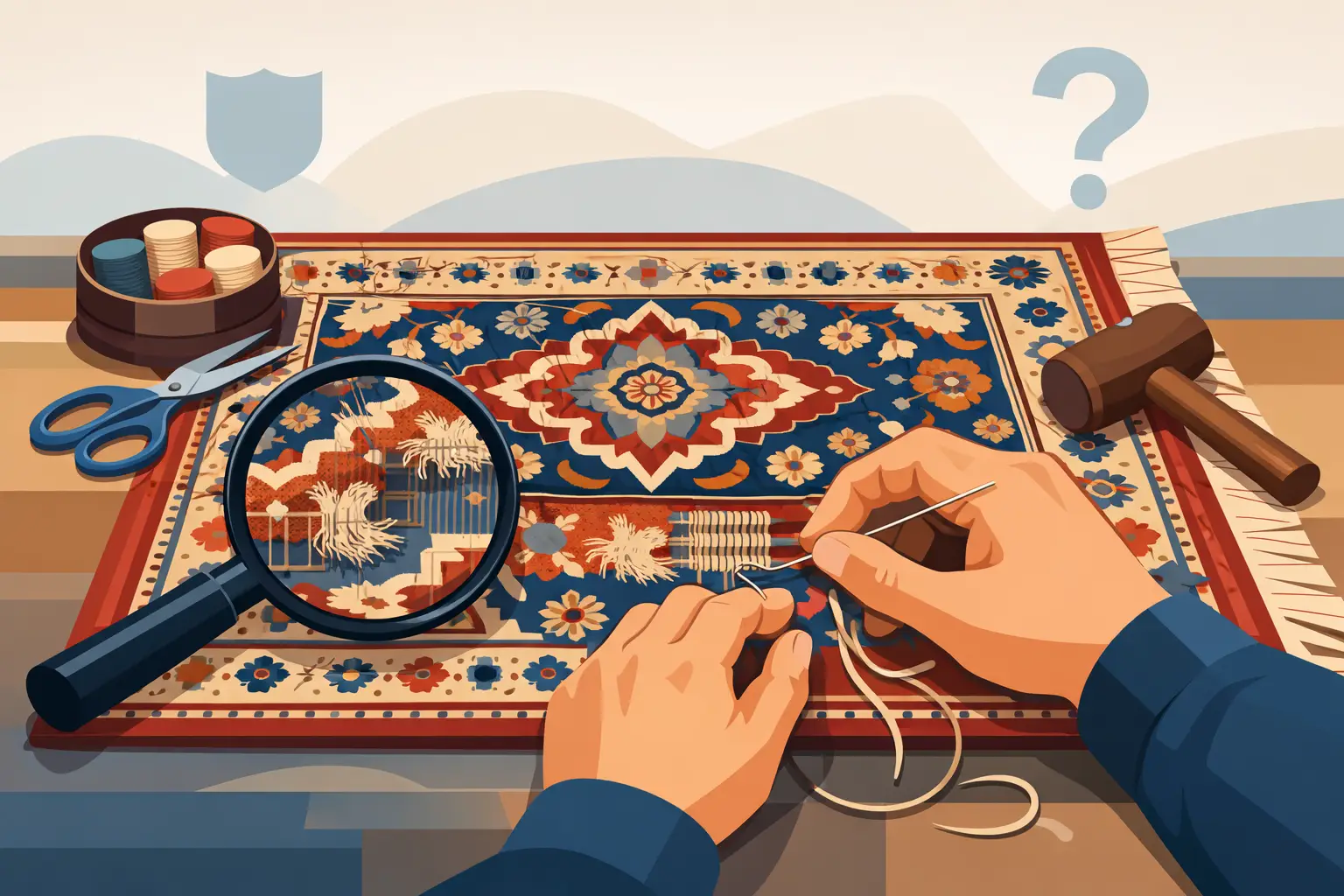
A Persian rug rarely falls apart all at once. The damage usually starts quietly: a curling edge here, a fraying fringe there, a worn patch under the coffee table, or a small tear after moving furniture. This is exactly where Persian rug repair in Montreal matters most. Acting early on a minor flaw is almost always the smarter, less expensive choice compared to waiting until the damage spreads and the structure of the piece is compromised.
Unlike machine-made rugs, a Persian piece is built around a precise weaving logic, specific fibre tensions, and materials that behave very differently from one another. Wool, silk, cotton foundation, natural dyes, and knot density all react to age, traffic, and maintenance history in their own ways. A proper oriental rug restoration service is never just about hiding the damage. It stabilises the structure, preserves the design, and extends the life of the rug without introducing new points of weakness.
Why Timing Matters for Persian Rug Repair
The longer you wait for Persian rug repair, the further the damage travels. A frayed fringe is not just a cosmetic issue. On many Persian rugs, the fringe connects directly to the foundation. Once it starts to give, the edge can unravel row by row. A small opening along the side can similarly trigger a loss of knots and a visible deformation of the rug’s overall shape.
Daily use compounds the problem. Repeated foot traffic, the weight of furniture, and changes in humidity all put extra stress on already weakened areas. If the rug has previously been washed with the wrong method or cleaned too aggressively, the fibres may be more brittle than they appear. In that context, delaying a repair often turns what should be a targeted fix into a full-scale oriental rug restoration service.
The Most Common Types of Damage on Persian Rugs
Not all damage looks the same, and that matters because the right Persian rug repair method depends entirely on what caused the problem in the first place.
Worn or Detached Fringes
This is one of the most frequent issues on Persian rugs. Fringes collect dirt quickly, snag on vacuum heads, trap moisture, and take a lot of mechanical wear. When they start to break, the question is not only about replacing them for cosmetic reasons. A specialist needs to check whether the base of the rug has been affected and whether the edge still has enough structural integrity to be reinforced properly. Persian carpet fringe repair cost depends largely on how far the damage has progressed before the rug comes in for assessment.
Open or Fraying Edges
The selvedge protects the perimeter of the rug. When it starts to loosen, the lateral tension decreases and the rug can warp. Repairing an edge requires the right materials and a carefully managed tension. Work that is too tight will cause the piece to buckle. Work that is too loose will not hold over time. This is one area where the quality of the craftsperson makes an enormous difference to the final result.
Holes, Tears, and Material Loss
A hole in a hand-knotted rug cannot be treated like a simple seam repair. The foundation often needs to be rebuilt first, and then the pattern area has to be reconstructed as faithfully as possible. Depending on the size of the loss, the age of the piece, and its overall value, the level of restoration can range from a discreet structural stabilisation to a more involved oriental rug restoration service that brings the design back to life.
Rippling and Distortion
A rug that ripples underfoot is not just visually distracting. It becomes more vulnerable to uneven wear and can create a tripping hazard, which is worth considering in any Montreal home with children or elderly residents. Rippling can result from improper washing, insufficient drying, uneven tension during a previous Persian rug repair, or simple structural ageing. In this case, the diagnosis is just as important as the repair itself.
What a Professional Assesses Before Starting Persian Rug Repair
A serious Persian rug repair begins with a thorough technical reading of the rug. The specialist examines fibre type, knotting style, the condition of the warp and weft, dye stability, and the true extent of the damage. What looks like surface wear can sometimes point to a deeper structural weakness in the foundation.
The goal is never to recommend the most extensive intervention by default. Sometimes a quick consolidation is enough to stop the damage from spreading. In other cases, a partial fix would be a false economy. If the selvedge, the fringes, and a central zone are all affected, it often makes more sense to address everything in a single coordinated operation rather than returning multiple times.
Usage context also plays a role. A decorative rug in a guest bedroom does not face the same demands as one placed in a busy entryway or a family living room in Laval or the South Shore. The right decision depends on the rug’s value, its role in the space, and the level of durability that is genuinely needed.
Persian Rug Repair and Cleaning: Why the Two Often Go Together
In many situations, repairing a rug without cleaning it first is not the best approach. Abrasive dust embedded in the fibres accelerates wear, and deep soiling can mask the true colours of the design or interfere with re-weaving work. An old stain, a musty odour, or a residue from a household cleaning product can all complicate the restoration process.
A proper clean before repair gives the specialist a sound, honest base to work from, as long as the cleaning method is appropriate for the materials. On a Persian rug, excess moisture, harsh detergents, or slow drying can cause additional damage on top of what already existed. This is why the best approach is usually to coordinate the diagnosis, the specialised cleaning, and the oriental rug restoration service as a single, coherent preservation plan.
What to Avoid Doing at Home
Improvised solutions tend to cause more damage than the original problem. Stitching a tear with standard thread, gluing a backing underneath the rug, or trimming a damaged fringe might seem practical in the moment, but each of these actions complicates a proper repair later. Rigid adhesives lock the fibres in place, non-specialist stitching shifts the tension across the piece, and clean cuts can remove reference points that a restorer would have used to guide the Persian rug repair.
Commercial spot removers are another risk to avoid. On rugs dyed with sensitive pigments, colour migration is a genuine concern. A red, blue, or burgundy area can bleed onto the lighter sections of the design, turning a small local problem into a much wider visual alteration. This type of damage significantly affects the Persian carpet fringe repair cost and overall restoration scope.
Even vacuuming deserves some care. A powerful vacuum run regularly over fragile fringes accelerates their deterioration. If an edge has started to lift, it is better to reduce friction in that area until a specialist has had the chance to assess it, whether you are based in Montreal, Laval, the North Shore, or the South Shore.
How to Recognise Quality Oriental Rug Restoration Service
A good repair is not judged solely on its immediate appearance. Visual results matter, especially on a decorative piece. But the real quality shows in the stability of the edge, the consistency of the tension, the discretion of the retouching, and the respect for the original materials.
Look for a methodical approach. A qualified specialist should be able to explain the type of damage clearly, the level of intervention they recommend, the realistic limits of what the result will look like, and the maintenance precautions to follow afterwards. Overly simple answers are rarely a good sign with Persian rugs. There are almost always nuances: some repairs become nearly invisible, while others remain faintly perceptible but successfully secure the structure for years to come.
Experience counts for a great deal. The approach to a recent wool piece is very different from the care required for an antique rug with weakened areas throughout. A company that regularly handles delicate textiles, coordinates deep cleaning, fibre safety, and repair techniques together, will generally provide a more reliable framework. That commitment to precision is what guides the team at Nettoyage Imperial when a rug calls for more than routine surface care.
How Much Does Persian Carpet Fringe Repair Cost?
There is no universal Persian carpet fringe repair cost, because the total depends on the type of damage, the size of the affected area, the fineness of the weave, and the time required. Re-binding an edge, reinforcing fringes, and reconstructing a deep tear each require different materials and very different levels of precision.
The right first step is always to request a clear written assessment before any work begins. A thorough estimate should separate the cleaning component from the repair component where applicable, identify priorities if multiple interventions are needed, and give you the information necessary to make an informed decision. That way, you avoid paying for unnecessary work and you avoid postponing something that genuinely needs to be done. For homeowners and property managers across Montreal, Laval, and the Greater Montreal area, this transparent approach is the best way to protect an investment that may have taken years to acquire.
When does Persian rug repair in Montreal make financial sense?
If your rug has sentimental, aesthetic, or heritage value, repair is almost always worth it, even for significant damage. If the piece is heavily worn across multiple areas and has low intrinsic value, weigh the Persian carpet fringe repair cost against the expected lifespan after the work is completed. A specialist can help you make that call honestly.
Can I have Persian rug repair and cleaning done at the same time?
Yes, and in many cases it is the recommended approach. Deep-cleaning the rug before repair removes abrasive particles, clarifies the true condition of the fibres, and gives the restorer a clean working surface. Coordinating both services as part of a single oriental rug restoration service also tends to be more efficient and cost-effective overall.
What is included in a professional oriental rug restoration service?
A proper restoration covers the full assessment of the rug’s fibre type, knot structure, warp and weft condition, and dye stability. Depending on findings, services can include fringe repair or replacement, edge re-binding, hole reconstruction, ripple correction, and deep cleaning. The scope is always determined by what the specific piece actually needs.
Why is the Persian carpet fringe repair cost so variable?
Because no two rugs are identical. The cost reflects the complexity of the damage, the fineness of the weave, the materials required, and the time a skilled craftsperson must invest. A fringe that has separated cleanly is much faster to address than one where the damage has reached the rug’s foundation and requires structural rebuilding before the fringe work can begin.
What mistakes should I avoid while waiting for Persian rug repair in Montreal?
Avoid using commercial stain removers, gluing any backing material, stitching tears with standard thread, or trimming frayed fringes. These actions almost always complicate the repair and can increase costs significantly. If an edge is lifting, reduce traffic over that area and limit vacuuming near the damaged zone until your rug has been assessed.
Key Takeaways
- Persian rug repair in Montreal is most effective when damage is caught early, before fringe loss or edge wear reaches the rug’s structural foundation.
- Fringes on Persian rugs are not purely decorative. Their failure can trigger row-by-row unravelling, making timely Persian carpet fringe repair essential.
- Oriental rug restoration service often includes both cleaning and structural repair coordinated together for the best and most cost-efficient outcome.
- Persian carpet fringe repair cost varies depending on damage complexity, weave fineness, and whether foundational reconstruction is required before surface work can begin.
- Avoid home remedies such as commercial stain removers, adhesive backings, and standard thread stitching, as each can significantly complicate a future Persian rug repair.
- Homeowners across Montreal, Laval, North Shore, and South Shore should request a written assessment before authorising any oriental rug restoration service work.