

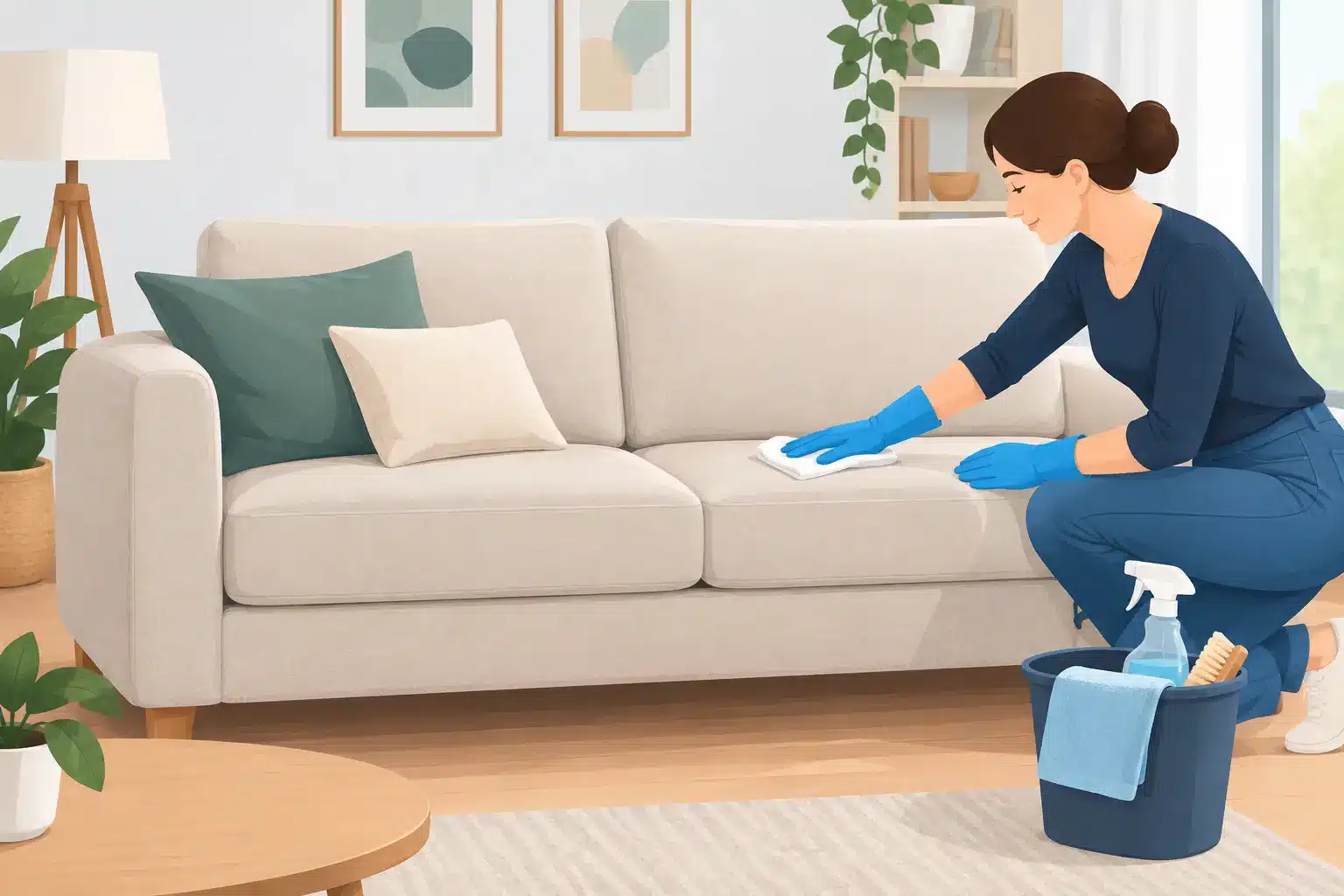
A smell that comes back after a few days, a ring around a stain, or fabric that looks dull are rarely just cosmetic details. They can signal that dirt, organic residue, moisture, or allergens have settled into the upholstery. Knowing how to sanitize a sofa means treating the surface, but also what lies beneath the fabric, without soaking or weakening the furniture.
A sofa is used every day. It naturally traps dust, dead skin, pet hair, crumbs, sweat, and particles carried in from outside. In a home with children, pets, or people sensitive to allergies, methodical maintenance helps preserve both comfort and indoor air quality.
Sanitizing, Cleaning, and Deodorizing: Three Different Actions
Vacuuming removes some of the dry dust. Spot treating targets a specific accident, like coffee or wine. Deodorizing masks or neutralizes certain odors. Sanitizing, on the other hand, aims to reduce the contaminants that build up in the fibers and the stuffing, while preventing moisture from encouraging bad odors or microbial growth.
This distinction matters especially for fabric sofas. A textile can look clean after a surface treatment, while its stuffing still holds fine particles and product residue. Conversely, applying too much water or an unsuitable disinfectant can leave marks, stiffen the fibers, or damage the foam.
The right method always depends on the material, the age of the furniture, the type of soiling, and whether there is a lingering odor. The care code on the sofa’s label is the first thing to check. The letters W, S, WS, and X generally indicate whether the fabric tolerates water, requires a solvent, or should only be vacuumed.
How to Sanitize a Fabric Sofa at Home
For routine maintenance, start by removing cushions, throws, and any objects wedged into the crevices. Slowly vacuum every surface using an upholstery attachment, including the seams, armrests, backrest, sides, and the frame beneath the cushions. Careful vacuuming is essential: wetting a dust-covered sofa often turns dry dirt into embedded grime.
Next, treat small stains locally. Blot the area with a clean, slightly damp white cloth rather than scrubbing. Scrubbing spreads the stain, wears down the fabric, and can change its appearance. Use a cleaner designed for upholstered furniture and compatible with the manufacturer’s care code. Always test on an inconspicuous spot, such as the bottom of the backrest or behind a cushion.
If the fabric accepts a water-based solution, use very little product and very little moisture. The goal is not to soak the stuffing. Work in small sections, then blot immediately with a dry cloth. Open the windows, increase ventilation in the room, and avoid sitting on the sofa until it is completely dry.
For light odors, extended airing and regular vacuuming often work better than an air freshener. Scented products can mask the problem for a few hours without removing its source. If the odor returns as soon as the sofa is used or the air becomes humid, it is likely settled deeper in the cushions or the foam.
Baking Soda: Useful, But Not a Cure-All
Baking soda is often used to absorb surface odors. Lightly sprinkled on dry fabric, left for a few hours, then carefully vacuumed, it can help on a lightly soiled sofa. However, it is not a complete disinfectant and does not remove oils, old stains, or contaminants absorbed into the stuffing.
It should also not be mixed with liquids directly on the sofa. The resulting paste can leave residue that is hard to remove. On dark, delicate, or short-fiber fabrics, a preliminary test remains essential.
Mistakes That Compromise the Sofa
The main risk when cleaning a sofa at home is over-wetting it. A sofa can look dry on the surface while the foam stays wet inside for several days. This residual moisture creates conditions favorable to musty odors, rings, and in some cases, mold.
Also avoid bleach, all-purpose cleaners, ammonia, abrasive powders, and household disinfectants not designed for fabric. These products can discolor the textile, weaken the fibers, leave irritating fumes, or create sticky residue that then attracts more dust.
Steam also requires caution. It can suit certain resistant fabrics, but its heat and moisture are not appropriate for all textiles, particularly velvet, some natural fibers, bonded fabrics, or sensitive upholstery. It should never be applied without checking the care label and controlling the amount of moisture deposited.
Finally, do not treat a stain without identifying what it is. A grease stain, urine, a sugary drink, or blood do not react the same way. Choosing the wrong product can set the stain rather than lift it.
When to Call in Professional Cleaning
Some situations go beyond the limits of home upkeep. This is the case with animal urine odor, water damage, vomit, visible mold, an old stain that has migrated into the foam, or a heavily used sofa after several years. Professional sofa and upholstery cleaning is also preferable for delicate fabrics, modular sofas, large sectionals, and high-value furniture.
A qualified technician starts by identifying the textile, the type of soiling, and color stability. They then select a method compatible with the piece: targeted pre-treatment, controlled extraction, low-moisture cleaning, or a process suited to a fabric that requires solvents. The goal is not only a visual result, but extracting residue while limiting moisture in the stuffing.
Professional equipment offers a decisive advantage: it allows water and dirt to be recovered after treatment. This step reduces the risk of residue and generally speeds up drying. For Montreal households where windows often stay closed for part of the year, this control over moisture is especially useful.
Since 1995, Nettoyage Imperial has applied an approach tailored to the type of furniture, the level of soiling, and the household’s constraints. This method makes it possible to sanitize upholstered furniture without resorting to harsh solutions or uniform treatments that do not respect every fabric.
Preventing Buildup Between Cleanings
A sofa does not need to be deep cleaned every month, but it benefits from regular upkeep. Vacuum it every one to two weeks if you have pets, or at least once a month otherwise. Rotate the cushions when the model allows it to distribute wear, and act quickly after an accident rather than waiting for the stain to dry.
Avoid eating on the sofa as a habit, and use a washable throw in the most heavily used areas. After a wet pet comes back inside or after outdoor activity, prevent moisture and dirt from settling into the fibers. These simple habits extend the effect of a deep clean and keep the sofa looking more uniform.
For most households, professional sanitizing every 12 to 18 months is a reasonable baseline. The frequency can be higher in a home with young children, pets, allergies, smokers, or high tenant turnover. A clean sofa should not just look fresh, it should be dry, free of residue, and suited to your household’s daily life.
How often should I sanitize my fabric sofa?
There is no fixed rule, but vacuuming every one to two weeks if you have pets (or at least once a month otherwise) helps prevent buildup. Most households benefit from a deeper professional sanitizing every 12 to 18 months, more often in homes with young children, pets, allergies, smokers, or high tenant turnover.
Can I use baking soda to clean my sofa?
Yes, but only for light surface odors. Sprinkled lightly on dry fabric, left for a few hours, then carefully vacuumed, baking soda can help absorb mild smells. It is not a full disinfectant and will not remove oils, old stains, or contaminants absorbed deep in the stuffing. Never mix it with liquids directly on the sofa, as the resulting paste can leave residue that is hard to remove.
Why does my sofa smell bad even after cleaning?
If an odor returns as soon as the sofa is used or the air becomes humid, it is likely settled deeper in the cushions or foam rather than on the surface. Scented products can mask this for a few hours without removing the source. Persistent odor, especially animal urine smell, is one of the signs that professional cleaning is needed.
Is steam cleaning safe for all sofa fabrics?
No. Steam can suit certain resistant fabrics, but its heat and moisture are not appropriate for velvet, some natural fibers, bonded fabrics, or sensitive upholstery. It should never be used without first checking the care label and carefully controlling how much moisture is applied.
How do I know if my sofa needs professional cleaning?
Professional cleaning is recommended for animal urine odor, water damage, vomit, visible mold, an old stain that has migrated into the foam, or a sofa that has seen heavy use for several years. It is also preferable for delicate fabrics, modular sofas, large sectionals, and high-value furniture, since professional equipment recovers water and dirt after treatment, reducing residue and speeding up drying.
Key Takeaways
- Sanitizing, cleaning, and deodorizing a sofa are three different actions: sanitizing targets contaminants in the fibers and stuffing, not just surface dirt or smells.
- Always check the sofa’s care code (W, S, WS, X) before choosing a cleaning method, since it determines whether water, solvent, or vacuuming only is safe.
- Vacuum thoroughly before using any liquid, and blot stains rather than scrub them, testing any product on a hidden area first.
- Over-wetting is the biggest risk in DIY cleaning: foam can stay wet inside for days, leading to musty odors, rings, or mold, so use minimal moisture, work in small sections, and ventilate well while drying.
- Avoid bleach, all-purpose cleaners, ammonia, abrasive powders, and unsuitable steam treatments, and call a professional for animal urine odors, water damage, mold, deep-set old stains, or delicate and high-value pieces.