

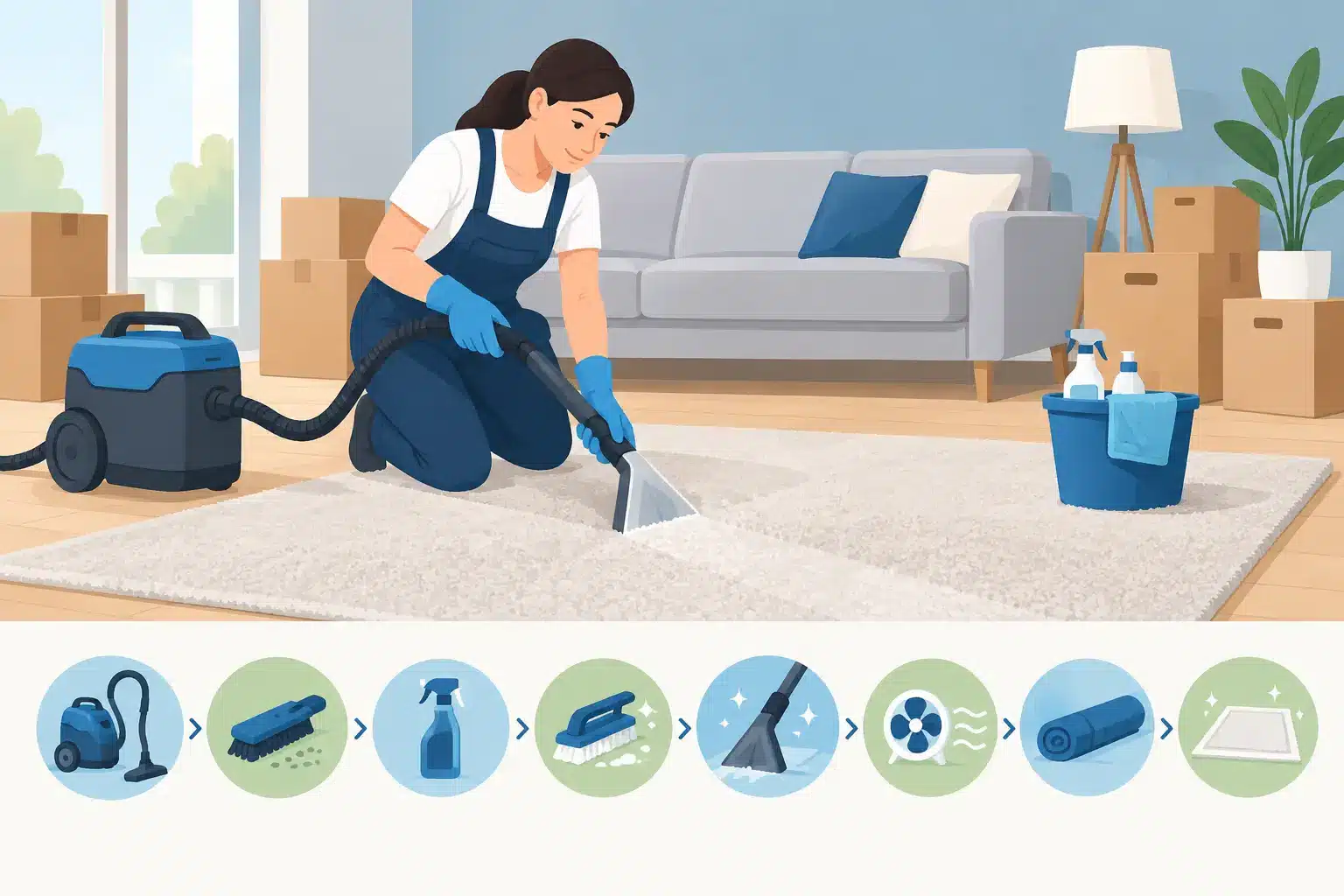
A carpet can look clean once the boxes are gone, while it still holds construction dust, shoe residue, allergens, and household odors. This guide to cleaning carpets after a move helps you act at the right time, using the right method, without damaging the fibers or setting in stains that are already there.
Moving is also a rare opportunity to clean surfaces that are usually covered by furniture. Whether it is a carpet installed in your new home, wall-to-wall carpeting left behind in a rental unit, or a rug transported in the moving truck, a methodical cleaning routine immediately improves the hygiene of the space and the appearance of the room.
Why Clean Carpets After a Move?
During a move, carpets often go through more than just increased foot traffic. Comings and goings deposit sand, calcium, dirt, small particles of wood or plaster, and debris from cardboard boxes. This abrasive dirt settles at the base of the fibers. If it is not removed, it speeds up carpet wear caused by footsteps and furniture.
In a recently renovated or newly purchased property, cleaning also removes what is not always visible: fine dust, pet hair, pollen, residue from scented products, and odors left behind by previous occupants. For families with young children, people with allergies, or pet owners, this step helps create a healthier indoor environment before fully settling in.
The right timing depends on the situation. In an empty home, it is best to clean the carpet before moving the furniture back in. In an already furnished home, the work is still possible, but certain areas will be harder to reach. If the carpet was rolled up, stored in a humid space, or transported in rainy weather, you need to act quickly to prevent moisture odors from setting in.
Carpet Cleaning Guide After a Move: The 8 Steps
1. Inspect the Carpet Before You Start
Before using any product or machine, identify the type of carpet. Synthetic fibers such as nylon, polyester, and olefin generally tolerate moisture better than wool, silk, jute, or certain handmade rugs. Also check the care label, whether there is a glued backing, and the condition of the edges.
Take the time to note dark areas, stains, furniture marks, tears, or odors. An old stain, a rust mark, or water damage should not be treated the same way as a recent mud mark. This first assessment prevents unnecessary treatments and reduces the risk of discoloration.
2. Remove Dry Debris First
Start by picking up visible particles such as tape, staples, bits of cardboard, gravel, crumbs, and pet hair. Then vacuum slowly and thoroughly, going over the area in several directions. A quick pass only removes surface dust, while slow vacuuming helps lift dirt embedded deeper at the base of the fibers.
Pay extra attention along baseboards, under radiators, and in areas where boxes were placed. For a rug, also vacuum the underside if its condition allows it. This preparation step is essential, because wetting a carpet that is still loaded with dust can create mud that is difficult to remove.
3. Ventilate the Room and Control Humidity
Open the windows when outdoor conditions allow and make sure there is good air circulation. After a move, rooms can contain fumes from paint, cardboard, plastic, or renovation products. Proper ventilation helps reduce odors and speeds up drying after cleaning.
However, avoid opening windows wide on a very humid, rainy, or hot and muggy day. In that case, a fan, a dehumidifier, or the property’s ventilation system will give you better control. A carpet that stays damp too long can develop a musty smell or encourage microbial growth in its backing.
4. Treat Stains According to Their Origin
The safest rule is to blot, never scrub vigorously. Scrubbing pushes dirt deeper into the fibers and can spread the stain. Use a clean white cloth to avoid any color transfer, and always test the chosen product on a less visible area first.
Mud marks should dry completely before being vacuumed up. Food stains or recent spills, on the other hand, should be treated quickly, using a product suited to the fiber type. For coffee, wine, pet urine, grease, or paint marks, the method varies depending on the carpet’s composition and the nature of the contaminant. Using an all-purpose stain remover or a homemade mixture may seem convenient, but it can set certain stains, alter colors, or leave a sticky residue that attracts more dirt.
5. Do Not Soak the Carpet
Rented cleaners and household machines can be useful for light maintenance on synthetic carpets in good condition. Their limitation is often in extraction: they inject water and cleaning solution but do not always recover enough moisture or deep-down residue.
A soaked carpet is particularly risky in a basement, a poorly ventilated condo, or a cool room. Water can reach the backing, the floor, or the seams, while leftover soap leaves a sticky feeling. Use a controlled amount of solution, keep wet passes to a minimum, and increase the number of extraction passes. If the carpet does not dry within a reasonable time, increase ventilation right away.
6. Restore Flattened Fibers and Furniture Marks
After moving a sofa, bed, or table, the fibers can stay flattened. Gently vacuum the area, then lift the fibers with a soft brush suited to the carpet. For some synthetic fibers, a lightly damp cloth placed temporarily over the mark can help, as long as the area is not overly wetted.
This method is not recommended for every material. Wool, long-pile carpets, antique rugs, and carpets with delicate backing require a more cautious approach. A deep mark may also reflect permanent compression rather than simple temporary flattening.
7. Treat Odors at the Source
A persistent odor after a move does not always come from the carpet itself. It can come from the underlay, the floor, old water damage, a litter box, smoke, or a piece of furniture that sat in the same spot for a long time. Masking the odor with fragrance does not solve the problem and can irritate people who are sensitive to scents.
When an odor is localized, you need to identify the affected area and assess whether a targeted treatment is enough. Pet odors in particular may have penetrated all the way to the backing or the subfloor. In this situation, surface cleaning sometimes gives only a temporary result. Professional treatment with proper extraction and specialized products is often the better option.
8. Let the Carpet Dry Completely Before Putting Furniture Back
Do not put furniture back while the carpet is still damp. The weight of a piece of furniture can crush wet fibers, transfer wood stains, or block air circulation. Wait until the carpet is dry to the touch, including near the walls and in thicker areas.
When you put the furniture back, use protective pads under the legs whenever possible. They reduce marks and limit the risk of color transfer. In the first few weeks after moving in, vacuum entryway areas regularly to prevent gravel and salt from building up again.
When Should You Hire a Professional?
Professional cleaning is recommended when a carpet has old stains, stubborn odors, heavy soiling, or delicate fibers. It is also the safest choice after minor water damage, a leak, transporting a wet rug, or renovation work that generated a lot of fine dust.
A qualified technician starts by determining the fiber type, the carpet’s condition, and any risks related to color or backing. The treatment method is then adjusted accordingly: pre-treatment, controlled agitation, deep extraction, odor treatment, and accelerated drying as needed. This approach aims to remove contaminants without compromising the integrity of the material.
In Montreal, Laval, the North Shore, and the South Shore, Nettoyage Imperial draws on its experience since 1995 to accurately assess residential and commercial carpets. For a valuable rug, in-shop cleaning can sometimes be preferable to at-home treatment, particularly if the rug requires specialized washing or an inspection of the fringes, edges, and backing.
Protecting the Carpet in the First Few Days
After cleaning, place an effective doormat at every entrance and ask movers, visitors, or workers to remove their shoes whenever possible. This simple precaution reduces the amount of sand, salt, and outdoor contaminants tracked in, especially during humid seasons or the Quebec winter.
A clean carpet from the moment you move in provides a healthy foundation for your new space. By acting before stains, dust, and odors set in, you protect both your indoor air quality and the lifespan of a surface that is part of everyday life at home.
How soon after moving should I clean my carpet?
Ideally before moving furniture back in, while the carpet is still empty and fully accessible. If the carpet was already in place, clean it as soon as boxes and moving traffic are done to remove abrasive dirt before it wears down the fibers.
Can I use a rented carpet cleaning machine after a move?
Rented machines can work for light maintenance on synthetic carpets in good condition, but they often do not extract enough water and residue. Use a controlled amount of solution and multiply extraction passes to avoid oversoaking the carpet.
How do I remove moving-related odors from carpet?
Identify where the odor is coming from, since it may originate from the underlay, the floor, or old water damage rather than the carpet itself. Localized odors, especially pet odors, may need targeted or professional treatment if they have reached the backing.
How long does a carpet need to dry after cleaning?
Drying time depends on humidity, ventilation, and how much water was used, but furniture should not go back until the carpet is dry to the touch throughout, including near walls and in thicker areas.
Should I clean the carpet myself or hire a professional after moving?
Light dirt on synthetic carpets in good condition can often be handled at home. Old stains, stubborn odors, heavy soiling, delicate fibers, or water damage are better left to a professional who can assess the fiber type and adjust the treatment method.
Key Takeaways
- Carpets can trap construction dust, shoe residue, allergens, and odors even when they look clean after a move.
- Always inspect the fiber type and note existing stains or damage before choosing a cleaning method.
- Remove dry debris and vacuum slowly before introducing any moisture.
- Ventilate the room to control humidity and speed up drying but adjust for very humid or rainy days.
- Blot stains rather than scrubbing and test any product on a hidden area first.
- Avoid soaking the carpet, especially in basements or poorly ventilated rooms.
- Let the carpet dry completely before putting furniture back and using protective pads under furniture legs.
- Persistent odors and old or delicate fiber stains are often better handled by a professional.