

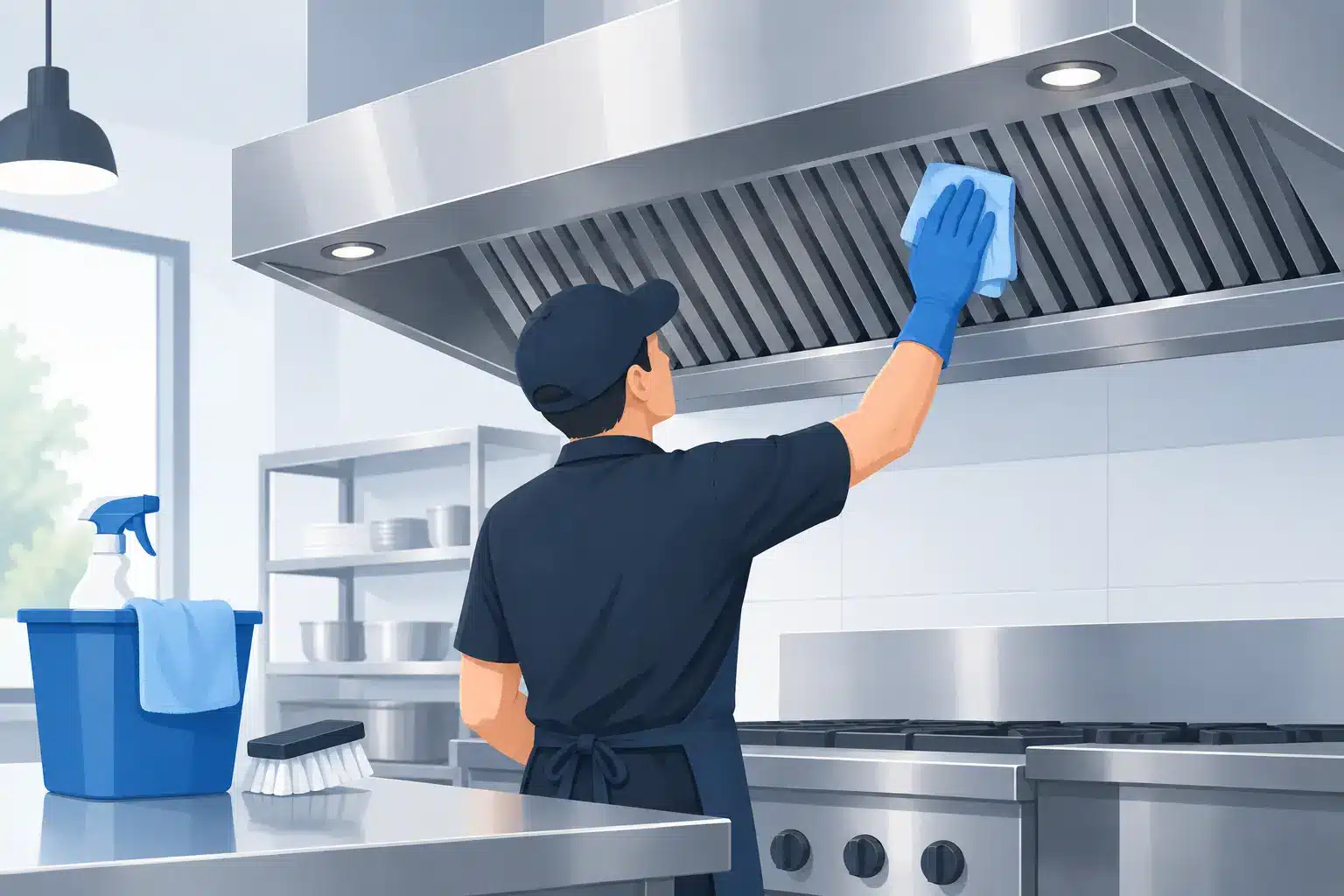
A fine grey layer on the hood, edges, light fixtures, or grilles is never just a cosmetic detail in a commercial kitchen. Dust can mix with greasy vapours, trap contaminants, and complicate daily upkeep. Knowing how to dust a commercial hood helps keep the space cleaner, makes inspections easier, and reduces the buildup of dirt on visible components.
However, dusting does not replace professional degreasing of the extraction system. A commercial kitchen hood deals with heat, steam, grease, and sometimes smoke. Every cleaning task must follow specific precautions to avoid pushing residue toward the filters, ducts, or cooking equipment.
Distinguishing Dust from Grease on a Hood
Before cleaning, look closely at the type of buildup. Dry dust usually appears as a grey or light brown film on the outer part of the hood, on raised surfaces, edges, and controls. It can be removed during routine maintenance with a gentle, controlled method.
A sticky, yellowish, or dark deposit points to grease instead. In that case, simply wiping with a dry cloth risks smearing the dirt and creating a film that becomes harder to remove. Grease buildup around the filters, under the hood, or near the plenums requires a suitable degreasing product and, depending on how heavy it is, a specialized intervention.
This distinction matters. Dust affects general cleanliness and can circulate in the air. Grease, on the other hand, is a matter of hygiene, system performance, and fire safety. A visibly dusty hood can hide more concerning deposits in less accessible areas.
How to Dust a Commercial Hood Safely
Preparing the Area Before Cleaning
The right time to dust a commercial hood is when the cooking equipment is off, cool, and clear. Notify the relevant staff, remove any exposed food, and protect nearby prep surfaces. Cleaning between two service periods, done in a rush, increases the risk of contaminating work surfaces or missing certain areas.
Cut power to the hood and its accessible components whenever your establishment’s procedure allows it. Never spray a product directly near an electrical panel, a motor, an unprotected light fixture, or a switch. A lightly dampened cloth is easier to control than a spray of cleaner.
Cleaning From Top to Bottom
Always start from the top and work your way down. Use a clean microfibre cloth to pick up dust rather than stir it into the air. For corners, joints, edges, and outer grilles, a soft brush can help. Avoid metal brushes, abrasive pads, and strongly corrosive products, as they can scratch stainless steel, damage finishes, or leave permanent marks.
If dust is sticking slightly, dampen the cloth with warm water and a mild cleaner compatible with stainless steel, then wring it out well. The goal is to clean the surface, not push moisture into the ventilation openings. Finish with a second dry cloth to avoid water marks and to prevent dust from clinging to a surface that has not fully dried.
Areas Often Overlooked
The outer faces of the hood get most of the attention, but several other areas collect dust too. Check the top of the hood, around the light fixtures, under the edges, the controls, the filter supports, and the adjacent walls. Ceilings, visible ducts, and shelves near the cooking line also deserve regular inspection.
Do not forget the filters. Their maintenance depends on their model and how intensely the kitchen cooks. A filter loaded with grease should not simply be dusted and put back. Follow the manufacturer’s recommendations and the cleaning protocols that apply to your equipment. A poorly maintained filter can reduce vapour capture and encourage lingering odours.
Mistakes to Avoid During Maintenance
The first mistake is using compressed air or a feather duster. These tools push dust toward food, equipment, and extraction areas. They give an impression of immediate cleanliness but do not actually remove the particles from the environment.
The second mistake is treating the whole hood as a simple stainless steel surface. Ducts, filters, fans, and electrical components are not cleaned the same way. An unsuitable approach can compromise how the equipment works or create a safety issue.
Finally, avoid putting off cleaning because the surfaces look clean at eye level. Dust and greasy residue often build up on the upper parts and inside the system, where they are less visible. A visual check alone is not enough to judge the real condition of a commercial hood.
Setting a Cleaning Frequency for Your Kitchen
How often you should dust depends on your kitchen’s activity. A café that does little greasy cooking does not have the same needs as a full-service restaurant, a production kitchen, or a rotisserie. Cooking volume, the type of food, hours of operation, ambient ventilation, and nearby renovation work all affect how quickly buildup forms.
In most establishments, wiping down the outer, accessible surfaces should be part of the weekly routine. Higher, less accessible areas can be checked monthly. When the environment is particularly dusty or the kitchen runs at high volume, more frequent cleaning is often warranted.
Keep a simple log of the work done. This habit helps managers spot the areas that get dirty too quickly, assign responsibilities, and show that regular maintenance is being carried out. It also helps separate daily tasks from planned technical cleaning.
When to Call in Professionals
Routine dusting is part of a good maintenance schedule. However, greasy deposits inside the hood, saturated filters, lingering cooking odours, dripping residue, or contaminated ducts call for a professional assessment. These signs mean the problem goes beyond surface cleaning.
A specialized service has the equipment, products, and methods needed to treat the system’s components without damaging materials or spreading contaminants. It also allows hard-to-reach areas that should not be handled without training to be cleaned safely. Depending on how the kitchen is used, scheduling should take into account the requirements of your insurer, the relevant authorities, and the recommendations tied to your ventilation system.
Since 1995, Nettoyage Impérial has supported businesses in Montreal, Laval, the North Shore, and the South Shore with structured interventions for commercial hoods and ventilation systems. The goal stays practical: reduce buildup, protect equipment, and maintain a clean and safe working environment.
A well-maintained commercial hood is barely noticeable during service. It captures vapours efficiently, stays clean to the touch, and does not let odours or deposits settle into the kitchen. By building dusting into your routine and leaving technical work to the right people, you protect your equipment, your team, and the quality of your establishment.
What is the difference between dust and grease on a commercial hood?
Dust appears as a dry grey or light brown film on outer, raised surfaces and can be removed with routine wiping. Grease is sticky, yellowish, or dark and needs a proper degreasing product rather than a dry cloth.
How often should a commercial kitchen hood be dusted?
Most kitchens should wipe down accessible outer surfaces weekly, with higher or less accessible areas checked monthly. High-volume kitchens or dustier environments may need more frequent attention.
Can I use compressed air to clean a commercial hood?
No. Compressed air and feather dusters push dust toward food, equipment, and extraction areas instead of removing it, which can create hygiene and safety issues.
Which parts of a commercial hood are most often missed during cleaning?
The top of the hood, the area around light fixtures, the underside of edges, controls, filter supports, and nearby walls or ceilings are commonly overlooked spots.
When should a commercial hood be professionally degreased instead of just dusted?
When there are greasy deposits inside the hood, saturated filters, persistent cooking odours, dripping residue, or duct contamination, since these issues go beyond what surface dusting can address.
Key Takeaways
- Dust and grease look and behave differently on a hood, and telling them apart determines the right cleaning method.
- Routine dusting should happen with equipment off, cool, and cleared of food.
- Always clean from top to bottom using a microfibre cloth, never compressed air or a feather duster.
- Commonly missed spots include the top of the hood, light fixtures, filter supports, and adjacent walls or ceilings.
- Cleaning frequency depends on kitchen volume, with weekly wipe-downs and monthly checks of higher areas as a general baseline.
- Greasy deposits, saturated filters, and lingering odours signal that the job needs a professional degreasing service, not just dusting.