

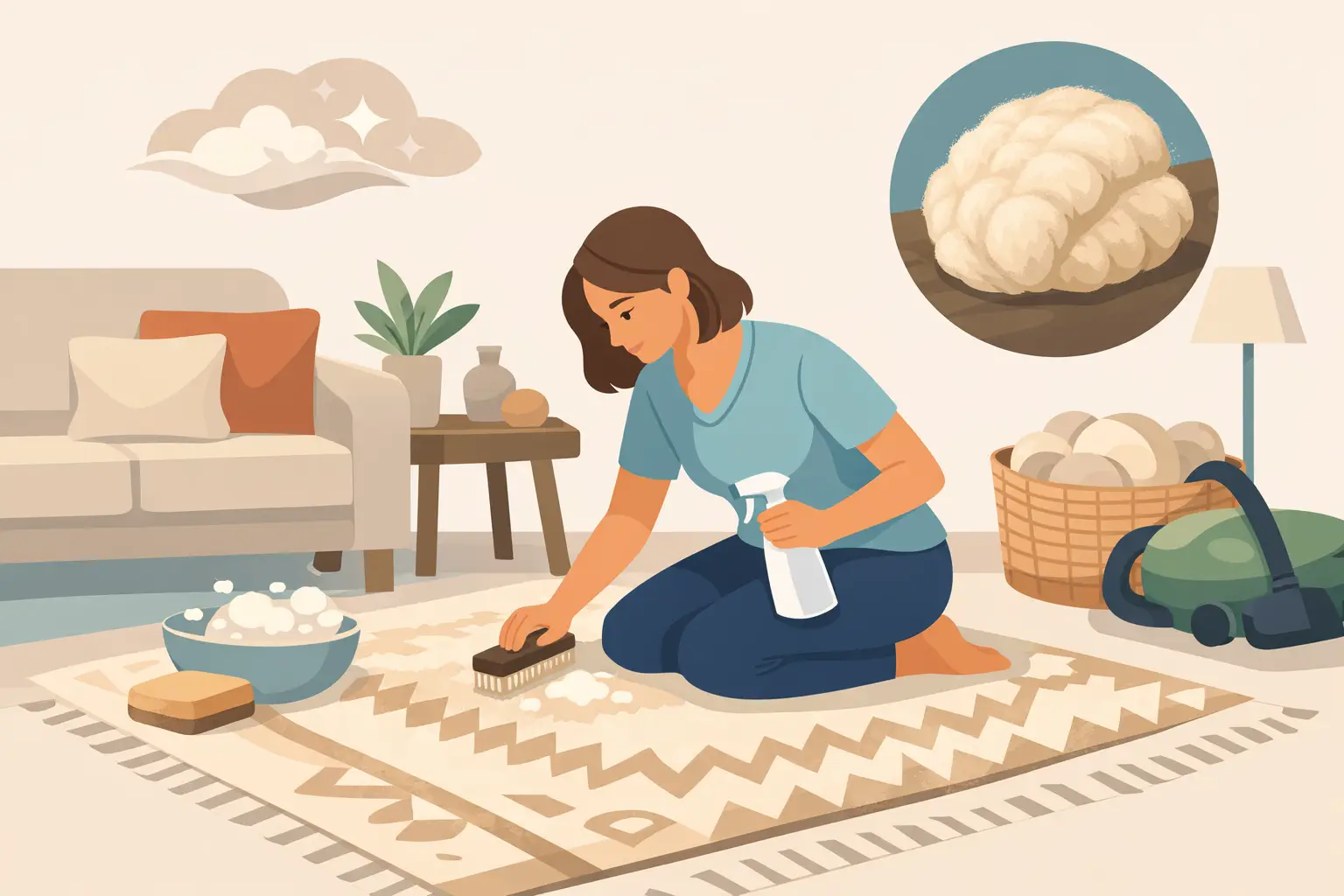
Wool is nothing like a synthetic rug, and treating it the same way can ruin it fast. Knowing how to clean wool carpets properly means paying close attention to water, temperature, friction, and drying time. Too much scrubbing or too much water can felt the fibres, cause colours to bleed, or leave a ring that is nearly impossible to fix.
The good news is that a careful, gradual approach protects your rug’s look, comfort, and lifespan for years. If you have ever wondered how to wash wool rugs without wrecking them, this guide walks you through everyday care, fresh stain response, and the moments when it is smarter to call in a professional for wool carpet cleaning.
Why Wool Carpet Cleaning Needs a Different Approach
Wool is a remarkable natural fibre. It resists crushing well, regulates moisture, and traps a surprising amount of particles inside its structure. That is exactly why a rug can look clean on the surface while dirt still hides deep in the fibres.
Fine dust, sand, pet hair, allergens, and greasy residue build up gradually at the base of the strands. This is one of the biggest reasons wool carpet cleaning needs to happen regularly, since trapped grit acts like sandpaper every time someone walks across it.
Check Before You Start Wool Carpet Cleaning
Before starting any wool carpet cleaning routine, check the care label if there is one. It often lists the exact fibre composition, manufacturer recommendations, and any restrictions around water or specific products. A hundred percent wool rug, a hand knotted piece, an antique, a fringed rug, or one with very vivid colours all call for extra caution.
Also flip the rug over and look at the backing. Jute, cotton, and latex backings do not react the same way to moisture. Jute can yellow, warp, or develop an odour if it gets too wet and dries slowly, so oriental, handmade, or high value rugs deserve a professional assessment before any wet cleaning.
Always test a small, hidden area before applying anything. Lightly dampen a clean white cloth with your chosen solution, dab a corner of the rug, and check whether any colour transfers onto the cloth. If it does, skip home cleaning altogether, since unstable dyes can bleed permanently under the wrong treatment.
Everyday Care Makes All the Difference
Regular vacuuming is still the best form of protection and the real foundation of how to clean wool carpets over the long term. Vacuum high traffic areas once or twice a week, and skip an aggressive rotating brush if the fibres are long, delicate, or looped. A moderate setting with several slow passes works best, and fringes should only get the flat attachment or a gentle hand brushing.
Flip the rug a few times a year to vacuum underneath, since a surprising amount of dust settles there and gets overlooked. If the rug sits on a hardwood floor, a good quality rug pad reduces wear, keeps the piece stable, and limits dirt working its way under the fibres.
Air out the room and gently shake smaller rugs outdoors when weather allows. Avoid beating them hard, since the fibres and backing of an antique or handmade rug can weaken under repeated impact.
How to Clean a Wool Rug After a Fresh Spill
A fresh stain is always easier to manage than one that has dried in. The golden rule for how to clean a wool rug in the moment is simple: blot, never rub. Rubbing pushes liquid deeper into the pile, spreads the mark, and can change the texture of the wool itself.
Start by lifting any solids with a spoon or the dull edge of a spatula. Place an absorbent white cloth or a few paper towels over the spot and press down firmly, working from the outside toward the centre so the stain does not spread further. Swap the cloth as soon as it becomes damp or coloured.
For a light stain, mix a very mild solution of cool or lukewarm water with a small amount of cleaner made specifically for wool. Dampen a cloth, without soaking it, and dab the area. Rinse with a second barely damp cloth to remove any leftover product, then blot up as much moisture as possible with a dry towel.
Hot water should be avoided entirely, since combined with soap and friction it can felt wool fibres almost instantly. Harsh alkaline products, bleach, powerful all purpose stain removers, abrasive powders, and heavily scented solutions are just as risky, since they can alter colour, weaken fibres, or leave a residue that attracts more dirt.
Food, Drinks, and Greasy Spills
For coffee, juice, wine, or sugary drinks, blot up the liquid immediately before reaching for a cleaning solution. Sugar left in the fibres can turn sticky and attract dirt quickly. If a faint shadow remains after drying, repeat the blotting with a very small amount of solution rather than adding more product.
Greasy stains need a different approach entirely. Remove the excess without spreading it, and avoid soaking the rug, since oils can migrate deep into the pile. Repeated home attempts often make grease stains worse, especially lighter coloured wool.
For pet accidents, blot quickly and treat the area without masking the odour with fragrance. The goal is removing organic residue at the source. If urine has reached the backing or the rug pad underneath, surface cleaning alone will not be enough, and the smell can return once humidity rises.
Why a Full Wash at Home Rarely Works Out
Soaking a wool rug in an attempt at deep wool carpet cleaning can seem like a shortcut, but it carries real risk. Oversaturation can cause dyes to migrate, warp the rug’s structure, create rings, or trap moisture that leads to musty odours. The real problem is usually not the washing itself but incomplete drying afterward.
A rug needs to dry quickly, evenly, and with proper air circulation. Leaving it damp on a floor, rolling it up before it is fully dry, or covering it too soon creates the perfect environment for odour and microbial growth, especially with thick rugs in poorly ventilated rooms.
Home steam cleaners are not automatically safe for wool either. Steam that is too hot or excessive water injection can damage both fibres and dyes. Whether they are appropriate really depends on the rug’s construction, condition, composition, and the machine’s actual ability to recover moisture.
When to Call in a Professional Wool Carpet Cleaning
Professional wool carpet cleaning is the right call when a rug has old stains, lingering odours, yellowing, heavy traffic marks, or visible dust buildup. It is also the safer route for handmade wool rugs, oriental pieces, fringed rugs, antiques, or any rug that has already bled colour once.
Serious cleaning work starts with identifying the fibre type, dyes, backing, and the nature of the soiling. From there, the method is chosen to limit moisture, protect colour, and support controlled drying. Insufficient extraction or the wrong product can leave a rug looking cleaner on the surface while making it more vulnerable to soiling down the road.
Learning how to clean wool carpets comes down to patience, the right products, and respecting how wool naturally behaves. Blot instead of scrub, avoid hot water and harsh chemicals, and let the rug dry fully and evenly every time. Regular vacuuming and quick action on spills go a long way toward keeping a wool rug looking its best.
When a stain is stubborn, the rug is valuable, or odours persist, a professional eye makes all the difference. Nettoyage Imperial has supported homeowners across Montreal, Laval, the North Shore, and the South Shore since 1995, and is always happy to help assess whether a rug needs a gentle touch up or a full in shop treatment.
Keeping a Wool Rug Clean for the Long Haul
Preventing dirt buildup is always simpler than repairing damaged fibres. Place an effective mat at every entry point, remove shoes where possible, and act quickly whenever a spill happens. In high traffic areas, rotate the rug occasionally so wear and fading spread out evenly.
A well maintained wool rug keeps its softness, its colour, and its role in a comfortable home. When in doubt, test gently, limit water, and ask for advice before applying any product. That caution protects a textile that can stay part of your home for many years to come.
What is the safest way to know how to clean wool carpets at home?
The safest approach is light vacuuming, prompt blotting of spills, and a mild wool specific cleaner used sparingly. Always test a hidden spot first, avoid hot water, and never scrub. This keeps fibres intact and colours from bleeding while handling most everyday dirt.
Can I use a regular carpet shampoo when learning how to wash wool rugs?
No, regular shampoos are often too alkaline for wool and can strip natural oils or cause felting. Stick to cleaners formulated specifically for wool, and rinse thoroughly with a barely damp cloth to remove leftover residue.
Is steam cleaning safe for how to clean a wool rug?
It depends on the rug’s construction and condition. Excess heat or water injection can damage delicate wool fibres and dyes, so professional assessment is safer for valuable or antique pieces before attempting steam cleaning at home.
How often should professional wool carpet cleaning be done?
Most homes benefit from professional cleaning every twelve to eighteen months, though high traffic rugs or homes with pets may need it more often to prevent trapped dirt from wearing down fibres.
Why does my wool rug still smell after I cleaned a stain myself?
Odour usually means moisture or residue reached the backing or pad underneath. Surface cleaning will not resolve that, and a professional extraction is often needed to fully remove the source of the smell.
Key Takeaways
- Knowing how to clean wool carpets starts with checking labels, backing, and doing a colour test before using any product.
- Blot, never rub, when treating a fresh spill, since rubbing spreads stains and damages wool’s texture.
- Hot water, bleach, and harsh alkaline cleaners are the biggest risks when it comes to how to wash wool rugs.
- Regular vacuuming and occasional flipping are the simplest ways to prevent deep set dirt in wool fibres.
- Full at home soaking is rarely a good idea, since incomplete drying causes odour and structural damage.
- Professional wool carpet cleaning is the safest choice for antique, handmade, or high value rugs.