

How Long Carpet Lasts and What Makes It Wear Out Early
Most residential carpet lasts 5 to 15 years. Nylon and wool sit at the long end. Olefin and budget polyester sit at the short end. Traffic, the pad underneath, pets and how well soil is removed change the number more than the fibre label does.
The good news is that most early wear is caused by grit, and grit is something you can control. The sections below show what to expect from your carpet, what shortens that life and what adds years.
How Long Carpet Lasts by Fibre
Different retailers quote different ranges, so use these as a way to compare fibres, not as a warranty.
| Fibre | Typical lifespan | What to know |
|---|---|---|
| Olefin (polypropylene) | 5 to 10 years | Affordable and stain resistant, but it flattens and holds oil |
| Polyester | 5 to 10 years | Soft and colourful, but it mats in traffic lanes |
| Nylon | 10 to 15 years | Resilient and the usual choice for busy rooms. Dense, solution dyed nylon can reach 15 to 20 years |
| Triexta | 5 to 15 years | Naturally stain resistant and fairly resilient |
| Wool | 15 to 25 years or more | Long lasting with care, but it needs gentler cleaning |
Construction matters as much as fibre. A dense, tightly twisted carpet on a good pad outlasts a thin carpet of the same fibre. A cheap pad often fails before the carpet does.
How Long Carpet Lasts by Room
The same carpet ages at different speeds in different rooms, because wear follows foot traffic.
| Room | Typical lifespan |
|---|---|
| Stairs and hallways | 5 to 10 years |
| Living rooms | 8 to 12 years |
| Bedrooms | 10 to 15 years or more |
Households with children and pets sit at the short end of every range. Some guides estimate that pets can roughly halve a carpet’s life, mostly when accidents soak through to the pad.
What Really Wears Carpet Out
Five things do most of the damage. Each one has a fix.
Grit. Sand, salt and dried soil act like fine sandpaper under every footstep. They cut and dull the fibre from the inside. Manufacturer guidance says proper vacuuming removes about 80 to 85 percent of dry soil, which is why vacuuming is the single best habit for carpet life. See carpet maintenance tips.
Crushing. Pile that is pressed down under furniture legs and along walkways stops springing back. Furniture pads, moving heavy pieces a few centimetres now and then, and a rug over the busiest path spread the load.
Moisture. A carpet that stays damp for hours can develop odours and, depending on the backing, mould. Too much water during a spot clean is a common cause. Blot, extract and dry quickly.
Pad damage. Pet urine and spills that soak through to the pad cannot be fixed from the surface. A smell that returns when the weather turns humid usually points here. See carpet odour removal.
Sun and residue. Strong window light fades colour over the years. Soap and cleaner left in the pile attract soil, so the carpet looks dirty again within days and wears faster.
Habits that Add Years
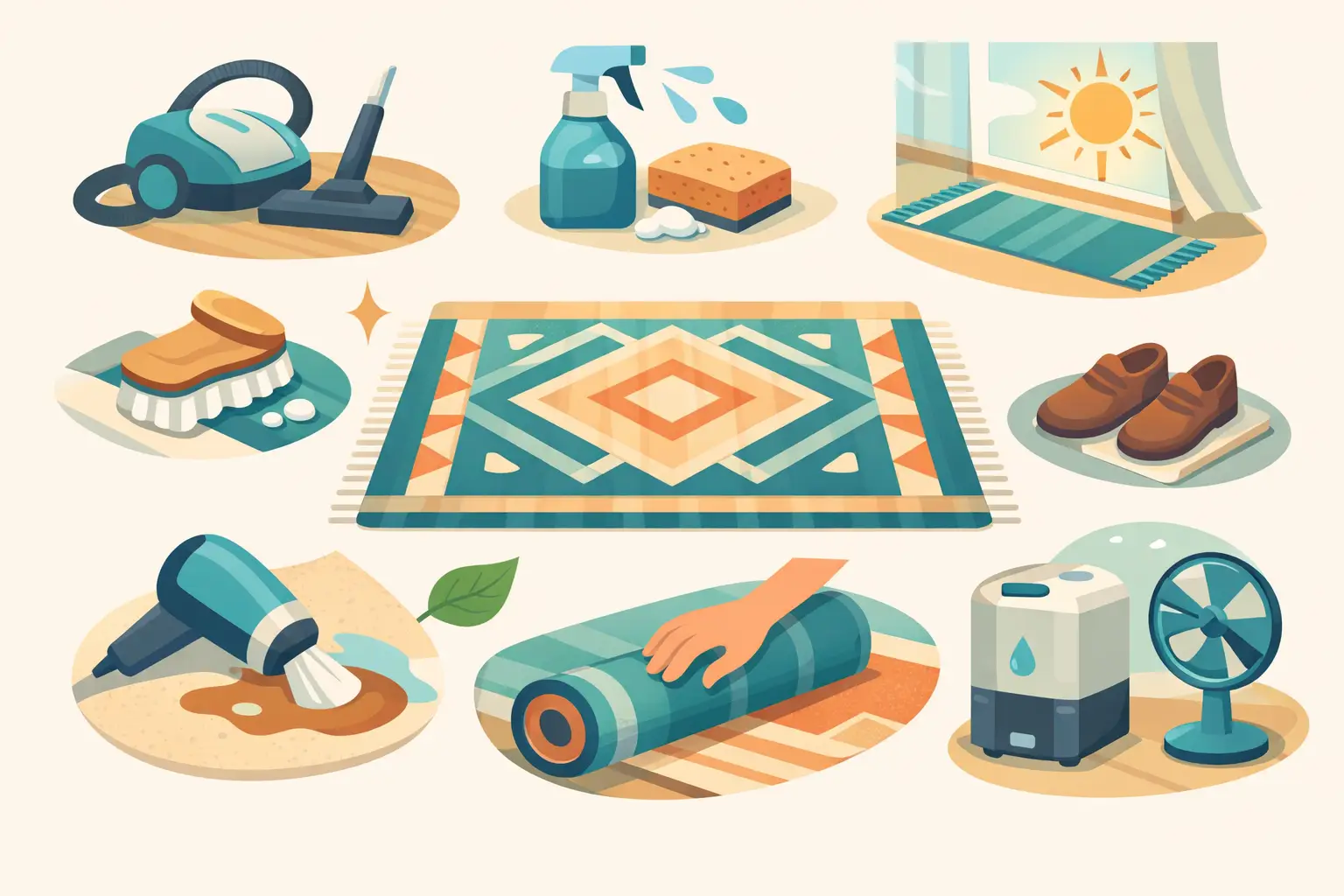
You do not need a complicated routine. These five habits protect most of a carpet’s life.
- Stop soil at the door. A coarse mat outside, an absorbent mat inside and shoes off. Montreal winters bring salt and slush that wear fibre fast.
- Vacuum slowly and often. Weekly at least, more in hallways and entrances.
- Clean on a schedule, not when it looks dirty. Once a year suits many homes. With pets, children or allergies, every 6 to 12 months. Soil removed early does less cutting.
- Treat spills and accidents quickly. Blot, never rub. For stain by stain methods see how to remove stains from carpet.
- Match the method to the fibre. Wool and handmade rugs need gentler care than synthetic carpet. See how to clean wool carpets.
The full routine, with a weekly and monthly checklist, is in carpet maintenance tips.
Does Professional Cleaning Make Carpet Last Longer
Yes, for the part of wear that soil causes. Hot water extraction, often called steam cleaning, removes abrasive grit from deep in the pile and rinses out residue. That reduces the cutting that happens with every step.
It cannot undo damage that has already happened. Crushed fibres, worn through pile and a damaged pad stay as they are. A simple test is to have a small area professionally cleaned and see whether the texture recovers.
Cleaning done badly can shorten life. Soaking the carpet, using strong products on wool or scrubbing hard all do harm. Fitted carpets at Nettoyage Impérial are cleaned on site with truck-mounted hot water extraction, and rugs are cleaned in our shop, where we can control each stage.
Why Carpet Can Look Worse After Cleaning
This surprises many people, and it is usually not the cleaning that caused the wear.
Soil darkens a carpet evenly, so it hides flattened fibre. When the soil comes out, the crushed traffic lanes show more clearly. The carpet was already worn. It is now visible.
Other causes are leftover soap that attracts new dirt, and soil wicking back up from the pad as the carpet dries. A plain water rinse and faster drying prevent both. If a traffic lane stays flat after a careful clean, the fibre has lost its spring and no cleaner will bring it back.
Signs It Is Time to Replace
One sign rarely settles the question. Several together usually do.
- Matted or flattened lanes that do not recover after a professional clean
- Pile worn through so the backing or pad shows
- Odours that return after cleaning, which often points to the pad
- Seams lifting, fraying edges or ripples that come back after restretching
- A carpet well past its expected life, such as 15 years or more in a busy room, together with any of the signs above. Age alone is not a reason to replace
For a full walk through of the decision, including stains, pet damage and cost, read carpet cleaning or replacement. For a quick check of whether cleaning would help, see signs you need professional carpet cleaning.
Is Old Carpet Unhealthy
Age alone does not make carpet unhealthy. Older carpet simply holds more years of dust, dander and odour, and its pad may have taken damage. Regular vacuuming and professional cleaning remove and reduce that load.
Replacement is worth considering if allergy symptoms continue after careful cleaning, if a musty or urine smell keeps returning, or if the pad is crumbling.
Book a Carpet Assessment in Montreal, Laval and the Shores
If you are not sure whether your carpet can be saved, we will look at the fibre, the traffic lanes and any stains, then tell you honestly whether cleaning will help. See our carpet cleaning and rug cleaning services or request a quote.
How long should carpet last?
Most residential carpet lasts 5 to 15 years. Wool and dense nylon last longest, and stairs and busy family rooms wear fastest.
How often should carpet be replaced?
Replace it when it shows several signs together, such as matting that does not recover, worn through pile, returning odours or a damaged pad, not at a fixed age.
Does carpet last longer in bedrooms?
Yes. Bedrooms see less foot traffic, so carpet there often lasts 10 to 15 years or more.
Does professional cleaning shorten carpet life?
Not when it is done correctly. Removing grit protects the fibre. Over wetting, harsh products and rough scrubbing are what cause harm.
How long does carpet last with pets?
Often noticeably less, especially when urine reaches the pad. Quick blotting and an enzyme cleaner help, and a professional extraction can reach what a home product cannot.
Is it worth cleaning a 20 year old carpet?
Often yes if the fibre still has spring and the pad is sound. If the pile is worn through, the pad is damaged or smells return, replacement is the better value.
How often should I clean carpet to make it last?
Once a year suits many homes. With pets, children or allergies, every 6 to 12 months.