

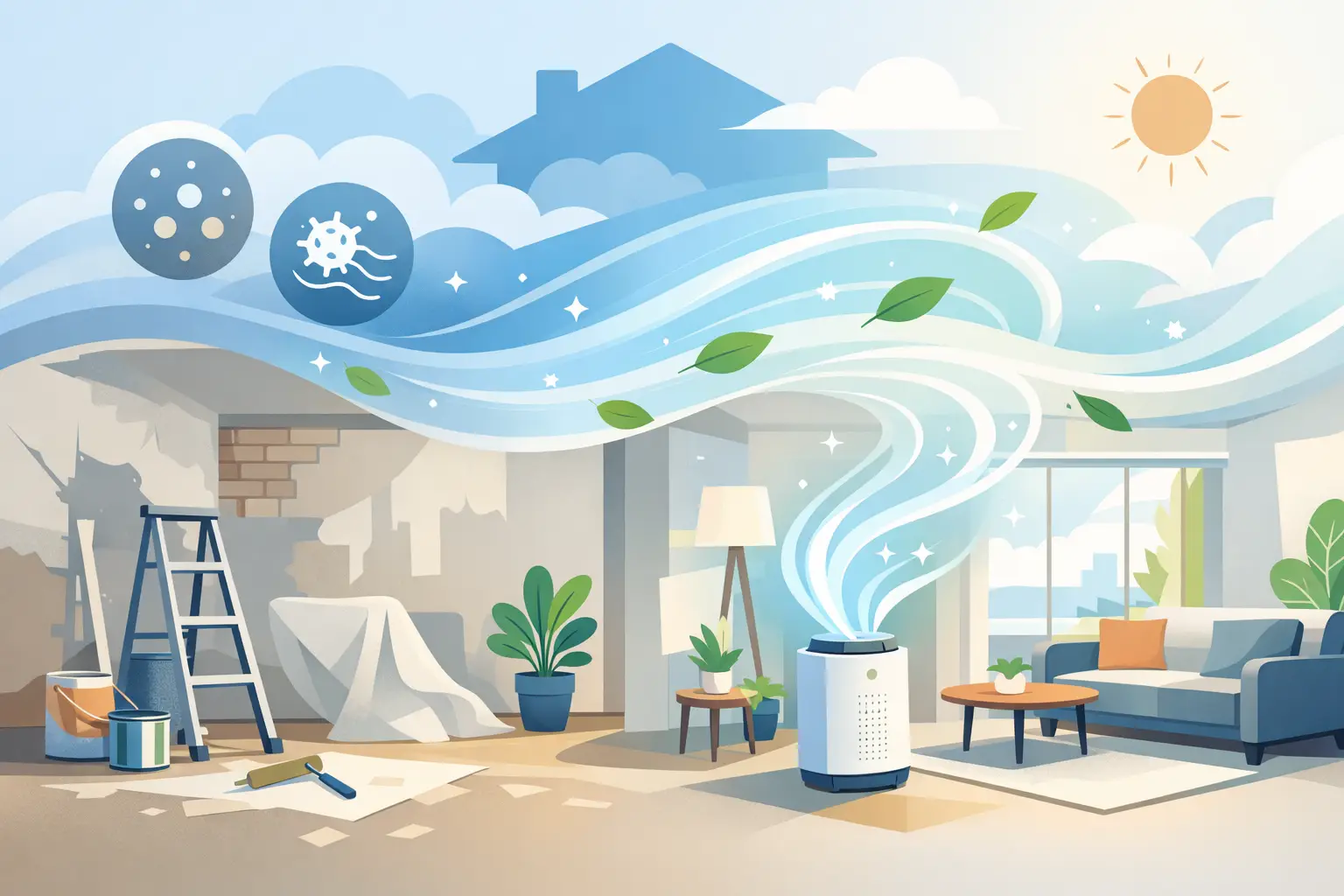
A renovation can leave a room looking spotless while quietly degrading the air you breathe. Plaster dust, sanding residue, volatile organic compounds, and material odors don’t disappear with the last sweep of the broom. Knowing how to purify the air after a renovation helps protect the comfort of your home, especially when children, allergy sufferers, or pets live there.
The outcome depends on the nature and scope of the work. Repainting a bedroom doesn’t carry the same challenges as opening up a wall, redoing a kitchen, or replacing flooring. In every case, the right approach is to eliminate contaminants at the source, ventilate in a controlled way, and clean the surfaces and systems that can trap particles.
Identifying What Pollutes the Air After Renovation Work
Renovation work rarely produces just one type of contaminant. Fine dust is often the most visible problem, but it isn’t always the most persistent. Sanding drywall, wood, concrete, or joint compound can generate very lightweight particles that stay suspended in the air for a long time before settling into carpets, furniture, baseboards, and ventilation ducts.
Paints, varnishes, adhesives, caulking, primers, insulation, and new flooring or coverings can also release VOCs (volatile organic compounds). These substances are responsible for chemical odors, eye or throat irritation, headaches, and sometimes a feeling of heavy air. Low-VOC products reduce the risk, but don’t always eliminate it entirely.
Finally, humidity deserves special attention. After plastering, painting, intensive cleaning, or a water issue discovered during the project, excess humidity creates conditions favorable to mold growth. A musty smell, new stains, or unusual condensation on windows warrant a quick inspection.
How to Purify the Air After a Renovation, Step by Step
The most common mistake is running the ventilation system at full blast while dust is still everywhere. This can push particles into the ducts and other rooms. You need to remove the bulk of the contaminants first, then renew the air efficiently.
Removing Fine Dust Without Spreading It
Start with a thorough top-to-bottom cleaning. Moldings, door frames, light fixtures, windowsills, and vent covers accumulate a surprising amount of dust. Use slightly damp microfiber cloths to capture particles rather than stirring them back into the air.
Floors require the same care. A vacuum with a HEPA filter is preferable, especially after sanding drywall or wood. Go over floors slowly, as well as rugs, carpets, upholstered chairs, and exposed mattresses. A single pass with a poorly filtered vacuum can release the finest particles back into the room.
One pass is rarely enough. It’s recommended to repeat the dusting after 24 to 48 hours, since some dust gradually resettles. During this period, avoid shaking out textiles, dry sweeping, or using an air blower.
Ventilating at the Right Time and in the Right Way
After the initial cleaning, air out the rooms generously. Opening windows on opposite sides of a room for 15 to 30 minutes promotes genuine air renewal, more effective than leaving a single window cracked open all day. If weather permits, repeat this two or three times a day during the first few days after the work is finished.
In Quebec, ventilation still needs to be adapted to the season. In winter, short periods of cross-ventilation limit heat loss and reduce the risk of condensation. In summer, when outdoor air is very humid or air quality is poor, it may be better to rely more on a well-maintained air exchanger and indoor filtration.
Bathroom and kitchen fans can help clear certain odors, but they don’t replace general ventilation. Make sure outdoor vents aren’t obstructed and that your air exchanger’s filters are clean.
Reducing VOCs and Lingering Odors
A paint smell that lingers for several days shouldn’t be masked with air freshener. Air fresheners often add their own substances to indoor air. The most reliable solution remains renewing the air, along with removing open containers, soiled rags, and construction waste.
An air purifier can be a useful addition in a bedroom, office, or home occupied during the renovation. To be effective against dust, it needs HEPA filtration. For odors and certain VOCs, an activated carbon filter is necessary. Its capacity should match the size of the room, and its filters should be replaced according to the manufacturer’s recommendations.
Houseplants can improve the visual comfort of a renovated space, but they don’t replace ventilation or filtration. They can’t quickly handle a high concentration of dust or chemical vapors.
Don’t Forget the Ducts and Air Exchanger
When a heating, cooling, or ventilation system ran during the renovation, it may have drawn in construction dust. These particles build up in filters, around vents, and, depending on how long the project lasted, in sections of the ductwork itself. They can then be redistributed throughout the house once the system is put back into service.
Start by replacing or cleaning the filters compatible with your unit. Check the return air grilles, supply vents, and the air exchanger housing. If you notice a significant buildup of dust, a persistent odor when the system starts up, or visible residue in the ducts, professional cleaning is recommended.
This service is especially relevant after a major renovation, demolition work, a water issue, or a project that generated a lot of drywall dust. A qualified technician uses specialized equipment to dislodge and capture deposits without damaging the ductwork or scattering contaminants throughout the home. At Nettoyage Imperial, this deep-cleaning approach applies just as much to ducts as it does to the textile surfaces likely to trap fine particles.
Protecting Carpets, Furniture, and Exposed Textiles
Carpets and upholstered furniture often act as passive filters during a renovation project. They trap dust, odors, and sometimes material residue, especially if protective coverings were removed too early. A carpet that looks clean can still release fine particles when you walk on it or sit down.
Professional extraction cleaning can be appropriate after dusty renovation work, provided the textile is compatible and drying is well managed. You shouldn’t unnecessarily dampen a carpet or mattress in a poorly ventilated space, since excess moisture can create a new problem. The right method depends on the fiber type, the level of contamination, and the drying conditions on site.
When Should You Request a Professional Assessment?
Some situations go beyond routine cleaning. A specialized intervention is recommended if occupants experience persistent irritation, if a chemical or musty odor doesn’t fade after several days, or if dust keeps coming back despite repeated cleaning. The same applies after removing old materials of unknown composition.
If you suspect asbestos, lead, extensive mold, or significant contamination following an incident, avoid cleaning the affected areas yourself. These situations call for containment procedures and trained professionals. The goal isn’t just a visibly clean space, it’s preventing unnecessary exposure.
Before fully moving furniture back in and closing the windows for good, take the time to check the air quality in each room. A renovated home should smell clean and new, never dusty, musty, or chemical. This final check, simple but methodical, helps you enjoy your renovation in a genuinely healthy environment.
How long does it take for air quality to return to normal after a renovation?
It varies with the scope of the work, but most homes need several days to a couple of weeks of active cleaning and ventilation. Dust can keep resettling for a few days, and VOC off-gassing from paints and adhesives can continue for longer, so consistent airing out and cleaning speeds up the process.
How do you get rid of construction dust in the air?
Combine HEPA vacuuming, damp microfiber dusting, and controlled cross-ventilation. A HEPA air purifier can help capture what remains airborne, especially in bedrooms or occupied spaces during the work.
Is it safe to sleep in a house during or right after renovations?
It depends on the type of work and the materials used. Heavy dust, strong VOC odors, or any work involving old materials that might contain asbestos or lead warrant staying elsewhere until the space has been properly cleaned and ventilated.
Do air purifiers really help after a renovation?
Yes, when they use HEPA filtration for dust and activated carbon for odors and VOCs. The purifier should be sized appropriately for the room, and filters need to be replaced as recommended for it to stay effective.
Should I clean my air ducts after a renovation?
Yes, especially after major work, demolition, or projects that generated a lot of drywall dust. If your HVAC system ran during construction, it likely drew dust into the ducts, which can then circulate back through the home unless professionally cleaned.
Key Takeaways
- Renovation dust, VOCs, and humidity are three distinct contaminants that each require a different response, not just one general cleanup.
- Always remove dust and debris before running ventilation systems, since blasting air too early can spread particles into ducts and other rooms.
- Repeat dusting 24 to 48 hours after the initial cleanup, since settled dust continues to resurface for a few days.
- HVAC filters, ducts, and air exchangers can collect renovation dust and redistribute it through the home if left unchecked.
- Persistent odors, irritation, or suspected asbestos, lead, or mold call for a professional assessment rather than DIY cleaning.