

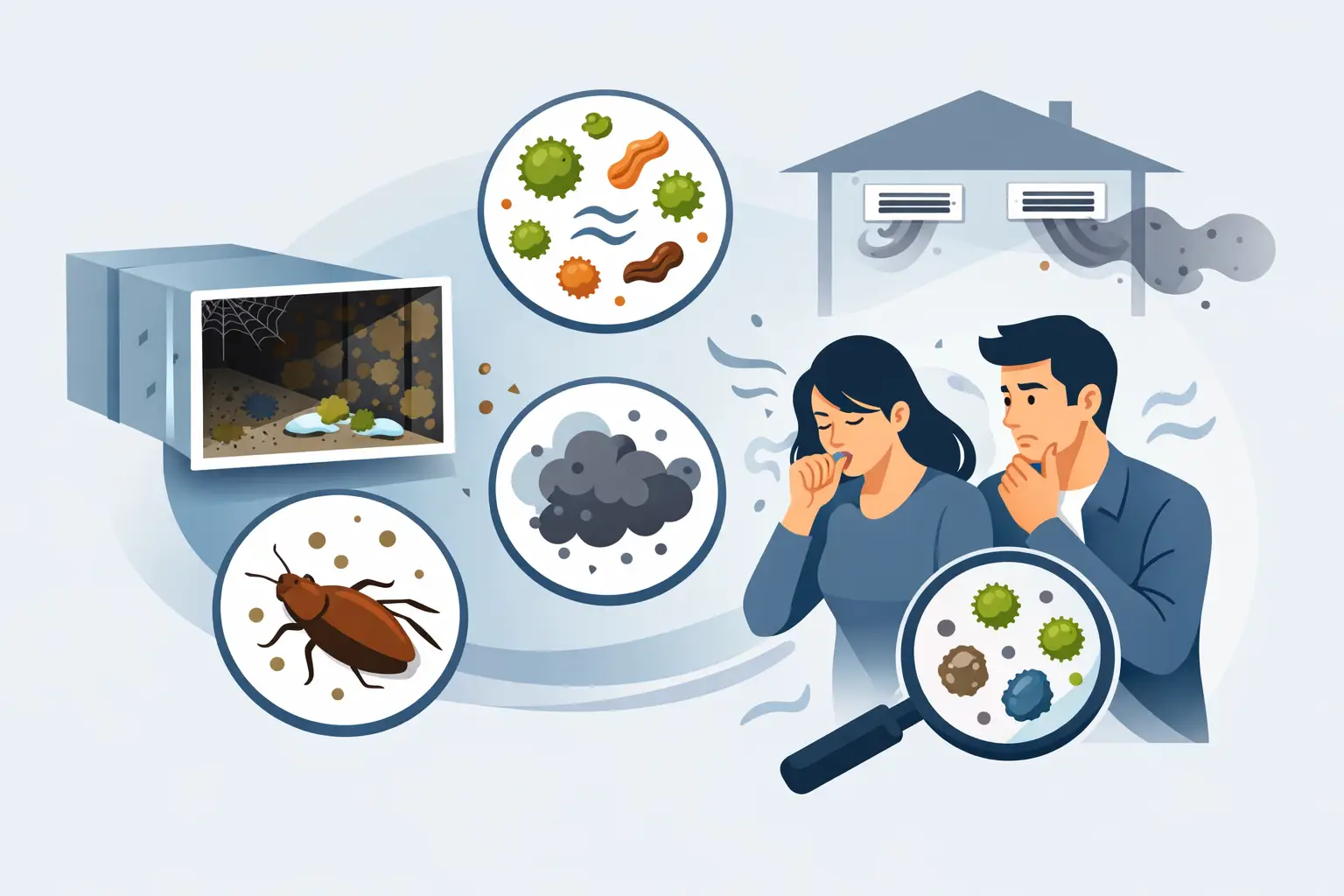
A stale smell that returns every time the heating or air conditioning kicks in is not something to brush off. It is one of the most noticeable signs of dirty air ducts, but it is rarely the only one. Dust, allergens, pet hair, renovation debris, and moisture can all build up inside your ventilation system long before you notice anything is wrong.
In a house, rental building, or commercial space, your ducts play a direct role in how air moves from room to room. When they are contaminated, they can spread particles throughout the property and reduce comfort for everyone inside. Knowing the air duct contamination signs to watch for helps you act at the right time, with a cleaning approach suited to your system and its actual condition.
Recognizing the Signs of Dirty Air Ducts
Below are the most common signs of dirty air ducts homeowners and property managers in Montreal, Laval, the North Shore, and the South Shore tend to notice first.
Dust Returns Quickly to Surfaces
You dust the furniture, baseboards, and shelves, and a fine film reappears within days. On its own, these are not the confirmed signs of dirty ducts, since traffic, renovations, or pets nearby can also play a role. But if the pattern gets worse whenever the ventilation system runs, your ducts deserve a closer look. Vents near the floor, in bedrooms, or in main living areas are often the first to reveal the problem.
Odours Persist When the System Starts
A smell of hot dust, mildew, cooking, or smoke that spreads as soon as the ventilation starts is one of the clearest air duct contamination signs. Cooking odours can cling to dust and grease buildup over time, especially in homes occupied for many years. A musty smell deserves particular attention, since it can point to moisture inside the ducts, around the ventilation unit, in the condensation tray, or in the air exchanger.
Black Marks or Residue Near the Vents
Check your supply and return vents without dismantling anything. Dust buildup, dark marks, or a greasy film around the openings can indicate contaminants moving through the air. These marks can also come from candles, a fireplace, cooking, or outdoor particles, so it is the pattern, spread, and location that matter most. Avoid poking a household vacuum, stiff brush, or random disinfectant into the ducts, since a poor attempt can push debris further into the system.
Airflow Feels Uneven From Room to Room
A bedroom stays cold in winter, an office feels stuffy in summer, or one vent seems to blow far less air than before. Uneven airflow can come from a closed damper, a clogged filter, a failing fan, a leak, or a real buildup of debris, so dirty ducts are one possible cause among several. Start with the simple checks: open registers, clear vents, and a filter replaced on schedule. If the imbalance continues, a professional inspection can tell the difference between a cleaning need and a mechanical issue.
You Just Finished Renovations or Moved In
Renovations generate a large amount of fine dust. Plaster, wood, cement, paint, and insulation fibres can settle into return vents even when work areas were covered. After major renovations, dirty ducts cleaning is often worth scheduling, especially if the system ran during the project. Moving into a property with an unknown maintenance history is another good time for an inspection, since previous owners may have had pets, smoked indoors, or renovated without protecting the ductwork.
Signs of Moisture, Insects, or Rodents
Unusual condensation, water stains, droppings, insects, or nesting materials call for prompt action. This goes beyond normal buildup, and the system may need thorough cleaning or corrective work before it goes back into service.
If mould or biological contamination is suspected, avoid jumping to conclusions. Not every dark stain is mould, and masking a smell never solves the underlying issue. A proper evaluation of air duct contamination signs traces the source of the moisture and checks accessible surfaces before recommending next steps.
Allergy Symptoms Flare Up More Often Indoors
Frequent sneezing, itchy eyes, nasal congestion, or a dry throat that gets worse at home, at the office, or whenever the ventilation runs is worth paying attention to. This does not confirm a diagnosis or automatically point to the ducts, but it is one of the air duct contamination signs that often gets overlooked. So, can dirty air ducts cause allergies? Ducts can hold fine dust, pollen, pet dander, and other allergens that recirculate every time the system starts, and for young children, older adults, and anyone with allergies or asthma, reducing this particle load is part of a sound maintenance plan. Filters still matter here too, since dirty duct cleaning cannot make up for a clogged or poorly sized filter.
What a Professional Dirty Ducts Cleaning Actually Involves
Effective dirty ducts cleaning goes beyond vacuuming the visible vents. The work should cover supply and return ducts, registers, dampers, the fan, and relevant components of the ventilation unit. Depending on the installation, the air exchanger, dryer vents, or sections of a heat pump may need separate attention.
The right method combines high efficiency suction with controlled agitation to loosen deposits without scattering them through the building. Equipment, brushes, and suction strength should match the type of duct involved, since flexible ductwork, older installations, and certain connections need more care than a standard metal system. A reliable technician will also be upfront about what dirty duct cleaning can and cannot fix, separating duct issues from filter problems, humidity control, or mechanical maintenance.
How Often Should You Schedule Dirty Ducts Cleaning?
There is no single interval that works for every building. The right frequency depends on system usage, pets, allergies, recent renovations, smokers in the home, filter quality, and the surrounding environment. A busy family home with pets has very different needs than a lightly used, well maintained unit.
In practice, an inspection is usually more useful than a fixed schedule. It confirms the actual condition of the ducts and recommends dirty ducts cleaning only when it is genuinely needed. For property managers and business owners, building this check into a regular maintenance plan also helps cut down on comfort and odour complaints from tenants or staff.
If several of these signs of dirty air ducts sound familiar, wiping down the visible vents will not solve the underlying issue. A targeted inspection gives you a clearer picture and helps restore cleaner air, room by room. Nettoyage Imperial has been serving homeowners and businesses across Montreal, Laval, the North Shore, and the South Shore since 1995, and our technicians are ready to assess your system and recommend the right next step.
What are the most common signs of dirty air ducts?
The clearest signs of dirty air ducts include dust that returns quickly after cleaning, odours when the system starts, dark residue near vents, and uneven airflow between rooms. Together, these air duct contamination signs usually mean the system is due for an inspection.
Can dirty air ducts cause allergies?
Yes, in many cases. Can dirty air ducts cause allergies? Ducts can trap dust, pollen, and pet dander, which recirculate through your home each time the system runs, often making allergy symptoms feel worse indoors.
How do I know if I need dirty ducts cleaning after a renovation?
If your system ran while renovation dust was in the air, dirty ducts cleaning is generally a good idea. Plaster, wood, and insulation particles settle into return vents even when work areas are protected.
Is a musty smell always a sign of mould in the ducts?
Not necessarily, but it is one of the more serious air duct contamination signs and should not be ignored. A musty odour often points to trapped moisture and warrants a proper inspection before assuming the worst.
How often should air ducts be cleaned in a Quebec home?
There is no universal schedule. Homes with pets, allergy sufferers, smokers, or recent renovations typically need dirty ducts cleaning more often than a lightly used, well maintained property.
Key Takeaways
- Recurring dust, odours, or uneven airflow are common signs of dirty air ducts worth investigating.
- Air duct contamination signs like dark residue near vents or musty smells often point to moisture or buildup.
- Can dirty air ducts cause allergies? Yes, trapped dust and pet dander can make indoor symptoms worse.
- Renovations and moving into a new property are ideal times to schedule dirty ducts cleaning.
- There is no fixed cleaning schedule. An inspection helps determine when dirty ducts cleaning is actually needed.
- Professional dirty duct cleaning should cover the full system, not just the visible vents.