

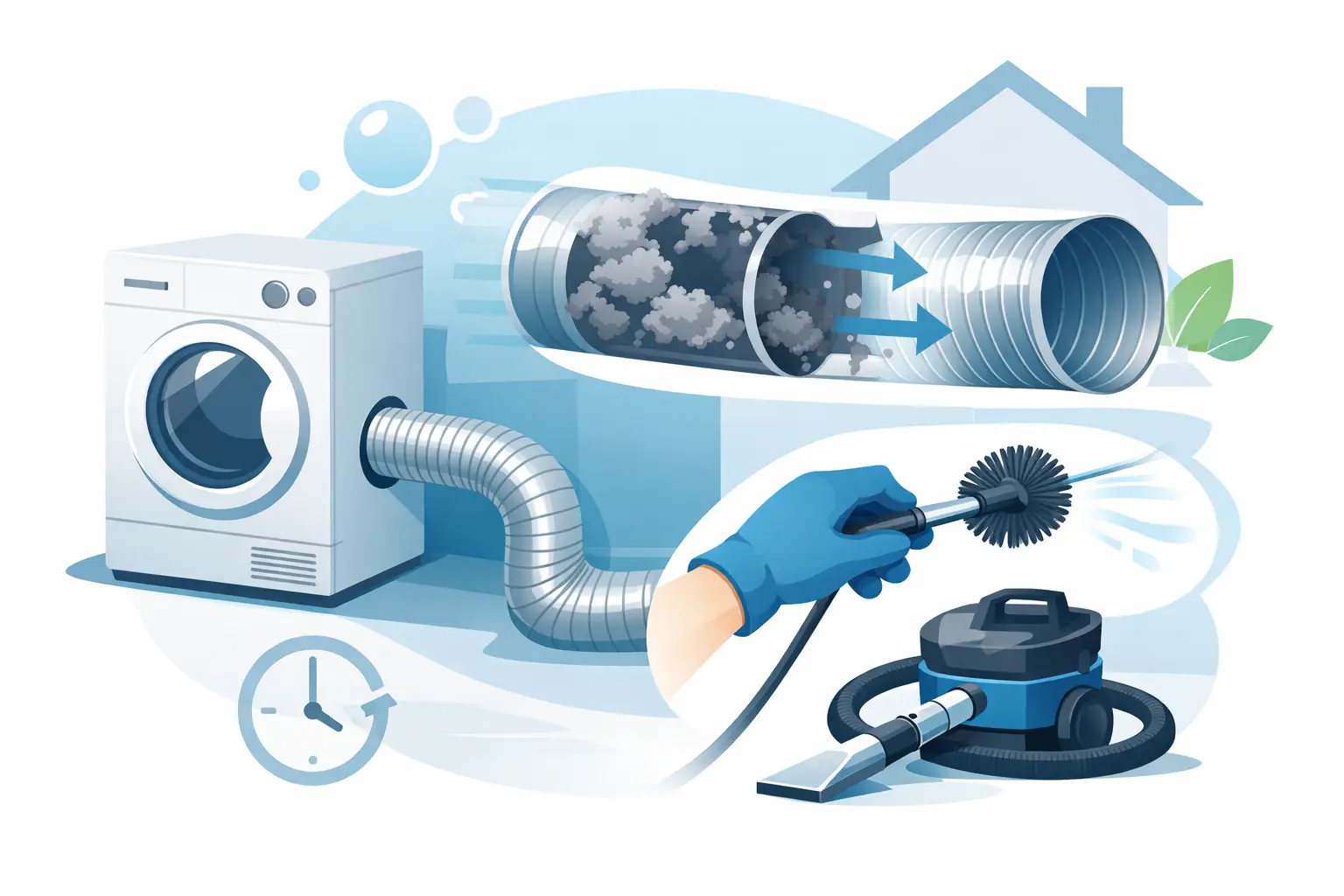
When a dryer suddenly takes two full cycles to dry a regular load, the appliance itself is rarely the culprit. The answer is usually hiding in the exhaust duct. If you have been wondering how often to clean dryer vent, the honest answer is not simply “when something goes wrong.” The right dryer vent cleaning frequency depends on your usage habits, the type of installation in your home, and several warning signs that too many households notice far too late. Staying ahead of this maintenance task protects your equipment, lowers your energy bills, and keeps your home safer.
How Often to Clean Dryer Vent Based on Your Usage
For most households in Montreal, Laval, the North Shore, and the South Shore, a professional dryer duct cleaning frequency should be once per year. It is a solid starting point. If your dryer runs several times a week under normal conditions, knowing how often to clean dryer vent becomes straightforward: once every 12 months is generally sufficient to maintain safe and efficient operation.
That said, some situations call for a tighter schedule. Large families, multigenerational households, or shared laundry setups where the machine runs almost daily may need attention every 6 to 9 months. Commercial laundry environments and shared buildings follow the same logic. The greater the laundry volume, the faster lint accumulates inside the duct, and the more critical your dryer vent cleaning frequency becomes.
At the other end of the spectrum, a single-person household with light dryer use might stretch the interval slightly. However, low usage does not always offset a long, curved, or poorly routed duct. Even a rarely used dryer can develop a dangerous blockage if the duct configuration works against proper airflow.
Key Factors That Affect Your Dryer Vent Cleaning Frequency
Understanding dryer vent cleaning frequency means looking beyond the calendar. The type of laundry you dry matters significantly. Thick towels, heavy cotton garments, pet bedding, and large blankets release far more lint than lightweight fabrics. If you regularly dry bulky items, lint builds up faster inside the duct even when you clean the lint trap after every cycle.
Duct length and layout also play a major role in understanding when to clean dryer exhaust duct. A short, straight run allows air and particles to move freely. A long duct with multiple bends retains residue at every curve. This is a common reality in condominiums, finished basements, and older buildings throughout Greater Montreal, where duct paths are rarely simple.
The material and condition of the duct itself also influence how quickly lint accumulates. A rigid metal duct with smooth walls promotes better airflow than a flexible plastic or foil duct that may be kinked or compressed behind the appliance. A crushed or sagging duct restricts circulation regardless of how often you clean dryer vent, and may require more frequent professional attention.
Finally, environmental factors inside the home can accelerate buildup. Pet hair, ambient humidity, and fine dust particles can mix with lint and cling to the interior walls of the duct. While understanding how often to clean dryer vent, it’s important to note that the effect is not always visible. However, the impact on drying performance becomes noticeable sooner than most homeowners expect.
Warning Signs That Tell You When to Clean Dryer Exhaust Duct
- Waiting for a fixed date on the calendar is not always enough. A blocked dryer vent tends to send clear signals well before it becomes a serious problem, and recognising them early is part of responsible home maintenance. When to clean dryer exhaust duct is often answered by the dryer itself.
- The most common sign is longer drying times. If clothes come out damp after a full cycle, the hot air is likely not escaping properly. The dryer compensates by running longer, which adds wear to its components and increases your hydro bill. This is one of the clearest cues that dryer vent cleaning frequency needs to be revisited.
- Excessive heat is another reliable indicator. If laundry feels unusually hot to the touch, if the laundry room becomes uncomfortably warm during a cycle, or if the dryer itself seems to overheat, restricted airflow is likely the cause. A burning smell, even a faint one, should never be dismissed. It can indicate lint that is being exposed to excessive heat inside the duct, which is a situation that requires immediate attention.
- If you want to know when to clean dryer exhaust duct, the exhaust vent flap outside your home, provides useful clues as well. If the flap barely opens during operation, if very little air comes out, or if you notice lint deposits or moisture around the exterior vent opening, a cleaning is overdue. These are some of the clearest external signals and they are easy to check with a quick visual inspection.
Paying attention to these warning signs can help homeowners determine how often to clean drying vent systems based on actual performance rather than relying solely on a fixed schedule.
Why Cleaning the Lint Trap Is Not Enough
Many homeowners assume that emptying the lint trap after every load covers the essential maintenance. It is a good habit and it does make a difference, but it is not a complete solution. The lint trap captures most airborne fibres, but a portion always passes through and gradually coats the interior walls of the exhaust duct. Over time, that layer reduces airflow and forces the dryer to work harder.
This gradual buildup is another important reason to understand how often to clean dryer vent, even when the dryer appears to be functioning normally. A duct can be significantly restricted long before performance problems become obvious. Many households quietly adapt to longer drying times without connecting the change to the condition of the duct. The result is higher energy consumption, additional strain on the motor and heating element, and a shorter lifespan for the appliance.
Professional Dryer Vent Cleaning vs DIY Maintenance
Basic upkeep between professional visits is always worthwhile. Carefully pulling the dryer away from the wall, vacuuming around the rear exhaust connection, and confirming the duct is not pinched or compressed are simple steps any homeowner can take. For short, accessible ducts, a basic cleaning kit can remove some surface lint and improve dryer vent cleaning frequency between scheduled service calls.
In practice, however, many installations are difficult to reach, particularly in condominiums, townhomes, or homes where the duct runs through walls or across multiple sections. Without proper equipment, it is difficult to evaluate the true degree of obstruction or clean the full length of the duct without risking damage to the lining or joints.
A professional service provides a thorough cleaning, a full inspection of the duct condition, and identification of issues such as improper assembly, blocked exterior vents, or configurations that affect safety. For residential and commercial clients across Montreal, Laval, the North Shore, and the South Shore, this type of preventive care avoids far more costly repairs down the line. How often to clean dryer vent professionally is often answered by a pattern of returning symptoms or an uncertain maintenance history.
How often to clean dryer vent in a typical Canadian home?
If you’re wondering how often to clean drying vent, once a year is the recommended baseline for most households. If your dryer runs frequently, handles large or heavy loads, or if the duct is long with several bends, moving to every 6 to 9 months is a smarter approach. Homes with pets or young children typically benefit from more frequent dryer vent cleaning frequency as well.
What is the recommended dryer vent cleaning frequency for shared or rental buildings?
In shared laundry facilities or multi-unit rental buildings, dryer vent cleaning frequency should be based on usage volume rather than a fixed time interval. When multiple tenants use the same machine regularly, inspections every 3 to 6 months are often appropriate to maintain safety and performance.
When to clean dryer exhaust duct even if the dryer seems fine?
A dryer can appear to function normally while the duct is already partially blocked. Knowing when to clean dryer exhaust duct proactively, rather than reactively, prevents efficiency loss and reduces fire risk. If it has been more than a year since the last cleaning, scheduling a professional inspection is always a wise precaution.
Does the type of duct material affect how often to clean dryer vent?
Yes, it does. Flexible plastic or foil ducts tend to accumulate lint faster than rigid metal ducts because their corrugated walls trap fibres more easily. If your installation uses this type of material, adjusting your dryer vent cleaning frequency to every 6 months rather than 12 is often the safer choice.
Can I handle dryer vent cleaning myself?
Light maintenance around the exterior vent and the connection behind the dryer is manageable for most homeowners. However, a full cleaning of the duct, especially for longer or harder to reach installations, requires professional equipment. A qualified technician can confirm when to clean dryer exhaust duct completely, detect hidden issues, and ensure the system is safe and efficient.
Key Takeaways
- Most households should follow a dryer vent cleaning frequency of once per year as a minimum baseline, with adjustments based on usage and duct configuration.
- Heavy laundry loads, long duct runs, flexible duct materials, and pet hair all accelerate lint buildup and require more frequent attention to learning how often to clean dryer vent.
- Longer drying times, excessive heat, a faint burning smell, and poor airflow at the exterior vent are all signs that indicate when to clean dryer exhaust duct sooner than scheduled.
- Cleaning the lint trap after every cycle is essential but does not replace professional dryer vent cleaning frequency maintenance for the full duct length.
- Condominiums, rental buildings, and commercial laundry settings typically require a tighter dryer vent cleaning frequency due to higher usage volumes.
- A professional inspection ensures the full duct is cleaned, any installation issues are identified, and your dryer continues to operate safely and efficiently.