

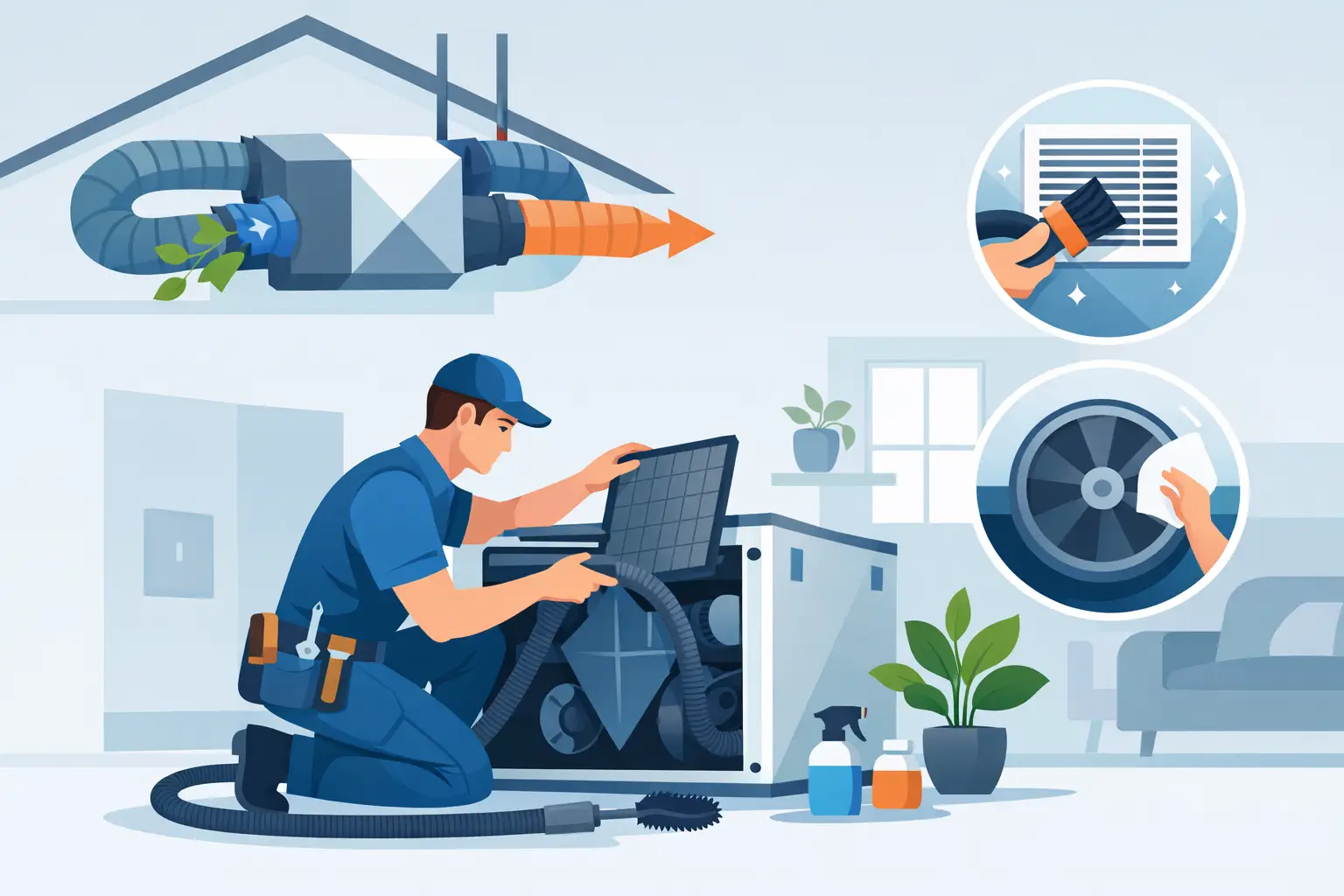
Most homeowners never notice a failing air exchanger until something feels off. The air feels heavier, humidity lingers, odours won’t clear, dust keeps coming back, or a strange noise starts coming from the unit. Air exchanger maintenance home routines exist precisely to prevent this kind of silent deterioration, which quietly damages both your indoor air quality and the long-term performance of your ventilation system. Regular HRV cleaning and maintenance helps prevent these issues by keeping airflow balanced and ensuring the system operates efficiently throughout the year.
Why Air Exchanger Maintenance at Home Actually Matters
Most homeowners remember to change their furnace filters or check their dryer, but the air exchanger is one of the most overlooked appliances in the house. It runs continuously, often more intensively during Montreal winters when windows stay closed and indoor air fills up with humidity, dust, and household odours. Skipping air exchanger maintenance home checks is one of the most common and costly mistakes property owners make.
If you do a proper air exchanger maintenance home check, it protects more than just surface cleanliness. It safeguards the motor, the fans, the heat recovery core, and the ductwork connected to the system. When buildup accumulates on these components, airflow drops, the balance between extracted and incoming air shifts, and you may start noticing increased condensation on windows, poorly ventilated rooms, or premature wear on internal parts.
Air exchanger maintenance home check cannot be ignored with regards to health as well. A poorly maintained unit can recirculate fine dust, particles, and even mould spores if humidity has been mismanaged over time. For families dealing with allergies or respiratory sensitivities, the difference after a thorough HRV cleaning and maintenance service is often felt within days.
How Often Should You Perform Air Exchanger Maintenance Home Checks
The right frequency depends on how your home is used, the type of unit you have, and your local environment. In a year-round occupied home, filter checks should happen several times a year. A more thorough cleaning of the full unit is generally recommended on a periodic basis, especially if the system runs continuously.
Homes with pets, recent renovations, high dust levels, or many occupants will typically need more frequent attention. A lightly occupied property may get away with a slightly longer interval, but waiting until problems appear is never a sound strategy. The classic mistake is waiting until the unit becomes noisy or clearly inefficient. By that point, buildup has usually settled into multiple internal components and HRV cleaning and maintenance becomes significantly more involved.
Just as homeowners know when to clean dryer exhaust duct lines to prevent fire hazards and poor airflow, the same proactive mindset should apply to the air exchanger maintenance home check. Preventive maintenance almost always costs less than repairing or replacing components that have been under strain for too long.
What Gets Cleaned During Air Exchanger Maintenance
A residential air exchanger has several components, each with different maintenance needs. Understanding proper air exchanger maintenance home requirements can help ensure the system operates efficiently and provides consistent indoor air quality.
The filters are the first line of defence. When saturated, airflow drops and the unit compensates by working harder. Filter condition should be checked regularly and cleaned or replaced depending on the model.
The heat recovery core is equally critical. It transfers heat between outgoing and incoming air, and if it becomes blocked or is cleaned improperly, system efficiency drops. Not all cores are cleaned the same way, so it is important to follow the manufacturer’s guidelines specific to your unit.
The fans and internal housing also collect dust over time. This buildup can create noise, reduce airflow balance, and shorten the lifespan of moving parts. Exterior grilles, intake and exhaust vents, and nearby duct sections can also trap debris or become partially blocked. The condensate drain, where present, must not be overlooked. A blocked drain allows water to pool, which creates conditions that lead to odours and potential contamination.
What Homeowners Can Handle Themselves
Some parts of air exchanger maintenance home routines can be completed by the homeowner with care and method. Always cut power to the unit before doing anything. From there, filters can be removed, inspected, and cleaned if the manufacturer permits it. If they are too worn, replacement is the better option.
Light cleaning of accessible grilles and a visual inspection of the interior can also be part of a regular routine. Gentle removal of visible dust on accessible surfaces helps limit accumulation. Avoid harsh cleaning products, leaving components wet without proper drying, or handling the core and electrical parts without the right knowledge.
Knowing your limits matters here. As soon as the job involves deeper disassembly, airflow testing, duct inspection, system balancing, or addressing serious buildup, professional HRV cleaning and maintenance is the safest and most reliable path forward.
When to Call a Professional for Air Exchanger Maintenance Home Service
Certain signs make it clear that surface cleaning will not be enough. Unusual odours coming from the unit, increased noise levels, visible moisture or condensation inside the casing, uneven ventilation between rooms, or a long gap since the last service all point to the need for a full professional inspection.
A trained technician goes well beyond dusting. They assess the real condition of internal components, clean areas that are difficult to access, spot early signs of wear, and can identify larger issues such as contaminated ductwork, blocked exterior intakes, or system imbalances. This is especially relevant after renovations, water damage, or in rental properties where maintenance history is unclear.
For property managers and homeowners alike, professional air exchanger maintenance home service brings predictability. A HRV cleaning and maintenance lasts longer, operates more efficiently, and is far less likely to fail at the worst possible moment.
How do I know if my air exchanger needs maintenance right now?
Common signs that air exchanger maintenance home is overdue include heavier or stale-feeling indoor air, persistent odours, increased humidity, more dust than usual settling on surfaces, or unusual sounds coming from the unit. If any of these are present, a cleaning and inspection should be scheduled promptly to protect your indoor air quality and the health of the system.
Is HRV cleaning and maintenance something I can do on my own?
Basic HRV cleaning and maintenance tasks, such as removing and cleaning filters or wiping accessible grilles, can be done by most homeowners. However, deeper cleaning of the heat recovery core, fan assemblies, and duct connections should be handled by a professional to avoid damage and ensure the system is properly balanced and functioning as intended.
How does air exchanger maintenance connect to dryer vent cleaning?
While they are separate systems, both your air exchanger and your dryer exhaust duct are ventilation components that require regular attention. Knowing when to clean dryer exhaust duct lines, typically once a year or more for high-use households, reflects the same principle that applies to your air exchanger: do not wait for a visible problem before acting. Preventive HRV cleaning and maintenance protects performance and reduces risk.
How often should HRV cleaning and maintenance be scheduled professionally?
For most homes, a professional HRV cleaning and maintenance visit once a year is a reasonable baseline. Homes with pets, high occupancy, recent construction work, or visible air quality concerns may benefit from more frequent service. Consult with a qualified technician to determine the right schedule for your specific unit and living conditions.
Can a dirty air exchanger affect my family's health?
Yes. A unit that has not received proper air exchanger maintenance home care can recirculate dust, allergens, and in some cases mould spores through your living space. Families with allergies, asthma, or other respiratory sensitivities are particularly vulnerable. Regular maintenance is one of the most direct ways to protect indoor air quality and reduce airborne irritants in the home.
Key Takeaways
- Air exchanger maintenance home routines should include filter checks several times a year and a full cleaning on a regular periodic schedule.
- HRV cleaning and maintenance protects the heat recovery core, fans, motor, and connected ductwork from premature wear and efficiency loss.
- Just as knowing when to clean dryer exhaust duct lines prevents hazards, staying proactive with your air exchanger prevents costly repairs.
- A poorly maintained air exchanger can recirculate dust, allergens, and mould spores, making air exchanger maintenance home a direct health priority.
- Basic upkeep can be handled by homeowners, but deeper HRV cleaning and maintenance should always be performed by a qualified professional.
- Montreal, Laval, North Shore, and South Shore homes face long sealed winters, making air exchanger maintenance especially critical for year-round indoor air quality.