

Cleaning a Flooded Carpet: The Right Steps
Water damage leaves very little time to decide. In a flooded carpet cleaning case, the first hours often determine whether the carpet can be recovered or has to be removed. Water seeps beneath the fibers, reaches the underlay, and can penetrate the floor. Without controlled extraction and drying, odors, mold, and deterioration of materials can appear quickly.
In Montreal, Laval, the North Shore, and the South Shore, the causes vary: plumbing backup, a leaking washing machine, a faulty water heater, infiltration through the foundation, a burst pipe, or rapid snowmelt. The right intervention does not depend only on the amount of visible water. It depends above all on the source of the water, the time elapsed, the type of carpet, and what lies beneath it.
Assessing the Risk Before Cleaning a Flooded Carpet
A wet carpet is not automatically a lost carpet. However, not all floods should be treated the same way. Clean water from a supply line or a recent leak generally presents a lower health risk. If the intervention is immediate, a synthetic carpet can often be extracted, lifted if needed, dried, and professionally cleaned.
The situation changes when the water comes from a drain, a sewer backup, a toilet, a river, or an infiltration that has circulated through contaminated areas. This water can contain bacteria, organic matter, and other contaminants. In this context, surface cleaning is not a safe solution. The underlay, and sometimes the carpet itself, must be removed depending on the extent of the contamination and the insurer’s requirements.
The material also matters. Nylon, olefin, or polyester carpets generally tolerate a controlled recovery better than wool rugs, artisanal rugs, antique rugs, or natural fibers such as jute. The latter risk shrinkage, color bleeding, distortion, or microbial growth. A valuable rug requires a precise diagnosis before any product is applied or any drying method is used.
What to Do in the First Few Minutes
Safety comes first. Cut the power to the area if the water is near outlets, extension cords, or electrical appliances. Avoid walking on a flooded carpet if the ceiling, walls, or electrical installations raise any doubt. If the source is an active leak, shut off the water when this can be done safely.
Next, remove light furniture and absorbent items from the area. Do not leave furniture legs resting directly on the wet carpet: wood can bleed color, metal can rust, and the weight can mark the fibers. Furniture that is too heavy can be temporarily protected with blocks or suitable supports, without dragging it across the carpet.
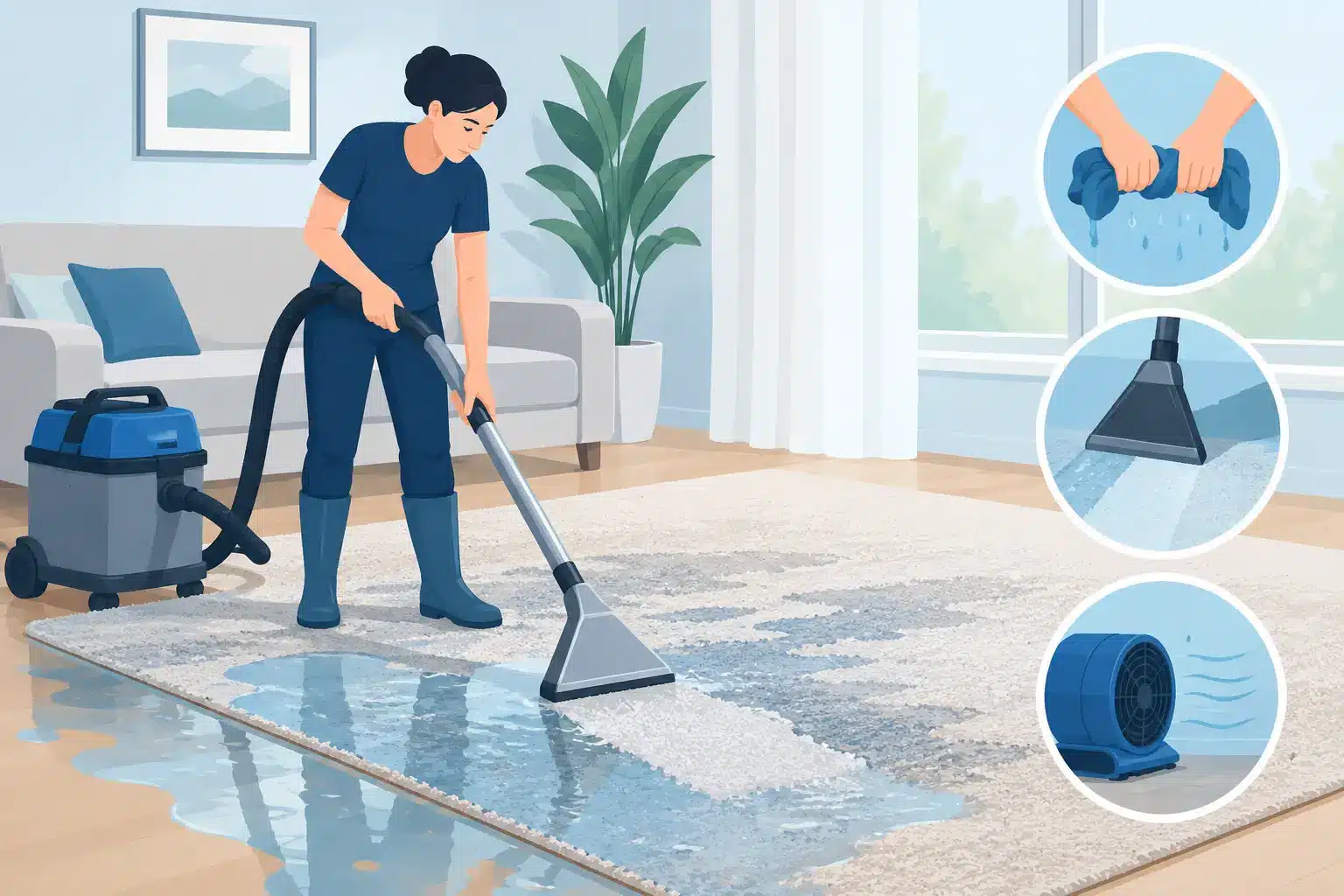
Surface water can be absorbed with clean towels or extracted with a device designed for liquids, provided the water is clean and the equipment is used correctly. An ordinary household vacuum must never be used for this task. It can be damaged and create an electrical risk.
Also avoid saturating the carpet with disinfectant, baking soda, or scented products. These solutions can mask an odor for a few days without solving the moisture trapped in the carpet backing or the underlay. Some products change colors, leave a sticky residue, or complicate the restoration work afterward.
Why Visible Drying Is Not Enough
A carpet can look dry on the surface while still holding a lot of moisture beneath the fibers. This is particularly common with wall-to-wall carpet installed over an underlay. Water travels horizontally under the covering, toward the walls and under furniture, sometimes well beyond the area that was originally flooded.
This is why a professional intervention relies on measurements, not only on appearance. Technicians assess the extent of the moisture, the condition of the materials, the potential contamination, and the possibility of drying the structure. They then carry out powerful extraction, controlled lifting of the carpet when required, removal of the unrecoverable underlay, and installation of suitable drying equipment.
Air circulation, dehumidification, and control of relative humidity work together. Opening windows can help in dry weather, but this approach becomes less effective during humid periods. A household fan can dry the surface while leaving deep moisture intact. Drying must be fast enough to limit microbial growth, but controlled enough not to damage the fibers, baseboards, or floor.
When a Carpet Can Be Recovered
Recovery is often possible when the water is clean, the damage is recent, and the carpet is in good condition. A synthetic carpet installed on a non-porous floor generally offers better prospects than a wool carpet on a very absorbent underlay. The result also depends on the speed of the extraction and the ability to dry all the affected layers.
After drying, a deep cleaning removes the residue brought in by the water and refreshes the fibers. Depending on the diagnosis, an antimicrobial treatment compatible with the material can be applied. This step never replaces extraction or drying: it completes a procedure in which the source of moisture has already been controlled.
However, a carpet exposed to contaminated water, left damp for a long time, or giving off a persistent odor may not be safely recoverable. The underlay is particularly hard to restore after saturation. Trying to save every material may seem economical in the short term, but keeping a source of odors or contaminants in a home or business often costs more later.
Mistakes That Make the Damage Worse
The first reflex to avoid is waiting to see whether the carpet will dry on its own. Within 24 to 48 hours, moisture can already encourage mold growth, especially in poorly ventilated rooms, basements, and areas where air circulates poorly.
You should also avoid steam cleaning a carpet that is still saturated. Adding water and heat to a material that has not been properly extracted can worsen the deep moisture. Likewise, pulling hard on a soaked carpet without knowing how it was installed can damage the seams, the tack strips, or the backing.
Finally, do not confuse a fresh odor with a resolved odor. A fragrance, an unsuitable neutralizer, or an air freshener does not correct a contamination. A musty odor that returns after a few days often indicates that moisture is still present in the carpet, the underlay, the baseboards, or the floor.
A Methodical Intervention for the Home or Business
In a home, each room requires an approach suited to the occupants, the materials, and the value of the belongings. In a business, you must also reduce interruptions to operations, secure walkways, and document the condition of the surfaces. The initial diagnosis is therefore essential: it determines what can be cleaned, what must be dried in place, and what must be removed.
Nettoyage Imperial favors a method based on thorough extraction, safety of materials, and moisture control. This approach is particularly useful for owners, property managers, and businesses that want to protect indoor air quality as much as the appearance of the carpet. A professional treatment aims for a lasting result, not simply a carpet that seems dry the same day.
Keep photos of the damage, note the approximate time of the incident, and document the source of the water before moving important items, when this can be done safely. This information makes discussions with your insurer easier and helps the technicians choose the right procedure.
After a flood, acting quickly does not mean acting at random. Appropriate extraction, measured drying, and an honest diagnosis make it possible to make the best decision for your carpet, your building, and the health of the people who live or work there.
Can a flooded carpet be saved?
Often, when the water is clean, the damage is recent, and the carpet is in good condition. A synthetic carpet on a non-porous floor generally has better prospects than a wool carpet on a very absorbent underlay.
Can you save a carpet flooded with sewage water?
Surface cleaning is not a safe solution when the water comes from a drain, sewer backup, or toilet. The underlay, and sometimes the carpet itself, must be removed depending on the extent of the contamination and the insurer’s requirements.
Will a wet carpet dry on its own?
It is not safe to wait. Within 24 to 48 hours, moisture can already encourage mold growth, especially in basements and poorly ventilated rooms.
Can you use a regular vacuum on a wet carpet?
No. An ordinary household vacuum can be damaged and create an electrical risk. Clean water can be absorbed with clean towels or extracted with a device designed for liquids.
Why does a flooded carpet still feel damp when it looks dry?
Water travels horizontally under the covering, toward the walls and under furniture, so moisture can remain under the fibers and in the underlay while the surface looks dry.
Key Takeaways
- The first hours decide whether a flooded carpet can be recovered, and the source of the water, the time elapsed, the carpet type, and what lies beneath it matter more than the amount of visible water.
- Clean water from a recent leak is lower risk, while water from a drain, sewer backup, toilet, or river requires removing the underlay and sometimes the carpet.
- Start with safety: cut power near water, avoid walking on the carpet if in doubt, shut off an active leak, and never use a household vacuum.
- A carpet that looks dry can still hold moisture underneath, so professional drying relies on measurements, extraction, and controlled air circulation and dehumidification.
- Do not wait for the carpet to dry on its own, do not steam clean a saturated carpet, and do not mask odors with fragrances or disinfectant.
- Photograph the damage, note the time, and document the water source to help with your insurer and the technicians.