

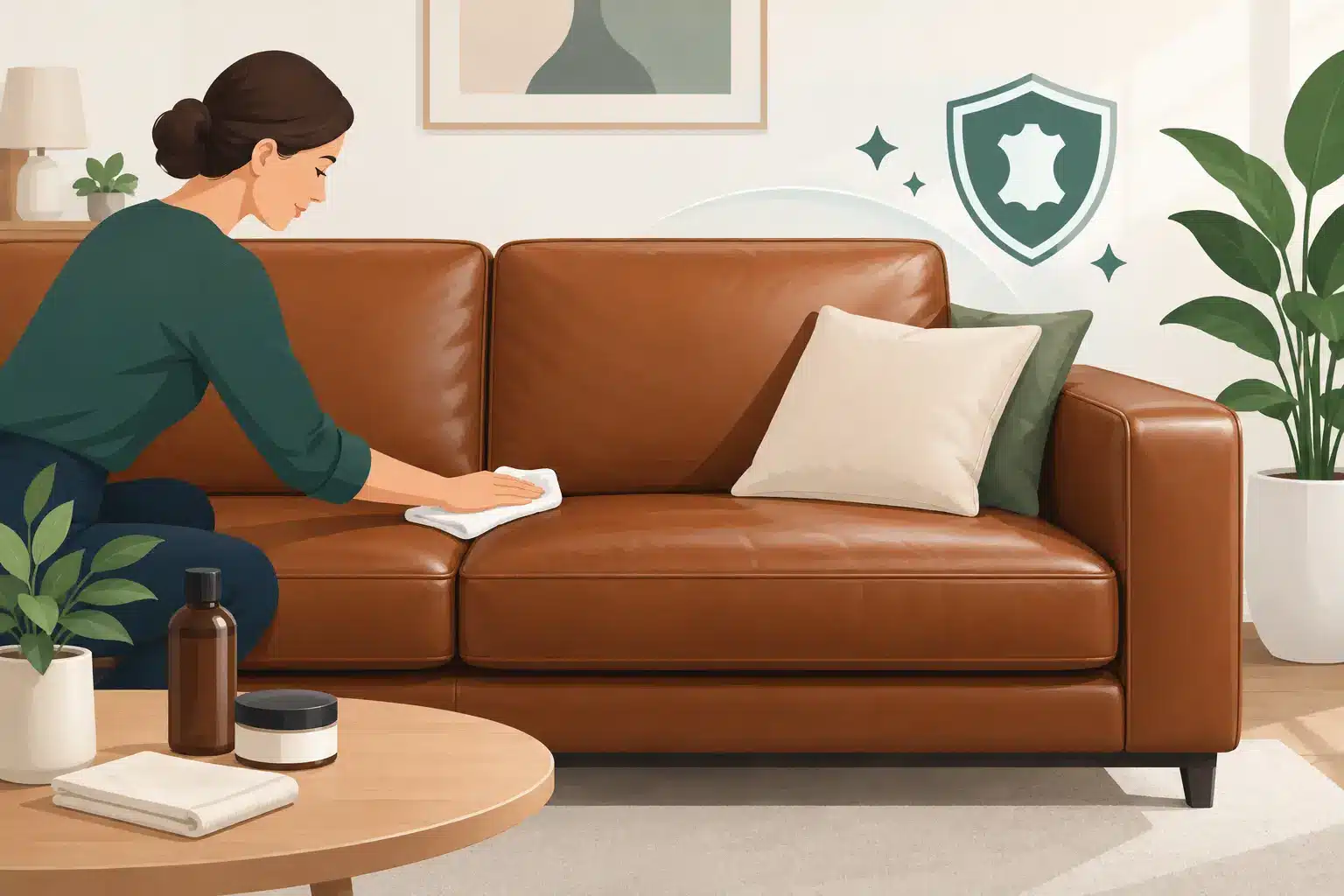
How to Protect a Leather Couch for the Long Term
A leather couch holds up well over the years, provided its surface is maintained with a method. Knowing how to protect a leather couch is not about multiplying products: it is mostly about limiting everyday wear, cleaning without stripping, and respecting the type of finish. In an active home in Montreal, Laval, or on the North Shore, winter heating, sunlight, pets, and the small incidents of everyday life can speed up its aging.
Why Leather Wears Out Faster Than You Think
Leather is a natural or treated material that contains oils and pigments. Over time, it can lose its suppleness, dull, dry out, or crack, especially in the most heavily used areas such as the seats, armrests, and back cushions. A slight patina is normal. A leather that becomes stiff, pale, or cracked, however, has often been exposed to a combination of heat, dryness, and unsuitable products.
Liquids are another frequent risk. On a protected leather, a splash can generally be removed quickly. On a porous, aniline, or semi-aniline leather, it can soak in within moments and leave a ring. The type of leather therefore determines the right steps. Before using a cleaner or a protector, you should always check the manufacturer’s recommendations and do a discreet test in an inconspicuous area.
Dust, perspiration residue, body oils, and pet hair also count. They seem harmless, but they build up in the creases and gradually weaken the finishing layer. Regular, light, and safe maintenance is better than an intensive cleaning done too late.
How to Protect a Leather Couch Day to Day
The best protection starts with where the furniture is placed. Avoid putting your couch directly in front of a very sunny window or right next to a radiator, an electric baseboard heater, a fireplace, or a heating vent. Heat dries out leather, while UV rays can change its color unevenly.
If moving the couch is impossible, use blinds or curtains during periods of intense sunlight. A reasonable distance from a heat source also helps preserve the suppleness of the covering. In winter, when indoor air becomes very dry, maintaining a balanced humidity level in the home can reduce the risk of the leather drying out and improve the general comfort of the space.
Also get into the habit of spreading the use of the seats. Fixed cushions wear differently depending on the occupants’ favorite spot. When the cushions are removable, flip them or move them around if the manufacturer allows it. This simple step reduces the premature appearance of a darker or more sagging area in the middle of the couch.
Dusting Before Dirt Sets In
Once a week or every two weeks, vacuum with a soft brush over the seams, creases, and spaces between the cushions. Do not rub with a hard attachment that could mark the surface. A clean, dry microfiber cloth can then remove the fine dust on the armrests and backs.
For a light cleaning, use a cloth very lightly dampened with lukewarm water, then dry immediately with another soft cloth. Leather must never be soaked. Water that gets into the seams or stays too long on the surface can leave marks and affect certain finishes.
Reacting Quickly to Liquids and Stains
In case of a spill, absorb the liquid without rubbing. Use a clean white cloth or an unprinted paper towel, then blot from the outside of the stain toward the center. Rubbing spreads the liquid and can remove part of the color or the protective coating.
For a greasy stain, avoid harsh homemade recipes. Dish soap, disinfecting wipes, vinegar, alcohol, baking soda, and all-purpose stain removers can alter the leather’s finish. Even when they seem to give an immediate result, they risk leaving a dull, sticky, or paler area. If the stain persists after absorption, it is more prudent to ask for a professional assessment than to keep trying one thing after another.
Nourishing and Protecting Leather with the Right Product
A pigmented leather generally benefits from a care product designed for its type of finish, applied at the frequency recommended by the manufacturer. These products can help maintain the suppleness of the material and strengthen its resistance to everyday soiling. However, more product does not mean more protection. Excessive application can create a greasy film that attracts dust and changes the look of the couch.
Before any treatment, the surface must be clean and completely dry. Apply a small amount to a soft cloth, never directly on the couch, then work in small sections with even motions. Let it dry without using heat. A test in a hidden area remains essential, because some leathers absorb products unevenly.
Aniline, nubuck, suede, and some matte leathers require particular attention. They are more sensitive to stains and must not receive the same creams or lotions as a smooth pigmented leather. In this case, a specialized protector may be appropriate, but only after confirming the exact nature of the covering. The furniture’s label, the manufacturer’s invoice, or a diagnosis by a technician can prevent a costly mistake.
Mistakes That Shorten the Life of the Couch
Couch covers can be useful in a home with young children or pets, but they must be breathable and clean. A rough, damp, or rarely washed cover can trap dust and create friction on the contact areas. Remove it regularly to air out and inspect the leather.
Also avoid sitting with sharp objects, exposed metal rivets, or clothing that bleeds color. Dark denim can transfer its color onto a light leather, particularly when it is new. Pet claws, zippers, and hard toys can leave permanent marks on a soft leather.
Do not try to camouflage a scratch, a discoloration, or a crack with furniture wax, cooking oil, or a product intended for wood. These solutions do not restore leather. They can instead saturate the pores, change the sheen, and complicate a later repair. Good maintenance aims to preserve the original finish, not to cover it.
When to Hand the Couch Over to a Professional
Some situations go beyond regular care at home: an old stain, a persistent odor, color transfer, buildup of body soil, sticky areas, very dry leather, or the beginning of cracks. A suitable intervention starts with identifying the leather and its finish. The method must be adjusted to the level of soiling, the stability of the pigments, and the general condition of the material.
A professional furniture cleaning makes it possible to treat soiling without resorting to inappropriate products or excessive moisture. At Nettoyage Imperial, assessing the material and using safe methods are part of an approach focused on preserving furniture, in homes as well as commercial spaces. A technician can also indicate whether the couch needs a cleaning, a specialized conditioning, or a targeted repair.
Do not wait for the cracks to widen or the stain to become permanent. The longer a contaminant stays on the leather, the more it can migrate into the finish or the underlying layers. An early intervention generally offers better chances of a good result.
A well-protected leather couch stays pleasant to the touch, keeps a uniform appearance, and keeps pace with the rhythm of the home without losing its value too quickly. A few consistent habits, compatible products, and a specialized intervention at the right time make all the difference.
How do you protect a leather couch?
Place it away from sunny windows and heat sources, dust it regularly, blot spills right away without rubbing, and use only a care product suited to its finish at the manufacturer’s recommended frequency.
What makes a leather couch dry out and crack?
Heat, dryness, and unsuitable products. Heat dries out leather, UV rays can change its color unevenly, and very dry winter indoor air adds to the risk.
How do you clean a leather couch?
Vacuum with a soft brush once a week or every two weeks, then wipe with a cloth very lightly dampened with lukewarm water and dry immediately. Leather must never be soaked.
What should you not use on a leather couch?
Dish soap, disinfecting wipes, vinegar, alcohol, baking soda, and all-purpose stain removers can alter the finish. Furniture wax, cooking oil, and wood products should not be used either.
How often should you condition a leather couch?
At the frequency recommended by the manufacturer for its finish. More product does not mean more protection, since excessive application can create a greasy film that attracts dust.
Key Takeaways
- Protecting a leather couch means limiting everyday wear, cleaning without stripping, and respecting the type of finish, not multiplying products.
- Keep the couch away from very sunny windows and heat sources, use blinds or curtains if needed, keep indoor humidity balanced in winter, and rotate seats and cushions.
- Vacuum with a soft brush every week or two, wipe with a barely damp cloth, dry immediately, and blot spills without rubbing.
- Avoid dish soap, disinfecting wipes, vinegar, alcohol, baking soda, all-purpose stain removers, furniture wax, and cooking oil, and always test a product in a hidden area first.
- Use a care product suited to the finish at the manufacturer’s frequency, apply it sparingly on a cloth, and be extra careful with aniline, nubuck, and suede.
- Call a professional for old stains, persistent odors, color transfer, sticky areas, very dry leather, or early cracks.