

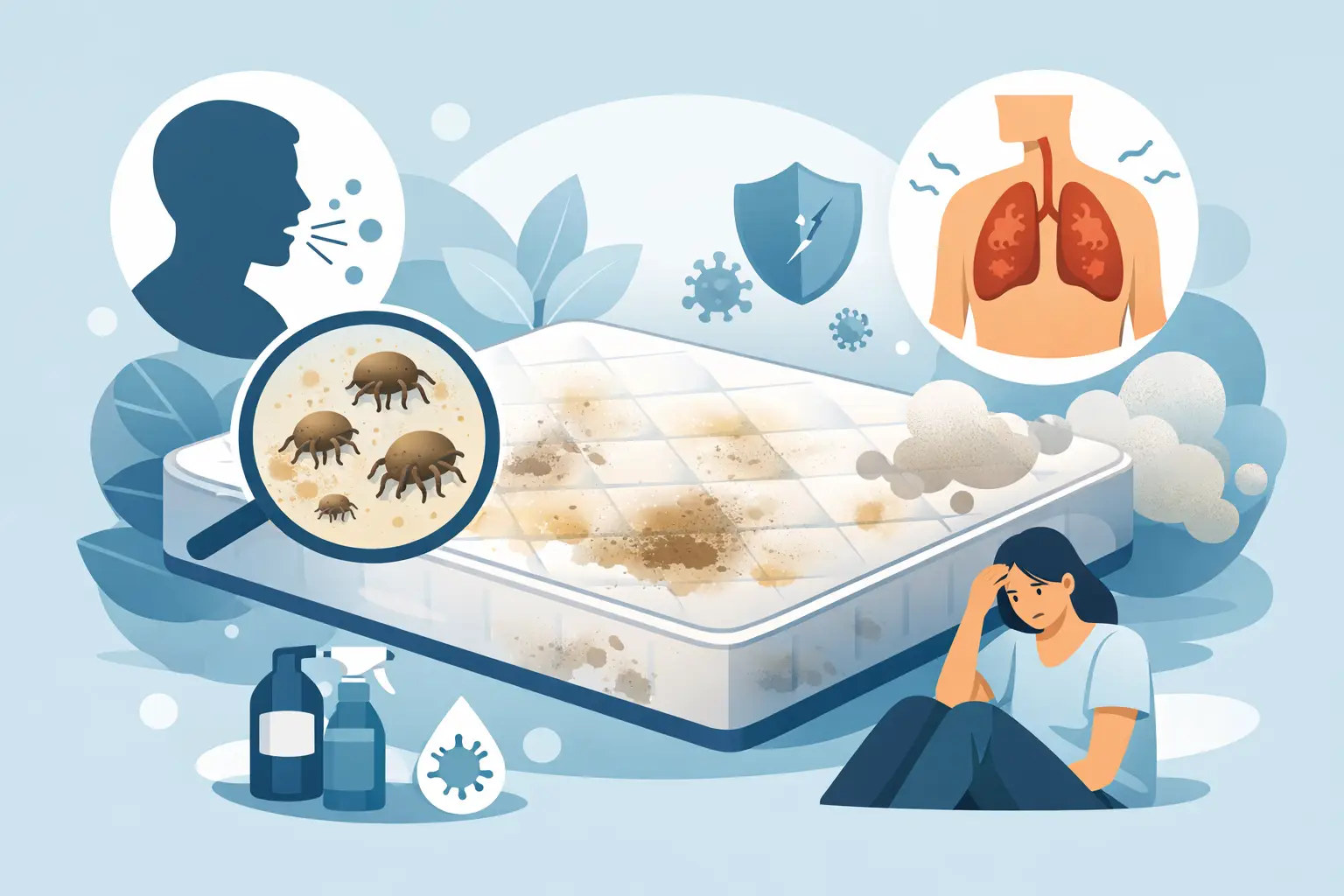
A mattress can look perfectly fine on the surface and still hide a lot underneath. If you have ever wondered about dirty mattress health risks, the short answer is yes, they are real, especially for anyone sensitive to allergens, young children, older adults, and anyone who spends several hours a night in bed.
The issue comes down to what a mattress absorbs over time: body moisture, dead skin cells, dust, and organic residue. Left unchecked, this creates the perfect environment for dust mites mattress health problems, bacteria, lingering odours, and sometimes mould. This is not just about appearance. It is about indoor air quality, breathing comfort, skin health, and how well you actually sleep.
What Actually Builds Up in a Mattress Over Time
A mattress absorbs far more than most people realize. Perspiration is one of the biggest contributors. Even on a cool night, the body releases moisture while you sleep, and that moisture works its way through the sheets into the inner layers of the mattress, where it can stay trapped if airflow is limited.
On top of that, you get dead skin cells, everyday dust, pet dander if a cat or dog sleeps on the bed, and small daily accidents. A spilled drink, a child’s mishap, a coffee cup, or an old stain that was never fully treated can all create the kind of environment where odours and microbial growth take hold, contributing directly to dirty mattress health risks.
In some cases, the risk climbs sharply after a water leak or when a mattress sits in a damp room. This is where mould can develop, often with no obvious sign on the surface. A musty smell, greyish patches, or persistent dampness should never be brushed off.
Dirty Mattress Health Risks You Should Know About
The most common issue is allergy flare ups. A neglected mattress becomes a reservoir for dust mites mattress health hazards, since mite waste is one of the most common household allergens. For many people, this shows up as a stuffy nose in the morning, repeated sneezing, itchy eyes, or a dry, scratchy throat. It is rarely dramatic, but it is often chronic.
Breathing is the second concern. Spending hours each night in an environment loaded with fine dust and biological contaminants can worsen existing conditions like asthma or respiratory sensitivity, particularly in a bedroom with poor ventilation. The mattress is not always the sole cause, but it can absolutely make things worse, which is why mattress allergies cleaning matters more than people think.
Skin health matters too. A dirty mattress will not automatically cause a skin condition, but it can encourage irritation, especially where sweat, old stains, or trapped moisture are involved. For anyone with reactive skin, eczema, or a tendency toward breakouts, a contaminated sleep surface can become an aggravating factor.
Finally, there is sleep quality itself. Odours, dampness, and the simple discomfort of knowing your bedding has not been properly cared for all take a toll on rest. People often think of comfort in terms of softness, but a mattress also needs to be genuinely clean to support good sleep.
Dust Mites and Mattress Health: Understanding the Real Risk
Not every dirty mattress carries the same level of health risk. A slightly dusty mattress is not the same as one that has been stained, damp, or used without any protection for years. The real risk level depends on the mattress’s age, how it has been maintained, how well the bedroom is ventilated, and how sensitive the people sleeping on it are.
Some dust mites mattress health exposure is nearly unavoidable in any mattress used regularly. The real issue is concentration. Bacteria, on the other hand, spread more easily when organic matter and moisture are both present. Mould does not appear everywhere, but when it does take hold, it becomes a serious concern for both respiratory health and overall bedroom hygiene.
Signs Your Mattress Needs Cleaning
A few warning signs tend to repeat. Sneezing that gets worse at night or first thing in the morning, a persistent odour despite clean sheets, old stains, a lingering feeling of dampness, or asthma symptoms that flare up specifically in the bedroom are all strong indicators that it is time to act on dirty mattress health risks.
It is also worth checking the mattress visually. Yellowish rings, dark patches, visible mould, or fabric that still smells musty after airing out are not just cosmetic issues. They usually point to contamination that has settled in deeper than the surface.
Children and Sensitive Household Members
Children have more sensitive respiratory systems and spend a lot of time in bed. A mattress loaded with allergens can contribute to subtle but repeated symptoms, such as a nighttime cough, morning congestion, or itchy eyes. It is not always the only cause, but it is a factor that gets overlooked far too often.
For anyone with asthma or allergies, bedding should be one of the first places you check. People often focus on carpets or curtains, but the mattress sees the most prolonged contact with the body. If symptoms are worse specifically in the bedroom, mattress allergies cleaning deserves a closer look.
Older adults or anyone who spends extended time in bed face similar vulnerability. A clean mattress supports comfort, helps prevent skin irritation, keeps odours in check, and maintains a genuinely healthy place to rest.
DIY Mattress Cleaning vs Professional Mattress Allergies Cleaning
Basic upkeep does help. Vacuuming the surface, airing out the bedroom, treating fresh stains right away, and using a protective mattress cover can go a long way toward limiting dirty mattress health risks, especially for small, localized messes handled quickly with the right products.
Problems usually start when someone tries to deep clean without the right equipment. Too much water, the wrong stain remover, or insufficient drying time can make things worse. A mattress that stays damp after cleaning becomes more vulnerable to odours, bacteria, and mould, which is one of those cases where good intentions backfire.
Materials matter as well. Not every mattress reacts the same way to moisture, heat, or household cleaners. Memory foam, standard foam, and certain textile fibres all need a controlled approach. Being too aggressive can damage the padding or actually set a stain instead of removing it.
When a mattress shows old stains, embedded odours, signs of moisture, or heavy buildup, professional mattress allergies cleaning is usually the smarter option. The goal is not just to freshen the surface but to extract contaminants using a method suited to the fabric and the level of soiling. This is especially important in households with allergy sufferers, babies, or anyone who is immunocompromised. At Nettoyage Imperial, our approach focuses on proper extraction depth, material safety, and drying times that are actually controlled, which is exactly what reduces dirty mattress health risks and improves indoor air quality for homes across Montreal, Laval, the North Shore, and the South Shore.
What are the main dirty mattress health risks for a family home?
The most common issues are allergy symptoms from dust mites mattress health exposure, worsened breathing problems like asthma, skin irritation, and reduced sleep quality. Risk levels vary depending on the mattress’s age, how well it has been maintained, and how well the bedroom is ventilated.
How does dust mites mattress health exposure actually affect allergy sufferers?
Dust mite waste is one of the most common household allergens. Regular exposure can trigger a stuffy nose, sneezing, itchy or watery eyes, and a scratchy throat, particularly upon waking after several hours of close contact with the mattress overnight.
Is mattress allergies cleaning something I can do myself?
Light upkeep such as vacuuming, airing the room out, and treating fresh stains quickly can help. Deep cleaning without the proper equipment often leaves the mattress damp, which increases the risk of odours, bacteria, and mould rather than solving the problem.
How often should a mattress be professionally cleaned to reduce health risks?
There is no single rule for everyone. A mattress protected by a regularly washed cover in a well ventilated room stays healthier longer. Heavily used mattresses, or ones exposed to moisture or repeated accidents, need attention sooner rather than later.
Can a dirty mattress really cause skin irritation?
A dirty mattress will not directly cause a skin condition, but it can worsen irritation, particularly where sweat, old stains, or trapped moisture are present. This is more noticeable for people with eczema or generally reactive skin.
Key Takeaways
- Dirty mattresses absorb sweat, dead skin, and dust over time, creating the conditions behind most dirty mattress health risks.
- Dust mites mattress health exposure is one of the leading causes of chronic allergy symptoms like sneezing and congestion.
- Poor bedroom ventilation and trapped moisture can worsen breathing issues and even lead to mould growth.
- Children, older adults, and immunocompromised household members are more vulnerable to allergens and benefit most from regular mattress allergies cleaning.
- DIY cleaning helps with small, fresh stains, but deep cleaning without proper equipment can trap moisture and make problems worse.
- Professional cleaning offers deeper extraction, safer handling of different mattress materials, and controlled drying that home methods cannot match.