

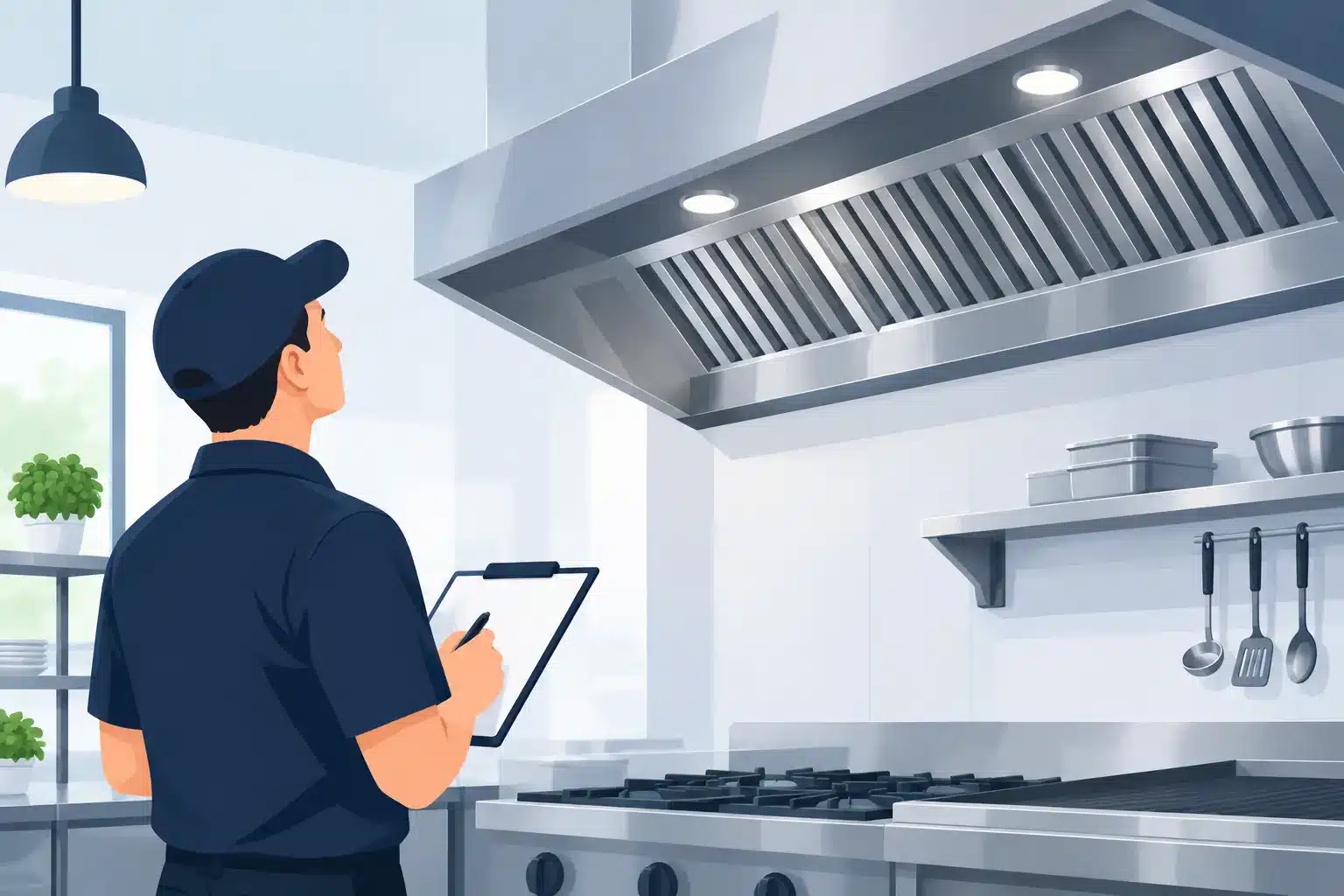
Restaurant Hood Inspection Guide
A hood that seems to work is not necessarily a safe hood. In a professional kitchen, grease deposits can build up out of sight, in the filters, the plenum, the ducts, and the exhaust fan. This restaurant hood inspection guide helps owners and managers spot the signs that call for action, prepare better for a technical visit, and protect their business.
Inspection does not replace professional cleaning. It does, however, make it possible to check the general condition of the system, document anomalies, and plan upkeep at the right time. For a restaurant, a cafeteria, a residence kitchen, or a catering service, this discipline reduces fire risks, limits persistent odors, and helps maintain a healthier work environment.
Why Inspect a Commercial Kitchen Hood?
The hood captures the heat, smoke, steam, and greasy particles produced by cooking. Its effectiveness depends on the entire exhaust chain, not only the visible part above the appliances. When grease builds up, the system gradually loses efficiency. The kitchen gets hotter, odors can spread into the dining room, and the surrounding surfaces get dirty faster.
Fire safety remains the main issue. Grease is combustible. A fire on a fryer, a griddle, or a grill can reach the filters and spread into a duct loaded with residue. Regular inspection makes it possible to detect this buildup before it becomes a major risk factor.
It also supports the establishment’s compliance. Requirements can vary depending on the type of cooking, the volume of activity, local authorities, insurers, and the internal rules of a banner or building. Kitchens that make heavy use of fryers, grills, woks, or open-flame equipment generally need more frequent follow-up than a space that only serves reheated food.
What to Check During a Restaurant Hood Inspection
A useful inspection follows the path of the air and grease, from the cooking area to the outdoor discharge point. The goal is not to take a system apart without training, but to observe, record, and have visible problems corrected.
The Filters and the Area Under the Hood
Baffle filters are the first barrier against grease. They must be properly installed, free of deformation, without open gaps, and without excessive residue buildup. A sticky, brownish, or blackened layer means cleaning is required. Filters must never be replaced with improvised materials or left incomplete, because this changes the airflow and increases the risk of flames spreading.
Also examine the accessible interior surfaces of the hood. Streaks of grease, drops ready to fall, or thick deposits near the joints are clear signs that upkeep no longer reaches the level needed. Check the grease troughs and collection containers when present. They must be clean, properly positioned, and emptied safely.
The Exhaust Duct and the Fan
The duct is often the most neglected part because it is hidden behind ceilings, walls, or building structures. Yet this is where deposits can become the most worrisome. A professional inspection assesses the inside of the network, the service access points, the elbows, the connections, and the condition of the fan on the roof or on the façade.
Outside, look for traces of grease around the housing, unusual vibrations, metallic noises, or leaks. A fan that is running does not guarantee adequate airflow. A tired motor, a worn belt, or a dirty blower wheel can reduce extraction without causing an immediate breakdown.
Airflow and Symptoms in the Kitchen
Employees are often the first to notice a drop in performance. Smoke that lingers above the appliances, excessive heat, condensation on the windows, or odors that migrate to the dining room deserve a check. These symptoms can come from a greasy system, but also from a balance problem between the air extracted and the makeup air.
Avoid jumping to conclusions too quickly. A hood can seem insufficient because equipment was moved, a more powerful appliance was added, or cooking habits changed. The diagnosis must take into account the whole kitchen, the layout of the appliances, and the actual production volume.
The Extinguishing System and Service Access Points
The automatic extinguishing system must remain unobstructed, identifiable, and suited to the protected appliances. The nozzles must not be blocked by grease or moved during a redesign. Their inspection and upkeep are the job of qualified specialists, but the manager can make sure that no unauthorized changes were made around the cooking line.
Duct access panels are just as important. They allow technicians to clean the internal sections without damaging ceilings or walls. A blocked, painted over, missing, or hard-to-reach access lengthens the job and can prevent a complete cleaning. During a renovation, these elements must be preserved.
A Simple Method for Recording the State of the System
An internal inspection should be planned before problems become visible to customers. The frequency depends on the actual use of the kitchen, but a monthly routine of visual checks is a reasonable baseline between professional cleanings.
To keep a clear record, log at least these items:
- the date of the inspection and the name of the person responsible;
- the condition of the filters, troughs, and accessible surfaces;
- odors, smoke, noises, or vibrations observed during service;
- visible traces of grease near the fan or the outdoor outlets;
- the date of the last cleaning and the recommendations left by the technician.
Dated photos can complete the file, especially when a problem develops or a repair is required. This record is not only useful for answering an insurer’s or inspector’s request. It also helps the manager plan work, inform new employees, and prevent a minor problem from being ignored for several months.
Mistakes That Compromise Hood Cleaning
The first mistake is cleaning only the filters. They are essential, but they represent only a portion of the system. When the duct and the fan remain loaded with grease, the risk is moved rather than eliminated.
The second mistake is waiting for a strong odor or obvious smoke before acting. At that stage, the buildup may already be significant. A maintenance schedule based on the type of cooking is more reliable than reacting to symptoms.
Finally, be wary of work that gives a clean appearance without treating the critical areas. A quality cleaning normally includes the hood, the filters, the accessible ducts, the fan, and the surfaces hit by splatter. The work must be done with methods that protect the equipment, the floors, and the food preparation areas.
When Should You Call a Professional?
Professional intervention is called for as soon as there are significant visible deposits, a drop in suction, streaks of grease, abnormal noises, or uncertainty about the last upkeep. It is also recommended before opening a new space, after renovation work, after a change of cooking equipment, or when an inspection report flags an anomaly.
A competent technician does not stop at degreasing the visible parts. They assess the accessibility of the system, protect the work areas, remove residue in a controlled manner, and flag the items that need a separate repair or check. For establishments in Montreal, Laval, the North Shore, and the South Shore, Nettoyage Imperial offers professional upkeep of commercial hoods suited to the reality of active kitchens.
A well-maintained hood stays discreet: it exhausts efficiently, limits odors, and creates no surprises during a busy service. Keeping an inspection log, listening to the team’s observations, and acting before excessive buildup are simple steps that protect the kitchen, the staff, and the continuity of operations.
What should a restaurant hood inspection include?
It should cover the filters, the area under the hood, the grease containers, the duct, the fan, the airflow, the extinguishing system, and the service access points. Record what you observe so visible problems can be corrected.
How often should a restaurant hood be inspected?
It depends on how the kitchen is actually used, but a monthly visual check is a reasonable baseline between professional cleanings. Kitchens with fryers, grills, woks, or open-flame equipment generally need more frequent follow-up.
Why is restaurant hood inspection important?
Grease is combustible and can build up out of sight in the filters, plenum, ducts, and fan. Regular inspection catches this buildup before it becomes a major fire risk, and it also supports compliance and limits odors.
What are the signs a restaurant hood needs attention?
Warning signs include sticky, brownish, or blackened filters, streaks of grease, thick deposits near the joints, and a drop in suction. Lingering smoke, excessive heat, odors in the dining room, and abnormal noises also deserve a check.
When should you call a professional for a restaurant hood?
When there are significant visible deposits, a drop in suction, streaks of grease, abnormal noises, or uncertainty about the last upkeep. It is also recommended before opening a new space, after renovation work, or after a change of cooking equipment.
Key Takeaways
- A hood that seems to work is not necessarily safe, because grease can build up out of sight in the filters, plenum, ducts, and fan.
- Inspection does not replace professional cleaning, but it helps document anomalies and plan upkeep at the right time.
- Check the filters, the area under the hood, the duct, the fan, the airflow, the extinguishing system, and the access panels.
- Do a visual check monthly and keep a log with dates, observations, photos, and the technician’s recommendations.
- Cleaning only the filters moves the risk instead of eliminating it, and waiting for a strong odor or smoke before acting is a mistake.
- Call a professional for significant deposits, a drop in suction, abnormal noises, a new space, renovation work, or a change of cooking equipment.