

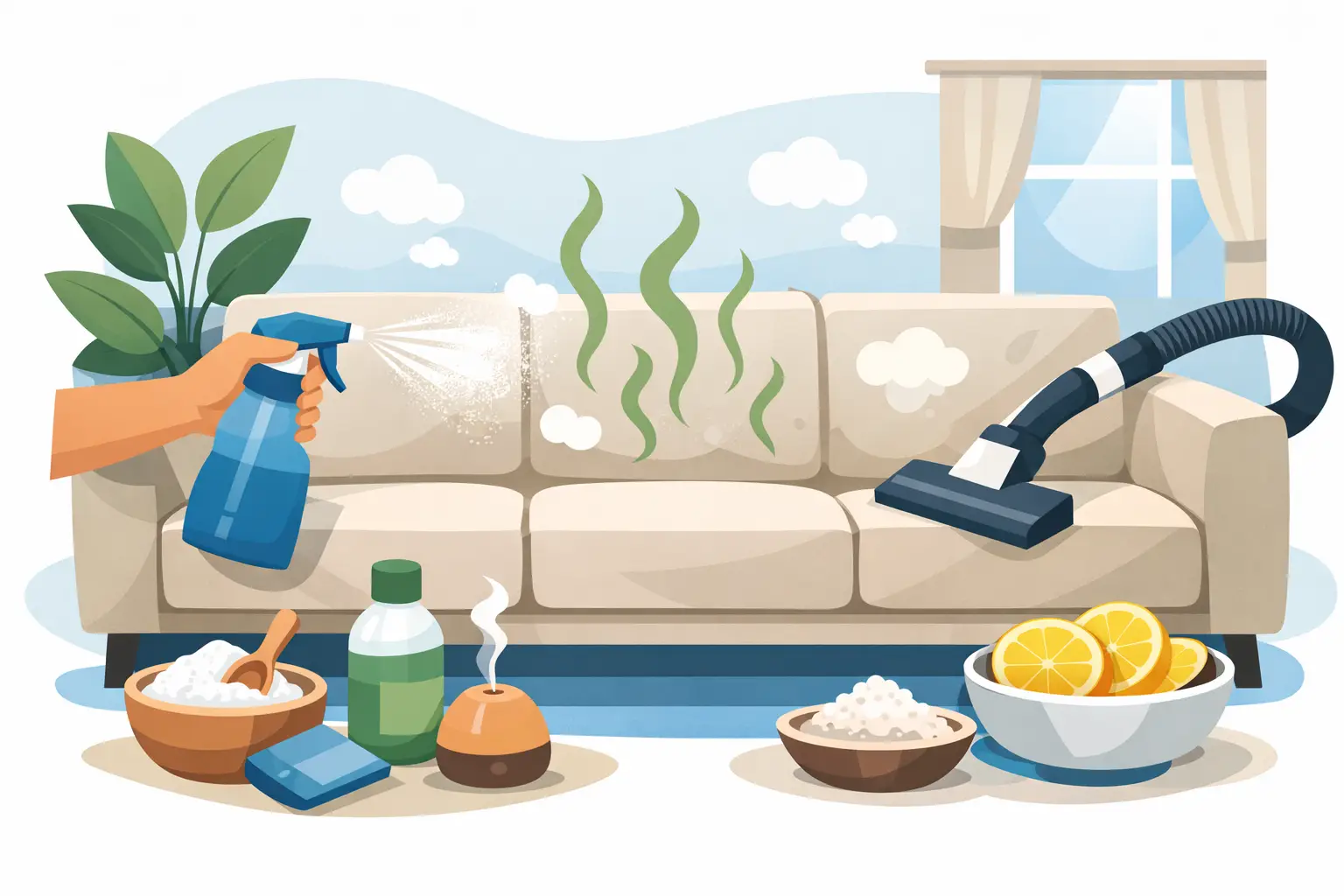
A smelly sofa is rarely just a matter of poor ventilation. In most cases, the odour has worked its way into the fabric fibres, the foam core, or beneath the cushions. If you’re wondering how to remove odor from sofa without making things worse, the first step is identifying the source, not masking it with a fabric spray. Covering up the smell only delays the problem.
Whether the cause is a pet accident, moisture, food spills, or smoke, treating the root issue is the only way to eliminate couch odor permanently and protect the life of your furniture.
Identifying the Cause Before You Start
The most important step while learning how to remove odor from sofa is to identify the cause behind it. Not all sofas clean the same way, and not all odours respond to the same treatments. Synthetic upholstery tends to be more forgiving than cotton, velvet, or blended wool fabrics. Leather requires extra caution to eliminate couch odour permanently since excess moisture or the wrong product can dry it out, crack it, or leave permanent staining.
Organic odours such as urine, sweat, sour milk, or vomit are among the most stubborn. They penetrate quickly into the padding and continue to develop when moisture stays trapped inside. Tobacco and cooking smells build up gradually across the entire sofa surface, especially in rooms with limited airflow. Mildew odour is a more serious indicator that moisture has been sitting long enough to cause real damage.
Before trying any treatment to eliminate couch odor permanently, check the care label on your sofa if it’s still legible. Some upholstery tolerates water-based cleaning, while others require dry-solvent methods or low-moisture professional cleaning. Skipping this step is one of the most common causes of permanent fabric damage.
How to Remove Odor from Sofa Using Home Remedies
Baking Soda for Light Odours
Baking soda remains the most widely recommended sofa smell removal home remedy for mild to moderate odours. It works best on dry fabric sofas with no active wet stains. Sprinkle a thin, even layer across the surface, let it sit for several hours or overnight, then vacuum thoroughly. This approach can help with general mustiness or light tobacco smells, but it won’t address deep contamination in the foam or padding underneath.
White Vinegar: Use With Caution
White vinegar is frequently suggested online, but it requires restraint if you’re trying to eliminate couch odor permanently. Heavily diluted, it may help reduce certain acidic odours on compatible fabrics, but always test on a hidden area first. It does not work on all materials and can leave its own temporary unpleasant smell. On leather or delicate upholstery, it is best avoided entirely.
Commercial Odour Sprays
Over-the-counter deodorising sprays can create the impression of a quick fix when you’re learning how to remove odor from sofa, but in most cases they mask odours rather than neutralise them. Some leave residue on the fabric, alter the texture, or react poorly with cleaning products already applied. For households with children, pets, or high daily use, these products offer limited lasting results as they do not eliminate couch odor permanently.
What to Avoid When Treating Sofa Odours
The most common mistake homeowners make while learning how to remove odor from sofa is over-wetting. More water or more product does not mean it will eliminate couch odor permanently. When moisture seeps through the upholstery and becomes trapped in the foam, the odour often worsens and can progress toward mildew. This is especially problematic in Montreal and Laval homes during winter months when indoor humidity and ventilation are already restricted.
Avoid improvised product combinations. Bleach, ammonia, vinegar, dish soap, essential oils, and heavy-duty stain removers should never be mixed randomly. Beyond the risk of damaging the fabric, some combinations can be irritating to the respiratory system, particularly in enclosed living spaces.
Surface-level drying is also not the same as complete drying. Even when the top of the sofa feels dry to the touch, the internal foam can remain damp for 24 to 48 hours or longer. As long as that moisture remains, odours are very likely to return.
Pet Accidents, Moisture Damage, and Mildew: Harder Cases
Pet urine is in a category of its own when it comes to how to remove odor from sofa effectively. It travels quickly through textile layers and reaches the upholstery padding. If not treated correctly, the salts and organic compounds remain present even after the surface appears clean. The sofa may seem fine at first, then release odour again the next time ambient humidity rises.
Enzyme-based products can help in these situations, but only when the product is compatible with the fabric and applied with proper technique. Approximate dosing or insufficient rinsing can leave more residue behind than before. For a fresh accident, absorb as much as possible without scrubbing aggressively. For older odours, deep treatment is usually necessary to eliminate couch odor permanently.
Mildew requires even more attention. When it results from a basement environment, a water leak, improper storage, or incomplete drying after cleaning, deodorising alone is not sufficient. The residual moisture must be addressed, and the internal padding evaluated. In cases of prolonged contamination, the foam may be too compromised for any surface treatment to hold.
Why Professional Sofa Cleaning Delivers Lasting Results
When a sofa has persistent odours, the goal is not simply to add fragrance to the surface. The objective is to extract contaminants, manage moisture levels, and respect the specific nature of the upholstery material. This is where professional methods make a real difference. A qualified technician assesses the fabric type, the intensity of the odour, the condition of the padding, and the most appropriate approach to clean without shrinking or damaging the fibres.
Depending on the situation, a professional treatment may combine technical vacuuming, targeted pre-treatment, injection-extraction cleaning, specialised deodorising, and controlled drying. Two sofas with equally strong odours can require two completely different approaches. That diagnostic capability is precisely what sets professional cleaning apart from trial-and-error home treatments.
For households in Montreal, Laval, the North Shore, or the South Shore where children, pets, or individuals with sensitivities are present, this level of care also supports indoor air quality. A persistent odour is often a signal that organic residue, moisture, or accumulated contaminants are still present. Removing them properly improves comfort, hygiene, and the long-term condition of your furniture.
If you are wondering how to remove odor from sofa cushions and upholstery effectively, addressing the source of the smell rather than masking it is the key to lasting results.
How to Keep Your Sofa Smelling Fresh Long-Term
Once the sofa has been properly cleaned, regular maintenance makes a significant difference. Frequent vacuuming limits the build-up of dust and particles that trap odours over time. Good room ventilation helps as well, particularly during winter or in homes with limited airflow.
Understanding how to remove odor from sofa also means acting quickly when a liquid is spilled, blotting without oversaturating the fabric and without pushing the moisture deeper into the material.
Avoid leaving a slightly damp sofa covered with a thick throw or a non-breathable slipcover for extended periods. This slows drying and encourages musty odours to develop. In high-traffic homes, periodic professional cleaning remains one of the safest and most effective ways to maintain a healthy level of hygiene without putting the upholstery at risk.
What is the most effective sofa smell removal home remedy for everyday odours?
Baking soda is the most reliable option for light to moderate odours on dry fabric sofas. Apply a thin, even layer, leave it overnight, and vacuum it off thoroughly. For stronger or deeper odours, home remedies are typically not sufficient to fully eliminate couch odor permanently, and professional treatment is worth considering.
How do I know if my sofa needs professional cleaning instead of a home treatment?
If the odour returns within a few days of cleaning, if the source is pet urine or mildew, or if the smell seems to come from inside the cushions or padding rather than the surface, professional intervention is likely necessary. A professional can assess the upholstery and treat the contamination at the source.
Can I use white vinegar to remove odor from a sofa?
White vinegar can help with certain mild odours when heavily diluted and used on compatible fabrics. However, it is not appropriate for all upholstery types, can leave a temporary smell of its own, and should never be used on leather or delicate textiles. While learning how to remove odor from sofa, always patch test in a hidden area before applying.
Why does my sofa smell worse after I cleaned it?
This is usually caused by over-wetting. When moisture penetrates the foam and stays trapped, it creates the ideal conditions for odours to intensify or evolve into mildew. Improper drying is one of the most common reasons a sofa smell removal home remedy produces results that don’t last.
How often should I have my sofa professionally cleaned to prevent odours?
For households in Montreal, Laval, the North Shore, or the South Shore with regular use, pets, or children, a professional cleaning every 12 to 18 months is generally recommended. This helps maintain hygiene, extend the life of the upholstery, and address any developing issues before they become harder to treat.
Key Takeaways
- Understanding the source of the odour is the most essential step in learning how to remove odor from sofa.
- Not all upholstery materials respond the same way to cleaning products or moisture
- Baking soda can neutralise light odours on dry fabric sofas, but won’t reach deep contamination
- Over-wetting a sofa is one of the most common mistakes and can lead to mould and worsening smells
- Pet urine, mildew, and organic odours typically require more than surface-level treatment
- Professional cleaning is often the most reliable way to eliminate couch odor permanently without damaging the material