

If you’ve noticed foggy windows, musty odors, or woken up with a dry throat, your home’s humidity levels might be off. Knowing how to measure home humidity is one of the simplest things you can do to protect your family’s health and the comfort of your living space. In Montreal, where winters are dry and summers bring heavy humidity, this knowledge is especially important.
This guide walks you through everything you need to know, from the right tools to use, to recognizing indoor humidity too high symptoms before they become serious problems.
Home humidity refers to the amount of water vapor present in the air inside your home. It’s measured as relative humidity, expressed as a percentage. When that percentage falls too low or climbs too high, your home environment becomes uncomfortable and potentially harmful.
In Montreal’s climate, humidity levels shift dramatically between seasons. Central heating in winter strips moisture from indoor air, while summer months can push home humidity well above comfortable levels. Understanding how to measure home humidity gives you real control over your indoor environment.
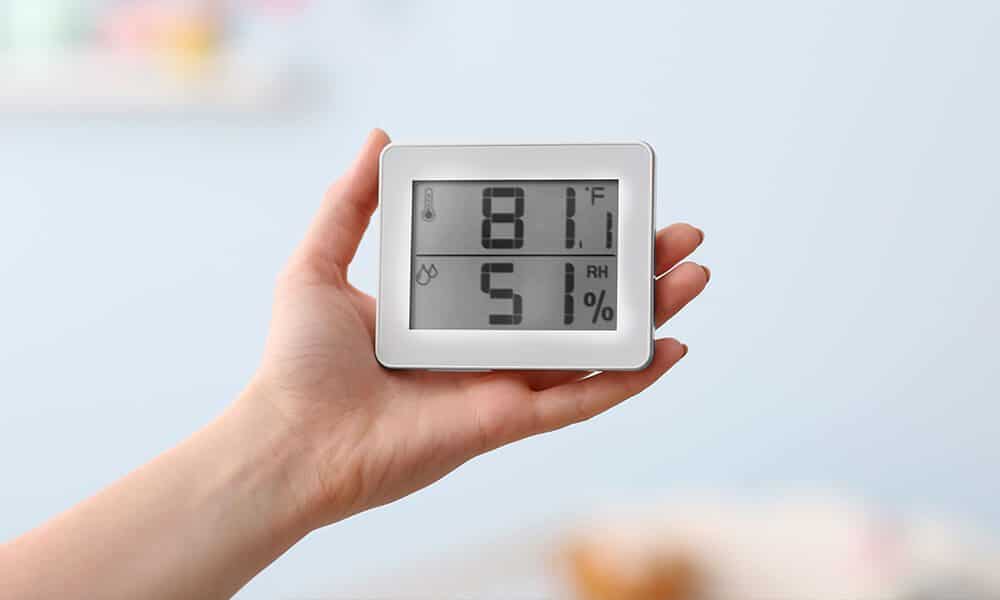
The most reliable way to measure home humidity is with a hygrometer, a small, affordable device that reads the relative humidity in any room. Digital hygrometers are the most accurate and easy to find at any hardware store in Montreal.
Here’s how to get an accurate reading:
- Place the hygrometer in the center of the room, away from windows, vents, or exterior walls
- Avoid positioning it near heat sources like radiators or stoves
- Leave it in place for at least one to two hours before reading the result
- For larger homes, test multiple rooms since humidity levels can vary significantly between spaces
Some smart home thermostats now include built-in humidity sensors, which give you continuous monitoring without needing a separate device. If you want a simple and low-cost solution, a standalone digital hygrometer gets the job done just as well.
The ideal home humidity range sits between 40% and 60% relative humidity. Within this range, your home feels comfortable, air quality stays healthy, and the risk of mold or structural damage stays low.
A helpful way to think about it by season in Montreal:
- Winter: aim for 30% to 40% since outdoor cold air naturally dries out your home
- Summer: aim for 45% to 55% to stay comfortable without encouraging mold growth
- Year-round sweet spot: 40% to 50% relative humidity for most households
If your readings consistently fall outside this range, that’s a signal your home needs attention, whether through better ventilation, a humidifier, or a dehumidifier. Knowing how to measure home humidity is essential for identifying these signals.
One of the most important reasons to measure home humidity regularly is to catch problems before they escalate. When indoor humidity is too high, your home and body both start showing signs.
Common indoor humidity too high symptoms include:
- Condensation forming on windows or cold surfaces
- A persistent musty or stale smell in certain rooms
- Visible mold or mildew on walls, ceilings, or in bathrooms
- Peeling wallpaper or paint bubbling on walls
- Increased allergy symptoms like sneezing, congestion, or itchy eyes
- A feeling of heaviness or stuffiness in the air
In Montreal homes, these symptoms are especially common in basements and bathrooms during summer months. If you’re noticing more than one of these signs, your humidity level is likely sitting above 60%, and that needs to be addressed promptly.
Low humidity is just as problematic as high humidity, though it tends to show up differently. Dry indoor air, common in Montreal winters, can cause cracked lips, dry skin, irritated sinuses, and increased susceptibility to colds and respiratory infections.
Understanding how to measure home humidity is important because very dry air can affect both your health and your property. From a structural standpoint, very low humidity causes wood floors and furniture to shrink and crack. Static electricity increases noticeably, and houseplants begin to suffer. If your hygrometer is consistently reading below 30%, investing in a quality humidifier for your main living areas is a smart move.
However, understanding indoor humidity too high symptoms is equally important, as excessive moisture can lead to mold growth, musty odors, and damage to your home. Maintaining a balanced humidity level is essential.
Your ventilation system plays a direct role in regulating home humidity. When air circulates properly, excess moisture is removed and fresh air replaces it throughout the home. When ventilation ducts are clogged or poorly maintained, that moisture has nowhere to go, and indoor humidity too high symptoms quickly follow.
In Montreal, where homes are sealed tightly during winter months, duct maintenance becomes even more critical. Dirty or blocked ducts trap humid air, create conditions where mold can thrive, and reduce the overall efficiency of your HVAC system. This makes it even more essential to know what the symptoms are.
While learning how to measure home humidity can help you identify potential problems early, it does not eliminate the need for professional cleaning when serious issues arise. Scheduling a professional duct cleaning is one of the most effective ways to restore proper airflow and support healthy humidity levels throughout your home. Clean ducts mean better circulation, fewer contaminants, and a living environment that’s easier to regulate season after season.
Once you know how to measure home humidity and understand where your levels stand, regulation becomes straightforward. Here are the most effective approaches:
Use a Humidifier or Dehumidifier
A humidifier adds moisture to dry air during winter months, while a dehumidifier pulls excess moisture out during humid summers. Portable units work well for individual rooms, while whole-home systems integrate directly with your HVAC for consistent regulation throughout the house.
Improve Your Home’s Ventilation
Open windows when outdoor conditions allow, use exhaust fans in kitchens and bathrooms consistently, and make sure your ventilation ducts are clean and functioning. Proper airflow is the most natural and cost-effective way to manage indoor humidity long-term.
Monitor Humidity Seasonally
Montreal’s climate requires different approaches in different seasons. Check your hygrometer readings monthly and adjust your humidifier or dehumidifier settings accordingly. A quick monthly check takes less than a minute and can prevent months of damage or discomfort.
What is the fastest way to measure home humidity?
The fastest way to measure home humidity is with a digital hygrometer. Place it in the room you want to test, wait one to two hours, and it will give you an accurate relative humidity reading.
What are the most common indoor humidity too high symptoms?
The most common indoor humidity too high symptoms include condensation on windows, musty odors, visible mold or mildew, peeling paint, and worsening allergy or respiratory symptoms.
What humidity level is dangerous for a home?
Humidity levels consistently above 60% create ideal conditions for mold growth and can cause structural damage. Levels below 25% to 30% can damage wood, irritate respiratory systems, and increase the risk of illness.
How often should I measure home humidity?
To measure home humidity levels monthly is a good habit. During seasonal transitions in Montreal, check more frequently since levels can shift quickly as outdoor temperatures change.
Can dirty air ducts affect home humidity?
Yes. Clogged or dirty air ducts restrict airflow, which prevents moisture from being properly circulated and removed. This is a common but overlooked cause of indoor humidity too high symptoms in Montreal homes.
- How to measure home humidity starts with a digital hygrometer, placed away from heat sources, for an accurate room-by-room reading.
- The ideal home humidity level is between 40% and 60% relative humidity year-round.
- Indoor humidity too high symptoms include condensation, musty smells, mold growth, and worsening allergies.
- Montreal’s seasonal climate requires adjusting home humidity management between winter dryness and summer moisture.
- Clean, well-maintained ventilation ducts play a key role in regulating indoor humidity and preventing indoor humidity too high symptoms.
- Regular monthly monitoring of home humidity helps you catch imbalances before they cause lasting damage.