

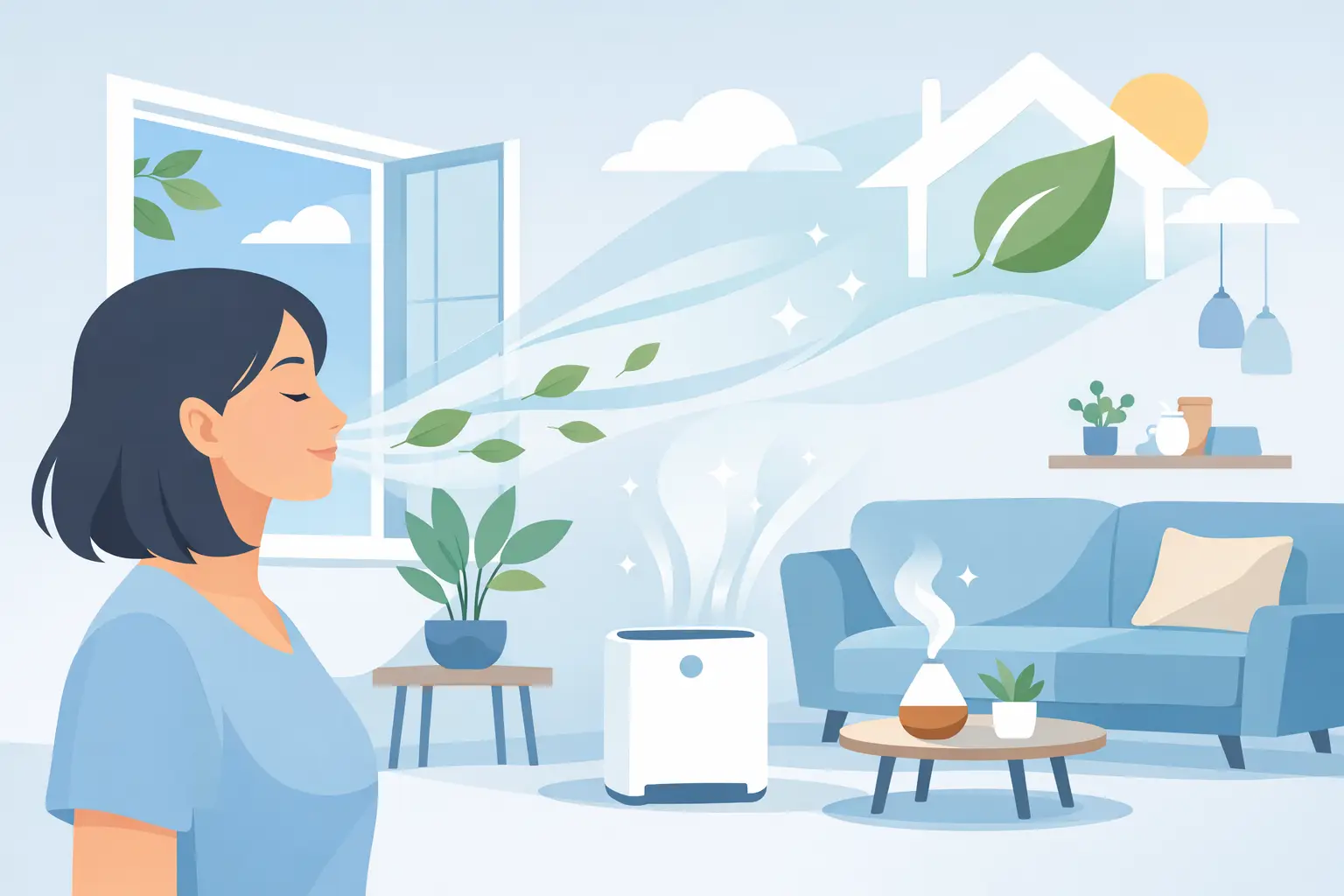
You open the windows, you vacuum regularly, and yet the air still feels heavy. Odours linger. Allergies flare. If you’ve been wondering how to improve indoor air quality, You’re not alone and the answer is rarely one simple fix. For homeowners across Montreal, Laval, the North Shore, and South Shore, this is a very real daily concern that touches comfort, respiratory health, and the overall condition of your home.
Indoor air quality rarely suffers because of a single cause. In most homes, it’s a combination of fine dust, poor humidity control, allergen-loaded textiles, dirty ventilation systems, and inadequate air circulation. Understanding how to improve indoor air quality requires a comprehensive approach that targets these underlying issues rather than relying on temporary solutions.
The Main Sources of Indoor Air Pollution
Most indoor pollutants are not dramatic. They’re the everyday kind: household dust, pet dander, dust mites, cooking residues, moisture, early-stage mould, and particles trapped deep in carpets, rugs, and upholstered furniture. These sources accumulate quietly over time, and they don’t disappear on their own.
Soft surfaces play a much bigger role than most homeowners expect. Carpets, area rugs, sofas, and mattresses capture enormous amounts of particles. That can work in your favour but only when these surfaces are properly maintained. Without regular, thorough cleaning, they become reservoirs. Every step, every draft, every light vacuuming session can push those particles back into the air you breathe. Following indoor air quality tips home Canada experts recommend almost always starts here.
Humidity is another major factor. Air that’s too dry causes irritation, but air that’s too humid encourages odours, allergens, and microbial growth. Poorly ventilated bathrooms, basements, and rooms where laundry dries indoors are common problem areas and they often go unaddressed until the issue becomes obvious.
Warning Signs You Shouldn’t Ignore
Poor indoor air quality doesn’t always announce itself with a strong smell. The signs are often subtler: a heavy feeling in certain rooms, dust that returns almost immediately after cleaning, waking up congested, frequent sneezing indoors, or upholstered furniture that holds onto odours. These are serious signals worth acting on.
If multiple people in the household feel better when they step outside, then the homeowners should seriously think about how to improve indoor air quality. In commercial spaces, declining comfort levels for employees or clients carry the same weight.
Better Ventilation Means More Than Opening a Window
Opening windows does help, particularly after cooking, showering, or cleaning. But this habit has its limits, especially during cold months, in dense urban areas, or in newer, well-sealed buildings. Effective ventilation depends on actual air circulation, the condition of your equipment, and how consistently it’s maintained.
A poorly maintained air exchanger loses efficiency and can redistribute dust rather than remove it. The same applies to wall-mounted heat pumps and certain central air systems. When filters and internal components are dirty, these units don’t improve air quality they can actively contribute to its decline. Knowing the best ways to purify air inside your house means knowing that equipment condition matters as much as equipment presence.
The Underestimated Role of Ducts and Soft Surfaces
When thinking about how to improve indoor air quality, most people picture air purifiers, open windows, or scented sprays. Rarely do they consider the ductwork behind their walls or the rug under their feet. Yet these are among the most significant contributors to what circulates through your home.
Ventilation ducts accumulate dust, debris, and various contaminants over time, distributing them from room to room every time the system runs. Renovations, pets, extended periods without maintenance, and high occupancy can all accelerate this buildup. Professional duct cleaning is not just about appearances. It’s a core part of maintaining genuine air hygiene and keeping your system running at full efficiency.
Carpets and upholstered furniture present a different challenge. Surface-level cleaning improves appearance but doesn’t always remove what’s embedded deep in the fibres. The right extraction method matched to the material, the level of soiling, and the drying time makes a measurable difference in results and in fibre safety.
When to Call a Professional
Some situations clearly call for professional intervention. Persistent allergies despite good routine maintenance, recent renovations, moving into a new home, lingering odours, water damage, or ventilation systems that haven’t been serviced in years are all strong indicators. These are also moments when indoor air quality tips home Canada specialists point to as the highest-value opportunities for improvement.
A qualified professional doesn’t just clean. They assess materials, choose safe and best ways to purify air inside house and effective methods, reduce the risk of over-wetting, and use equipment designed to remove what everyday cleaning leaves behind. Companies like Nettoyage Imperial work on the elements that influence indoor air the most: air ducts, air exchangers, carpets, upholstered furniture, mattresses, and dryer vents.
The right time to act is not only when a problem becomes obvious. Preventive intervention protects occupants’ health, extends the life of your equipment, and preserves your surfaces over time making it a smarter long-term investment than waiting for things to worsen.
What are the most effective indoor air quality tips for Canadian homes?
The most effective approach combines several actions: maintaining your ventilation equipment, cleaning ducts and air exchangers regularly, using a vacuum with proper filtration, controlling indoor humidity, and scheduling professional cleaning for carpets and upholstered furniture. In Canada’s climate, where homes are sealed tightly for much of the year, these steps carry even more weight.
What are the best ways to purify air inside your house without buying expensive equipment?
You don’t need a high-end air purifier to see meaningful results. Cleaning your dryer vent, vacuuming frequently with a quality unit, washing bedding regularly, reducing indoor humidity, and keeping ventilation equipment clean and serviced are all highly effective. These basics address the source of contamination rather than filtering around it.
How to improve indoor air quality in an older Montreal home?
Older homes tend to have more accumulated dust in ductwork, older ventilation systems, and textiles that have gone years without deep cleaning. A professional assessment of your ducts, air exchanger, and soft surfaces is a strong starting point. From there, consistent upkeep keeps the air cleaner between professional visits.
How often should ducts be cleaned to maintain good indoor air quality?
For most homes in the Greater Montreal area, every three to five years is a reasonable baseline. Homes with pets, recent renovations, allergy sufferers, or high occupancy may benefit from more frequent service. A professional inspection can give you a clearer picture based on your specific situation.
Can dirty carpets really affect indoor air quality tips home Canada experts talk about?
Absolutely. Carpets trap dust, allergens, pet dander, and other particles that get redistributed into the air with every step or air current. Deep professional extraction removes what surface vacuuming leaves behind, directly improving what you breathe indoors.
Key Takeaways
- How to improve indoor air quality starts with identifying sources of pollution like dust, humidity, and neglected ventilation systems rather than masking symptoms.
- Following indoor air quality tips home Canada experts recommend means addressing soft surfaces, including carpets, rugs, and upholstered furniture, as a priority.
- The best ways to purify air inside your house often involve maintaining your ducts, air exchanger, and ventilation equipment rather than purchasing standalone devices.
- Humidity control is a critical and frequently overlooked factor in maintaining healthy indoor air quality.
- Professional intervention is most valuable after renovations, in cases of persistent allergies, or when indoor air quality equipment has gone without service for extended periods.
- Preventive maintenance protects occupants’ health and extends the life of surfaces and systems, making it a smarter investment than reactive cleaning.