

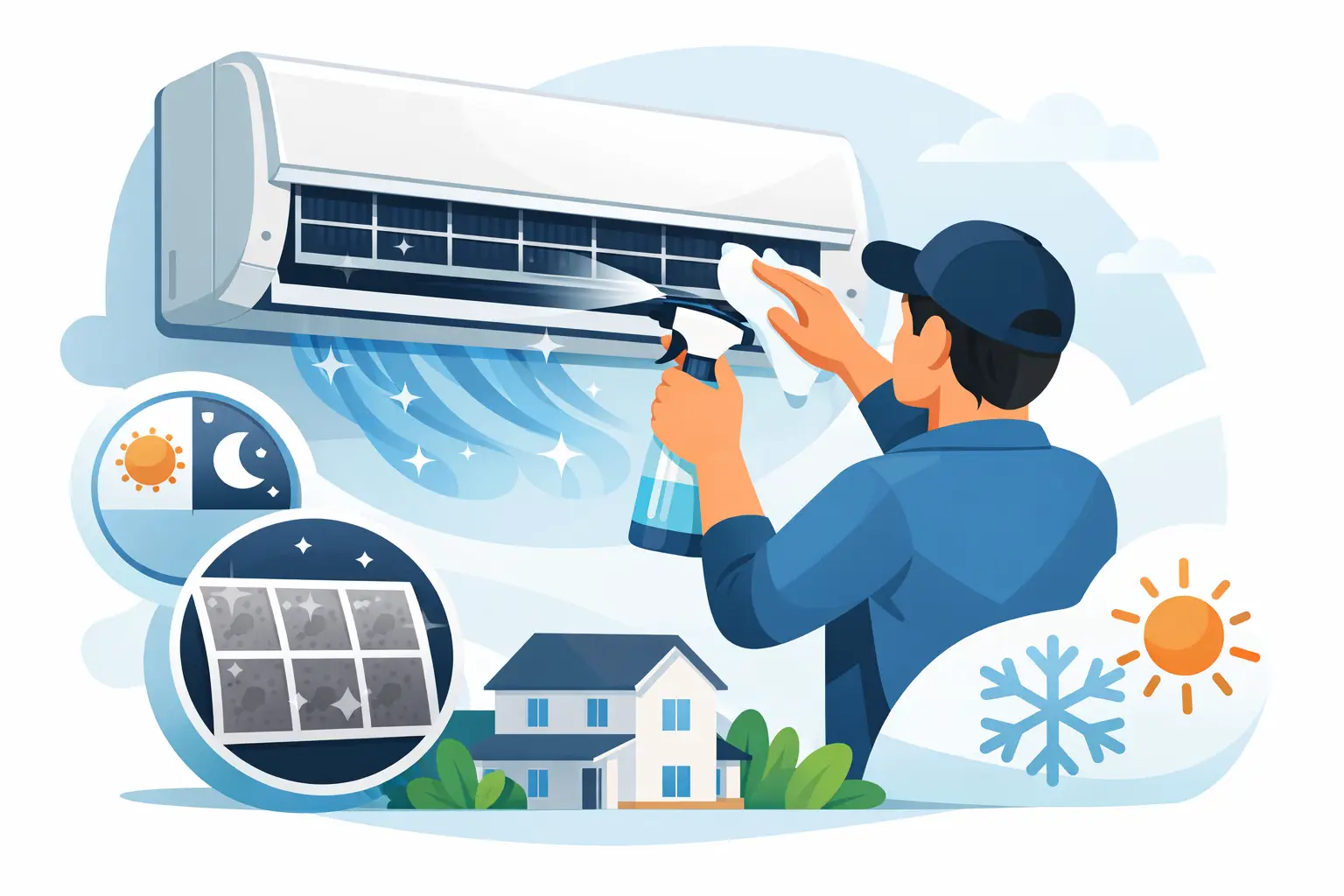
A faint stale smell at startup, airflow that feels weaker than it used to, or dust settling back on your furniture faster than normal; these are often the first signs that something is off. Knowing how often to clean your wall heat pump is not just a housekeeping habit. It directly affects performance, indoor air quality, and the long-term health of the unit.
In Montreal homes and commercial spaces, wall heat pumps run almost year-round. That near-constant operation means contaminants build up faster than most owners expect, and waiting too long almost always ends up costing more than a well-timed cleaning. Therefore, having a wall mounted heat pump cleaning schedule is necessary for Montreal homeowners.
How Often to Clean a Wall Heat Pump Based on Usage
The right frequency starts with how hard the unit actually works. For typical residential use, thorough cleaning at least once a year is a sensible baseline. If the unit handles both heating and cooling, twice a year is often more appropriate ideally timed before the peak demand seasons begin.
In a busy household with an active kitchen, pets, children, or regular foot traffic, buildup happens faster. Filters catch a portion of the dust, but they do not stop everything. The tangential fan, evaporator coil, and condensate tray can accumulate grime steadily over time. In these situations, scheduling cleaning before summer and again before winter is the most reliable approach to maintaining air quality and efficiency.
In rental properties and commercial settings, the wall mounted heat pump cleaning schedule may need to be adjusted further. A small office, a retail space, or a multi-unit building presents different contamination factors than a private home. Occupant count, cooking odours, tobacco exposure, pet presence, and overall ventilation quality all influence how quickly the unit becomes dirty.
The Best Times of Year for Wall Mounted Heat Pump Cleaning Schedule
Spring is often the most strategic time for a first cleaning of the year. After months of continuous heating, the indoor unit has already worked hard and accumulated particulate matter. Cleaning at this point sets up the unit for the warm season in a more efficient, stable state.
Autumn is equally important, especially if the heat pump will serve as the primary or supplementary heating source through the colder months. A cleaning before temperatures drop reduces the risk of performance issues exactly when the unit matters most to daily comfort.
That said, the calendar is not the only guide. Knowing when to service your mini split heat pump also means watching for symptoms between scheduled cleanings. A fixed date approach alone is not enough if the unit is showing signs of trouble.
When to Service Mini Split Heat Pump
Some indicators are hard to ignore. If airflow feels noticeably weaker, if the unit is louder than usual, or if there is an unpleasant smell at startup, it is time to inspect the unit. A spike in electricity use without any change in habits can also point to buildup that is forcing the system to work harder to reach the same output.
Pay attention to how people in the space feel as well. When occupants notice increased irritation, allergy flare-ups, or a general sense that the air feels less clean, the heat pump may be a contributing factor. A dirty unit does not cause every indoor air quality problem, but it can certainly make existing issues worse.
Visible mould, dark residue around the air vents, or unusual water discharge are signs that should not be ignored. At that point, how often to clean your wall heat pump becomes less of a scheduling question and more of an immediate concern requiring a proper technical cleaning of the internal components.
Filter Rinsing Versus a Full Cleaning
Many homeowners assume that rinsing the washable filters is enough to maintain the unit properly. Cleaning the filters regularly is useful and worth doing every few weeks during heavy use, but it does not replace a full cleaning. Filters are the first line of defence, not the entire system.
The components that collect the most problematic buildup are further inside. The fan, evaporator fins, coil, and drainage system all require a more technical approach. An incomplete cleaning can leave deposits behind, push dirt deeper into the unit, or cause water to discharge in the wrong places. A thorough wall mounted heat pump cleaning schedule accounts for all of these internal components, not just the filter panel.
When Professional Cleaning Is the Right Call
Whenever there is a persistent odour, visible internal staining, a noticeable drop in performance, or any suspicion of microbial growth, professional cleaning is the most reliable solution. It allows the unit to be treated thoroughly, without improvising around sensitive electronics or fragile internal plastics.
It is also the right choice when the unit has not been serviced in a long time. A wall heat pump that has accumulated several seasons of deposits typically needs more than a surface clean. The goal is not just for the unit to look clean from the outside, but for it to return to healthy, stable operation.
For property managers and businesses in Montreal, Laval, the North Shore, and the South Shore, professional maintenance offers the added benefit of consistency. A planned service schedule reduces emergency calls, protects equipment, and makes cost management far more predictable. From a prevention standpoint, knowing when to service your mini split heat pump on a regular basis is almost always more cost-effective than waiting for a visible problem to develop.
How often to clean a wall heat pump in a typical Montreal home?
For most residential settings, a thorough cleaning once a year is the minimum recommended baseline. If the unit runs for both heating and cooling, twice a year is a better target. Homes with pets, young children, or active kitchens may benefit from cleaning before summer and again before winter to maintain proper wall mounted heat pump cleaning schedule and indoor air quality.
When to service a mini split heat pump if there are no obvious problems?
Even without visible symptoms, when to service your mini split heat pump should follow a proactive schedule rather than a reactive one. Spring and autumn are the most practical windows. Waiting until performance drops or odours appear usually means the unit is already working harder than it should be.
What happens if you wait too long between cleanings?
A dirty wall heat pump loses efficiency gradually, which can be easy to overlook. Over time, this leads to higher energy consumption, reduced comfort, faster wear on internal components, and potential indoor air quality issues. The longer the buildup is left, the more difficult it becomes to clean thoroughly without partial disassembly.
Can I manage my own wall mounted heat pump cleaning schedule at home?
Homeowners can and should rinse the filters regularly during periods of heavy use. However, internal components like the evaporator coil, tangential fan, and condensate tray require a more technical approach. For a complete cleaning that addresses all internal areas, professional service is recommended at least once a year.
What factors make a wall heat pump get dirty faster?
Pets, frequent cooking, recent renovation work, and nearby construction all increase the rate of contamination. In urban environments like Montreal and Laval, seasonal pollens, outdoor air quality, and building density also play a role. The more contaminants circulating in the space, the more frequently you will need to consider how often to clean your wall heat pump.
Key Takeaways
- How often to clean your wall heat pump depends on usage intensity at minimum once a year, and twice a year for units handling both heating and cooling.
- A wall mounted heat pump cleaning schedule should be planned around spring and autumn to prepare the unit for peak demand seasons.
- Knowing when to service your mini split heat pump means watching for reduced airflow, unusual noise, odours, or increased energy use between scheduled cleanings.
- Rinsing filters regularly is helpful but does not replace a full professional cleaning of internal components like the evaporator coil and condensate tray.
- Homes with pets, active kitchens, or allergy-sensitive occupants in Montreal, Laval, and surrounding areas may need to clean their wall heat pump more frequently than standard recommendations suggest.
- Delaying service makes buildup harder to remove and accelerates wear on internal components early action is always more cost-effective.