

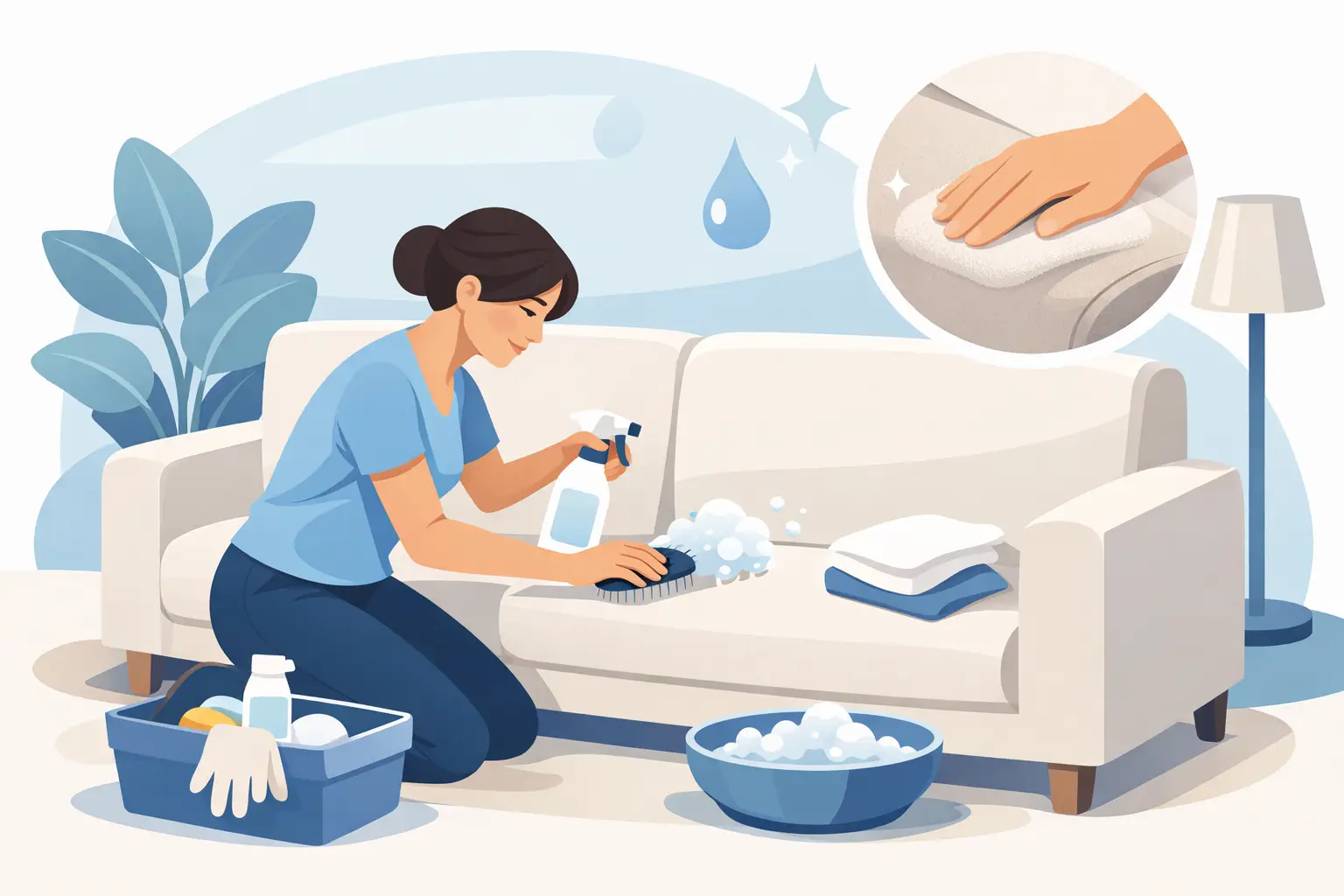
A ring that spreads after one wipe, a fabric that pills, a colour that dulls within minutes; this is how most sofa-cleaning mistakes begin. If you want to know how to clean a delicate fabric sofa without causing irreversible damage, start with one rule: on sensitive upholstery, the method matters just as much as the product. Whether you are dealing with cotton, linen blend, velvet, chenille, viscose, or any textured fabric, what works on a durable material can leave permanent marks on a more fragile one. A methodical approach is always the safest path for velvet couch cleaning at home.
Identify Your Fabric Before You Do Anything Else
Before touching a single stain, check the manufacturer’s label on your sofa. Some delicate fabric sofas can handle a small amount of water-based cleaning, while others require specialised dry solvents, and many demand very precise moisture control. If the label is missing or unclear, treat the sofa as sensitive until you know otherwise.
Always test your chosen solution in a hidden area first, such as the back panel or under a cushion. Apply a small amount, blot with a clean white cloth, and allow it to dry completely. If the colour transfers, the texture stiffens, or a ring appears, stop immediately. This step is one that many homeowners in Montreal and across the South Shore skip, and it prevents the majority of sensitive upholstery damage.
The Right Way to Treat a Fresh Stain
A fresh stain and an old stain are not treated the same way. If a liquid has just been spilled, absorb it immediately; do not rub. Use a clean dry white cloth or an unprinted paper towel to lift the excess. Rubbing pushes the stain deeper into the fibre and causes localised wear on delicate fabric sofas.
Always work from the outside of the stain inward. This prevents the mark from spreading. On sensitive upholstery, use light pressure, minimal product, and very little water. The goal is not to saturate the area but to correct it gradually.
Greasy stains rarely respond to water alone. On the other hand, using too much product on a coffee or juice stain can leave more residue than the original mark. Each situation requires a carefully adjusted approach, which is why safe cleaning methods for sensitive upholstery always start with less, not more.
Choosing the Right Products for Velvet Couch Cleaning at Home
The word “delicate” demands a strict product selection. All-purpose cleaners, harsh stain removers, bleach, ammonia, and improvised mixtures of concentrated vinegar and baking soda are rarely a good choice for a quality sofa. These solutions can alter colour, break down the flexibility of the textile, or leave a lingering odour.
For velvet couch cleaning at home, a product formulated specifically for upholstery fabrics is the safest option. Apply it in small quantities. A light foam or a lightly dampened solution is far preferable to direct saturation. The less moisture the fabric absorbs, the lower the risk of rings, shrinkage, and long drying times.
Pay attention to your cloth as well. A clean, white, lint-free textile prevents colour transfer. A soft brush may work on certain fibres, but never with heavy pressure. On velvet or pile fabrics, the wrong direction of movement can visibly mark the surface in a way that is difficult to reverse.
The Most Common Mistake During Velvet Couch Cleaning at Home: Too Much Water
The greatest risk when attempting how to clean a delicate fabric sofa at home is not always the product; it is residual moisture. When water penetrates deeply into the cushion padding, it creates conditions for wicking rings, unpleasant odours, and the slow migration of internal debris toward the surface.
A sofa may look clean in the moment and show new marks the next day. This is why professional safe cleaning methods for sensitive upholstery emphasise moisture control, efficient extraction, and rapid drying. Without the right equipment, this level of control is difficult to achieve at home, especially in households with children or pets in Laval and the North Shore where sofas often see heavy daily use.
Certain stains require extra caution: red wine, pet urine, coffee, grease, ink, and cosmetics all interact with fabric differently. Biological stains such as urine present a double problem the visible mark and the embedded odour. Treating only the surface means the smell returns every time humidity rises. Ink and makeup can spread further if the wrong solvent is used, making the situation worse than before. These are the moments when safe cleaning methods for sensitive upholstery must be followed precisely.
When to Call a Professional Instead of Velvet Couch Cleaning at Home
Light maintenance between deeper cleanings makes sense: vacuuming with a fabric attachment, quickly absorbing a spill, and treating a small fresh stain with care are all reasonable steps. However, once a high-end fabric is involved, a large surface is affected, a stain is old, or an odour has set in, the home approach becomes a genuine risk.
If your sofa is light-coloured, finely woven, or has multiple stains across different areas, partial cleaning done without professional consistency will leave visible tonal differences.
A professional service begins by identifying the textile type, the nature of the soiling, and the colour sensitivity before choosing any method. The technique is then adjusted accordingly, whether that means low-moisture cleaning, controlled foam, or localised treatment. Drying is also better managed with the right equipment, which reduces the risk of rings and odours.
Since 1995, Nettoyage Imperial has served homeowners across Montreal, Laval, the North Shore, and the South Shore using exactly this logic: thorough cleaning when it is needed, without ever compromising the safety of the material.
What is the safest way to clean a delicate fabric sofa at home?
The safest approach on how to clean a delicate fabric sofa starts with reading the manufacturer’s label, testing any solution in a hidden area, and using as little moisture as possible. Work from the outside of the stain inward, blot rather than rub, and always allow the fabric to dry fully before assessing the result. When in doubt, contact a professional before attempting any treatment.
Is velvet couch cleaning at home possible without damaging the fabric?
Yes, velvet couch cleaning at home is possible for light surface dirt and small fresh stains, provided you use a product formulated for upholstery and work with a clean, lint-free white cloth. Always brush or blot in the direction of the pile. For deeper stains, embedded odours, or large affected areas, professional cleaning is the recommended option to avoid permanent pile damage.
What products should I avoid when using safe cleaning methods for sensitive upholstery?
When applying safe cleaning methods for sensitive upholstery, avoid bleach, ammonia, concentrated vinegar and baking soda mixtures, and generic all-purpose sprays. These can permanently alter the colour, break down the fibre structure, or leave residues that attract more dirt over time. A specially formulated upholstery foam used sparingly is nearly always a better choice.
How do I know when a professional is necessary for delicate fabric sofa cleaning?
Professional cleaning becomes necessary when the stain is old or biological, when the fabric is high-end or light-coloured, when an odour has persisted, or when multiple areas are affected. Attempting repeated home treatments on a delicate fabric sofa in these situations carries a high risk of causing more visible damage than the original stain.
How often should a delicate fabric sofa be professionally cleaned?
For most households, professional cleaning of sensitive upholstery once every 12 to 18 months is a reasonable standard. In homes with children, pets, or allergy sufferers in the Greater Montreal area, once a year or more frequently may be appropriate. Regular light maintenance, including vacuuming and prompt stain treatment, extends the time between professional sessions.
Key Takeaways
- Always test any product on a hidden area before treating a stain on a delicate fabric sofa; this single step prevents most permanent damage.
- For velvet couch cleaning at home, blot rather than rub, work from the outside in, and use only a product formulated for upholstery.
- Safe cleaning methods for sensitive upholstery always prioritise minimal moisture; too much water causes rings, odours, and prolonged drying times.
- Harsh household products including bleach, ammonia, and concentrated vinegar can permanently alter the colour and texture of delicate fabric sofas.
- Biological stains such as pet urine and old stains affecting sensitive upholstery over a large area require professional treatment rather than repeated home attempts.
- Regular vacuuming with a fabric attachment and prompt action on spills extends the life of any delicate fabric sofa and reduces the need for intensive cleaning.