

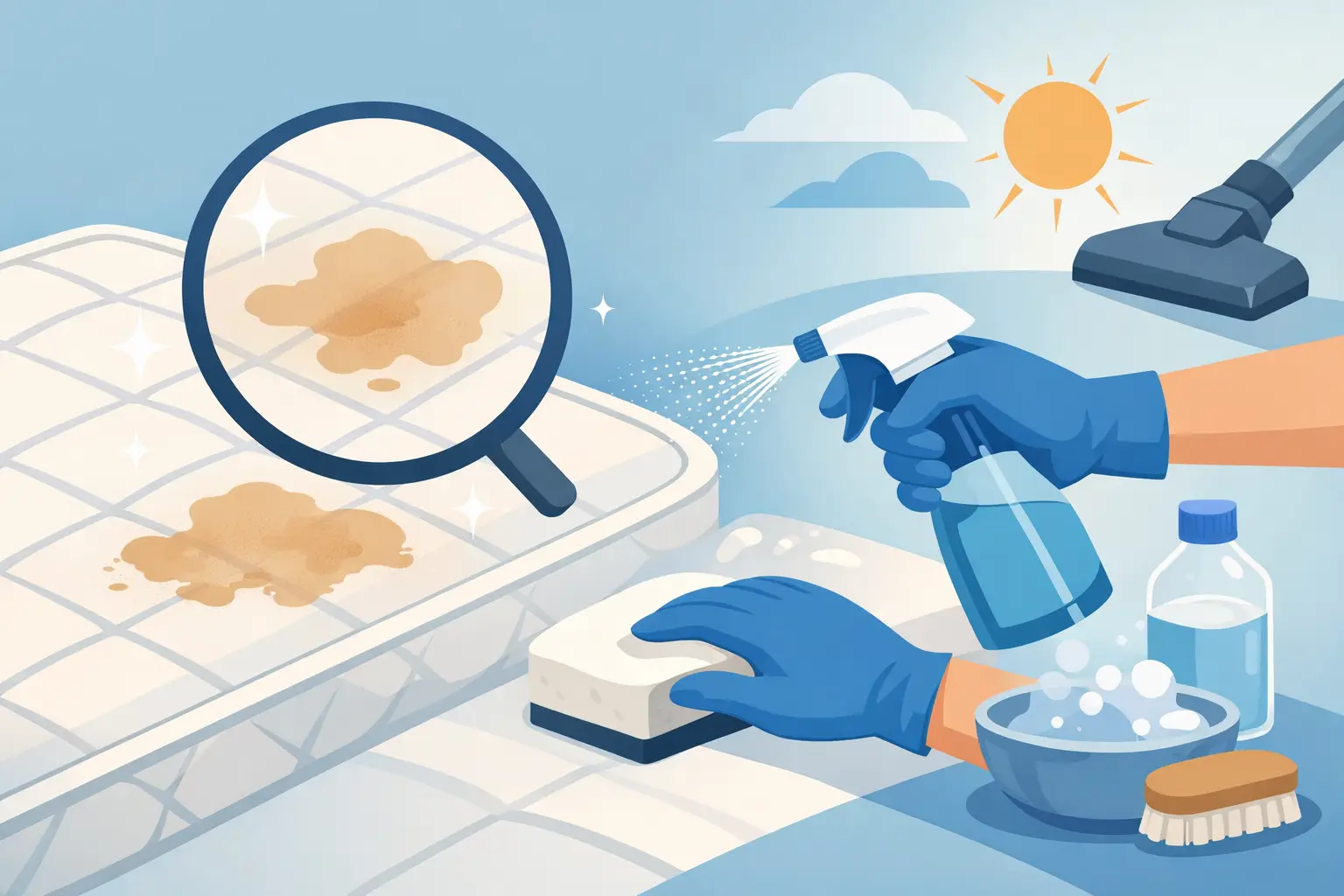
A yellow ring, a urine stain, a sweat mark, or a coffee spill on a mattress is not the same as a stain on a bedsheet. When you’re figuring out how to clean a stained mattress, the goal goes beyond making the surface look presentable. The real challenge is removing the stain without soaking the inner padding, pushing the stain deeper, or creating the kind of lingering dampness that leads to odours and mould. A mattress absorbs quickly and dries slowly. That combination is what makes mattress stain removal at home trickier than most people expect. The right approach comes down to three principles: identify the stain, use as little moisture as possible, and allow for complete drying before putting the bedding back on.
For a fresh stain, the priority is absorption. Use a clean white cloth or absorbent towel and blot firmly without spreading. The sooner you act, the less the stain will penetrate the inner layers. For an older stain, it is important to be realistic. You can usually improve the appearance and eliminate most of the odour, but getting the mattress back to a perfectly pristine state is not always possible. The question of how to clean a stained mattress depends on the fabric type, how deep the stain has gone, and how much time has passed.
Sweat stains are among the most common mattress complaints for which people try mattress stain removal at home. They build up gradually and leave yellowish rings caused by mineral salts and body oils. For light marks, a gentle cleaning solution of warm water and mild soap applied with a slightly damp cloth can make a noticeable difference. Blot the area, then follow up with another barely damp cloth to lift the residue.
The critical point is always the same: do not saturate the mattress. If the ring appears larger after the area dries, it usually means too much water was used or the residue was not fully removed.
Urine presents a two-part problem: the visible stain and the persistent odour. Even when the surface appears clean, residual contamination can remain in the padding. Absorb as much as possible first, then treat the area promptly. A gentle way to remove stains from mattress without chemicals can help clean the surface, but if the odour returns after the mattress dries, it usually means the liquid penetrated deeper than the surface treatment reached.
This is especially common in children’s rooms, rental units, and homes with limited air circulation. At that point, home remedies have their limits. A partial treatment may mask the problem temporarily, but the smell tends to return with ambient humidity. Mattress stain removal at home can work well for surface-level issues, but a professional cleaning service becomes the better option when the contamination has gone deeper.
Blood requires careful handling. Avoid hot water, as heat can set the proteins into the fabric and make the stain permanent. Work with minimal moisture, apply gentle pressure, and always test any product on a small, inconspicuous area before treating the full stain. Blot, do not scrub. The older the stain, the more technique-sensitive the process becomes. Aggressive scrubbing or a stiff brush can damage the mattress cover.
Coffee, juice, wine, and other pigmented liquids migrate quickly. Absorb immediately, then treat lightly without saturating the material. The visible stain is not the only concern here, the liquid may have already transferred into the foam or inner layers beneath the surface. If the mattress develops a sweet or sour odour after drying, the surface treatment alone was not enough.
When searching for ways to remove stains from mattress without chemicals, it is tempting to reach for the strongest product available. However, the more absorbent the material, the higher the risk. A mattress cannot be rinsed the way a floor or countertop can, so any product applied goes in and stays in.
The safest options are also the simplest: mild dish soap, a clean cloth, minimal moisture, and thorough drying. Some fabric-safe upholstery products may also be appropriate, as long as the mattress manufacturer’s instructions are followed and you test the product on a small area first.
Always go for removing stains from the mattress without chemicals. Avoid bleach, degreasers not designed for upholstery, improvised chemical mixtures, and fragrance-masking sprays. These can discolour the fabric, stiffen the fibres, leave irritating residues, or create an odour that is harder to remove than the original stain. Baking soda is a useful tool for neutralising surface odours but only when the mattress is completely dry. Applied to a damp area, it can form residues that are difficult to fully remove afterward.
Before doing anything, strip the bedding and lay the mattress flat in a well-ventilated space. Run a vacuum over the surface to remove dust, hair, and dry particles. Skipping this step can turn dry debris into a paste the moment you introduce any moisture.
While cleaning a stained mattress at home always work in small sections, moving from the outer edge of the stain toward the centre to limit spreading. Blot with steady, controlled pressure rather than scrubbing. It is better to repeat a light treatment several times than to attempt one aggressive pass.
Allow the mattress to dry completely before covering it again, use open windows, a fan, or natural air circulation to speed up the process. A mattress that is even slightly damp when covered can develop odours, microbial growth, and material breakdown over time.
Some situations require professional help. If the stain covers a large surface, the odour persists after repeated treatments, the liquid has soaked through the fabric layer, or there are signs of longstanding moisture damage, a professional cleaning service is the more reliable choice than cleaning a stained mattress at home.
Extra caution is warranted with high-end mattresses, memory foam models, children’s mattresses, and bedding used in rental or commercial settings. Using the wrong product or too much water in these cases can cost more than the cleaning itself. Homeowners across Montreal, Laval, the North Shore, and the South Shore face this regularly especially in homes with young children, pets, or older mattresses that have accumulated years of use.
A professional does not just remove the visible stain. They assess the fabric type, evaluate how far the contamination has reached, select a compatible treatment method, and account for the drying time required. This is especially relevant when hygiene, allergens, or indoor air quality are a concern. A professional cleaning can remove organic residues, deep-set odours, and a significant portion of accumulated contaminants that a home treatment simply cannot reach.
A well-protected mattress needs far less cleaning. A washable, breathable mattress protector is the most effective preventive measure available, especially in homes with children, pets, or allergy sufferers. It reduces the risks associated with sweat, accidents, and the gradual accumulation of dust and skin cells.
It also helps to leave the bed open for a short while each morning before making it. This simple habit allows some of the overnight moisture to dissipate before the sheets trap it against the surface. Regular light vacuuming and keeping an eye on early stains before they set can prevent the need for more intensive cleaning down the road.
The principle is straightforward: the longer you wait for how to clean a stained mattress, the harder the stain becomes to remove. If your mattress is relatively new, high quality, or central to your daily comfort, a careful, measured approach is always better than a series of improvised attempts.
How to clean a stained mattress without soaking it?
Blot the stain with a clean, damp cloth using a small amount of mild soap and water. Work from the outer edge of the stain toward the centre. Use minimal moisture and allow the mattress to dry fully before replacing the bedding. Avoid pouring water directly onto the surface, as deep saturation is difficult to reverse and can cause mould or odour issues over time.
What is the best method for mattress stain removal at home?
The most reliable approach combines quick action, gentle products, and minimal moisture. For most stains, a mild soap solution applied with a damp cloth is sufficient for surface-level marks. For organic stains like urine or sweat, blotting first and allowing the area to dry completely is essential. Baking soda can help absorb residual odours once the area is dry.
Can I remove stains from a mattress without chemicals?
Yes, for most surface stains. Warm water, mild dish soap, and a clean cloth are often enough for fresh or light marks. Baking soda applied to a dry surface can neutralise odours. Avoid bleach and harsh stain removers not designed for upholstery, as they can damage the fabric and leave residues.
When should I call a professional to clean my mattress?
If the stain is large, the odour persists after multiple treatments, or the liquid has penetrated the inner layers of the mattress, a professional service is the better option. This is especially true for memory foam mattresses, children’s mattresses, and rental units where hygiene and air quality are priorities.
How often should a mattress be professionally cleaned?
For most households, a professional mattress cleaning once every one to two years is a reasonable standard. Homes with young children, pets, or allergy sufferers may benefit from more frequent cleaning. Regular use of a mattress protector significantly reduces how often deep cleaning is needed.
If your mattress needs more than a home treatment can offer, Nettoyage Imperial provides professional upholstery and fabric cleaning services across the Greater Montreal area. Book a cleaning service with Nettoyage Imperial
- How to clean a stained mattress safely starts with identifying the type of stain before applying any product.
Act quickly on fresh stains; blot first, never rub, to limit how deep the stain penetrates. - Mattress stain removal at home works best with minimal moisture and simple, gentle cleaning solutions.
- Remove stains from mattress without chemicals using mild soap, clean cloths, and thorough air-drying.
- Baking soda can help neutralise surface odours, but only on a fully dry mattress.
- Persistent stains, deep odours, or large affected areas are best handled by a professional cleaning service.