

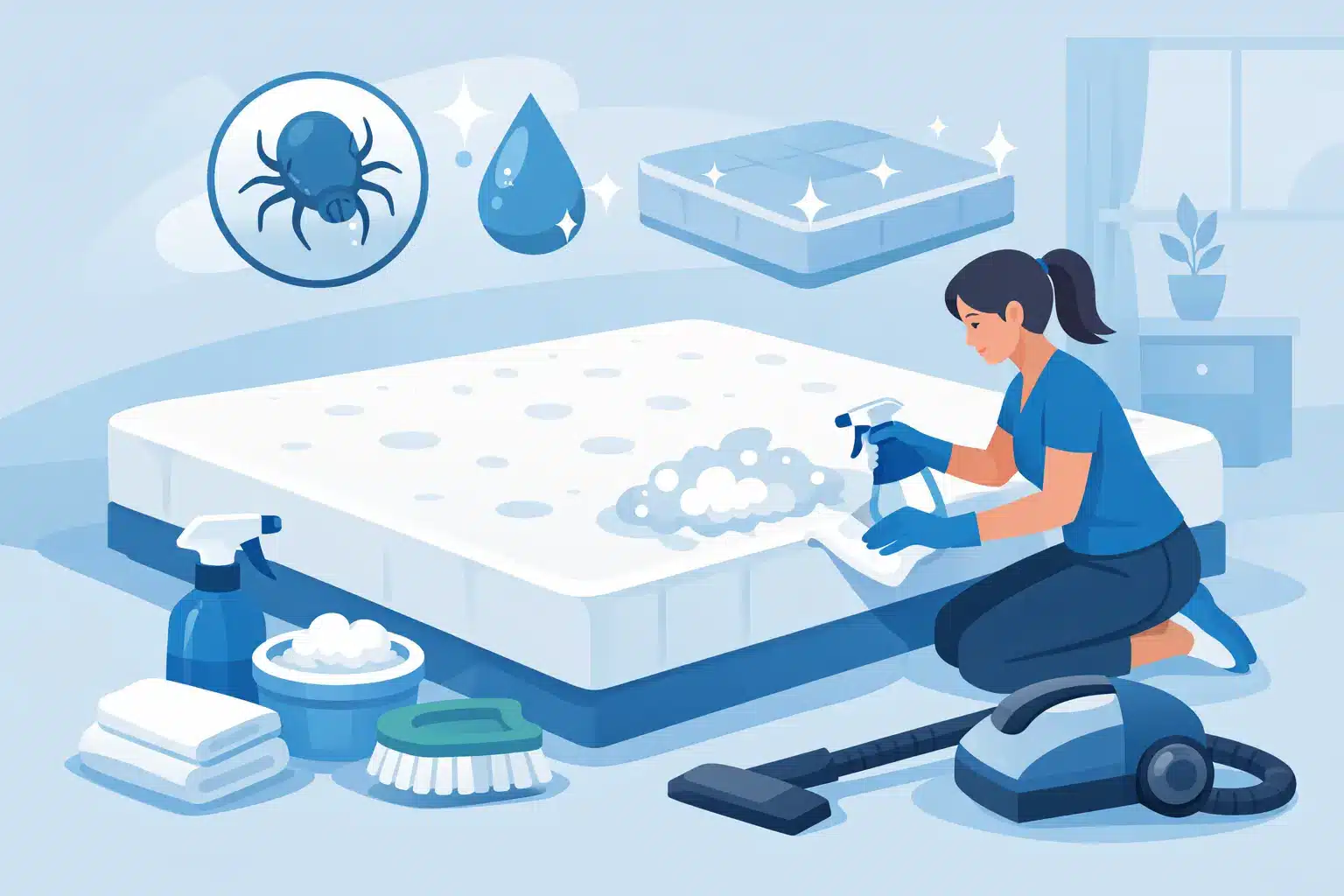
A sweat ring, a nighttime accident, or a lingering odor doesn’t mean you need to replace your bedding right away. The question “can you clean a foam mattress?” deserves a careful answer: yes, as long as you clean the surface without saturating the mattress’s core. Foam easily retains moisture, and an overly aggressive method can encourage bad odors, mold, or lasting deformation.
Can a Foam Mattress Be Cleaned Without Soaking It?
A foam mattress can be cleaned, but it doesn’t wash like a duvet cover. Its structure is made up of cells that absorb liquids at different rates depending on the type of foam: polyurethane, memory foam, high-resilience foam, or multilayer construction. Once water penetrates deeply, it can take a long time to evaporate, especially in a poorly ventilated room.
The principle is simple: use as little liquid as possible, work locally, and dry completely. This precaution is especially necessary for memory foam mattresses. Their comfort depends on their density and elasticity; excessive moisture, combined with a direct heat source, risks altering these properties.
Before doing anything, remove the sheets, mattress pad, and protector. Also check the manufacturer’s label when available. Some models have a removable, washable cover, but that doesn’t mean the foam core itself can be wetted.
The Safe Method for Routine Cleaning
For a recent stain or occasional upkeep, a gentle approach generally gives better results than a strong stain remover. Work in a ventilated room and allow several hours of drying time before remaking the bed.
- Vacuum the mattress thoroughly. Use a clean attachment, without an abrasive brush, focusing on seams, edges, and areas where dust builds up. This step removes hair, skin flakes, and some of the allergenic particles present on the surface.
- Prepare a low-moisture solution. Mix lukewarm water with a very small amount of mild soap. Lightly dampen a white microfiber cloth, then wring it out firmly. The cloth should feel damp to the touch, never dripping.
- Blot instead of rubbing. Apply the cloth to the stain with light pressing motions, working from the outside toward the center. Rubbing can spread the dirt, push the liquid deeper, and weaken certain fabric coverings.
- Remove the residue. Wipe with a second cloth barely dampened with clean water, always blotting. Then blot with a clean, dry towel to absorb as much moisture as possible.
- Let it dry completely. Open the windows if weather permits, turn on gentle ventilation, or place a fan nearby. Don’t put sheets or a mattress protector back on until the surface and the padding underneath are completely dry.
Localized cleaning won’t necessarily restore an older mattress to a like-new appearance. Its purpose is to sanitize a specific area and limit a stain from setting in, without creating a more serious moisture problem.
Is Baking Soda Useful?
Baking soda can help absorb a light odor and freshen the surface. Sprinkle a thin layer on a completely dry mattress, let it sit for a few hours, then vacuum thoroughly. It doesn’t disinfect deeply and won’t remove an old organic stain on its own.
This solution is therefore suited to occasional upkeep, for example between two cleanings. If baking soda residue remains in the seams or foam, it can also create dust — vacuuming needs to be thorough.
How to Treat the Most Common Stains
The type of stain determines the treatment. The faster you act, the better your chances of success. In every case, test the product on a small, inconspicuous area and avoid combining multiple homemade mixtures.
For a urine stain, first blot up the liquid with absorbent towels, without pressing too hard. Then use an enzymatic cleaner suited to fabrics and mattresses, following the recommended amount strictly. Enzymes are useful for breaking down the organic residue responsible for odors, but excessive application can moisten the foam too deeply.
For sweat marks or yellowish rings, a gentle, gradual cleaning approach works best. A cloth very lightly dampened with a soapy solution is often enough to fade the mark. Set-in stains may remain visible even after successful sanitizing: trying to make them disappear at all costs increases the risk of discoloration or over-saturation.
In the case of blood, use cold water. Hot water can set the proteins in the fibers and make the stain harder to remove. Blot, absorb, then repeat with minimal liquid. For vomit or any other significant biological stain, deodorizing and sanitizing often require more technical treatment than simple home cleaning.
Don’t use bleach on a foam mattress. It can damage the fabric, cause discoloration, and leave an irritating odor. Vinegar, alcohol, ammonia, and hydrogen peroxide aren’t universally compatible with covers, adhesives, and foams. Using them without a proper diagnosis can do more harm than good.
Mistakes That Prolong Odors and Moisture
Foam mattress cleaning rarely fails from a lack of product. It mostly fails because the mattress was over-wetted or not dried enough. Renting an injection-extraction machine, using a steam cleaner, or spraying a stain remover generously might seem effective in the moment, but these methods aren’t automatically suited to foam.
Steam should also be handled with caution. Its heat and moisture can compromise certain viscoelastic foams, laminated coverings, or internal adhesives. As for a hair dryer, a radiator, or intense sunlight, they can dry the material too abruptly and cause a loss of softness. Continuous ventilation at a moderate temperature remains the safest option.
Another habit to avoid is flipping a still-damp mattress against the box spring. Air no longer circulates under the treated side, which slows drying and encourages a musty odor.
When Should You Leave It to a Professional?
A specialized service is recommended when an odor returns despite cleaning, when a stain has penetrated deeply, or when the mattress has suffered water damage. If the mattress has been affected by vomiting, heavy sweating, or another illness-related incident, see our guide on mattress disinfection after illness for additional cleaning and hygiene precautions. It’s also relevant for rental units, children’s bedrooms, residences, or facilities where hygiene and turnaround time matter especially.
A technician’s role isn’t to further wet the surface. They assess the type of fabric, the apparent density of the foam, how old the stain is, and the level of contamination before selecting a controlled method. Extraction, targeted odor treatment, and drying are then adjusted to reduce residue without compromising the mattress.
In Montreal, Laval, the North Shore, and the South Shore, Nettoyage Impérial applies this diagnostic and safe-cleaning approach to bedding as well as upholstered furniture. The goal is to remove dirt and odors using suitable processes, while protecting the materials and indoor air quality.
Preventing a Stain Beats Treating One
A breathable, washable mattress protector is the most effective protection against liquids, sweat, and surface allergens. Wash it regularly according to the manufacturer’s instructions. Also vacuum the mattress when changing the sheets and air out the bedroom daily, especially if indoor humidity is high.
A mattress that’s protected, vacuumed, and dried properly after every incident keeps its comfort and hygiene longer. When facing a major stain, the right decision isn’t to use more product — it’s to choose a method that respects the foam and leaves the mattress truly dry.
Can you steam clean a foam mattress?
It’s not recommended without caution. Steam’s heat and moisture can compromise viscoelastic foams, laminated coverings, or internal adhesives, so a light, low-moisture cleaning method is safer.
How long does it take for a foam mattress to dry after cleaning?
It depends on the amount of moisture used and the room’s ventilation, but you should always wait until the surface and the padding underneath are completely dry before adding sheets or a protector back on — this can take several hours.
Does baking soda damage a foam mattress?
No, when used on a completely dry mattress and vacuumed thoroughly afterward. Leftover residue in the seams or foam can create dust if vacuuming isn’t complete.
Can I use hydrogen peroxide on a memory foam mattress?
It’s not universally compatible with covers, adhesives, and foams. Without a proper diagnosis, it can do more harm than good — always test on a small, hidden area first.
How often should you clean a foam mattress?
Vacuum it every time you change the sheets and treat stains as soon as they happen for the best results. A breathable, washable protector combined with daily airing of the room helps reduce how often deeper cleaning is needed.
Key Takeaways
- Foam absorbs moisture easily; always use minimal liquid, blot instead of rubbing, and never saturate the mattress.
- Memory foam is especially sensitive to the combination of heat and moisture.
- Match the treatment to the stain: an enzymatic cleaner for urine, cold water for blood, a mild soap solution for sweat.
- Never use bleach, and use vinegar, alcohol, ammonia, or hydrogen peroxide only after testing a hidden area.
- Poor drying, not lack of product is the main cause of lingering odors; never flip or re-cover a still-damp mattress.
- A breathable, washable mattress protector plus regular vacuuming and airing is the best long-term prevention.
- Call a professional when odors persist, a stain has penetrated deeply, or the mattress has suffered water damage.