

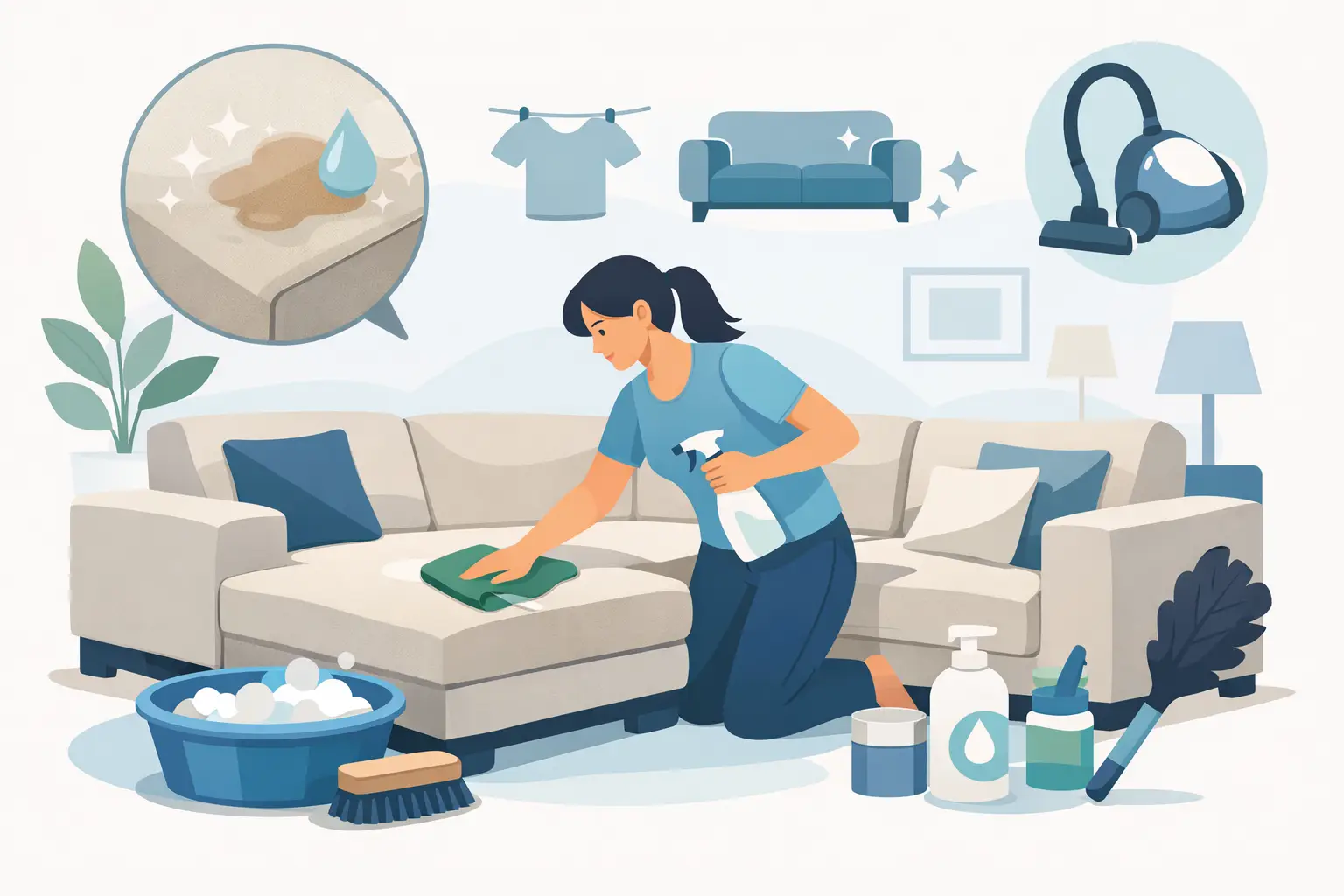
A fabric sectional sofa sits at the center of everyday life: meals eaten on the go, kids playing, pet hair, dust, and the occasional spilled drink. This fabric sectional sofa care guide helps you step in at the right moment, with the right technique, without setting a stain or weakening the fibers. The goal isn’t just to keep the sofa looking good; it’s also to limit odors, allergens, and premature wear on the padding.
Start by identifying the fabric and its care code
Before applying for any product, check the care label, usually found under a cushion or on the frame of the sofa. The most common code indicates which type of cleaning to use. A “W” code generally allows water-based products, while an “S” code calls for a specific solvent. A “WS” code offers more flexibility. If the label shows an “X,” avoid any moisture or liquid product altogether, vacuuming and professional servicing are the safest options in that case.
Why this matters on delicate fabrics
This precaution is essential for delicate fabrics, natural fiber blends, velvet, linen, or certain microfibers. Two sofas that look similar can react very differently to water. A ring, discoloration, or hardened texture often comes from a mismatched product, but can also result from slow drying.
Always test first
Even with a compatible fabric, always test on a hidden area first. Apply a small amount of solution, blot with a clean white cloth, and let it dry completely. If the color doesn’t transfer and the fabric keeps its original feel, you can move forward carefully.
The routine that actually helps
Regular upkeep keeps an invisible layer of dust, skin flakes, and greasy particles from working its way into the fibers. Vacuum the sofa once a week in an active household, or at least every two weeks in a lower-traffic space. Use a soft brush attachment on the seats, backrests, armrests, and seams. Also vacuum between the sections and under the cushions, where crumbs, hair, and pet fur tend to collect.
Flip and rotate cushions
Remove any loose cushions and flip them when the design allows it. This simple habit distributes pressure more evenly and reduces sagging on one side. On a sectional, it also helps to alternate which spots get used most. The corner facing the TV or the chaise section often wears faster than the rest of the piece.
Brush with care
Light brushing, in the direction of the pile for textured fabrics or velvet, helps keep the surface looking even. Avoid scrubbing vigorously, though — abrasion can create shiny patches, cause pilling, or change the direction of the fibers.
Protecting the sofa from everyday wear
Prevention remains the lowest-risk approach. Limit direct sun exposure, especially near a bay window. UV rays can fade colors irreversibly, even on a good-quality fabric. Rearranging furniture, using filtering curtains, or periodically rotating the sections can slow this down.
For homes with pets and kids
If you have pets, a washable throw on their usual spot noticeably cuts down on the hair and body oils that settle onto the seats. In households with young children, keeping meals to designated areas avoids a lot of emergency cleanups. None of these steps replace regular maintenance, but they do reduce how often spot treatment is needed.
Treating a stain without spreading it
With a fresh stain, speed matters more than how much product you use. Start by lifting any solid residue with a spoon or the edge of a dull spatula. For a liquid, blot immediately with an absorbent white cloth or plain paper towel. Work from the outside of the stain toward the center so it doesn’t spread further.
For more detailed guidance, see our fabric sofa cleaning tips for safely dealing with stains and everyday buildup.
Don’t rub
Rubbing pushes the liquid deeper into the padding and can distort the fibers. It also raises the risk of a ring forming, especially on light-colored fabrics. Blot instead, using light pressure, and switch to a clean section of the cloth as you go.
Treating light stains
For a light stain on a fabric that allows water-based cleaning, use a well-diluted solution of a suitable fabric cleaner or mild soap. Dampen the cloth — never the sofa directly. After treating the spot, wipe away residue with a second cloth lightly dampened with clean water, then blot up excess moisture with a dry towel.
Tougher stains
Coffee, wine, greasy sauces, ink, and pet accidents call for a more targeted approach. An all-purpose stain remover can actually make things worse if it’s not suited to the fabric or the type of stain. Highly alkaline products, bleach, glass cleaners, and abrasive powders should be avoided — they can discolor the fabric or leave residue that attracts more dirt afterward.
Watch for odors and watermarks
A lingering odor often means the contamination has reached the foam or the inner structure. Spraying fabric perfume just masks the problem instead of solving it. The source needs to be neutralized, and the sofa needs to dry completely. This is especially true after a pet accident, a liquid spill, or prolonged dampness.
What causes watermarks
Watermarks form when the fabric gets too wet, when a product dries unevenly, or when detergent residue is left in the fibers. If a ring does form, don’t layer on more products one after another — that buildup only makes the cleanup harder. A professional assessment is often the better call, especially on a large seat panel or a delicate fabric.
Why deep cleaning isn’t a DIY shortcut
Vacuuming and spot treatment protect your sofa, but they don’t fully remove the body oils, fine dust, and allergens that gradually build up in the fabric and padding. Professional upholstery cleaning can lift out this buildup at a level that home methods rarely reach.
The right method depends on the covering, the density of the fabric, the condition of the stains, and how much drying time is available. Overly aggressive extraction can soak the cushions through. On the other hand, a too-light cleaning leaves greasy dirt behind in the fibers. Professional work is about balancing moisture level, choosing compatible products, and extracting residue without compromising the fabric’s stability.
For a sofa used daily, professional servicing every 12 to 18 months is generally a good benchmark. That frequency can be higher in a household with kids, pets, allergies, or smokers. In a rental unit, a cleaning before a move or after new tenants arrive also helps freshen the furniture and restore its appearance.
Making sure it dries completely
After any wet cleaning, air out the room and keep the temperature normal. A fan can speed up drying, as long as it isn’t aimed to concentrate excessive heat on the fabric. Don’t push the cushions back together tightly right away, and avoid sitting on the sofa while it’s still damp.
Signs of a drying problem
A sofa that dries poorly can end up with a musty smell and become more prone to marking. If the cushions stay damp for several hours, an unusual odor shows up, or the fabric starts to feel rough, it’s better to have the padding checked out rather than repeating treatments.
A well-maintained fabric sectional keeps its color, comfort, and value longer. A few regular habits, a measured response to stains, and deep cleaning when it’s genuinely needed let you enjoy your furniture without taking unnecessary risks with its fibers.
How often should a fabric sectional sofa be professionally cleaned?
Roughly every 12 to 18 months for a sofa used daily, though households with kids, pets, allergy sufferers, or smokers may need it more often.
What does the W, S, or WS code on a sofa's care label mean?
W means water-based cleaning products are generally safe, S calls for a specific solvent instead of water, and WS allows either. An X code means the fabric should only be vacuumed, with no liquid or moisture at all.
How do I remove a stain from a fabric sofa without leaving a ring?
Blot — don’t rub — starting from the outside of the stain and working in, using a clean white cloth. Rubbing pushes the stain deeper into the padding and increases the chance of a ring forming, especially on light fabrics.
Why does my fabric sofa still smell after cleaning?
A lingering smell usually means the contamination has reached the foam or inner structure, not just the surface fabric. Spraying a fabric freshener only masks it — the source needs to be neutralized and the sofa fully dried out.
Can I use any stain remover on a fabric sectional sofa?
No — an all-purpose stain remover can react badly with certain fabrics or stain types. Bleach, highly alkaline cleaners, glass cleaners, and abrasive powders should always be avoided, since they can discolor the fabric or leave residue behind.
- Always check the fabric care code (W, S, WS, or X) before using any cleaning product, and test on a hidden spot first.
- Vacuum weekly to biweekly, flip and rotate cushions, and brush gently in the direction of the pile.
- Limit sun exposure and use a washable throw in pet-heavy spots to reduce fading and buildup between cleanings.
- Blot fresh stains immediately instead of rubbing, working from the outside in, and avoid bleach, alkaline cleaners, or abrasive products.
- Deep clean roughly every 12-18 months (more often with kids, pets, allergies, or smokers), and let the sofa dry fully before use.