

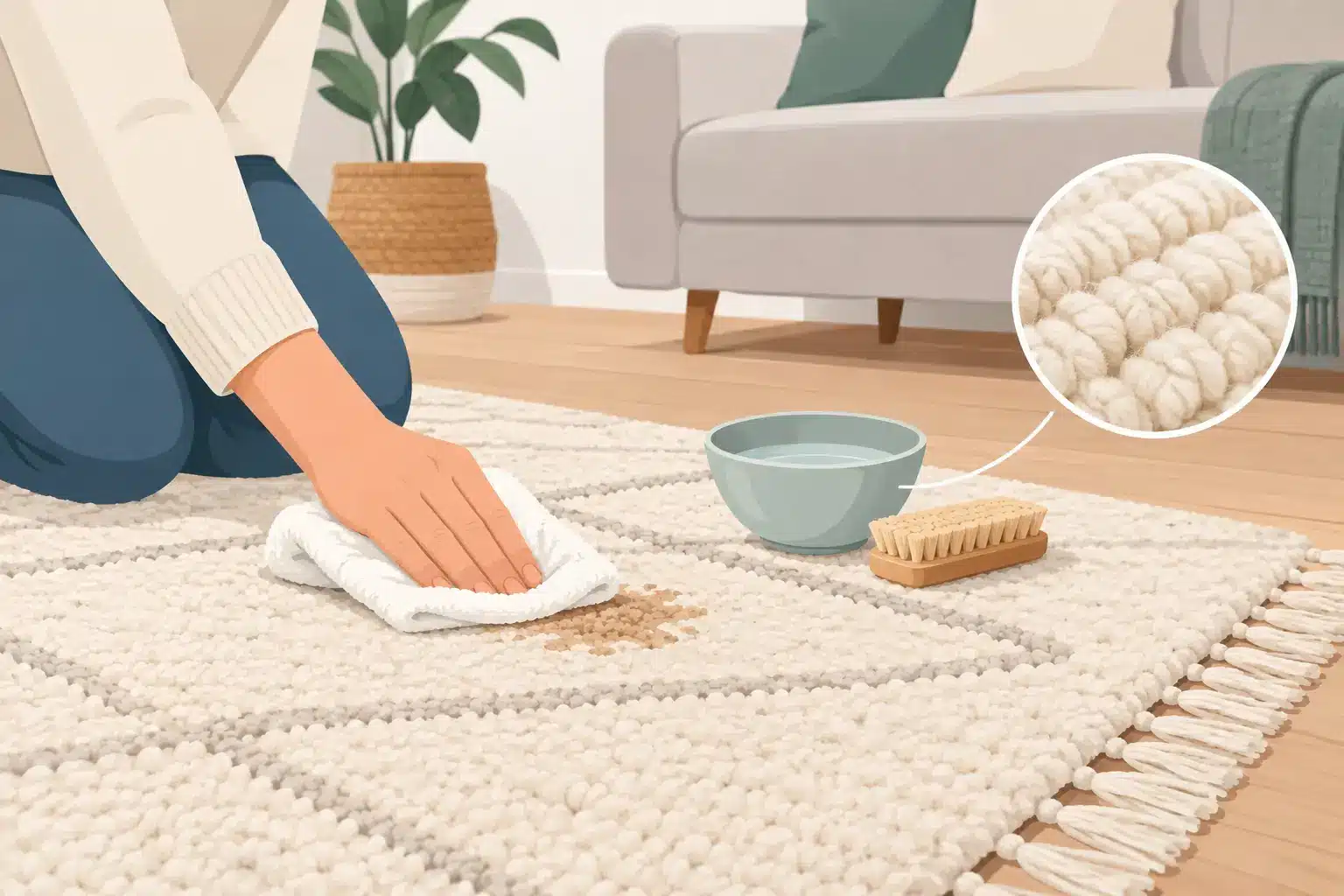
A coffee, wine, or urine stain on a wool rug is not treated the same way as on a synthetic rug. To know how to remove stains from a wool rug without creating a ring, matting the fibers, or fading the colors, you need to act quickly, but with very little moisture and without harsh products. Wool is a remarkable natural fiber, but it does not tolerate excess heat, alkaline detergents, or vigorous rubbing well.
Why Wool Requires a Special Method
Wool fiber has a scaly structure and contains natural proteins. It repels dry dirt relatively well, but once wet, it becomes more vulnerable to rubbing and unsuitable products. Too much water can make colors run, distort the rug, or leave a damp odor deep in the fibers and the backing.
Wool rugs can also react differently depending on how they are made. A hand-woven rug, an oriental rug, a kilim, or a piece with artisanal dyes requires more caution than a manufactured wool rug. If the care label is present, it remains the first reference. The absence of a label does not mean you should improvise: when in doubt, a minimal method is always better than a treatment that is too strong.
How to Remove Stains from a Wool Rug Right After an Accident
The first rule is simple: blot, do not rub. Place a clean white cloth or white paper towels on the stain and press gently from the outside toward the center. This direction limits the spread of the soiled area. Replace the cloth as soon as it absorbs color or liquid.
Do not use a colored towel, printed paper, or an abrasive sponge. Pigments can transfer onto the wool, while abrasion can open the fibers and create an area that is duller than the rest of the rug. Also avoid hot water: it can set some stains, notably protein stains such as blood, milk, or urine, and it increases the risk of shrinkage.
Once the excess is absorbed, always test your solution on a small hidden section. Lightly dampen a white cloth with the chosen product, press it on the test area, then check whether any color transfers. If the cloth picks up color, stop the home treatment and have the rug assessed by a specialist.
The Gentle Solution for Most Fresh Stains
For a recent, non-greasy stain, prepare a very gentle solution: a few drops of neutral liquid soap, ideally formulated for delicate fibers, in a bowl of cold or lukewarm water. The mixture should not produce a lot of foam.
Barely dampen a white cloth, then dab the stain. Work in small touches and without soaking the wool. Then pass a second cloth lightly dampened with clear water to remove the soap residue. Finish by pressing several dry cloths on the area until they absorb almost no more moisture.
The rug must dry quickly and flat, in a ventilated place. Keep pets, children, and furniture away from the area until it is completely dry. A fan placed nearby, without blowing intense heat directly, can speed up the process.
Adapting Stain Removal to the Type of Stain
The right steps vary depending on the nature of the damage. There is no universal method, especially on a natural fiber such as wool.
Coffee, Tea, Juice, and Wine
Absorb the liquid immediately. Then treat with the cold water and neutral soap solution, dabbing gently. For a persistent colored mark, avoid oxygen-based stain removers, bleach, and very alkaline products. They can lighten the dyes or change the texture of the wool.
White vinegar is often presented as a miracle solution. On a wool rug, it must be used with restraint. Its acidity can be useful in some cases, but poor dilution or excess moisture can leave an odor and affect delicate colors. If the wine stain is old or the rug is valuable, it is better not to keep trying one thing after another.
Grease, Sauce, or Oil
For a greasy stain, start by gently removing any solid residue with the edge of a spoon. Then sprinkle a small amount of cornstarch or unscented absorbent powder on the dry area. Let it work for several hours, then vacuum gently with the appropriate attachment.
If a greasy shadow remains, do not add a strong household degreaser. These products are often too harsh for wool and can leave a visible circle. A professional intervention makes it possible to choose a solvent or a controlled method according to the type of fiber, dye, and backing.
Pet Urine, Vomit, and Organic Stains
These stains require a quick response because they combine moisture, odor, and organic matter. Blot as much as possible with dry white cloths. Then use a very small amount of gentle solution, without saturating the rug, then remove the moisture by pressing.
Avoid enzymatic cleaners that are not designed for wool. Some can act effectively on odors, but their formulation or contact time may not suit protein fibers. When the odor persists after drying, the problem is often in the deep layers or the underpad. A surface treatment is then not enough.
Mud, Wax, and Gum
Let the mud dry completely before handling it. Vacuum the dry particles, then brush very gently in the direction of the pile with a soft brush if needed. Cleaning mud that is still wet risks pushing it deeper into the fibers.
For wax or gum, do not heat the rug directly with an iron. The risk of burning, color transfer, or melting of the backing is real. Instead, cool the material with an ice pack wrapped in a cloth, gently break the hardened residue, then have a professional treat what remains if necessary.
The Mistakes That Damage Wool Rugs the Most
The main risk is wetting the rug too much. Saturated wool dries slowly, can give off a musty odor, and sometimes shrinks or becomes distorted. Steam cleaning is also among the methods to avoid at home, particularly for antique rugs, lined pieces, or rugs with unstable colors.
Vigorous rubbing is another common mistake. It spreads the stain, breaks the fibers, and can create a fuzzy area. All-purpose stain removers, scented powders, bleach, ammonia, and bathroom cleaners have no place on a wool rug.
Finally, do not put a heavy piece of furniture back on an area that is still damp. The pressure slows drying and can leave a lasting mark. Wait until the rug is dry to the touch, including underneath if you can check without distorting it.
When to Hand the Rug Over to a Professional
A small, fresh, clearly identified stain can often be stabilized at home. However, an old rug, a set-in red wine stain, a urine odor, water damage, discoloration, or a rug whose colors run requires a specialized assessment.
Professional cleaning is not simply a matter of applying more product. It begins with identifying the fibers, dyes, type of soiling, and construction of the rug. The cleaning method, moisture control, and drying are then adapted to protect the value and appearance of the piece. At Nettoyage Imperial, this approach makes it possible to treat delicate rugs with safe processes rather than risk irreversible damage.
Periodic maintenance also helps preserve the rug before stains become permanent. Fine dust, allergens, and abrasive particles build up deep in the fibers, even when the surface looks clean. Regular dusting and suitable cleaning extend the life of the wool, keep the colors bright, and improve the hygiene of the space.
When facing a stain on a wool rug, the best decision is rarely the most vigorous one: absorb, test, use as little moisture as possible, and stop as soon as the result becomes uncertain. This restraint often protects your rug better than an overly ambitious home remedy.
How do you remove a stain from a wool rug?
Blot with a clean white cloth from the outside of the stain toward the center, without rubbing. Then dab with a few drops of neutral liquid soap in cold or lukewarm water, rinse with a cloth dampened with clear water, and press dry.
Can you use vinegar on a wool rug?
Only with restraint. Its acidity can be useful in some cases, but poor dilution or excess moisture can leave an odor and affect delicate colors.
Can you use hot water on a wool rug?
No. Hot water can set some stains, notably protein stains such as blood, milk, or urine, and it increases the risk of shrinkage.
Can you steam clean a wool rug at home?
It is best avoided, particularly for antique rugs, lined pieces, or rugs with unstable colors.
When should you call a professional for a wool rug stain?
For an old rug, a set-in red wine stain, a urine odor, water damage, discoloration, or colors that run.
Key Takeaways
- Wool does not tolerate excess heat, alkaline detergents, or vigorous rubbing, and too much water can make colors run or distort the rug.
- Act quickly, but blot from the outside toward the center instead of rubbing, using clean white cloths.
- Always test a solution on a small hidden section, and stop if the cloth picks up color.
- For most fresh stains, a few drops of neutral liquid soap in cold or lukewarm water, followed by a clear water rinse and dry pressing, is enough.
- Grease, urine, mud, wax, and gum each call for a different approach, and bleach, oxygen-based removers, strong degreasers, and steam cleaning should be avoided.
- Old rugs, set-in wine stains, urine odors, water damage, discoloration, and running colors are best handled by a professional.