

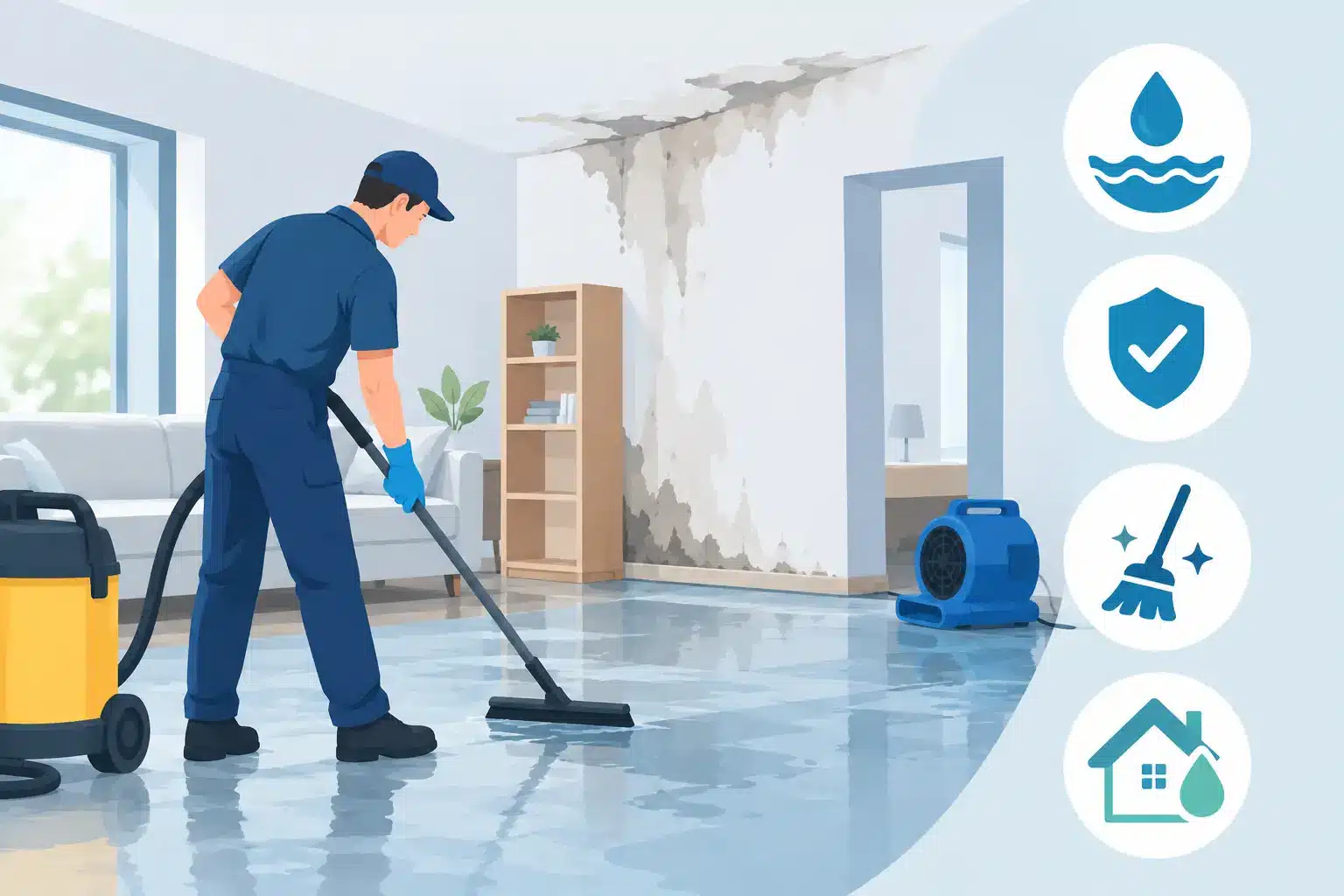
A visible water line on a wall, a lingering smoke odor or a soaked carpet are not simple cleanliness problems. After water damage, a fire, a sewer backup or an infiltration, disaster cleanup must follow a precise order. The goal is not only to get a clean space back, but to protect the occupants, limit contamination, and preserve what can truly be recovered.
Speed matters, but it does not replace diagnosis. Cleaning too early, with the wrong product or an unsuitable device, can set an odor, spread contamination or trap moisture in the materials. A methodical intervention makes it possible to tell washable surfaces from materials that must be removed and then return the premises to a healthy and safe condition.
Disaster Cleanup: Acting in the Right Order
Safety Comes First
The first priority is always safety. If the damage is recent, avoid entering an area where electricity could be in contact with water, where the ceiling seems weakened or where smoke has left heavy deposits. In the presence of wastewater, extensive mold or soot, household gloves and everyday products are not enough to adequately protect the people from doing the work.
Stop the Cause and Document the Damage
Next, stop the cause of the damage when this is possible and safe: shut off the water supply, isolate an affected room or have an electrical source checked. Take detailed photos before moving your belongings. They are used to document the situation for the insurer and to track how the damage evolves.
Moving Dry Items Safely
Move dry items to a clean area only if this can be done without risk. Raised furniture, documents, electronic devices, and textiles can sometimes be preserved, but each material reacts differently to water, heat, or smoke. A solid wood piece of furniture does not have the same chance of recovery as a particleboard panel swollen by moisture.
Why Simple Housecleaning Does Not Solve the Problem
Visible cleaning is only part of the work. After water damage, moisture can migrate behind baseboards, under flooring, into insulation or inside upholstered furniture. A surface that seems dry to the touch can hold enough water to encourage microbial growth in the following days.
The type of water also changes the measures to take. A leak from a clean supply pipe is not treated like water from a drain, a backup, or a flood. In the latter case, contaminants may be present in carpets, porous materials, and objects that touch the water. Disinfection does not automatically turn a heavily contaminated material into a safe item.
After a fire, soot is often more complex than it looks. It’s fine that particles can settle into fabrics, ducts, walls, and appliances. Rubbing a dry surface with an unsuitable cloth can spread the deposit and embed it further. Smoke odors, for their part, do not disappear with an air freshener: they require removing residues at the source and, depending on the situation, professional treatment of the air and surfaces.
The Steps of a Professional Intervention
Assessment of the Premises
A serious approach begins with an assessment of the premises. The professional examines the cause of the damage, the materials affected, the level of contamination, and the real extent of moisture or deposits. Measuring instruments make it possible to check what cannot be seen right away, notably in walls, floors, and certain building elements.
Controlling the Affected Area
Next comes control of the affected area. The goal is to prevent soot dust, spores, or moisture from spreading to unaffected rooms. Depending on the nature of the damage, this may require targeted removal of unrecoverable materials, containment of an area, or the use of air filtration equipment.
Water Extraction and Drying
Water extraction must be carried out quickly and with equipment designed for this type of intervention. It is not a matter of running a mop or opening the windows and hoping everything dries. Professional dehumidifiers and fans are used in a controlled way to bring materials back to an acceptable moisture level, without creating condensation elsewhere in the building.
Cleaning and Disinfection
Cleaning and disinfection come after this stabilization. Methods vary depending on the material: specialized washing of hard surfaces, treatment of recoverable textiles, cleaning of carpets or upholstered furniture, and removal of embedded residues. Once the surfaces are treated, the final verification must confirm that the space is dry, clean, and ready for the necessary repairs.
What Can Be Recovered, and What Sometimes Has to Go
It Depends on the Damage and the Material
The answer depends on the disaster, the length of exposure, and the composition of each object. Non-porous surfaces, such as glass, metal, and some plastics, are generally easier to clean when they have not been damaged. Upholstered furniture, mattresses, carpets, drywall, insulation and paper items require a much more cautious assessment.
Carpets, Cushions and Absorbent Materials
A carpet soaked by a clean water leak and treated quickly can sometimes be recovered. However, a carpet exposed to sewer water or left damp for several days represents a risk that outweighs its replacement value. The same principle applies to cushions, particleboard furniture, and absorbent materials. Trying to keep everything may seem economical in the short term, but it can lead to odors, mold, and higher costs later.
Documenting Valuable Items
For items with sentimental or financial value, documentation is essential. Photograph them before cleaning, keep receipts when possible and ask for a clear assessment before authorizing the removal or disposal of an important item.
Do Not Overlook Textiles and Ventilation
Once structural damage is stabilized, some elements are often forgotten carpets, area rugs, sofas, mattresses and ventilation ducts. Yet these materials can retain particles, allergens, and odors long after the walls have been cleaned. An appropriate treatment must respect the fibers, dyes, leather or furniture mechanisms to avoid creating new damage.
Ventilation ducts and equipment also deserve particular attention when smoke, dust, or contaminants have circulated in the building. Running a contaminated system can redistribute odors and particles into rooms that have already been cleaned. Maintenance must be done at the right time, after the source has been controlled and the main cleaning of the affected areas is complete.
In the greater Montreal area, Laval, the North Shore and the South Shore, temperature variations can also complicate drying, particularly in a basement or a poorly ventilated home. Natural drying can help in certain limited cases, but it does not replace a moisture measurement when building materials have been affected.
How to Choose a Company After a Disaster
The right contractor first explains what they observe, the risks present, and the proposed steps. Be wary of promises of total recovery made without an inspection, or of prices given without taking into account the real extent of the damage. A clear quote must specify the planned work, the materials concerned, and the limits of the intervention.
Also ask how unaffected areas will be protected, how moisture will be controlled, and what equipment will be used. Certifications, the team’s experience and safety procedures are not administrative details: they directly influence the quality of the cleaning and the protection of your belongings.
When repairs are complete, plan targeted maintenance of the carpets, furniture and ventilation systems that were exposed. A restored space deserves a complete return to cleanliness, carried out with methods compatible with its materials. Acting methodically from the first hours remains the best way to preserve your environment, your comfort and the value of your property.
What should you do first after water damage or fire?
Safety comes first. Avoid entering areas where electricity may be in contact with water, where the ceiling seems weakened, or where smoke has left heavy deposits. Then, when it is possible and safe, stop the cause of the damage by shutting off the water supply, isolating the affected room, or having an electrical source checked. Take detailed photos before moving belongings so you can document the situation for your insurer.
Can you clean up water damage yourself with a mop and open windows?
Not reliably. Visible cleaning is only part of the work, because moisture can migrate behind baseboards, under flooring, into insulation, or inside upholstered furniture. A surface that feels dry can still hold enough water to encourage microbial growth. Water extraction needs equipment designed for it, and drying is done in a controlled way with professional dehumidifiers and fans.
How do you get rid of smoke odor after a fire?
An air freshener will not make smoke odors disappear. They require removing residues at the source and, depending on the situation, professional treatment of the air and surfaces. Soot particles can also settle into fabrics, ducts, walls and appliances, and rubbing a dry surface with an unsuitable cloth can spread the deposit and embed it further.
What can be saved after water damage, and what should be thrown away?
It depends on the disaster, the length of exposure, and the composition of each item. Non-porous surfaces such as glass, metal, and plastics are generally easier to clean if they are undamaged. Upholstered furniture, mattresses, carpets, drywall, insulation and paper items need a more cautious assessment. A carpet soaked by a clean water leak and treated quickly can sometimes be recovered, but one exposed to sewer water or left damp for several days is a risk that outweighs its replacement value.
How do you choose a company for disaster cleanup?
Look for one that explains what it observes, the risks present and the proposed steps. Be wary of promises of total recovery made without an inspection, or prices given without considering the real extent of the damage. A clear quote should specify the planned work, the materials concerned, and the limits of the intervention. Ask how unaffected areas will be protected, how moisture will be controlled, and what equipment will be used, since certifications, experience and safety procedures directly affect the quality of the work.
Key Takeaways
- Safety comes first. Avoid areas where electricity may be in contact with water, where the ceiling seems weakened, or where smoke has left heavy deposits.
- Speed matters, but it does not replace diagnosis. Cleaning too early or with the wrong product can set odors, spread contamination or trap moisture.
- Stop the cause of the damage when it is safe to do so and take detailed photos before moving belongings.
- Visible cleaning is only part of the job. Moisture can hide behind baseboards, under flooring, insulation, and upholstered furniture.
- The type of water matters. Clean supply of water, drain water, backups and floods are not treated the same way, and disinfection does not make a heavily contaminated material safe.
- Soot and smoke odors need to be removed at the source, not covered with an air freshener.
- A professional intervention follows a clear order: assessment, area control, water extraction and controlled drying, cleaning and disinfection, then final verification.
- What can be recovered depends on the disaster, the length of exposure, and the material. Porous items need the most cautious assessment.
- Do not forget carpets, area rugs, sofas, mattresses and ventilation ducts, which can hold particles, allergens and odors.
- Choose a company that explains the risks and steps, gives a clear quote, and answers your questions about protection, moisture control, and equipment.