

A grey, sticky, or dusty ventilation grille does more than affect how a room looks. It can also hold onto particles that circulate every time your heating, air conditioning, or air exchange system runs. Knowing how to clean ventilation grilles helps you keep your home cleaner, limit odors, and quickly spot a problem that goes beyond simple surface maintenance.
In a house as much as in a commercial space, grilles are the visible part of the ventilation network. They do not always reveal the real condition of the ducts behind them, but they offer good clues. A fast buildup of dust, black marks, reduced airflow, or a persistent odor all deserve attention.
Why Do Ventilation Grilles Get Dirty?
Grilles naturally attract airborne dust, textile fibers, pet hair, and depending on the room, cooking residue or humidity. Return air registers are often the dirtiest, since they pull ambient air back into the system. Floor grilles also tend to collect more dirt tracked in by shoes, carpets, and daily activity.
In the greater Montreal area, the heating season can make the problem worse. Windows stay closed longer, air circulates more indoors, and dust gradually settles on ventilation surfaces. A saturated furnace or air exchanger filter can also contribute to buildup on the grilles.
That said, it’s important not to assume that a dusty grille automatically means the entire duct system is contaminated. The situation depends on the age of the building, whether pets are present, recent renovations, humidity, and how well the system has been maintained. The grille itself is easy to clean, while the inside of the network sometimes requires a more thorough inspection.
How to Clean Ventilation Grilles Safely
The right first step is to turn off your ventilation, heating, or air conditioning system. This precaution stops dust from circulating during cleaning and reduces the risk of dropping something into the duct while the fan is running. If a grille is connected to a specific unit, such as a wall-mounted heat pump or an air exchanger, check the manufacturer’s instructions before removing it.
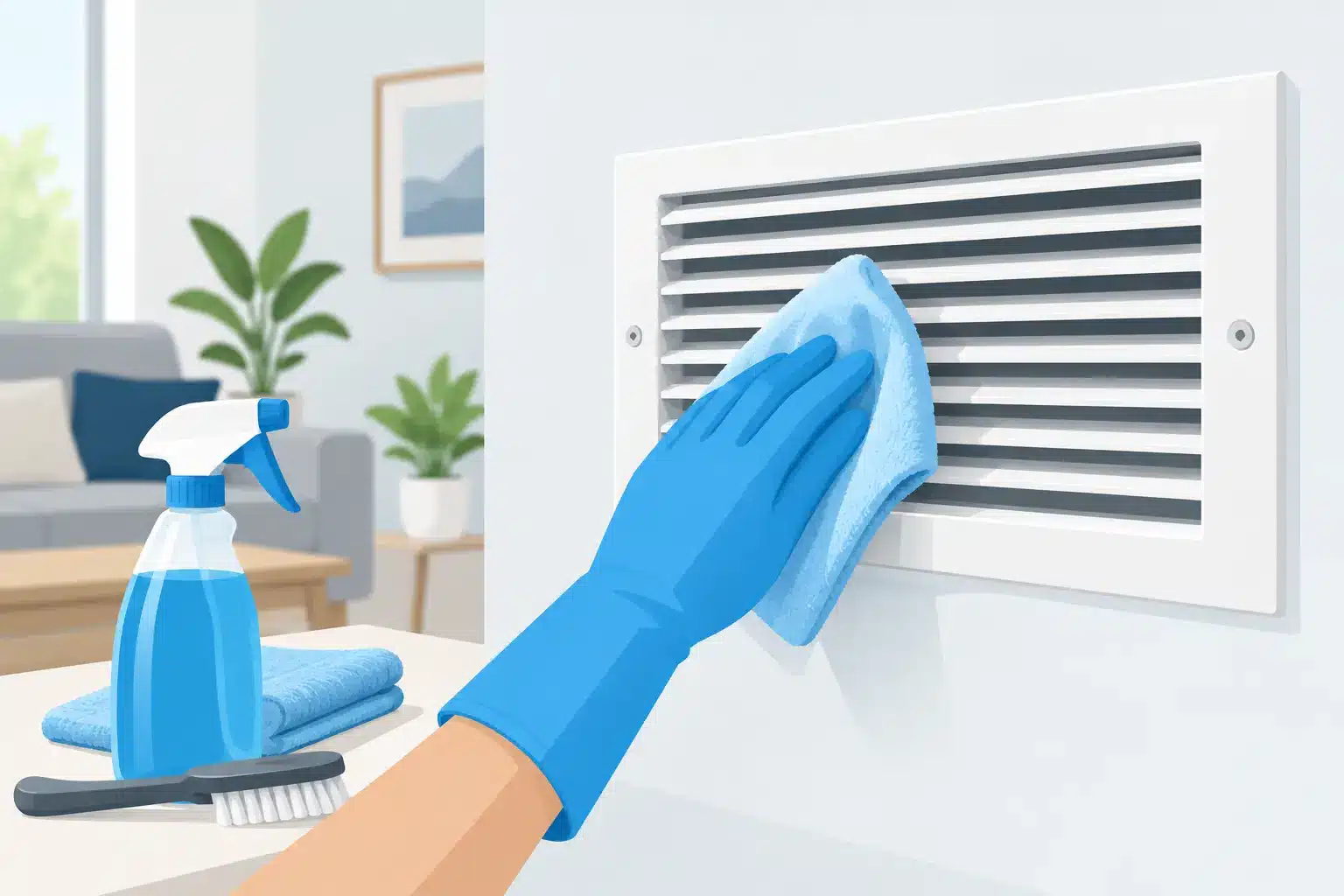
Next, prepare a vacuum with a soft brush attachment, microfiber cloths, warm water, and a mild soap. A small, soft brush can help you reach corners, slats, and narrow openings. For routine maintenance, these tools are usually enough.
- A vacuum with a brush attachment to remove dry dust.
- A slightly damp microfiber cloth for fine residue.
- Warm water and mild soap for washable grilles.
- A soft brush or a clean, old toothbrush for slats and gaps.
- Work gloves if the metal edges are sharp.
Start by vacuuming the outer face of the grille without forcing the slats. Then go over the surface and any accessible gaps with a damp, well-wrung cloth. Avoid spraying cleaning product directly onto a grille that’s fixed to a wall, ceiling, or floor. The liquid could run into the duct, reach sensitive materials, or trap dust once it dries.
Removing and Washing a Removable Grille
When a grille is held in place with visible screws, remove it carefully. Put the screws in a small container and take a photo before disassembly if the slats are angled in a particular way. Some grilles direct airflow in a specific direction and need to go back in facing the same way.
Vacuum the back of the grille, then wash it in warm, soapy water if the material allows it. A painted metal, aluminum, or plastic grille usually cleans well with a non-abrasive sponge. Rinse thoroughly and let it dry completely before putting it back. Moisture should never be introduced into the duct unnecessarily.
For older, rusted, warped, or very fragile grilles, limit how much you scrub. A harsh product, steel wool, or a metal brush can strip paint, worsen corrosion, and create sharp edges. In some cases, replacing the grille makes more sense than intensive cleaning.
Cleaning Just Behind the Grille Without Pushing Dirt Further In
Once the grille is removed, gently run the vacuum attachment into the accessible portion of the duct. A few centimeters is enough to remove dust that has built up near the opening. Do not push a cloth, a long brush, or an unsuitable hose deep into the network. This can dislodge debris without removing it, damage a flexible duct, or push dust further into other sections.
Also avoid using bleach, strongly scented deodorizers, or cleaning foam inside the ducts. These products don’t address the root cause of an odor and can leave residue that the system then redistributes. A musty, burnt, animal, or stale smell calls for a proper diagnosis instead: a clogged filter, humidity, a mechanical issue, a contaminated duct, or a source outside the system entirely.
How Often Should You Clean Ventilation Grilles?
Light dusting every two to four weeks
A light dusting every two to four weeks works well for most homes, especially for return air grilles and those near entrances. A more thorough wash twice a year, ideally before and after the heating season, helps maintain a good level of cleanliness.
Increase frequency after renovations or with pets
This frequency should increase after renovations, a move, water damage, or a new pet in the home. Families affected by allergies may also choose more frequent maintenance, keeping in mind that filters should be checked and replaced according to the manufacturer’s recommendations. A clean grille does not make up for a clogged filter.
Commercial spaces need more regular attention
In a business, rental building, or office, the pace depends on foot traffic and on-site activity. Spaces with a lot of dust, cardboard, textiles, or food vapors need more regular monitoring. The manager should also check that grilles aren’t blocked by furniture, boxes, or rugs.
When Cleaning the Grilles Isn’t Enough
Some situations call for the intervention of specialized technicians. Dust that builds back up very quickly, visibly weak airflow, signs of moisture, particles coming out of the vents, or persistent odors are all signals worth taking seriously. The same applies after major construction work or when a system hasn’t been maintained in several years.
Professional duct cleaning targets the entire network, not just the visible openings. It relies on equipment designed to dislodge and capture deposits without spreading them through the rooms. An inspection also helps distinguish a cleaning need from a ventilation, filtration, sealing, or humidity issue. This distinction matters: cleaning a duct won’t fix a faulty fan, just as replacing a filter won’t remove deposits already built up in the network.
Nettoyage Imperial supports homeowners, property managers, and businesses across Montreal, Laval, the North Shore, and the South Shore with a methodical approach adapted to the type of system and the condition of the installation. Professional service is especially useful when access to the ducts is limited or when the signs you’re seeing call for more than surface-level maintenance.
A clean grille is a simple gesture, but a revealing one. By maintaining it regularly and staying alert to changes in odor, airflow, or dust, you protect the air quality of your spaces more easily and step in at the right time, before a small sign turns into a costlier problem.
How often should ventilation grilles be cleaned?
A light dusting every two to four weeks works for most homes, with a more thorough wash twice a year, ideally before and after the heating season.
Can I clean a ventilation grille without removing it?
Yes, for routine maintenance you can vacuum the surface and wipe it with a damp microfiber cloth without removing it, as long as you avoid spraying liquid directly onto it.
Why does my return air grille get dirtier than other grilles?
Return air grilles pull ambient air back into the system, so they naturally attract more dust, fibers, and pet hair than supply grilles.
Is it safe to clean inside the ventilation duct myself?
Only the first few centimeters near the opening are safe to vacuum yourself. Pushing a cloth, brush, or hose deeper into the duct can dislodge debris without removing it or damage the ductwork.
What does a bad smell coming from vents usually mean?
A musty, burnt, animal, or stale odor usually points to a clogged filter, humidity, a mechanical issue, or a contaminated duct, and is best diagnosed rather than masked with deodorizer.
Key Takeaways
- Ventilation grilles collect dust, fibers, pet hair, and cooking residue faster during the heating season, when windows stay closed longer.
- A dusty grille doesn’t automatically mean the whole duct system is contaminated, but it’s worth watching closely.
- Always turn off the system before cleaning, and never spray liquid directly onto a fixed grille.
- Removable grilles can be washed in warm, soapy water, but old or fragile ones need gentle handling to avoid damage.
- Persistent odors, weak airflow, or visible moisture are signs that go beyond grille cleaning and call for professional duct service.