

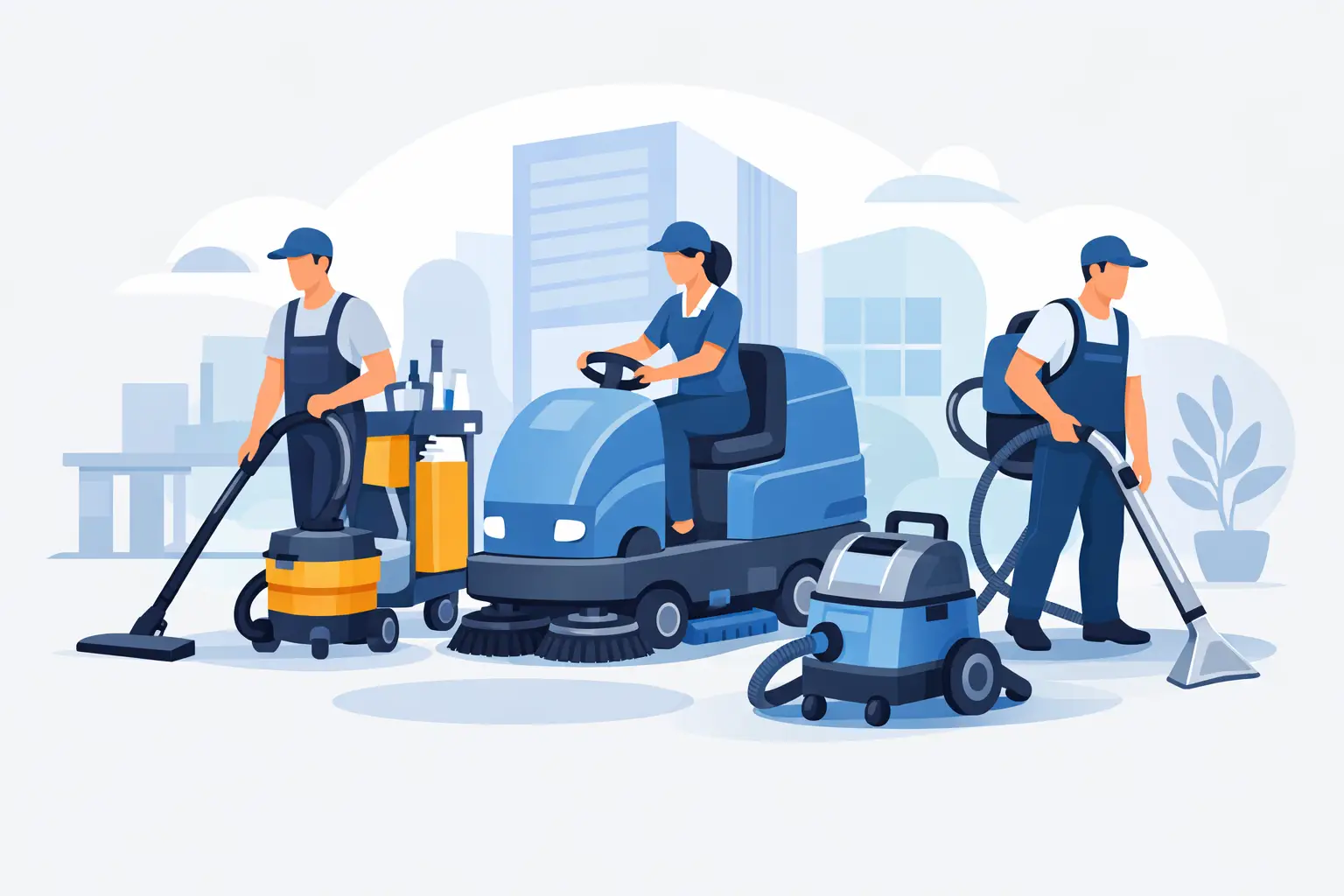
Choosing a commercial cleaning provider can feel like comparing apples to apples when it’s really apples to oranges. Two companies can both call themselves “commercial cleaners” while offering completely different levels of expertise, equipment, and methods. A commercial cleaning service should be evaluated based on the specific needs of the property, not just the services listed on a website. This guide breaks down what actually separates a general cleaning crew from a specialized provider, so the comparison is based on what matters; not just the price on a quote.
Why a Simple Price Comparison Isn’t Enough
Comparing commercial cleaners isn’t just about lining up hourly rates side by side. For an office, a condo building, a retail space or a rental property, the right choice depends mainly on the surfaces to be treated, the level of soiling, foot traffic, and hygiene requirements. A budget service that leaves residue in a carpet, damages a surface, or disrupts business activity often ends up costing more to fix than a well-prepared professional intervention would have cost in the first place.
Commercial cleaning directly affects a company’s image, occupant comfort, and the lifespan of equipment. In Montreal, Laval, the North Shore or South Shore, winter conditions add a real challenge: salt, sand, water and mud build up quickly in entryways, carpets and common areas. Comparing providers on technical criteria makes it possible to choose a service that’s actually suited to the need, rather than simply whoever happens to be available on the calendar.
What a Commercial Cleaning Comparison Should Actually Measure
Two companies can both offer “commercial cleaning” while providing very different interventions. One might handle routine floor and washroom maintenance, while another specializes in deep carpet extraction, upholstery cleaning, duct maintenance, or kitchen hood degreasing. These services are complementary, but they don’t address the same risks or use the same methods.
A proper comparison should start with a simple question: what problem needs solving? Daily marks in a lobby call for a regular maintenance plan. Dull, smelly or stained carpets require an extraction method suited to the fibers. A greasy kitchen hood requires a degreasing and safety protocol that’s far more demanding than a surface clean. A competent provider is one that correctly identifies the need before proposing a solution.
Comparison of Common Commercial Cleaning Services
| Service Type | Need Addressed | Expected Method | Point of Caution |
|---|---|---|---|
| Routine maintenance | Floors, washrooms, high-traffic areas, offices | Scheduled cleaning based on foot traffic | Check quality controls and staff rotation |
| Carpet Cleaning | Stains, odors, dust, salt and allergens | Pre-treatment, extraction, controlled drying | Method must respect the fiber and limit residual moisture |
| Upholstered furniture | Armchairs, chairs, banquettes, fabric partitions | Fabric diagnosis, targeted stain removal, suited cleaning | The wrong product can leave rings or alter colors |
| Ducts and ventilation | Dust, particles, odors, reduced airflow | Mechanical cleaning and specialized vacuuming | Ask for a method suited to the network and its access points |
| Commercial hoods | Grease buildup and contamination risk | Professional degreasing of affected components | Safety, surface protection and compliance come first |
This shows why a generalist provider isn’t always the best choice for a specialized need. A daily maintenance team can be very effective at keeping a space clean, without having the equipment or expertise needed to restore a heavily soiled carpet or service a ventilation system.
Routine Maintenance: Essential, But Not Always Enough
Regular maintenance is the foundation of a welcoming space. It reduces the buildup of dirt and helps keep washrooms, reception areas, and workstations in a consistently clean state. Its effectiveness depends largely on frequency, occupant numbers, schedules, and how clearly the scope of work is defined.
It does have limits, though. Running a floor scrubber or vacuum doesn’t replace deep cleaning of textiles. Carpets trap fine particles, salt residue and embedded dirt that surface-level maintenance can’t fully remove. Scheduling specialized interventions at regular intervals protects the investment and improves the appearance of a space.
Carpet Cleaning: Compare the Method Before the Price
For commercial carpets, quality starts with the initial diagnosis. The technician needs to account for fiber type, the condition of seams, the presence of old stains, foot traffic, and available drying time. A method that’s too aggressive can weaken the material. On the other hand, a method that’s too light can create a temporary impression of cleanliness without removing deep-seated dirt.
A professional extraction generally includes pre-vacuuming, treatment of stained areas, application of a solution compatible with the material, controlled extraction, and attention to drying. For businesses needing this type of specialised service, commercial carpet cleaning can be tailored to the condition and use of the space.
In occupied offices, the timing of the service matters just as much as the technique, an evening appointment or a slower period limits disruption and allows for a faster return to normal operations.
Ducts and Hoods: Technical Services in Their Own Right
Ventilation duct and hood cleaning shouldn’t be compared to a simple janitorial service. These interventions affect indoor air quality, equipment performance, and in the case of kitchens grease management. They require specialized tools, methodical protection of the space, and precise knowledge of the components being cleaned.
A good provider explains exactly what’s included in the service: access points, components treated, vacuuming or degreasing methods, surface protection, residue collection, and final checks. A vague quote that doesn’t specify scope or method deserves to be clarified before any decision is made.
The Criteria That Actually Set Providers Apart
Technical Skill and Equipment
Certifications, hands-on experience, and the condition of the equipment give a concrete indication of how serious a company is. Suitable equipment allows for a better level of extraction, reduces residue, and enables more precise work. For delicate textiles, leather, ducts or kitchen systems, the technician’s experience remains the deciding factor.
It’s worth asking how materials will be identified and protected. This question quickly reveals the difference between a standardized approach and a genuine professional diagnosis. A specialist doesn’t apply the same method to an office carpet, a restaurant banquette, and a natural-fiber rug.
Quote Transparency
A reliable quote clearly states the surfaces involved, the tasks planned, any limitations, the scheduled time slot, and the price. It should also specify situations that could change the cost — for example, difficult access, a larger-than-expected surface, or unusual contamination.
The lowest price can be appealing for a simple, well-defined need. It becomes less appealing when it hides insufficient service time, a lack of preparation, or added fees after the fact. A fair comparison requires quotes covering the same scope of work.
Service Continuity and Scheduling Flexibility
In a commercial setting, cleaning shouldn’t slow down business operations. Flexible scheduling, punctuality, and the ability to plan recurring interventions are therefore important criteria. For high-traffic buildings, a company should also be able to adjust frequency based on the season and peak periods.
Continuity matters especially for property managers. Keeping a history of the areas treated, sensitive materials, and recurring issues makes it possible to fine-tune maintenance over time instead of starting the assessment from scratch with every visit.
The Right Questions to Ask Before Hiring a Company
Before signing, ask whether the provider has handled surfaces comparable to yours, which method they recommend and why, how much drying time to expect, how sensitive areas will be protected, and exactly what the quote covers. For technical services, also ask how access will be managed and what checks will be done at the end of the intervention.
These questions don’t complicate with the process — they prevent misunderstandings. They also help confirm that the company considers the safety of employees, customers, and occupants, as well as the preservation of the property being cleaned.
Choosing Based on the Life Cycle of Your Surfaces
The best time to clean isn’t always when the surface looks dirty. A commercial carpet that’s starting to look dull often already contains a significant number of abrasive particles. Waiting until stains are very noticeable makes cleaning take longer, sometimes limits the possible results, and speeds up fiber wear.
A preventive strategy combines routine maintenance with scheduled specialized cleaning. Frequency depends on traffic, season, the presence of pets, the nature of the business, and internal facility standards. In a high-traffic entryway, more frequent interventions during winter can more effectively protect the flooring.
How much does commercial cleaning cost?
Pricing depends on the surfaces involved, the level of soiling, the size of the space, and the type of service (routine maintenance vs. specialized cleaning like carpets, ducts or hoods). A reliable quote should clearly define scope before providing a price.
What's the difference between commercial cleaning and janitorial services?
Janitorial or routine maintenance covers daily upkeep of floors and washrooms, while commercial cleaning can also include specialized services like deep carpet extraction, upholstery cleaning, duct maintenance, and hood degreasing; each requiring different equipment and expertise.
How often should commercial carpets be professionally cleaned?
Frequency depends on foot traffic, season, and facility type. High-traffic entryways, especially during winter, generally benefit from more frequent professional extraction to prevent particles and salt residue from wearing down the fibers.
Why is duct and hood cleaning considered a specialized service?
These services affect indoor air quality, equipment performance and, for kitchens, grease and fire safety. They require specific tools, careful protection of the surrounding space, and precise knowledge of the system being cleaned unlike general surface cleaning.
What should a commercial cleaning quote include?
A trustworthy quote should specify the surfaces and tasks covered, any limitations, the scheduled time slot, the price, and the conditions that could change the cost (such as difficult access or unexpected contamination).
Key Takeaways
- A commercial cleaning comparison should go beyond price and focus on the specific problem being solved.
- Routine maintenance and specialized services (carpets, upholstery, ducts, hoods) require different methods and expertise a generalist provider isn’t always equipped for specialized needs.
- Carpet cleaning quality depends on proper diagnosis of fiber type, staining, and drying time, not just the extraction itself.
- Duct and hood cleaning are technical services tied to air quality and safety and should never be treated as basic cleaning.
- The best providers are identified through technical competence, quote transparency, and scheduling flexibility, and it’s more cost-effective to clean proactively than to wait until surfaces are visibly worn.