

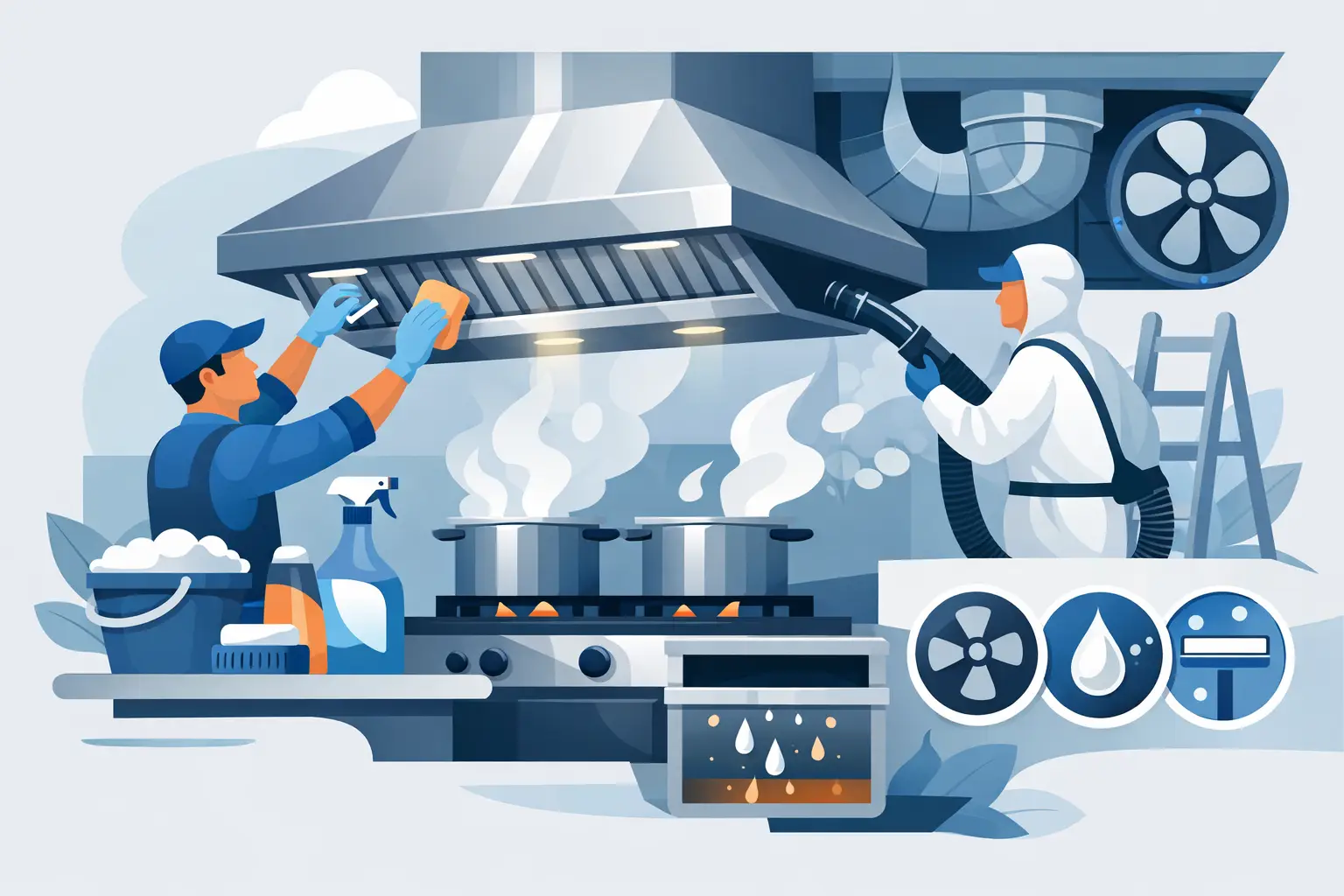
A commercial hood can look spotless on the outside while still hiding a significant buildup of grease in its filters, ductwork, and exhaust fan. Best practices for commercial hood maintenance aren’t just about keeping a kitchen presentable — they reduce fire risk, limit persistent odors, and support a healthier working environment for staff and customers alike. For businesses that need a deeper clean, professional commercial kitchen hood cleaning can address grease buildup throughout the system.
In a restaurant, cafeteria, hotel kitchen, or catering operation, the ventilation system works with every single cook. Steam, smoke, grease particles, and heat are all pulled into the extraction system. Without rigorous maintenance, these residues eventually slow down airflow, clog mechanical components, and create a risk that goes well beyond hygiene.
Why Hood Maintenance Is an Operational Priority
Cooking grease gradually settles on filters, plenums, ducts, and the exhaust fan. Even a thin layer becomes a problem when it’s regularly exposed to high heat. In the event of a flame or overheating, accumulated deposits can fuel a fire and allow it to spread through the duct network.
A dirty hood also hurts kitchen performance. Hot air is exhausted less efficiently, odors linger longer in the dining room or prep areas, and staff work in a less comfortable environment. The motor can also be put under more strain, increasing equipment wear and the risk of unexpected breakdowns.
Preventive maintenance therefore protects three essential things: building safety, operational continuity, and the lifespan of the ventilation system. For a manager, it’s a planned intervention that avoids costly disruptions.
Daily Best Practices for Commercial Hood Maintenance
Deep professional cleaning is essential, but it doesn’t replace the regular habits of the kitchen team. A simple, consistent routine slows grease buildup between specialized interventions.
Clean Accessible Surfaces After Service
At the end of each cooking period, the hood’s exterior surfaces, edges, and the visible areas around the filters should be degreased with a suitable product. The goal isn’t to spray degreaser across the whole system, but to remove splatter before it cooks and hardens onto the metal.
Products used must be compatible with stainless steel and the other materials present in the kitchen. A product that’s too harsh, an abrasive sponge, or an improvised method can dull surfaces, damage seals, and leave unwanted chemical residue. Always respect the recommended contact time, then rinse or wipe according to the product’s instructions.
Remove and Wash Filters Regularly
Filters are the first barrier against grease. How often they need cleaning depends on the type of cooking and the volume of activity. A kitchen that relies heavily on deep fryers, grills, woks, or high-heat cooktops will need to service them more often than an establishment that mainly reheats prepared food.
Filters should be removed carefully, washed according to the manufacturer’s instructions, dried completely, and reinstalled correctly. A poorly installed filter reduces capture efficiency and can let more grease through to the ducts. A still-damp filter should never be put back into the hood, since moisture encourages buildup and can drip onto cooking equipment below.
Keep Cooking Zones Under Control
Good ventilation also starts with good cooking habits. Pots and appliances should stay under the hood’s capture zone. Fryers shouldn’t be overloaded, and oil spills should be cleaned right away. These habits reduce the grease splatter that ends up settling directly into the system.
How Often Should Professional Cleaning Be Scheduled?
There’s no single cleaning frequency that works for every commercial kitchen. The right schedule depends on cooking volume, the types of fats used, the equipment involved, operating hours, and how much smoke is produced.
A high-volume establishment, or a kitchen that fries and grills intensively, generally needs more frequent servicing. Conversely, a lower-volume kitchen with less greasy cooking can sometimes work with a longer interval. For more guidance on scheduling, see our guide to restaurant hood cleaning.
A qualified professional can assess the system’s condition and recommend a realistic frequency. This approach is more reliable than a schedule chosen on budget alone, since maintenance that’s too infrequent can lead to higher costs down the line: more complex cleaning, reduced performance, fan repairs, or business interruption.
What a Professional Cleaning Should Cover
A complete service isn’t limited to the filters. It needs to follow the actual path grease takes, from the hood all the way to the exhaust fan. The technician starts by protecting kitchen equipment and nearby surfaces to avoid splatter from products or residue during the work.
Degreasing then covers the accessible internal components: filters, plenum, ducts, transition areas, and the fan itself when its configuration allows access. Deposits are loosened using appropriate methods, tools, and products, then removed in a controlled way. Surfaces are cleaned to the expected standard, without damaging components or contaminating food prep areas.
A visual inspection after cleaning is essential. It helps catch corrosion, a warped filter, a grease leak, a weakened fastener, or a fan abnormality. Cleaning then becomes a useful moment to prevent a future failure, rather than just a housekeeping task.
Mistakes That Weaken the System
The first mistake is entrusting the inside of the ducts to a DIY cleaning job. The hidden parts of the network require safe access, appropriate equipment, and a real understanding of extraction systems. Working without the right method can spread grease around instead of removing it, damage the ducts, or create a risk for people nearby.
The second mistake is cleaning only what’s visible. A shiny hood doesn’t guarantee a clean duct network. The most concerning deposits are often found beyond the filters, in places that are neither visible nor easily accessible.
Finally, don’t ignore the warning signs: persistent grease odor, smoke that doesn’t clear properly, excessive heat in the kitchen, grease dripping near the filters, unusual fan noise, or deposit marks on walls and ceilings. These symptoms call for a prompt evaluation rather than waiting for the next scheduled service.
Documenting Every Service to Manage Risk Better
A maintenance log adds real value to running a kitchen. It allows you to track filter cleaning dates, professional interventions, technician observations, and recommended repairs. This traceability also makes it easier to keep track of things when multiple teams work different shifts, or when a manager oversees several locations.
After a service, the team should know which areas were treated and what actions still need to be planned. If a component shows signs of wear, it’s best to schedule its repair before it causes a breakdown during a busy service. Clear communication between the service provider, management, and kitchen staff keeps minor issues from turning into emergencies.
A well-maintained hood often goes unnoticed during service — and that’s exactly its job: efficiently clearing away heat, smoke, and grease so the kitchen can operate with confidence, day after day.
How often should a commercial kitchen hood be cleaned?
It depends on cooking volume and grease exposure — high-volume frying or grilling operations need more frequent service than kitchens that mostly reheat food.
Can hood filters be cleaned by kitchen staff, or do they need a professional?
Filters can be removed and washed by staff following manufacturer’s instructions, but the ducts and exhaust fan require professional cleaning.
What are the signs that a commercial hood needs cleaning?
Persistent grease odor, poor smoke clearance, excess heat, dripping grease near filters, unusual fan noise, and visible deposits on walls or ceilings.
Why is commercial hood cleaning important for fire safety?
Grease deposits in filters, ducts, and fans can fuel a fire and help it spread through the ventilation network if not removed regularly.
What does professional commercial hood cleaning include?
It covers filters, plenum, ducts, transition areas, and the exhaust fan, followed by a visual inspection for corrosion, damage, or leaks.
Key Takeaways
- Grease can build up invisibly inside ducts and fans even when the hood looks clean on the outside.
- Daily habits — wiping surfaces, washing filters, controlling cooking zones — slow buildup between professional cleanings.
- Cleaning frequency should be based on cooking volume and grease exposure, not just budget.
- Professional cleaning must reach the full grease path: filters, plenum, ducts, and fan — not just visible surfaces.
- A maintenance log and prompt attention to warning signs help prevent fires and unplanned breakdowns.