

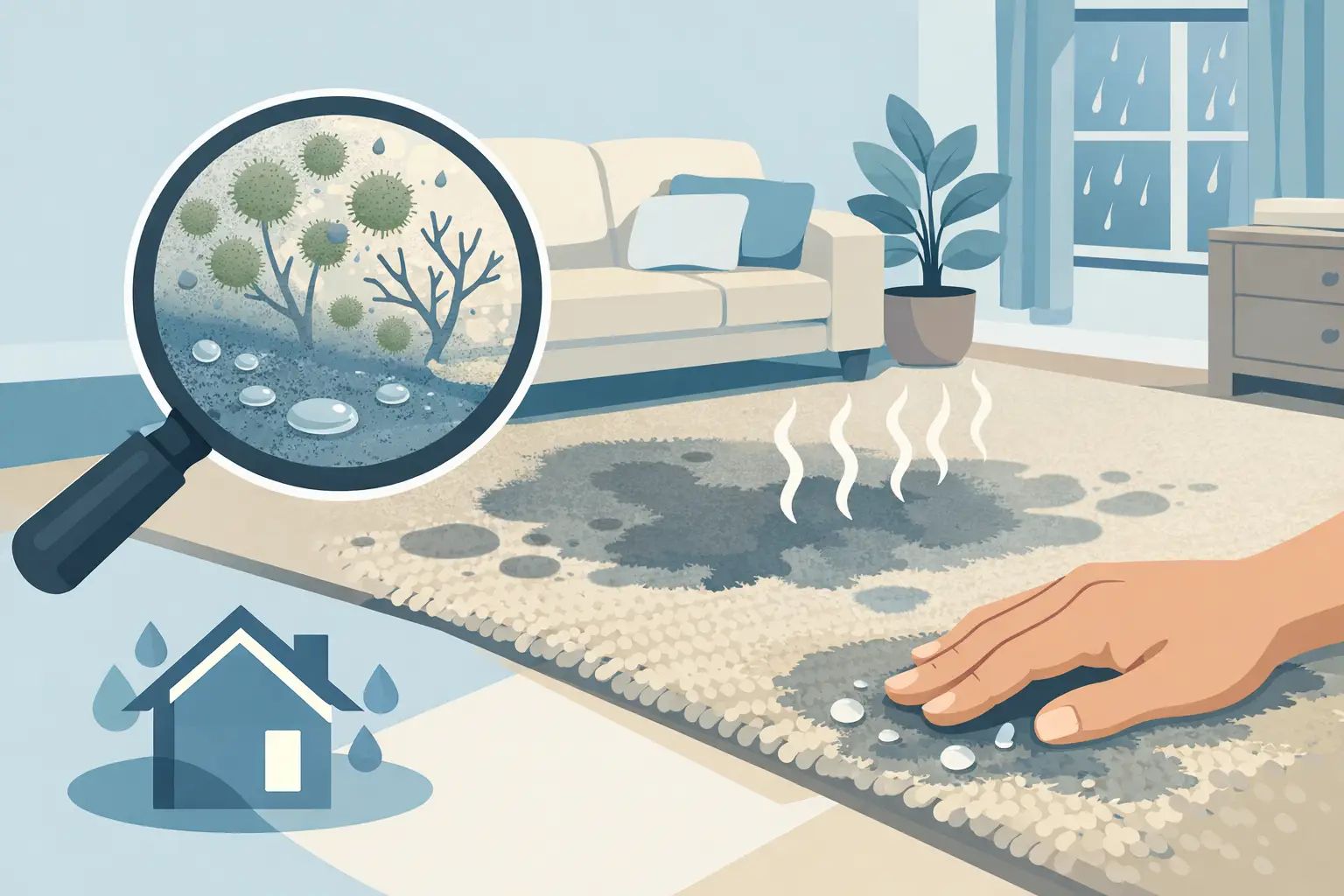
A leak near a door, a minor water incident, cleaning up a spill, or a window left open during rain can be enough to leave a carpet damp. Can a wet carpet grow mold? Yes — especially if moisture stays trapped in the fibers, the padding, or the flooring underneath for several hours or several days. The risk isn’t limited to how the carpet looks: it can also affect indoor air quality, odors, and the condition of the flooring below.
The right response always depends on how much water is involved, how long it’s been sitting, and the type of carpet. A small, lightly damp area can often be dried quickly at home. On the other hand, a soaked carpet, a rug wet all the way through to the backing, or water from a sewer backup call for a more rigorous response.
Why Can a Wet Carpet Grow Mold?
The conditions mold needs
Mold needs three things to grow: moisture, organic material, and time. A carpet easily provides the first two. Its fibers, along with accumulated dust, food residue, pet hair, and dirt, create a favorable environment when water doesn’t drain or evaporate quickly enough.
Why the problem is often invisible at first
The problem is often invisible at first. The surface may seem dry while the underside of the carpet, the padding, or the seams in the flooring stay damp. In a well-insulated Montreal home, a basement, a poorly ventilated room, or an apartment with limited air circulation, this incomplete drying can extend the risk.
The role of temperature
Temperature also plays a role. A heated room speeds up surface evaporation, but it can also create conditions that favor mold growth if moisture stays trapped underneath the carpet. So it isn’t enough to wait until the top no longer feels cold to the touch.
Signs to Watch For Before the Problem Sets In
Odor is usually the first clue
Odor is often the first clue. A musty smell, a scent of damp earth, or a basement smell after rain shouldn’t be covered up with air freshener. It usually means water or moisture has penetrated deeper than expected.
Visual and textural changes
Discoloration, stains that reappear after drying, fibers that stay dark, or an area that feels sticky can also signal a problem. On a carpet installed wall-to-wall, watch for edges that lift, rippling, or padding that feels soft underfoot.
Physical reactions to watch for
Physical reactions can also draw attention to the issue: eye irritation, a stuffy nose, an unusual cough, or worsening allergy symptoms in a particular room. These signs alone don’t prove mold is present, but they justify inspecting the carpet, the flooring underneath, and nearby sources of moisture.
If you notice persistent dampness, discolouration, musty odours or visible mould, professional carpet cleaning services may be needed to address the problem properly.
Timing Matters More Than You Think
There’s no universal number of hours
There’s no single number of hours that applies to every carpet. That said, the longer a carpet stays wet beyond 24 to 48 hours, the more seriously the situation should be treated. Clean water from a spilled glass doesn’t carry the same level of risk as a dishwasher leak, an outdoor infiltration, or contaminated water.
Material affects how much water is retained
A thick carpet, a wool rug, a latex backing, or wall-to-wall carpet installed over padding retains more water than a small, thin synthetic rug. The material’s composition determines the drying method and, in some cases, whether specialized cleaning is needed.
What to Do Immediately If Your Carpet Gets Wet
Remove the source of moisture
Start by removing the cause of the moisture. Shut off the water supply if a leak is active, blot up water in the surrounding area, and move the carpet away from the wet zone when possible. A carpet that keeps absorbing water won’t be able to dry effectively.
Blot up as much water as possible
Next, absorb as much water as you can without rubbing. Use clean, dry towels and press down firmly. On a small washable rug, blot both sides. On an installed carpet or a large rug, a wet/dry vacuum can help if it’s designed for liquid extraction.
Increase air circulation
Increase air circulation in the room. Open windows only if the outdoor air is drier than the indoor air. Point fans toward the wet area and use a dehumidifier if you have one. Air conditioning can also help during hot, humid weather. Avoid placing an intense heat source directly on the fibers, though — some materials can warp, shrink, or lose their color.
Check underneath the carpet
Inspect underneath the carpet. This step is essential. If you can lift a corner without damaging the installation, check the padding and the flooring. A dry top layer over soaked padding does not mean the carpet is dry. In some cases, the padding needs to be removed and replaced to prevent odors and contaminants from lingering.
Mistakes to Avoid With a Very Wet Carpet
Don’t trap the moisture in
Don’t cover the area with another rug, furniture, or boxes. Doing so traps the moisture and slows down drying. Also avoid heavily scented cleaners or disinfecting solutions not made for textiles — they can leave residue, damage the fibers, or temporarily mask an odor without addressing its cause.
Baking soda and over-wetting aren’t fixes
Baking soda can absorb a mild odor on a carpet that’s already dry, but it doesn’t replace water extraction or drying the padding underneath. Similarly, running a household cleaner with a lot of added water can make things worse when the carpet is already saturated.
Contaminated water is a different category of risk
Finally, don’t try to save a carpet contaminated by sewage, a sewer backup, or water that has passed through soiled materials. In this case, the health risk goes beyond simple moisture. A professional assessment can determine what can be safely treated and what needs to be replaced.
When to Call a Drying and Cleaning Specialist
Signs it’s time to call in help
Professional help is recommended when water has reached the padding, the flooring, or several square meters of carpet. It’s also worth calling in a specialist if the odor persists, if stains reappear, if the carpet is still damp after a full day of ventilation, or if you notice visible signs of mold.
What a professional evaluation actually involves
The work isn’t limited to cleaning the surface. A qualified technician assesses the fiber type, the level of saturation, the condition of the backing, and where the water came from. They then use appropriate extraction methods, drying equipment, and products compatible with the material. This approach reduces the risk of leftover residue, damage, and odors coming back.
Extra care for delicate materials
For valuable carpets, antique rugs, wool, silk, or delicate textiles, extra caution is especially necessary. The wrong method can set a stain, warp the carpet, or weaken its structure. Nettoyage Impérial uses processes suited to the material and the carpet’s actual condition, rather than a one-size-fits-all solution.
Preventing Moisture Under Carpets
Start with moisture control in the home
Prevention starts with controlling moisture in the home or business. Repair leaks promptly, keep an eye on areas near entryways, windows, and appliances, and make sure rooms at risk have adequate ventilation. A dehumidifier is especially useful in a basement or a room where humidity is regularly high.
After a carpet cleaning
After a carpet cleaning, let the air circulate and avoid putting furniture back too soon. Drying time varies depending on the carpet’s thickness, how soiled it was, and the temperature and humidity in the room. Professional service that extracts water efficiently shortens this window, but it never replaces the need for ventilation afterward.
A wet carpet isn’t automatically ruined. By acting quickly, checking what’s happening beneath the fibers, and calling for appropriate help when water has penetrated deeply, you protect your flooring, your carpet, and the air you breathe every day.
Along with controlling moisture, following simple carpet maintenance tips can help prevent premature wear and extend the life of your carpet.
How long can a carpet stay wet before it molds?
There’s no universal number, but the risk increases significantly once a carpet stays wet for more than 24 to 48 hours. Clean water dries faster and poses less risk than water from a leak or backup.
Can a carpet look dry on top but still be wet underneath?
Yes. The surface can feel dry to the touch while the padding or the flooring underneath is still damp — this hidden moisture is one of the main reasons mold develops undetected.
What does a moldy carpet smell like?
A musty smell, a damp-earth odor, or a basement-like scent after rain are common signs. This smell shouldn’t be masked with air freshener, since it usually means moisture has gone deeper than the surface.
Is it safe to clean a carpet myself after a small spill?
A small, lightly damp area can often be dried at home with towels, fans, and good ventilation. Larger amounts of water, or water from a leak or backup, usually call for professional extraction and drying.
When should I call a professional instead of drying the carpet myself?
Call a specialist if water reached the padding or flooring, if the odor doesn’t go away, if stains reappear after drying, if the carpet is still damp after a full day, or if you see visible mold.
Key Takeaways
- Mold needs moisture, organic material, and time — all three can be present in a damp carpet.
- Surface dryness can be misleading; the padding and flooring underneath may still be wet.
- Odor, discoloration, rippling edges, and allergy-like symptoms are all warning signs worth investigating.
- The 24–48 hour window is a useful guideline for taking wet carpet moisture seriously.
- Contaminated water (sewage, backups) always requires professional assessment rather than DIY drying.