

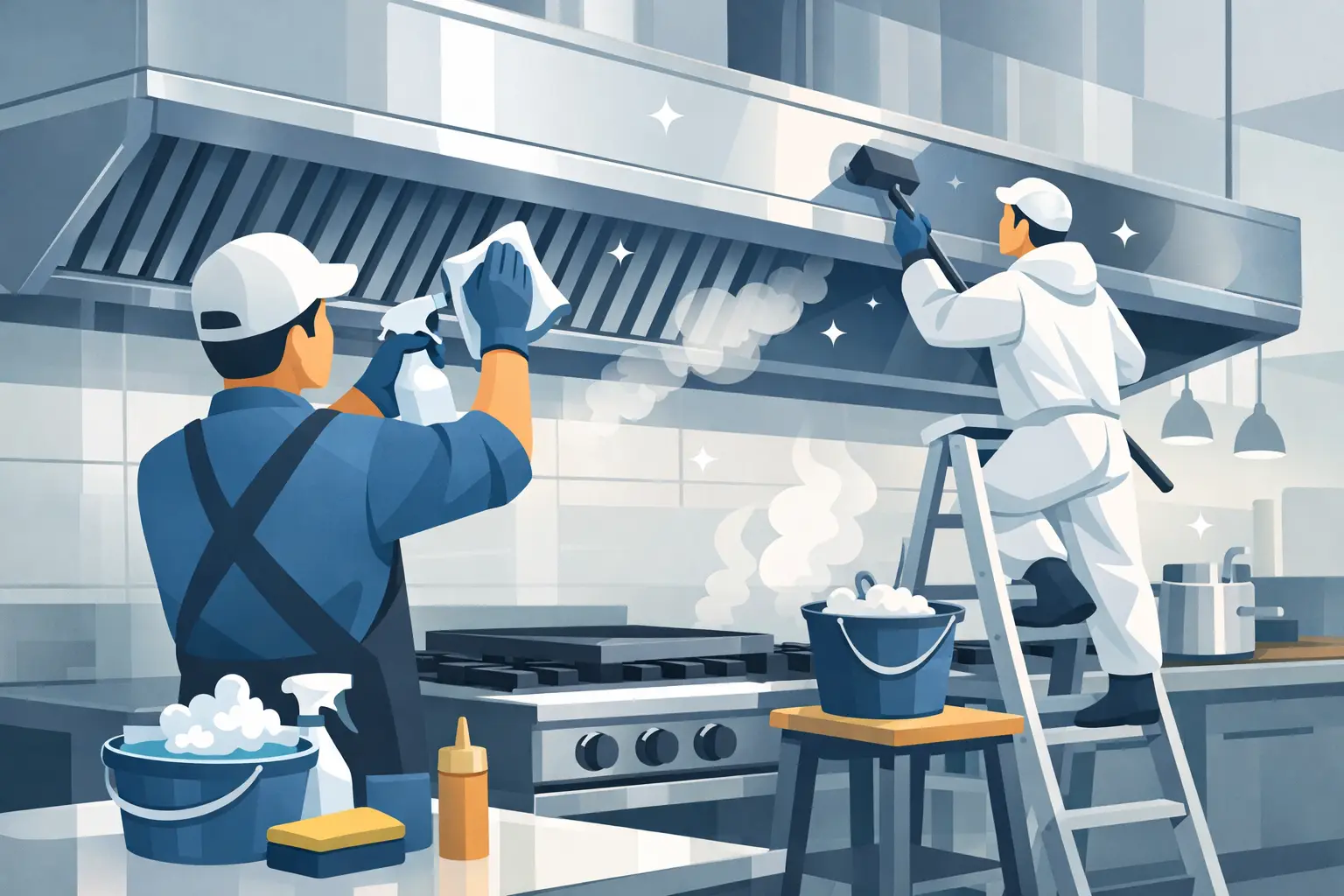
A hood that looks clean on the surface can hide several kilograms of grease in its filters, ducts, and exhaust fan. In a commercial kitchen, this buildup isn’t just a matter of hygiene — it’s fuel sitting directly next to the cooking area. Commercial kitchen hood cleaning standards exist primarily to reduce fire risk, maintain effective ventilation, and demonstrate that the establishment is maintained according to a verifiable procedure.
For a restaurant, cafeteria, senior residence, hotel kitchen, or catering operation, cleaning should never be limited to degreasing the visible filters. The system must be considered as a whole, from the hood all the way to the exterior exhaust point.
What Commercial Hood Cleaning Standards Cover
In Quebec, the requirements that apply to a commercial kitchen can fall under the Safety Code, municipal authorities, fire prevention inspectors, the insurer, and the building’s operating conditions. Recognized industry references — notably NFPA 96, the standard covering commercial cooking ventilation systems — are frequently used as the basis for inspection expectations and best practices.
The principle is simple: any part of the system that could collect grease deposits must be able to be inspected and cleaned. This includes the hood, the filters, the plenum, the ducts, the access doors, the fan, the rooftop components, and the adjacent areas affected by grease splatter.
A compliant installation doesn’t depend on cleaning frequency alone. It also depends on proper access to the ducts, their condition, the exhaust system functioning correctly, and documentation of the work performed. An incomplete report or a lack of proof of maintenance can become a problem during an inspection or an insurance claim.
Grease Must Be Removed, Not Just Moved Around
Professional cleaning aims to eliminate combustible deposits — not hide them under a layer of degreasing product. Hard-to-reach areas, duct elbows, and the inside of the fan are often where grease accumulates fastest.
The method varies depending on the system’s configuration, roof access, cooking type, and the condition of the deposits. It can include controlled scraping, application of suitable degreasers, pressure washing when conditions allow, and recovery of residue. The products and pressure used must protect surfaces, electrical equipment, ceilings, and food preparation areas.
How Often Should a Commercial Hood Be Cleaned?
There is no single frequency that applies to every kitchen. The schedule depends mainly on cooking volume, the foods prepared, and the amount of grease or smoke produced. A heavily used fryer, a charcoal grill, or a fast-food kitchen will clog a system much faster than a kitchen serving reheated meals.
Common practice suggests monthly cleaning for very high-volume operations, quarterly for many high-volume restaurants, semi-annual for moderate-activity kitchens, and annual for certain low-usage installations. This schedule should still be confirmed against the requirements of the relevant authority, the insurer, and the actual condition of the system.
Waiting until grease is dripping from the filters or odors persist is rarely a good strategy. By that stage, deposits may already be compromising airflow and increasing the time needed for the intervention. Planned maintenance generally offers better cost control than an urgent cleaning forced ahead of an inspection.
Signs Your System Is Overdue for Cleaning
Certain signs should prompt a quick check: smoke lingering in the kitchen, grease odors when opening up or after service, saturated filters, a noisy fan, oily residue on surfaces, or visible buildup in accessible ducts. Excessive heat in the kitchen can also indicate that the exhaust system is no longer doing its job properly.
These symptoms don’t always prove the hood is the only cause. A failing fan, a worn belt, insufficient air intake, or a damaged duct can produce similar effects. That’s exactly why a methodical inspection is preferable to a simple surface cleaning.
The Steps of a Professional, Compliant Cleaning
Before the intervention: the technician assesses the kitchen’s configuration, protects the equipment, isolates sensitive surfaces, and checks access to the ducts. The work area must be carefully prepared to prevent water, grease, or cleaning products from reaching food, cooking equipment, or the building’s finishes.
During the cleaning: the work then focuses on the interior of the hood and the exhaust network. Filters are removed and treated separately. Ducts are cleaned through their designated access points, while the fan and its housing are degreased according to their accessibility. Residue must be collected and disposed of properly, never released into drains or onto exterior surfaces.
After the work: a visual check confirms the condition of the treated areas. Filters are put back in place, protective coverings are removed, and the area is left clean. A service tag and a dated report are usually provided. This document should specify the areas cleaned, any anomalies observed, the date of the next recommended service, and the identity of the service provider.
The Role of Kitchen Staff Between Cleanings
Kitchen staff play an essential role, but they don’t replace a complete cleaning of the exhaust network. Regular cleaning of exterior surfaces, filters per the manufacturer’s instructions, and splatter around equipment reduces daily buildup. It also helps spot problems more quickly.
On the other hand, dismantling a rooftop fan, opening ducts without proper access, or using corrosive products can cause damage, leaks, and risks to staff. Improperly repositioned filters, access doors left open, or wet electrical components can interfere with the system’s operation.
It’s also important to distinguish hood cleaning from maintenance of the automatic fire suppression system. Both relate to fire safety, but they follow separate procedures. Hood cleaning does not replace inspection or maintenance of the suppression device by a qualified professional.
Why Documentation Matters as Much as the Result
During a fire prevention visit, a clean system is reassuring — but proof of a maintenance program matters just as much. Keeping reports, invoices, recommendations, and service dates on file demonstrates responsible kitchen management.
This traceability is particularly useful for building managers, franchises, shared kitchens, and establishments with multiple shifts. It makes it easier to track deadlines and prevents maintenance responsibility from falling through the cracks between the building owner, the commercial tenant, and the operator.
A specialized company can also flag issues that go beyond the cleaning itself: insufficient access, damaged ducts, deteriorated seals, an abnormally clogged fan, or water infiltration around a rooftop installation. Correcting these issues at the right time protects the equipment and reduces service interruptions.
Keeping proof-of-service documentation can also make it easier to demonstrate that your kitchen exhaust system has been properly maintained when inspections are required.
Choosing a Provider for a Commercial Kitchen
Price matters, but a vague quote deserves questions. Find out whether the service includes the ducts, the fan, the filters, protection of the kitchen, cleaning of affected surfaces, and a written report. It’s also worth checking the provider’s experience with your type of establishment and their rooftop safety procedures, when the exhaust point is located there.
Nettoyage Imperial applies a structured approach to commercial hood systems in Montreal, Laval, the North Shore, and the South Shore: assessment of the installation, protection of the premises, thorough degreasing, and clear documentation of the work performed. The goal is to maintain extraction that is clean, functional, and ready to meet the requirements of your operation.
A well-defined maintenance schedule goes unnoticed during service. That’s exactly its value: it helps your team work in a healthier environment, limits unpleasant surprises, and lets the kitchen focus on what it does best.
How often should a commercial kitchen hood be cleaned?
It depends on cooking volume and type — high-volume operations like fryers or grills may need monthly or quarterly cleaning, while lower-usage kitchens may only need cleaning annually.
What does a commercial kitchen hood cleaning actually include?
A full cleaning covers the hood, filters, plenum, ducts, access doors, fan, and rooftop components — not just the visible grease filters.
What standard governs commercial kitchen exhaust cleaning?
NFPA 96, the standard for commercial cooking ventilation systems, is commonly used as a reference alongside local fire codes and insurer requirements.
What are the signs that a kitchen hood needs cleaning?
Lingering smoke, grease odors, saturated filters, a noisy fan, oily residue on surfaces, or visible duct buildup are all signs the system needs attention.
Is hood cleaning the same as fire suppression system maintenance?
No — they are related to fire safety but are separate procedures. Hood cleaning does not replace inspection or maintenance of the automatic fire suppression system.
- Commercial hood cleaning standards cover the entire exhaust system — hood, filters, plenum, ducts, fan, and rooftop components — not just the visible filters.
- NFPA 96 and local fire prevention/insurance requirements form the basis of most cleaning expectations in Quebec.
- Cleaning frequency depends on cooking volume and type, ranging from monthly for high-intensity operations to annually for low-usage kitchens.
- Warning signs like lingering smoke, grease odors, saturated filters, or a noisy fan should trigger an inspection, not just a surface wipe-down.
- Documentation — service tags, dated reports, and records of anomalies — is as important as the cleaning itself for insurance and inspection purposes.