

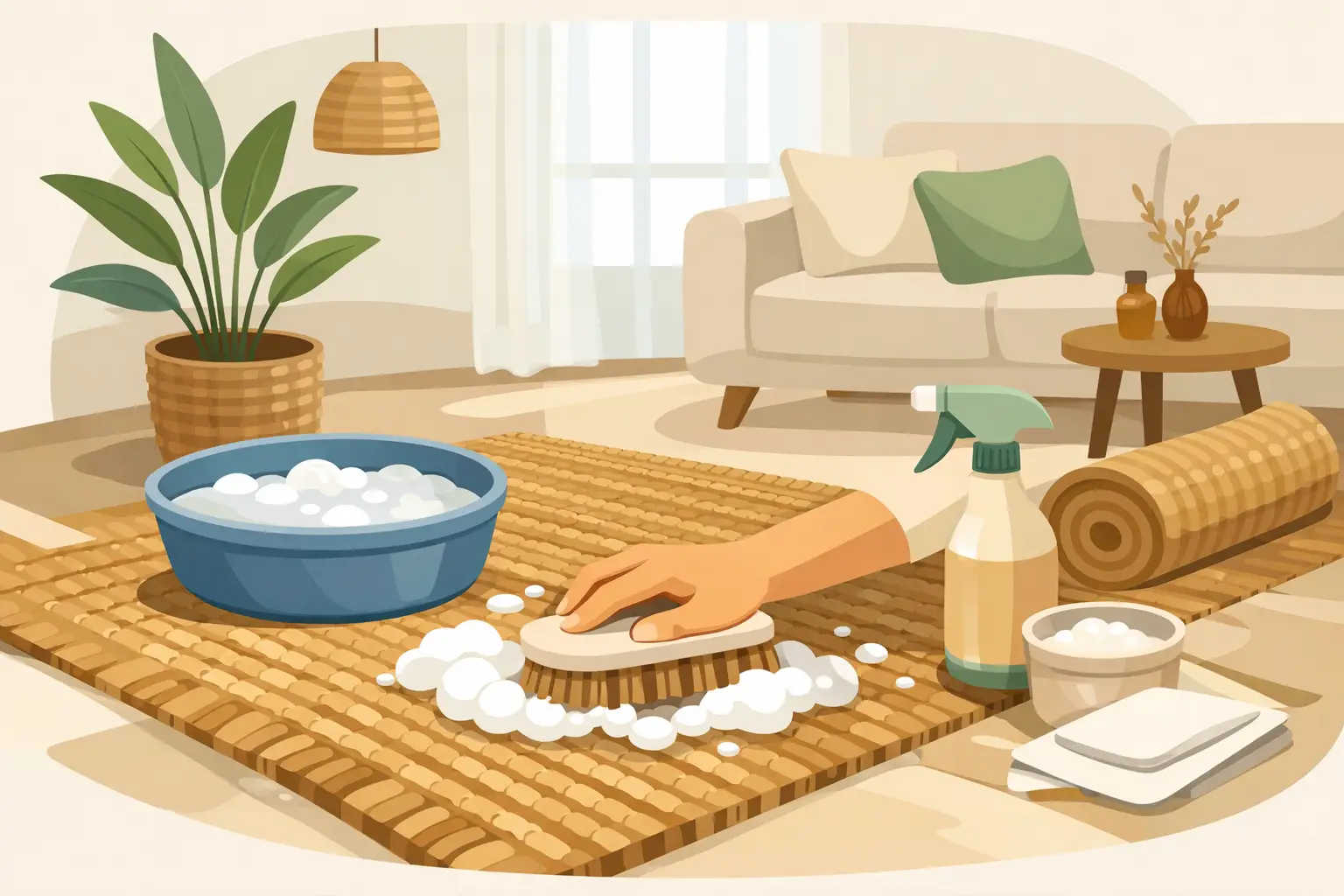
A wool rug that felts, a jute rug that water-marks, or a silk rug whose colors bleed can be ruined in just a few minutes by the wrong method. This natural fiber rug cleaning guide helps you recognize the risks specific to each material, act with caution, and know when professional treatment is the better choice.
Natural fiber rugs offer remarkable comfort, texture, and durability. However, they react more strongly to moisture, alkaline products, heat, and friction than many synthetic rugs do. The safest rule is simple: treat sparingly, test first, and never soak the rug.
Why Natural Fiber Rugs Need a Precise Approach
A rug is more than just floor covering. Its fibers, dyes, backing, any adhesive, and its fringes can all react differently. A surface that looks sturdy can hide a structure that’s sensitive to water or heat.
Wool, for example, holds up well to wear and resists greasy soiling better than some fibers. But it can shrink, felt, or develop a lingering odor if it stays damp too long. Silk is even more delicate: it doesn’t tolerate friction, harsh stain removers, or pH swings well. Cotton absorbs a lot of water and can lose its shape or leave rings.
Jute, sisal, and seagrass are especially vulnerable to moisture. Washing them too wet can cause brown stains, water marks, hardened fibers, or warping. On these rugs, controlled surface cleaning is often safer than a standard water extraction.
The type of soiling matters too. Dried mud, a wine stain, pet urine, and accumulated dust don’t all call for the same treatment. Trying to apply a single all-purpose product is one of the leading causes of avoidable damage.
Identifying the Fiber Before Cleaning a Natural Rug
Start by checking the care label, if there is one. It may list the fiber composition, cleaning instructions, and manufacturer warnings. If there’s no label, examine the rug without pulling on the fibers: wool is generally soft and slightly wavy, while sisal has a drier, stiffer texture.
Watch out for blended rugs, though. A rug may combine wool and cotton, or include viscose alongside a natural fiber. Viscose, often used for its sheen, is highly water-sensitive and can yellow or stiffen. An older, handmade, or Oriental rug should be treated as a higher-risk piece until its composition and colorfastness have been confirmed.
Before using any product, run a test in an inconspicuous area. Lightly dampen a clean white cloth with the chosen solution, then dab it on the rug. If the cloth picks up color, if the fiber’s appearance changes, or if a ring appears once it dries, stop immediately.
The Routine Care That Protects the Fibers
The best cleaning is the kind that keeps dirt from settling in in the first place. Fine dust, sand, and abrasive particles work their way down to the base of the fibers. Over time, foot traffic grinds them in like sandpaper and speeds up wear.
Vacuum regularly, adjusting suction and brush type to the rug. On wool, use moderate suction and avoid an overly aggressive rotating brush, especially on loops, fringes, or fragile areas. On jute and sisal, vacuum gently in the direction of the weave so you don’t snag the fibers.
Rotate the rug once or twice a year if it gets direct sunlight or heavy foot traffic. This habit reduces uneven fading and spreads out wear. An entry mat and a good-quality rug pad also cut down on dust, slipping, and premature crushing.
For small crumbs or pet hair, avoid scrubbing with a stiff brush. Slow, repeated, cross-directional vacuuming is more effective and much lower-risk. If a faint odor lingers, air out the room and address the cause rather than masking the problem with fabric freshener.
Natural Fiber Rug Cleaning: Handling a Fresh Stain
When a stain happens, speed matters, but rushing can make things worse. First remove any solids with a spoon or a dull spatula. For a liquid, lay a white absorbent cloth over the area and press gently. Repeat with a clean section of cloth until it has soaked up as much as possible.
Don’t scrub. Scrubbing pushes the liquid deeper, distorts the fibers, and spreads the stain. Also avoid colored towels, since their dye can transfer onto a light-colored or damp rug.
For light soiling on a wool rug with stable, colorfast dyes, a barely damp cloth and a very mild solution suited to wool may be enough. Work from the outside of the stain toward the center, dabbing in a limited way. Then remove any residue with another cloth lightly dampened with clean water, without saturating the rug.
On silk, jute, sisal, seagrass, or a valuable rug, avoid DIY stain-removal attempts as soon as a stain appears. These materials don’t forgive excess water. Keep the area as dry as possible and seek an appropriate assessment.
Products And Habits to Avoid
Some common products seem effective because they make the mark disappear on the surface. In reality, they can weaken the fibers or leave a residue that quickly attracts new soiling. Highly alkaline cleaners, bleach, ammonia, abrasive powders, and untested stain removers should never be used on natural fibers.
Vinegar is often presented as a universal solution, but it isn’t suited to every fiber, every dye, or every rug backing. Its acidity can alter the appearance of certain materials and is no substitute for a product formulated for the specific textile.
Also avoid high-temperature steam. On certain rugs, it can set a stain, cause colors to bleed, weaken adhesives, or shrink the fibers. Renting a hot-water extraction machine can work on some synthetic rugs, but it carries a real risk of over-wetting wool, cotton, and plant fibers.
The most common mistakes are: pouring product directly onto a stain, soaking the area, using a stiff brush, and putting the rug back in place before it’s fully dry. Moisture trapped in the backing can lead to odors, rings, and sometimes mold growth.
Drying a Rug Without Leaving Rings
After any wet treatment, drying needs to be quick and even. Gently blot up excess water with dry white cloths. Then let air circulate through the room, ideally with gentle ventilation or a dehumidifier. Don’t set the rug on a cold, damp floor, and never fold it until it’s completely dry.
Direct heat from a radiator, a hair dryer, or intense sunlight isn’t always a good idea. It can stiffen certain fibers, speed up fading, and cause uneven drying. For a plant-fiber rug, minimal intervention followed by controlled drying is generally safer than a thorough at-home wash.
When to Hand the Rug Over to a Professional
Calling in a specialized service is recommended when a rug has old stains, a urine odor, recurring rings, heavy contamination, or dyes that seem unstable. It’s also the safest option for Oriental rugs, antique pieces, silk rugs, plant-fiber rugs, and rugs with a fragile backing.
A qualified technician starts by identifying the fiber composition, the condition of the dyes, the type of soiling, and any sensitive areas. The method is then chosen based on the rug: thorough dusting, low-moisture cleaning, spot treatment, controlled washing, or tailored drying. The right process isn’t about running every rug through the same machine — it’s about limiting risk while still lifting out embedded soil.
In Montreal, Laval, the North Shore, or the South Shore, Nettoyage Impérial can assess a rug’s condition and recommend an approach that respects its material, its use, and its level of soiling. That caution protects both the rug’s appearance and its lifespan.
A natural fiber rug stays beautiful when it’s cared for consistently and treated with restraint. When in doubt, protecting the fiber is always worth more than attempting an overly aggressive clean to save a few minutes.
Can you clean a wool rug at home?
Yes, for light, fresh stains, using a barely damp cloth and a mild wool-safe solution. Avoid soaking the rug, work from the outside of the stain inward, and dry it thoroughly and quickly to prevent felting or odor.
Is it safe to use vinegar on natural fiber rugs?
Not always. Vinegar’s acidity can change the appearance of certain dyes, fibers, and rug backings. It isn’t a universal solution and should never replace a product tested and formulated for the specific material.
Why do jute and sisal rugs get water stains?
Jute, sisal, and seagrass are highly moisture sensitive. Excess water during cleaning can cause brown staining, hardened fibers, and warping, which is why light, low-moisture surface cleaning is usually safer than a full wet wash.
How do you get pet urine smell out of a rug?
Blot up any moisture immediately with a white absorbent cloth and keep the area as dry as possible. Urine odor on natural fibers is difficult to fully neutralize with home products alone and often calls for professional treatment.
How often should natural fiber rugs be professionally cleaned?
There’s no fixed schedule, but a professional cleaning is recommended when stains are old or recurring, odors persist, colors look unstable, or the rug is a delicate type like silk, wool, or an antique Oriental piece.
Key Takeaways
- Natural fiber rugs (wool, silk, jute, sisal, seagrass, cotton) are more sensitive to water, alkaline products, heat, and friction than synthetic rugs, so treat sparingly and always test first.
- Identify the fiber before cleaning: check the care label, examine the texture, and treat blended or handmade/Oriental rugs as higher risk until confirmed.
- Regular, gentle vacuuming (adjusted to the fiber) prevents the abrasive buildup that causes most long-term wear.
- On fresh stains, blot rather than scrub, and avoid harsh products like bleach, ammonia, abrasive powders, high-heat steam, and unverified vinegar solutions.
- When in doubt; especially with silk, jute, sisal, seagrass, or valuable/antique rugs, professional assessment is safer than a DIY attempt.