

Which Carpet Cleaning Method Is Right for Your Carpet
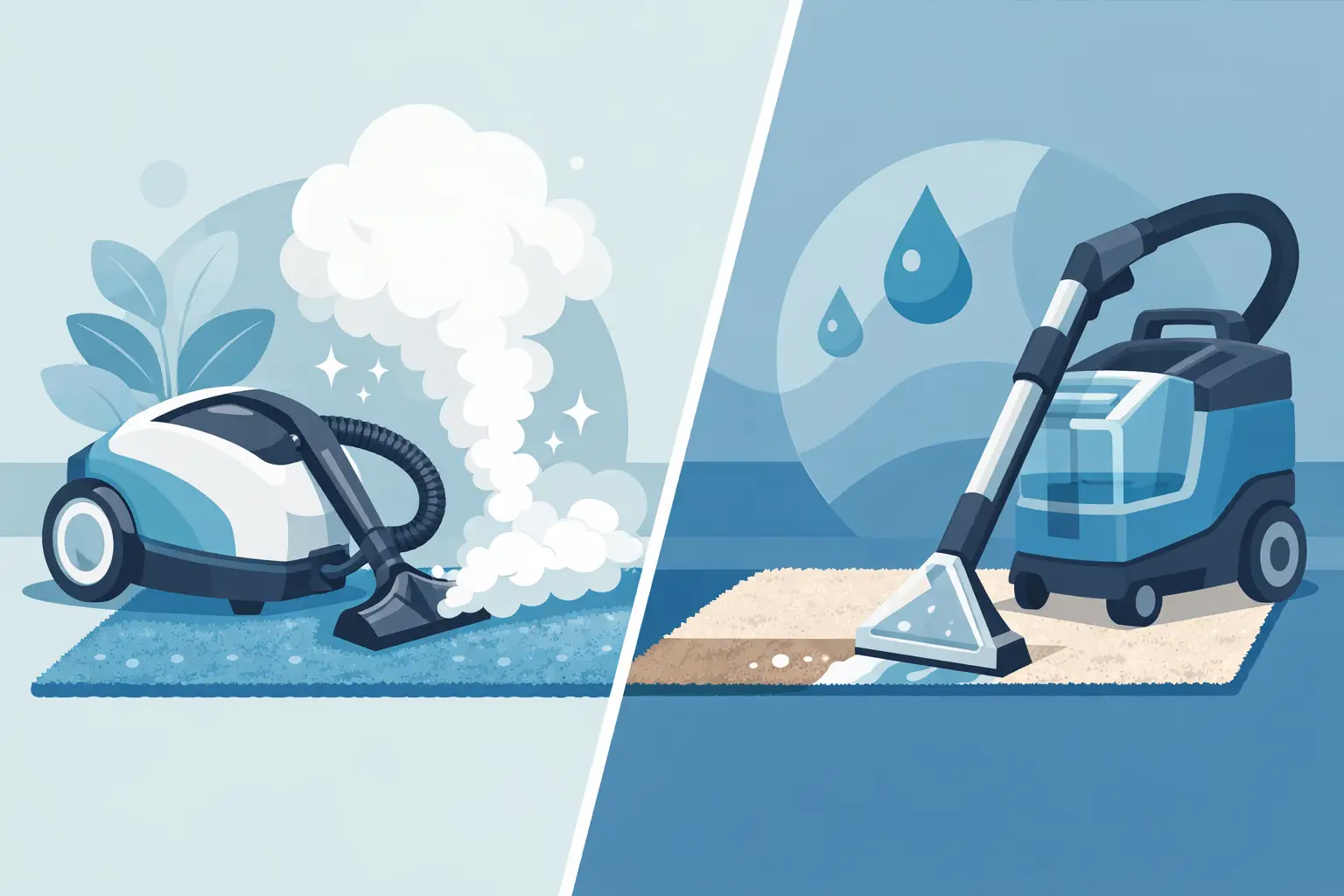
When a company says “steam cleaning,” it almost always means hot water extraction. The machine does not blow steam into your carpet. It sprays hot water and a cleaning solution into the pile, then pulls the dirty water straight back out with strong suction.
That one fact clears up most of the confusion. The real choice is between three methods: hot water extraction, shampooing and low moisture cleaning.
The Short Answer
| Method | How it works | Best for | Main risk |
|---|---|---|---|
| Hot water extraction ("steam cleaning") | Hot solution is injected, then suctioned out with the dirt | Embedded soil, stains, pet odours, annual deep cleaning | Slower drying if extraction is weak |
| Carpet shampooing | Foam or detergent is brushed in, then vacuumed or extracted | Light soil, short term freshening | Leftover product that attracts dirt |
| Low moisture or dry cleaning | Powder, encapsulating product or bonnet pad lifts surface soil | Fast turnaround, light soil, moisture sensitive carpet | Does not rinse out deep soil |
For most family homes, hot water extraction is the method that cleans the deepest. The other two have real uses, but they are narrower.
Is Steam Cleaning the Same as Hot Water Extraction
For carpets, yes. The name stuck because the hot water gives off vapour during cleaning.
True steam is different. A vapour steam cleaner uses a boiler and very little water. It suits tile, grout, sealed floors and car interiors. On carpet it does not rinse or remove soil, and the heat can distort some pile and backings.
So if a quote says “steam cleaning,” ask one question. Is that hot water extraction with suction, or a handheld vapour unit? The answer tells you what you are paying for.
How Hot Water Extraction Works
A technician pre-treats stains and traffic lanes, then agitates the pile. A wand injects hot water and solution, and powerful suction recovers it right away.
The goal is removal, not just freshening. Soil, residue and dissolved dirt leave with the water. A truck mounted machine does this at higher heat and suction than a rental unit, and the machine stays outside, so the heat and moisture are not working inside your home.
At Nettoyage Impérial, fitted carpets are cleaned on site with truck mounted hot water extraction.
When Hot Water Extraction Is the Better Choice
Choose it when the carpet has:
- Visible greying in hallways and in front of seating
- Pet accidents or lingering odour
- Food, drink or tracked in grease
- Years of dust, allergens and pet hair worked into the pile
- Not been professionally cleaned in a year or more
It removes and reduces allergens and odour sources by taking soil out of the pile. It does not guarantee an odour or stain is gone. Old stains that have changed the fibre colour may only lighten.
When Shampooing Makes Sense
Carpet shampooing is an older method. A foam or detergent is brushed in to loosen soil, then removed by vacuuming or extraction.
It can freshen a lightly soiled carpet. The trouble is residue. If detergent stays in the fibre, it feels slightly sticky and attracts dust, so the carpet re-soils faster. That is the most common reason a “freshly shampooed” carpet looks dull again within weeks.
Aggressive brushing can also fuzz or flatten some pile. If a company offers shampooing, ask how the product is removed afterwards.
When Dry or Low Moisture Cleaning Makes Sense
Low moisture cleaning uses powder, an encapsulating polymer or a bonnet pad. The product binds to soil, then is vacuumed or lifted away.
It is useful when a space cannot be out of use for long, such as an office or shop, or when a carpet or backing does not tolerate much water. Drying is fast, often within an hour or two.
Its limit is depth. It works well on light, regular maintenance. It does not flush out mud, spilled drinks, urine or heavy oily soil, and it can leave residue if not fully vacuumed. Many cleaners use it for maintenance between deep cleans, not instead of them.
Note that “dry cleaning” for carpet does not mean the solvent process used on clothing. It means very little water.
How the Three Compare on Drying Time
Drying depends on carpet thickness, underlay, humidity and airflow, and on how well the machine recovers water.
- Hot water extraction leaves a carpet damp, not soaked. Plan on several hours, and longer for thick pile or a humid basement.
- Shampooing varies with how much liquid is used and removed.
- Low moisture methods are the quickest.
Open windows, run fans and keep furniture off damp carpet. If a carpet is still wet after a day, call the company.
Match the Method to the Fibre
Nylon, polyester and polypropylene generally tolerate hot water extraction well. Wool, silk, viscose and some natural fibres can shrink, bleed dye or brown if they are over wet or too hot. Glued down carpet and some backings need care too.
A good cleaner identifies the fibre, tests colourfastness in a hidden spot and adjusts heat, water and solution before starting. Handmade and valuable rugs are usually better cleaned in a shop than on site. Nettoyage Impérial cleans rugs in shop.
Can a Rental Machine Do the Same Job
Rental extractors use the same idea at a smaller scale. They have less suction and less heat control, so more water stays in the carpet. Common results are slow drying, a soapy film from too much product and quick re-soiling.
A rental can handle a small spill or a light refresh. For a whole room of grey carpet, the extraction quality is what you are paying for. Our professional cleaning vs machine rental page compares cost and results in full.
What About Sofas and Mattresses
Upholstery and mattresses have their own fabric, foam and moisture limits, so the method differs from carpet. See upholstery cleaning methods.
Questions to Ask Before You Book
- Is this hot water extraction, shampooing, or low moisture?
- Is the equipment truck mounted or portable?
- How will you test my carpet fibre and dye?
- How is leftover product removed?
- How long should drying take, and what should I do while it dries?
For more on comparing companies, read what to check before you hire a carpet cleaner.
Ready to Book
Nettoyage Impérial cleans carpets in Montreal with truck mounted hot water extraction. Rugs are cleaned in shop.
See carpet cleaning prices and book or learn about rug cleaning.
Is steam cleaning the same as hot water extraction?
For carpets, yes. “Steam cleaning” is the common name for hot water extraction, where hot solution is injected and suctioned out. True vapour steam is a different tool made for hard surfaces.
Is steam cleaning or dry cleaning better for carpet?
Hot water extraction cleans deeper and suits stains, odours and heavy soil. Dry or low moisture cleaning dries faster and suits light soil or moisture sensitive carpet.
Is carpet shampooing better than hot water extraction?
Usually not. Shampooing can freshen light soil, but leftover product attracts dirt. Extraction rinses and removes it.
Does steam cleaning ruin carpet?
Not when done properly. Damage comes from too much water, too much heat or the wrong solution for the fibre, which is why fibre testing matters.
Does steam cleaning remove pet odour?
It removes and reduces odour by taking soil out of the carpet. Urine that has reached the underlay may need targeted treatment first.
How long does carpet take to dry after hot water extraction?
Several hours in most homes, longer for thick carpet or humid rooms. Airflow speeds it up.
Can heat set a stain?
Yes, for some protein stains such as blood or food. A technician pre-treats these before applying heat.
How often should carpet be deep cleaned?
Once a year for most homes, or every 6 to 12 months with pets, children or allergies.
Is a rented carpet cleaner as good as a professional?
Not for a deep clean. Rentals recover less water, so carpet dries slower and can re-soil faster.