

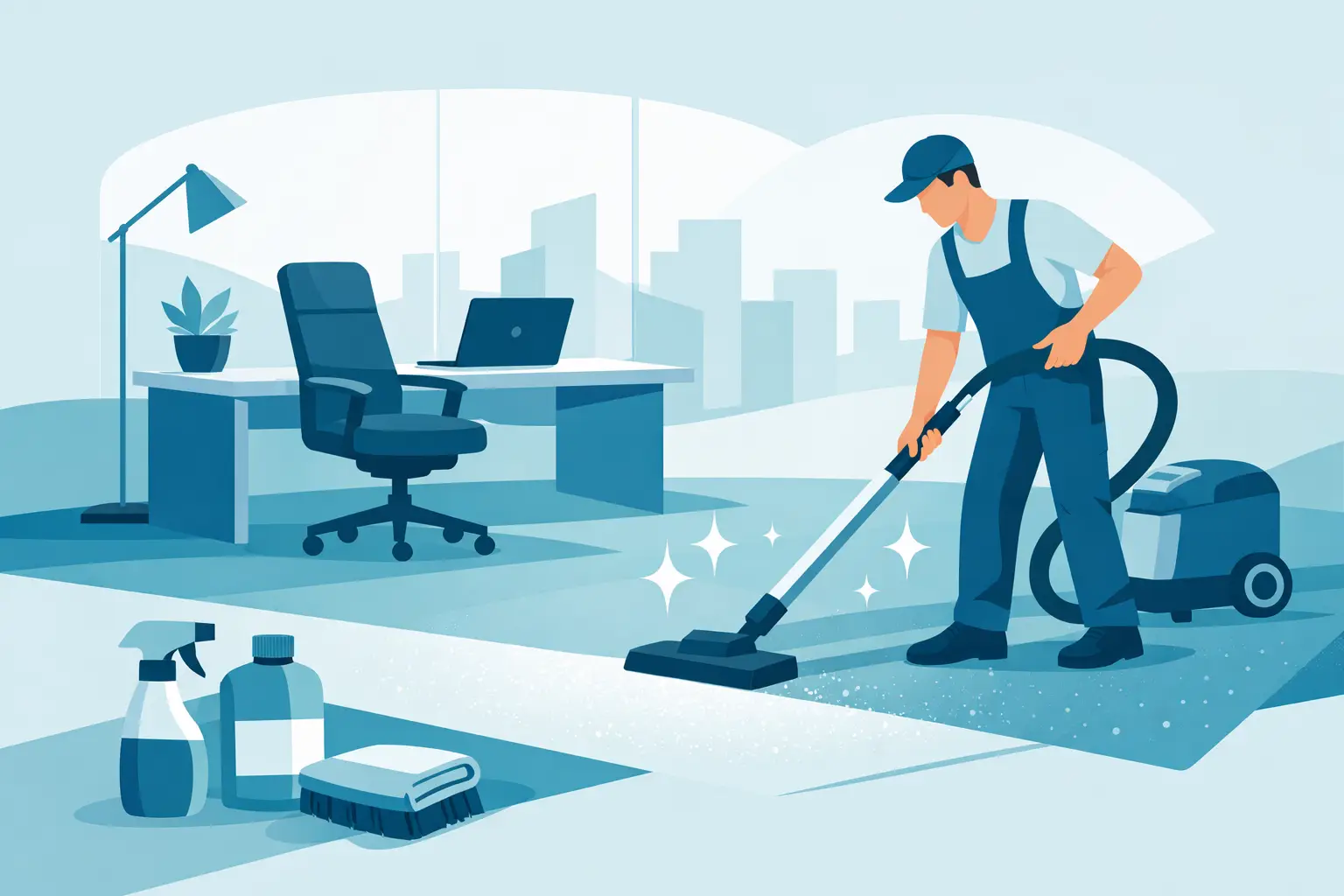
A commercial carpet never gets dirty from the surface alone. Fine particles tracked in from outside, daily foot traffic, spilled liquids, and dust settling deep into fibres all take a steady toll. Without a reliable office carpet maintenance routine and a consistent office rug cleaning schedule, what starts as a hygiene issue quickly becomes an image problem and a costly replacement decision.
Following practical commercial carpet cleaning tips, such as regular vacuuming, prompt stain treatment, and scheduled professional cleaning, helps prevent premature wear. In Montreal, Laval, the North Shore, and the South Shore, businesses that invest in proactive carpet care consistently get more life out of their flooring and keep their workspaces looking sharp year-round.
Why Office Carpet Maintenance Goes Beyond Appearances
Carpet in a commercial setting works harder than most people realise. It absorbs sound, adds comfort underfoot, anchors the aesthetic of reception areas and meeting rooms, and traps airborne particles that would otherwise stay in circulation. That last function is genuinely useful until the carpet becomes overloaded with what it has collected.
A neglected carpet signals something to everyone who walks in. Grey traffic lanes, persistent odours, and flattened pile in high-use areas create an impression of neglect even when the rest of the office looks clean. For staff working in enclosed spaces, a heavily soiled carpet also means prolonged exposure to dust, allergens, and fine particles that never fully clear the air.
There is also a straightforward financial argument. Abrasive debris caught in carpet fibres acts like sandpaper with every footstep, accelerating fibre breakdown and making wear patterns visible far sooner than necessary. A consistent office carpet maintenance plan costs a fraction of early carpet replacement.
What Actually Contaminates a Commercial Carpet
Most contamination builds gradually through ordinary daily activity rather than a single incident. Moisture, mineral residue, body oils, fine dust, food particles, and outdoor grime all accumulate in the textile. Because this process is slow, many facility managers underestimate how loaded the carpet has actually become by the time visible wear appears.
Entry zones take the hardest hit, especially during Montreal winters when slush, road salt, and ice melt are tracked in constantly. Workstation areas collect dry particulate and fine dust. Breakrooms face organic stains and spills. Each zone has a different contamination profile, which is why a one-size approach to commercial carpet cleaning tips misses the mark.
Building a Realistic Office Rug Cleaning Schedule
There is no universal office rug cleaning schedule that works for every office. The right office rug cleaning schedule depends on foot traffic volume, proximity to building entrances, the nature of business activity, and the visual standard the space needs to maintain. A busy professional services firm receiving clients all day has very different needs from a small back-office team with restricted access.
Routine vacuuming of high-traffic corridors and entry zones should happen frequently and consistently, adjusted to actual traffic rather than a fixed weekly calendar. That foundation does not replace deep cleaning.
Most commercial environments require professional extraction several times a year, with higher-traffic surfaces needing more frequent attention. The goal is always to intervene before the carpet visibly degrades, not after.
Commercial Carpet Cleaning Tips: Methods That Work in Offices
Commercial vacuuming is the first line of defence. It removes dry particles before they become embedded, but it does little for fixed stains, greasy residue, or debris bonded to the fibres. For those, a technical cleaning method is required.
Hot water extraction injects a heated cleaning solution into the carpet and immediately recovers it along with dissolved contaminants. Done correctly, it cleans thoroughly, rinses residue, and leaves fibres in better condition. It does require careful management of pressure, temperature, chemical concentration, and drying time, particularly in occupied offices where downtime needs to be minimised.
Encapsulation is a useful interim method in professional settings. The product surrounds soil particles, which are then removed by vacuuming once dry. It dries faster and disrupts operations less than extraction, making it well-suited for maintenance between deeper cleans. It is not a full replacement for extraction when soil load is high.
The right office carpet maintenance method depends on fibre type, backing construction, current soil level, and how long the space can be taken out of use. Cost and speed should never be the only deciding factors.
Common Mistakes That Undermine Office Carpet Maintenance
Waiting too long to treat spills is the most common error. The longer a liquid sits, the deeper it migrates into the fibre and backing. Some stains reappear after a first cleaning precisely because they were left to set.
Using consumer-grade spot products is another frequent mistake. Many leave sticky residue, bleach fibres locally, or spread the stain rather than lifting it. The carpet may look acceptable immediately after treatment but resoils faster.
Finally, cleaning without a plan is rarely cost-effective. Reactive cleaning triggered by an important client visit or a complaint produces uneven results and higher costs than a structured calendar. A written office rug cleaning schedule with planned professional interventions, entry mat protocols, and prompt stain response gives consistently better outcomes with less disruption.
A well-maintained commercial carpet is not just a cosmetic concern. It reflects the overall standard of your workplace, protects the health and comfort of everyone in the building, and preserves a flooring asset that represents a real capital investment. Office carpet maintenance done correctly, on a consistent schedule and with the right methods for each surface, prevents the kind of gradual deterioration that forces early replacement.
At Nettoyage Imperial, serving businesses across Montreal, Laval, the North Shore, and the South Shore since 1995, we provide commercial carpet cleaning tailored to the specific demands of each workspace. Whether you need to establish an office rug cleaning schedule, address accumulated soil in high-traffic zones, or apply targeted commercial carpet cleaning tips across multiple surfaces, our team brings the expertise to get it done with minimal disruption to your operations.
How often should office carpet maintenance be scheduled in a typical Montreal business?
Most commercial offices benefit from professional deep cleaning two to four times per year, with routine vacuuming adjusted to actual traffic levels. High-traffic zones near entrances and reception areas require more frequent attention, particularly during winter months when slush and road salt are tracked in regularly across Montreal, Laval, and the surrounding region.
What are the best commercial carpet cleaning tips for businesses trying to extend carpet life?
Install quality entry mats at all building access points to reduce incoming soil. Vacuum high-use areas frequently based on traffic, not a fixed schedule. Address spills immediately using compatible cleaning products and an absorb-then-extract method rather than scrubbing. Schedule professional extractions before visible wear sets in, not after.
How do I build an office rug cleaning schedule that fits around business hours?
Start by mapping your space into zones based on traffic intensity. High-exposure areas like lobbies and main corridors need more frequent professional attention. Low-traffic offices can follow a longer cycle. Plan deep cleans during evenings, weekends, or lower-occupancy periods to reduce disruption, and work with a provider experienced in occupied commercial sites.
Does hot water extraction work on all types of commercial carpet?
Most commercial carpets tolerate hot water extraction well when it is performed correctly, with controlled pressure, appropriate chemical concentration, and thorough moisture recovery. Some fibre types and backings require a more conservative approach to avoid over-wetting, delamination, or extended drying. A professional assessment before cleaning prevents costly errors.
Can office carpet maintenance actually improve indoor air quality?
Yes. Carpet fibres trap dust, fine particles, and allergens that would otherwise remain airborne in a closed environment. Regular professional cleaning extracts that accumulated load, reducing overall particulate levels. In enclosed office spaces where air circulation is limited, this has a measurable effect on the day-to-day comfort of the people working there.
Key Takeaways
- Office carpet maintenance should be proactive, not reactive. Waiting for visible wear means the carpet has already degraded further than it appears.
- A structured office rug cleaning schedule mapped to actual traffic zones is more effective and more cost-efficient than fixed-calendar or event-triggered cleaning.
- Commercial carpet cleaning tips that matter most: quality entry mats, traffic-adjusted vacuuming, immediate spill response, and planned professional extractions.
- Hot water extraction remains the most thorough method for deep office carpet maintenance, provided moisture, pressure, and drying are properly managed.
- Montreal winters introduce specific challenges. Road salt, slush, and ice melt accelerate contamination at building entrances and require more frequent professional attention in those zones.
- Clean carpet directly supports indoor air quality. Regular commercial carpet cleaning removes the accumulated particulate load that fibres trap over time in enclosed workspaces.