

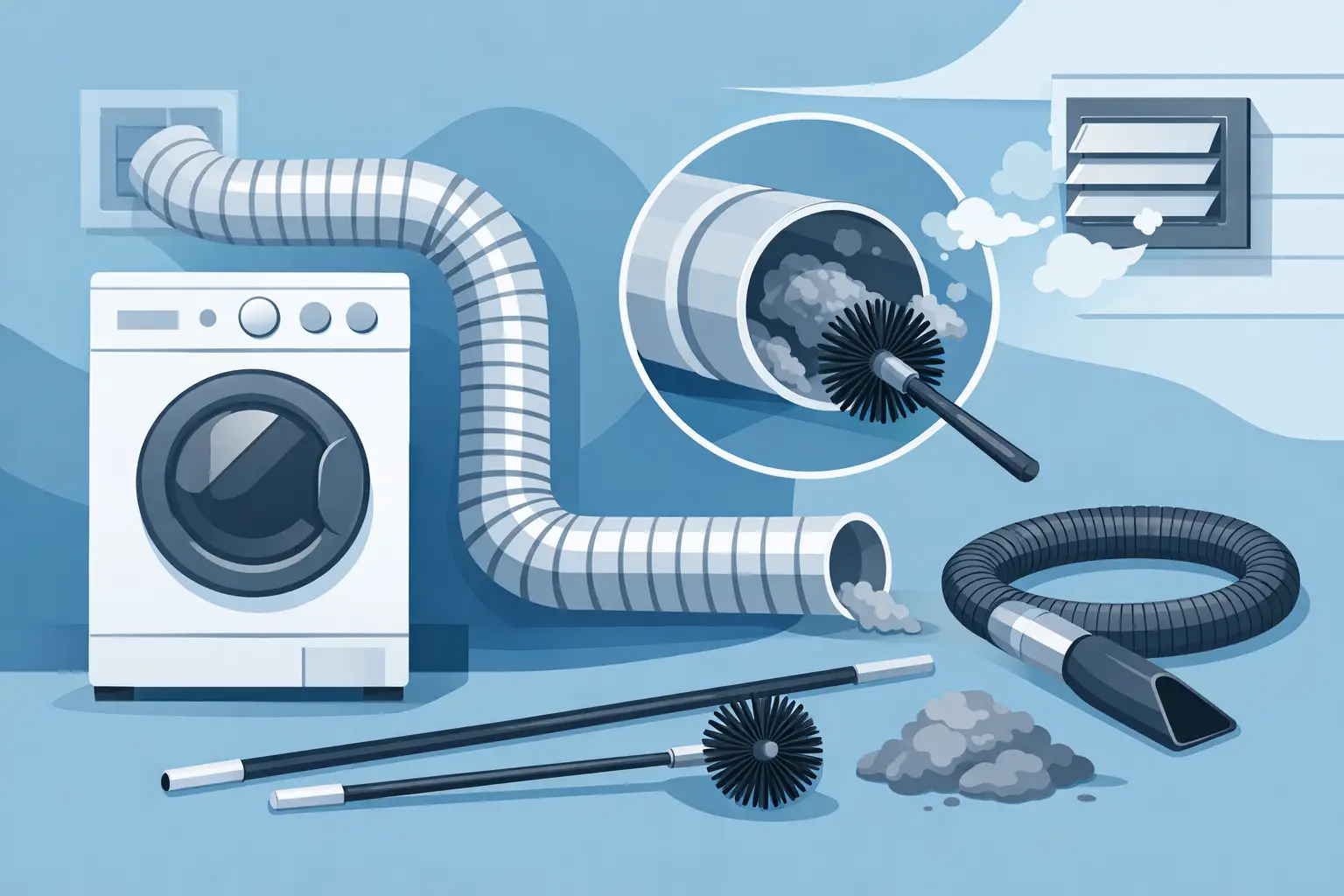
If your dryer is taking two cycles to dry a single load, running hotter than usual, or leaving clothes with a warm, stale smell, the motor probably isn’t the problem. In most cases, the real issue is a blocked vent line. Knowing how to unclog a dryer vent matters, because a restricted line lowers efficiency, drives up your energy bill, and creates a genuine fire hazard.
Lint does not only collect in one obvious spot near the outlet. It builds up gradually along the entire vent, inside elbows, behind the appliance, and sometimes right up to the exterior hood. The longer or more complex the vent run, the faster a blockage returns. This is exactly why homeowners in Montreal, Laval, the North Shore, and the South Shore should understand both the clogged dryer vent signs and the proper cleaning steps.
How to Unclog a Dryer Vent Safely
Before touching anything, unplug the dryer or shut off its breaker. Gas dryers also need the gas supply closed according to your installation. Carefully pull the appliance away from the wall, since flexible ducts crush easily when forced.
Start by detaching the duct from the back of the dryer. A visual check often reveals a compacted mass of lint right at the entry point. From there:
- Remove loose lint by hand or with a shop vacuum
- Feed a dryer vent cleaning brush through the duct in sections, pulling it back to extract debris
- Work slowly through elbows so you do not push the clog further down the line
- Avoid compressed air on heavily clogged ducts, since it can pack fibres into an inaccessible section or push dust back into the room
Clogged Dryer Vent Signs You Shouldn’t Ignore
Most blockages don’t appear overnight. Recognizing clogged dryer vent signs early can save you a service call and a safety scare later on.
Watch for clothes that stay damp after a full cycle, a dryer that feels unusually hot to the touch, a burning smell during operation, or a laundry room that stays humid long after the load is done. Visible lint buildup behind the machine, even after cleaning the lint trap, is another common red flag.
Where Vent Clogs Form Most Often
The first elbow behind the dryer is a frequent trouble spot, since airflow slows down right where the duct changes direction. The exterior hood is another critical point. A flap that won’t open properly, debris, humidity buildup, or even a nest can trap warm air inside the line.
In condos, multi unit buildings, and homes with long duct runs, the path from the dryer to the outside is often longer and more complex, which makes a thorough cleaning more important and more technical.
Dryer Vent Cleaning Frequency
There’s no single rule for dryer vent cleaning frequency, since it depends heavily on usage. A household running several loads a week needs cleaning more often than someone living alone. Pet hair, heavy textiles, and towels also speed up buildup.
As a general guideline, most homes benefit from a full cleaning once a year. Larger families, rental properties, and homes with pets often need it every six to eight months to keep airflow efficient and safe.
When to Call a Professional
Some situations go beyond a DIY fix. If your vent is long, hidden inside a wall, hard to access, or the clogged dryer vent signs keep returning even after cleaning, it’s time to bring in a technician.
A professional doesn’t just pull out visible lint. They assess the full duct path, identify restriction points, check every connection, and use proper equipment to clean without damaging the installation.
Understanding how to unclog a dryer vent, recognizing clogged dryer vent signs early, and keeping a consistent dryer vent cleaning frequency are the simplest ways to protect your appliance and your home. If your duct run is long, hidden, or the problem keeps coming back, the team at Nettoyage Imperial is here to help homeowners and property managers across Montreal, Laval, the North Shore, and the South Shore breathe easier and dry faster.
What are the most common clogged dryer vent signs?
The most reliable clogged dryer vent signs include clothes that stay damp after a full cycle, a dryer that runs hotter than normal, a burning smell, and visible lint buildup behind the appliance even after the lint trap has been cleaned. A musty or humid laundry room after drying is another strong indicator.
How often should I follow a dryer vent cleaning frequency schedule?
A typical dryer vent cleaning frequency is once a year for an average household. Families doing several loads weekly, homes with pets, or rental units should aim for every six to eight months to avoid buildup and reduce fire risk.
Can I learn how to unclog a dryer vent on my own?
Yes, for shorter and accessible duct runs. How to unclog a dryer vent safely involves disconnecting the duct, removing visible lint, and using a proper vent brush along the full length. Long, hidden, or complex duct systems are safer left to a professional.
What tools do I need to unclog a dryer vent myself?
A dryer vent cleaning brush, a shop vacuum, and work gloves are usually enough for a basic cleaning. Avoid wire hangers or rigid tools, since they can tear flexible ducts and create rough spots where lint collects faster.
Is a clogged dryer vent actually a fire risk?
Yes. Lint is highly flammable, and a blocked vent traps heat inside the duct instead of releasing it outdoors. This combination is one of the leading causes of residential dryer fires, which is why catching clogged dryer vent signs early matters.
Key Takeaways
- How to unclog a dryer vent starts with disconnecting the duct and clearing it section by section with a proper brush, not improvised tools.
- Watch for the most common clogged dryer vent signs: long cycles, a hot to the touch dryer, and a burning smell.
- A sensible dryer vent cleaning frequency is once a year, or every six to eight months for heavy use households.
- Clogs form most often at the first elbow and the exterior hood, not just near the dryer itself.
- Long, hidden, or recurring blockages are best handled by a professional technician rather than repeated DIY attempts.
- Regular maintenance protects against fire risk while improving drying time and energy efficiency.