

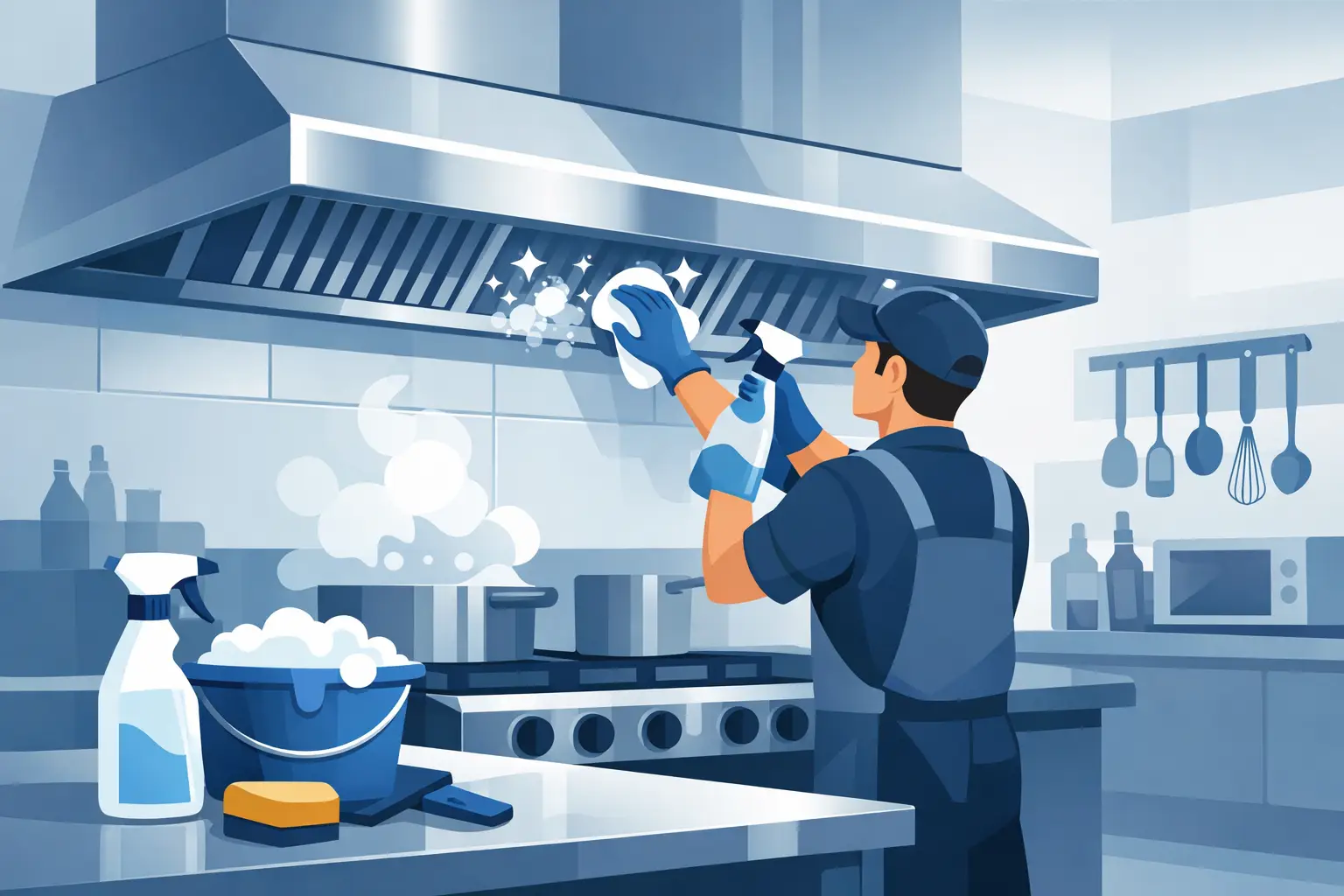
A grease-saturated filter does not warn you before it becomes a serious problem. In a restaurant kitchen, deposits build up quickly inside the hood, filters, plenum, and ductwork, often far beyond what is visible on the surface. This is exactly why commercial kitchen exhaust cleaning in Montreal should never be treated as a routine housekeeping task.
It is a technical operation that directly affects fire safety, hygiene, extraction performance, and the smooth daily functioning of your kitchen. Regular professional kitchen hood degreasing is a critical part of this process, helping to remove combustible grease deposits before compromising safety or efficiency. Whether you run a high-volume grill kitchen or a neighbourhood bistro, staying ahead of grease accumulation is one of the most important maintenance commitments you can make.
Why Commercial Kitchen Exhaust Cleaning Is Non-Negotiable
In any restaurant, the exhaust hood draws out a complex mixture of steam, smoke, grease particles, and odour. Even with consistent use, a portion of these residues clings to the internal surfaces of the system. Over time, that grease becomes denser, stickier, and harder to remove.
The first concern is fire safety. Accumulated grease inside a commercial hood is combustible. When a flame spikes, a cooking surface overheats, or excessive heat concentrates in the ductwork, the risk of a rapid fire spread increases significantly. A heavily fouled system also restricts airflow, which can push heat and smoke back into the cooking zone.
The second concern is sanitation. A dirty hood traps organic residues, encourages persistent odours, and creates a general impression of poor upkeep. In a food service environment, that is simply not acceptable. Hygiene that is visible matters, and so does hygiene that is not. Professional kitchen hood degreasing addresses both.
There is also an operational dimension. Reduced extraction performance affects staff comfort, accelerates grease buildup on nearby surfaces, increases condensation, and puts additional strain on equipment. Regular commercial kitchen exhaust cleaning helps protect the overall investment in your Montreal restaurant.
What a Professional Kitchen Hood Degreasing Service Must Actually Cover
Many operators focus only on the filters and the visible exterior of the hood. That is a start, but it is not enough. A thorough professional kitchen hood degreasing service addresses the entire accessible system, based on its configuration.
This typically includes the visible hood structure, the filters, internal grease accumulation zones, the exhaust duct, and depending on the installation, certain fan components. The scope of the intervention depends on the type of cuisine, the intensity of service, cooking volumes, and the types of food prepared. A kitchen running daily frying, grilling, or high-heat cooking fouls its system far faster than a lighter-use establishment.
This is where an experienced technician makes a real difference. The goal is not simply to remove what is visible. It means identifying risk zones, using products appropriate to the surfaces, protecting surrounding equipment, and returning the system to a clean state without compromising its integrity.
How Often Should You Schedule Commercial Kitchen Exhaust Cleaning in Montreal?
There is no single answer that applies to every kitchen. The right frequency depends on cooking volume and style. A high-traffic restaurant with intensive frying or daily greasy cooking needs more frequent service. A lighter or seasonal establishment may operate on a different schedule. What matters is an honest assessment of actual fouling, not an approximate estimate.
Certain signs indicate that commercial kitchen exhaust cleaning Montreal is needed sooner rather than later. Stronger odours than usual, noticeably reduced suction, grease appearing on nearby surfaces, visibly saturated filters, or rising heat levels in the kitchen are all indicators to take seriously. Waiting for the next scheduled service is not always the right call.
The Real Cost of Delaying Professional Kitchen Hood Degreasing
Many restaurant managers look for ways to reduce service frequency in order to manage costs. That reasoning can quickly work against them. A severely fouled hood demands more time, more effort, and sometimes additional corrective measures. The immediate cost ends up higher, not lower.
Beyond the cleaning bill itself, the true cost of delayed commercial kitchen exhaust cleaning includes reduced system performance, accelerated wear on components, diminished comfort for kitchen staff, and increased safety risk. In a Montreal restaurant, one technical incident or an unplanned operational interruption almost always costs more than a well-planned preventive maintenance visit.
The better approach is to think in terms of sustained performance rather than one-time expenses. A clean system runs more efficiently, lasts longer, and places less pressure on the broader operation.
Why Work With a Specialized Commercial Kitchen Exhaust Cleaning Company
A specialized provider brings more than cleaning capacity. They bring a method, disciplined execution, and genuine technical understanding of commercial exhaust systems. In a commercial kitchen, that difference is significant.
Products must be effective without damaging surfaces. Equipment must enable deep cleaning without redistributing grease to other areas. Technicians must understand the specific precautions required in food service environments and work with precision in a space where every service window matters.
At Nettoyage Imperial, commercial kitchen exhaust cleaning in Montreal follows a clear approach: qualified technicians, proven methods, and a genuine focus on both installation safety and the quality of the result. Restaurants across Montreal, Laval, the North Shore, and South Shore rely on this level of service to keep their kitchens running without unpleasant surprises.
What does commercial kitchen exhaust cleaning in Montreal actually include?
A full commercial kitchen exhaust cleaning service covers the visible hood, internal grease accumulation zones, filters, exhaust ductwork, and accessible fan components. The scope depends on the kitchen’s configuration and the level of fouling present. A qualified technician will assess the system before beginning any work.
How is professional kitchen hood degreasing different from a standard cleaning?
Professional kitchen hood degreasing uses specialized products and techniques designed for commercial grease buildup in food service environments. Standard cleaning does not address internal ductwork or technical zones. A specialized service ensures that residues are fully removed, surfaces are protected, and the system is returned to safe operating condition.
How often should a Montreal restaurant schedule exhaust hood cleaning?
Frequency depends on cooking volume and type. High-output kitchens with daily frying or grilling typically need more frequent commercial kitchen exhaust cleaning. Lighter operations may require less frequent service. Signs such as reduced suction, strong odours, or visible grease near the hood indicate that service should not be delayed.
What are the risks of skipping regular professional kitchen hood degreasing?
Grease accumulation is combustible and poses a genuine fire risk. Beyond safety, a fouled system extracts air less effectively, increases heat in the kitchen, encourages odours, and accelerates wear on equipment. Delaying professional kitchen hood degreasing almost always leads to higher costs over time, both in cleaning and in operational disruption.
Can hood cleaning be scheduled outside of service hours?
Yes. In most cases, a flexible schedule, early morning, late evening, or between service periods, helps minimize operational impact. A good service provider will work with your restaurant’s schedule to make the intervention as seamless as possible.
Key Takeaways
- Commercial kitchen exhaust cleaning in Montreal is a fire safety requirement, not just a hygiene preference, and should never be treated as optional.
- Professional kitchen hood degreasing covers the full system including internal ductwork, not just the visible hood and filters.
- Cleaning frequency should be based on actual cooking volume and type, with high-output kitchens requiring more frequent service.
- Delaying commercial kitchen exhaust cleaning increases both the cost of the cleaning itself and the risk of equipment damage or operational disruption.
- Warning signs such as reduced suction, persistent odours, or visible grease near the hood indicate that professional kitchen hood degreasing should be booked promptly.
- Restaurants across Montreal, Laval, the North Shore, and South Shore benefit from working with a specialized provider who understands commercial kitchen systems.